The Sistine Chapel

A pope's private chapel, built to last
The Sistine Chapel takes its name from Pope Sixtus IV, who commissioned it between 1477 and 1481 on the site and foundations of an older medieval chapel inside the papal palace. Its original purpose was practical rather than purely artistic: a defensible, private chapel for the pope's own household and the College of Cardinals, built with fortress-like proportions — its dimensions are said to echo the measurements given for the Temple of Solomon in the Old Testament. Sixtus brought in some of the leading painters of the day, including Botticelli, Perugino, and Ghirlandaio, to decorate the side walls with fresco cycles depicting the lives of Moses and Christ, long before Michelangelo ever set foot inside.
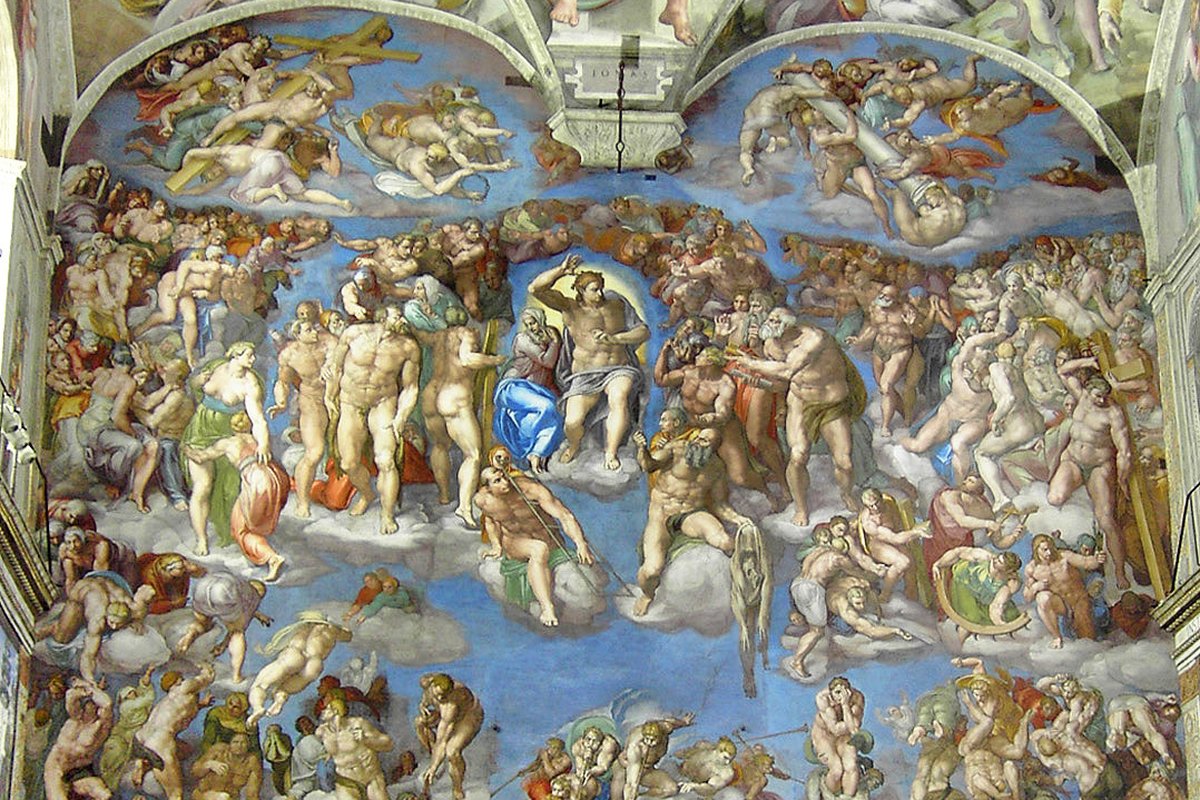
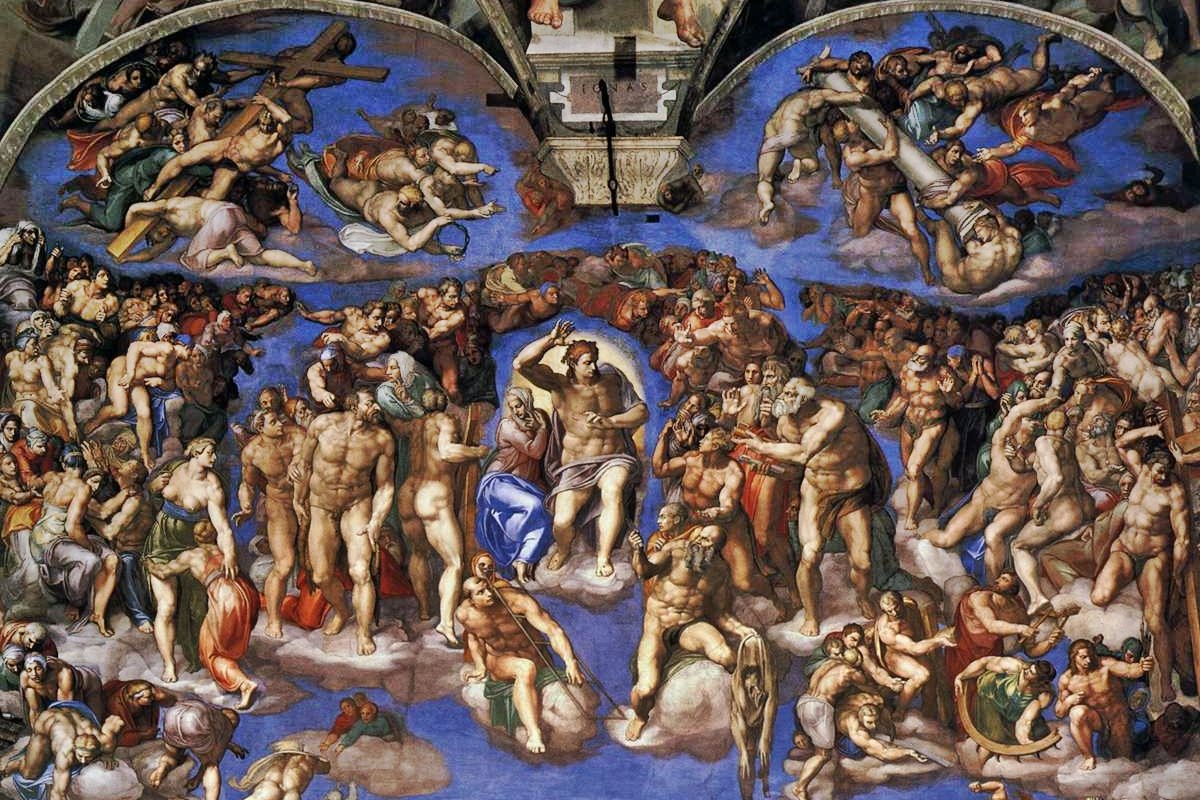
Michelangelo, The Last Judgment, 1536-1541 - public domain.
The ceiling nobody wanted painted
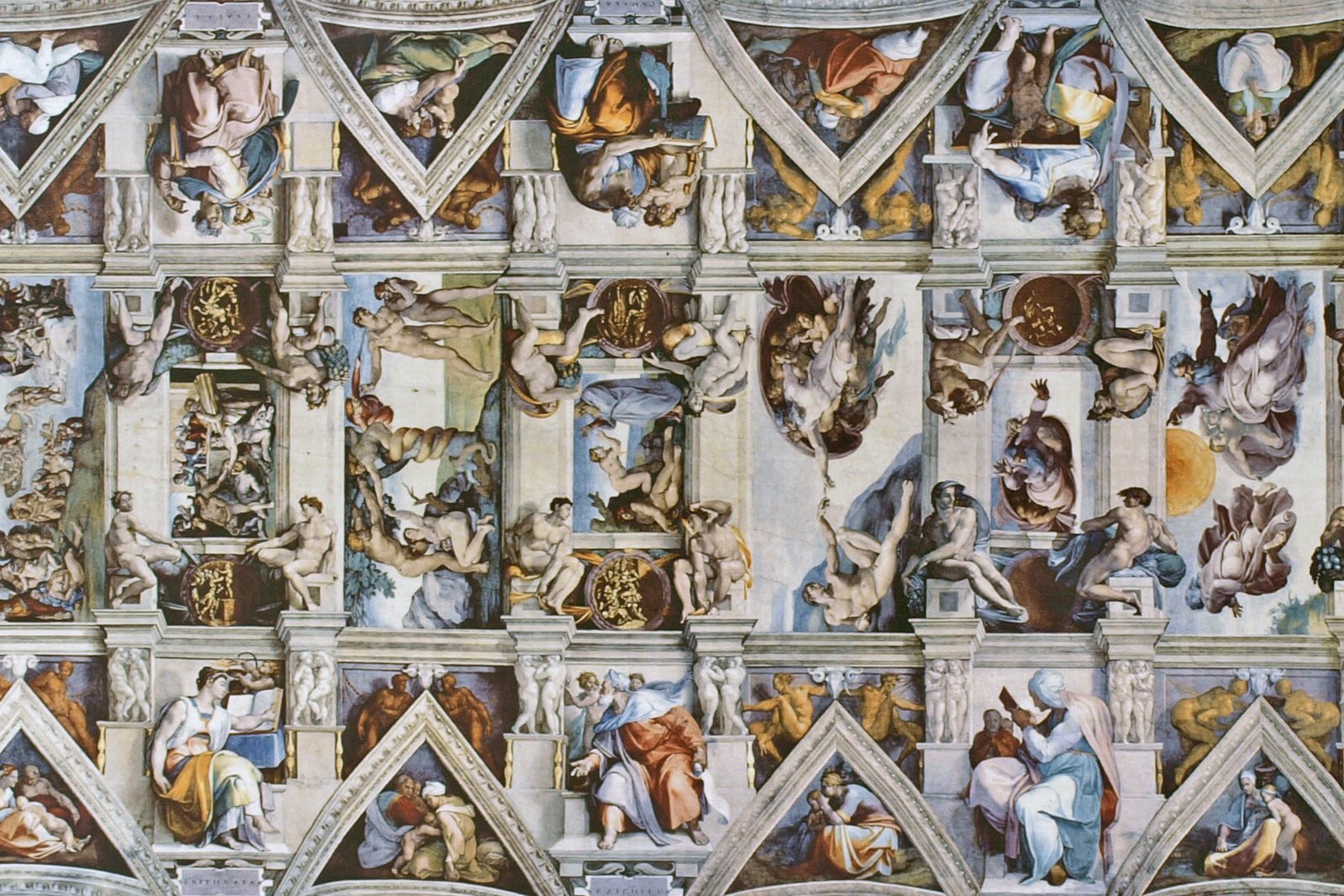
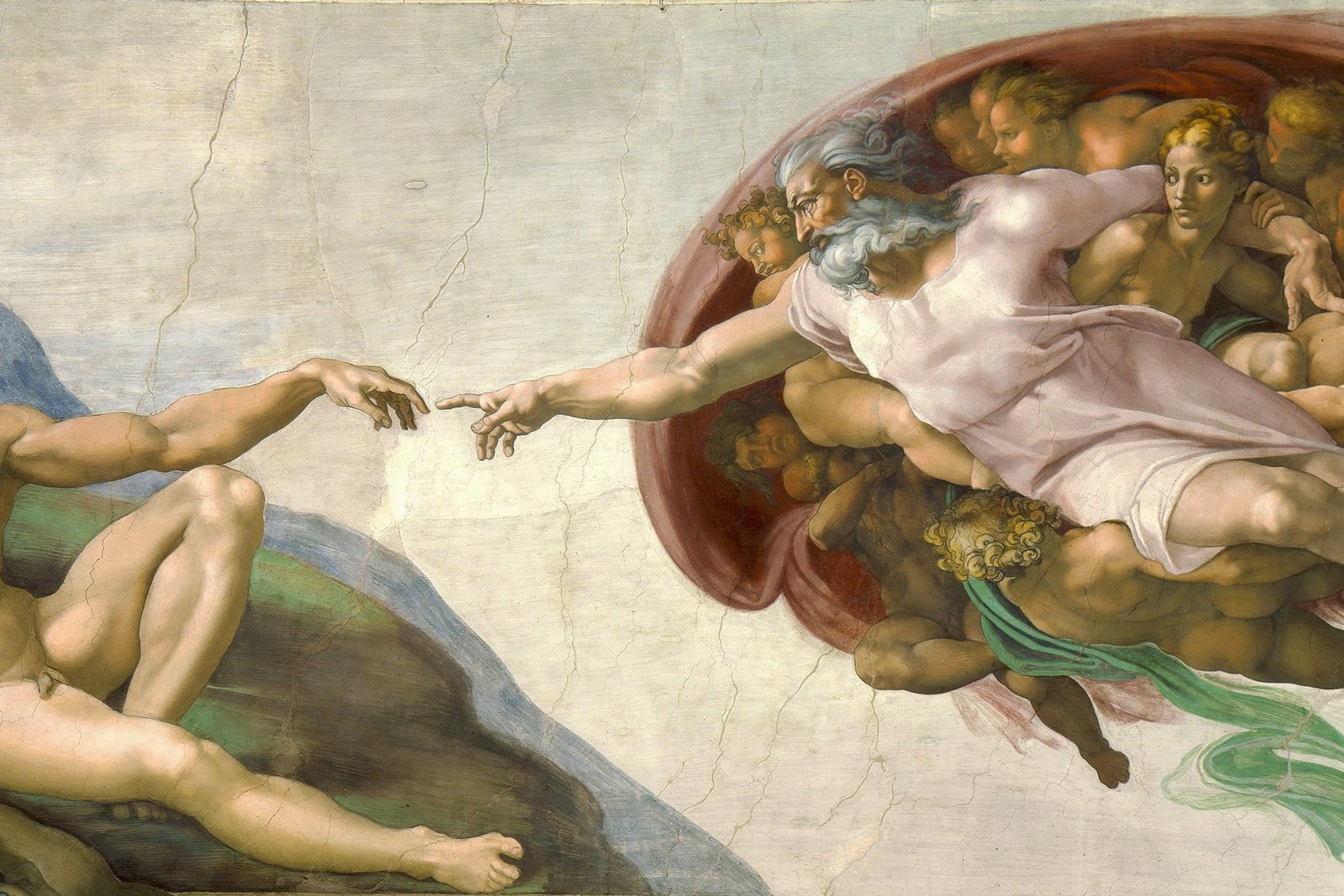
Three decades later, Pope Julius II decided the plain blue, star-studded ceiling needed something grander, and he pressed a reluctant Michelangelo — who considered himself a sculptor working at the time on Julius's own tomb — into taking the commission. Michelangelo spent roughly four years, from 1508 to 1512, working largely alone on a custom scaffold he designed himself, high above the chapel floor. The result covers over 5,000 square feet with nine central scenes from the Book of Genesis, from the Separation of Light from Darkness through the Drunkenness of Noah, framed by painted prophets, sibyls, and muscular figures known as ignudi. The best known single panel, the Creation of Adam — God's outstretched hand almost touching Adam's — has become one of the most reproduced images in the history of art.
A darker vision on the altar wall
Michelangelo returned to the Sistine Chapel roughly two decades later, commissioned by Pope Clement VII and completed under Pope Paul III between 1536 and 1541, this time to paint the Last Judgment across the entire altar wall. It's a strikingly different work from the ceiling — one dense, swirling composition rather than a series of separated scenes, depicting Christ's Second Coming with the saved rising and the damned falling into torment below. The mood is darker, more anguished, and less serene than the ceiling above it, a shift often read against the backdrop of the 1527 Sack of Rome and the religious upheaval of the early Reformation years that separated the two commissions. The painting proved controversial almost immediately for its nudity; a later pope ordered draperies painted over some of the figures, additions that still partly cover the work today.
Restoring the colors
By the late 20th century, centuries of candle smoke, dust, and earlier restoration attempts had darkened Michelangelo's ceiling so thoroughly that generations of art historians assumed he had worked in deliberately somber, muted tones. A major cleaning and restoration project, carried out between 1980 and 1994 under the direction of the Vatican Museums, proved otherwise: beneath the grime, the ceiling's true palette turned out to be startlingly bright and saturated, forcing a real reassessment of Michelangelo's technique and intentions as a colorist, not just as a draftsman. The restoration was not without controversy — some critics argued the cleaning had gone too far and stripped away shading Michelangelo himself had applied after the fresco dried — but it remains the standard against which the ceiling is now studied and viewed.
Where the Church chooses its popes
Beyond its artistic weight, the Sistine Chapel carries a role unlike any other room on earth: it is where the papal conclave takes place, the process by which the College of Cardinals elects a new pope. The tradition of using the chapel for this purpose dates to the late 15th century, chosen for its seclusion within the Vatican and its suitability for keeping the electors cut off from outside contact until a decision is reached. During a conclave, the cardinals are sequestered inside, casting ballots beneath Michelangelo's Last Judgment until one candidate receives the required two-thirds majority — at which point the famous white smoke rises from a chimney installed for the occasion, telling the waiting crowd in St. Peter's Square that habemus papam, "we have a pope."
The side walls Michelangelo never touched
It's easy for the ceiling and the Last Judgment to eclipse everything else in the room, but the chapel's side walls hold their own significant fresco cycle, painted a generation before Michelangelo ever climbed his scaffold. Sixtus IV commissioned a team of the era's most sought-after painters — Botticelli, Perugino, Ghirlandaio, and others — to cover the walls with two parallel narrative cycles: scenes from the life of Moses on one side facing scenes from the life of Christ on the other, a pairing meant to show the Old Testament foreshadowing the New. Botticelli's contributions include the Temptations of Christ and Punishment of the Rebels, dense, carefully composed scenes that rank among his most significant work outside Florence. These frescoes are often overlooked by visitors craning their necks at the ceiling, but they represent the chapel's original decorative program and give the room a theological structure that Michelangelo's later additions were built to complete rather than replace.
A room that keeps working
Few buildings anywhere carry this much weight at once — a working chapel, a museum destination drawing millions of visitors a year, and the single room where the leadership of the Catholic Church changes hands. Michelangelo, by most accounts, never fully reconciled himself to being remembered as a painter. The room he left behind made sure he would be anyway.
Trivia
Who built the Sistine Chapel, and when?
How long did Michelangelo spend painting the ceiling?
What does the ceiling actually depict?
When did Michelangelo paint the Last Judgment, and why is it different from the ceiling?
Why do papal conclaves take place in the Sistine Chapel?
Related Reading