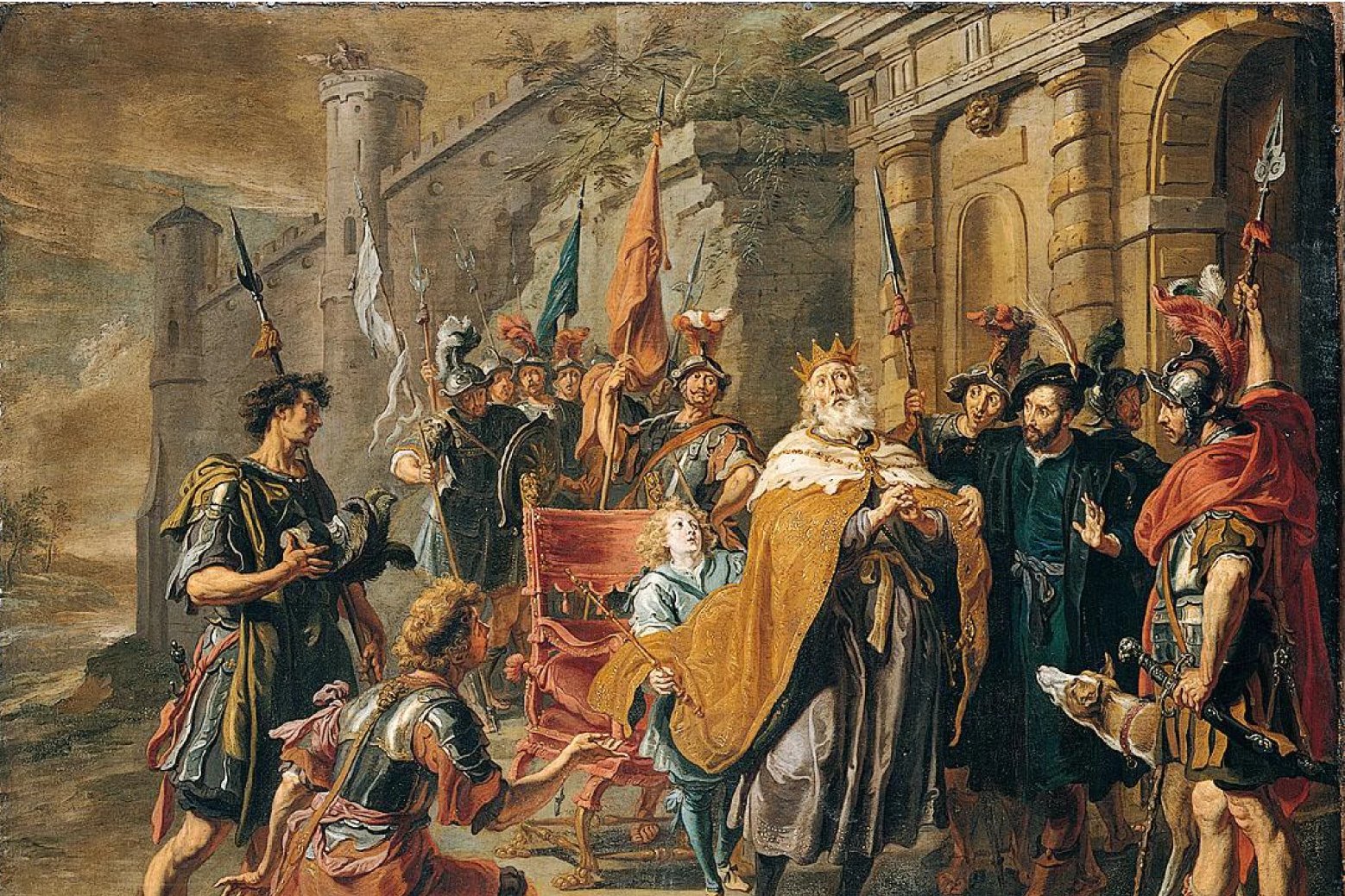
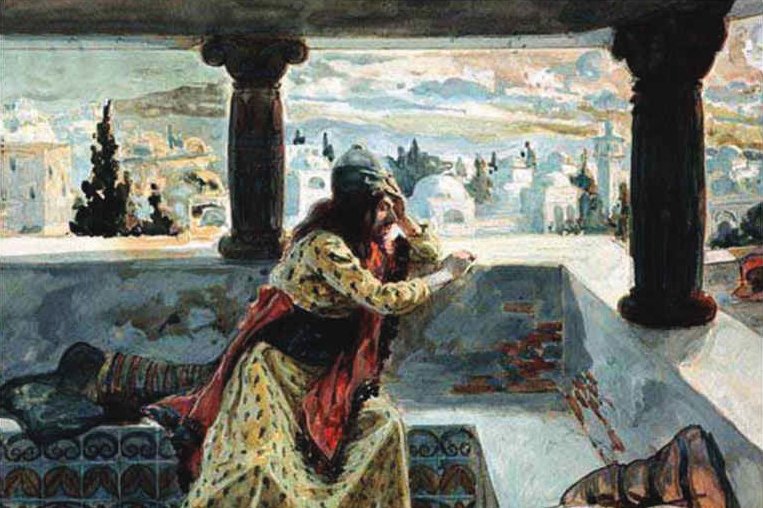
David and Goliath

Forty days of silence
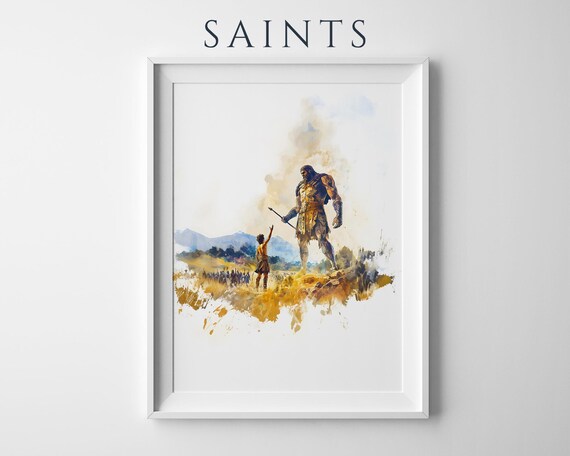
Before David ever appears in the story, 1 Samuel spends real time establishing just how thoroughly the Philistine champion had paralyzed Israel's army. Goliath's size alone was intimidating: "His height was six cubits and a span" (1 Samuel 17:4, RSV-CE) — by the most commonly cited ancient measurement, somewhere near nine and a half feet tall, armored head to foot. Twice a day, for forty days, he walked out and repeated the same challenge, and twice a day the entire army of Israel, including its king, declined to answer him. That standoff — not the fight itself — is the part of the story that explains everything that follows.
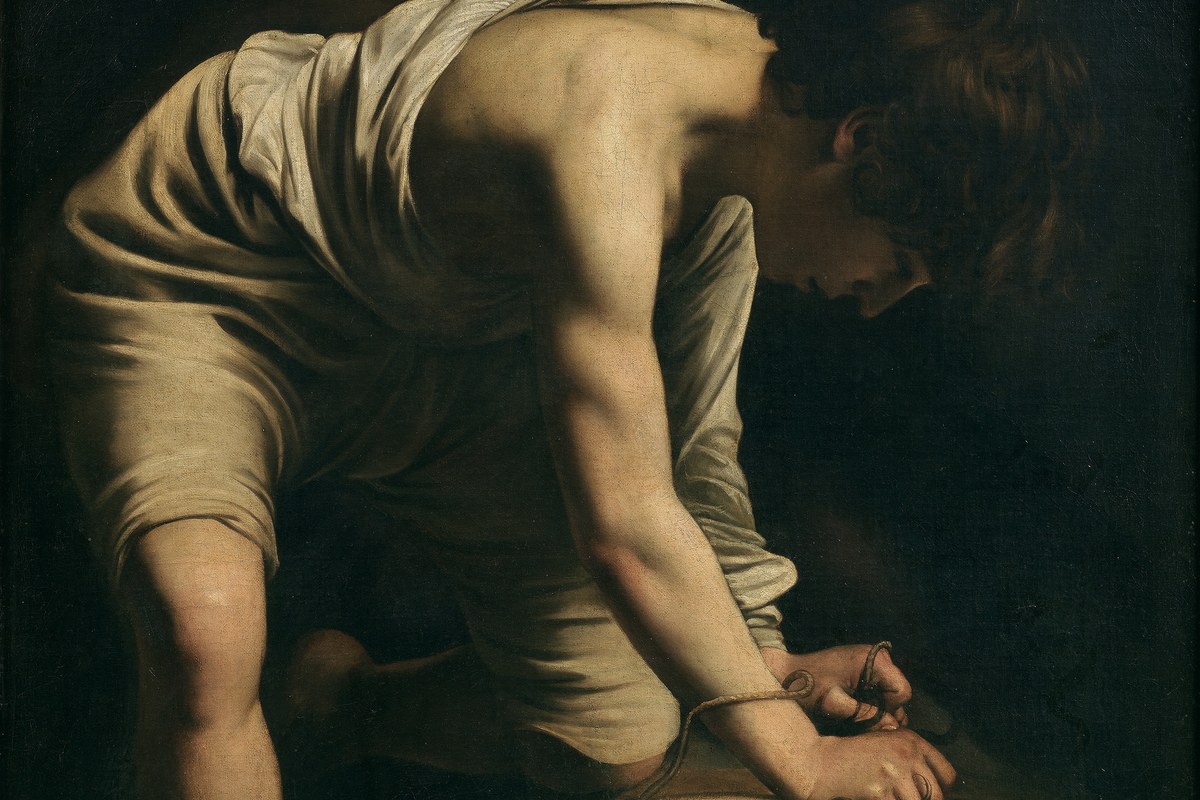
Caravaggio, "David with the Head of Goliath," c. 1600, Kunsthistorisches Museum, Vienna — public domain.
An errand boy who asked the obvious question
David isn't a soldier when he arrives at the battle line. He's a shepherd, sent by his father to deliver food to his brothers and bring back word of how the fighting was going. What changes the story is simply that David, hearing Goliath's challenge for the first time, reacts differently than everyone who has already grown used to it — he's the only one still asking why this is being tolerated at all. When he volunteers to fight, even King Saul tries to talk him out of it in blunt terms: "You are not able to go against this Philistine to fight with him; for you are but a youth, and he has been a man of war from his youth" (1 Samuel 17:33, RSV-CE). David's answer — that he had already killed lions and bears defending his father's sheep — isn't presented as false modesty. It's the only résumé he has, and he offers it plainly.
Refusing the armor, and a speech before the stone
Before David even reaches Goliath, Saul tries to outfit him properly, dressing him in royal armor and a bronze helmet. David tries walking in it and finds he can't move — he's not used to it, and he takes it off, choosing instead to go out with only his shepherd's staff, sling, and five smooth stones picked from a streambed. It's an easy detail to skip past, but it sets up the story's real point: David isn't refusing help out of pride, he's refusing a kind of strength that was never his to begin with, going into the fight with the only tools he actually knew how to use.
Goliath, seeing a boy without armor approach him, doesn't hide his contempt — he curses David by his gods and threatens to feed his body to birds and wild animals. David's answer is the theological center of the whole episode: "You come against me with sword and spear and scimitar, but I come against you in the name of the Lord of hosts, the God of the armies of Israel whom you have insulted... All this multitude, too, shall learn that it is not by sword or spear that the Lord saves. For the battle belongs to the Lord, who shall deliver you into our hands" (1 Samuel 17:45-47, NABRE). It's worth pausing on that line, because it reframes everything that follows: David isn't presented as simply lucky or unusually brave, but as making an explicit claim, spoken aloud before witnesses, that the coming victory belongs to God rather than to the boy holding the sling.
The fight itself
The confrontation, when it finally happens, is almost anticlimactic in its brevity compared to the forty days of buildup: "And David put his hand in his bag and took out a stone, and slung it, and struck the Philistine on his forehead; the stone sank into his forehead, and he fell on his face to the ground. So David prevailed over the Philistine with a sling and with a stone, and struck the Philistine, and killed him; there was no sword in the hand of David" (1 Samuel 17:49-50, RSV-CE). David then uses Goliath's own sword to finish what the stone started — a detail later artists, including Caravaggio in the painting above, have returned to again and again as the story's final, unsettling image.
What happened after Goliath fell
The moment the stone struck home, the story's momentum shifts completely. Seeing their champion dead, the Philistine army broke and ran, and the army of Israel and Judah — the same soldiers who had stood frozen for forty days — surged forward in pursuit, chasing the retreating Philistines back toward their own territory. David carried Goliath's head away with him and kept the giant's armor as a trophy, a detail 1 Samuel records almost as an afterthought, but one that later Israelite memory held onto: Goliath's sword eventually resurfaces later in David's story, kept at the sanctuary at Nob, where David retrieves it years afterward while fleeing from Saul.
The victory also marks the real beginning of David's rise. It's after this battle that Saul asks who the boy's father is, and it's from this moment that David enters royal service in earnest, eventually forming his famous friendship with Saul's son Jonathan. The killing of Goliath, in other words, isn't an isolated adventure — it's the hinge on which the rest of David's story turns, the moment a shepherd's household becomes tied, for better and for much worse in the chapters that follow, to the throne of Israel.
Why the story still resonates
David and Goliath has become shorthand, well beyond religious contexts, for any contest between a clear underdog and an overwhelming opponent. But the detail worth remembering from the text itself isn't really about size at all — it's that an entire trained army stood in silence for forty days, and the person who finally acted was the one person nobody had thought to ask.
Trivia
How big was Goliath, according to the Bible?
Why wouldn't any of Israel's soldiers fight him?
Did David really kill Goliath with just a sling?
Was David a soldier when this happened?
Related Reading