The Carrying of the Cross

A name recorded almost in passing
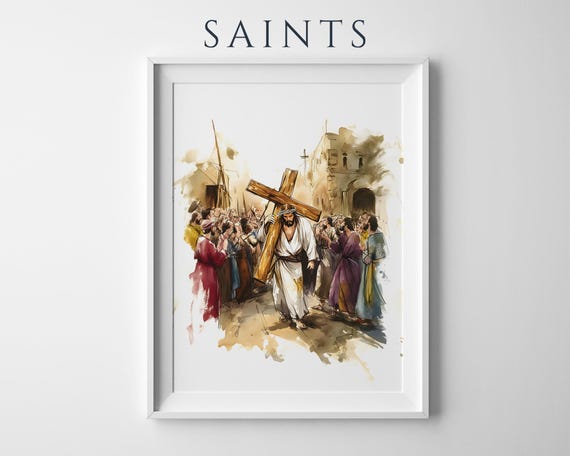
Of the many details Luke includes in his account of the crucifixion, one of the most understated is also one of the most human: "As they led him away they took hold of a certain Simon, a Cyrenian, who was coming in from the country; and after laying the cross on him, they made him carry it behind Jesus." (Luke 23:26, RSV-CE). Simon isn't a disciple, a witness with something to gain, or anyone previously mentioned in the story. He is simply a man walking into the city, pulled without warning into an execution he had nothing to do with.
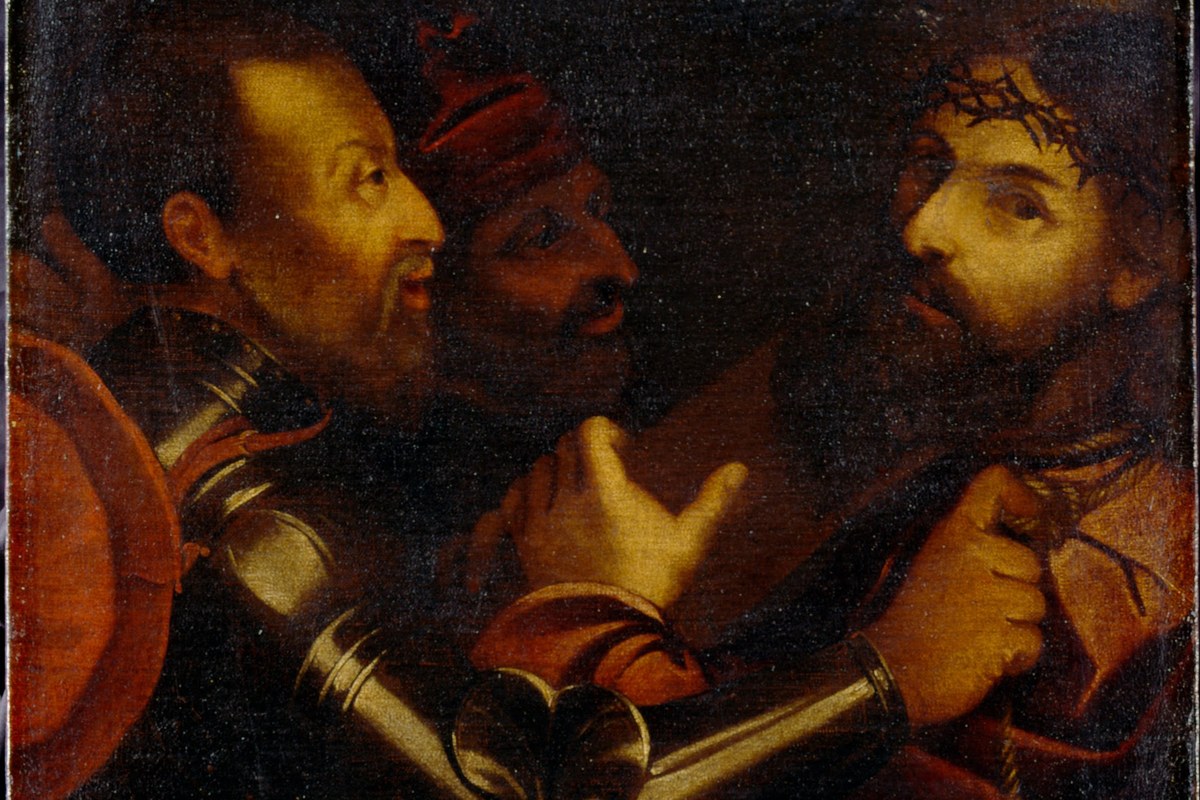
Unknown artist, "Christ Carrying the Cross," before 1686, Dulwich Picture Gallery — public domain.
Mark's and Matthew's Gospels record the same event more briefly, but Mark adds one small, striking detail Luke leaves out: he identifies Simon as "the father of Alexander and Rufus" (Mark 15:21, RSV-CE), naming two sons who, by the time Mark wrote his Gospel decades later, were apparently known figures within the early Christian community — a small aside suggesting that Simon's chance encounter on the road to Golgotha didn't end that day, but became, for his family, the seed of an ongoing connection to the community that grew up around the very event he'd been dragged into.
Weakened, not merely condemned
The Gospels don't spell out exactly why the soldiers needed someone else to carry the cross, but the surrounding narrative — describing the flogging and abuse Jesus had already endured before the march to Golgotha even began — has led to the long-standing reading that his body simply could not manage the weight and the distance alone. The image often imagined of Jesus carrying his cross unaided the entire way is, according to Luke's own account, not quite what happened. Someone else had to finish part of that walk.
A road remembered step by step
Over the centuries, Christian devotion mapped this walk in far more detail than the Gospels themselves provide, developing what became known as the Via Dolorosa, the "Way of Sorrows," through the streets of Jerusalem, and eventually the fourteen-station devotion familiar in Catholic churches worldwide today. Several of those later stations draw on traditions found outside Scripture rather than in the Gospel text directly: the belief that Jesus fell beneath the weight of the cross on three separate occasions, and the widely told story of Veronica, a woman who is said to have wiped Jesus's face with her veil along the route, leaving an image of his face miraculously imprinted on the cloth. These additions belong to pious tradition rather than recorded history, distinct from the Gospel account of Simon of Cyrene itself, though they've shaped popular devotion just as deeply. The fourth station in that same devotional sequence commemorates Mary meeting her son along this road — a moment of shared suffering between mother and son that sits, in the traditional ordering, just before Simon is compelled to help carry the load. It was largely the eighteenth-century Franciscan preacher Saint Leonard of Port Maurice who standardized this fourteen-station form and spread it across hundreds of churches in Italy, fixing it into something close to the version still practiced today.
An ordinary man, given no choice
What makes Simon's appearance in the story so quietly affecting is precisely how involuntary it is. He isn't asked. He is "seized," the same verb used for an arrest, and made to carry something he had no part in creating and no way to refuse. Christian reflection on this scene has long returned to that detail as a kind of mirror: suffering alongside Christ is rarely something people sign up for in advance. More often, as with Simon, it simply arrives mid-journey, without explanation, and asks to be carried anyway.
That reading has deep roots earlier in the Gospels themselves. Well before the crucifixion, Jesus had told his followers, "Then he said to all, “If anyone wishes to come after me, he must deny himself and take up his cross daily and follow me." (Luke 9:23, RSV-CE) — language his listeners would have understood, given how Rome carried out crucifixions, as describing something close to what actually happens to Simon later in the story. Simon's experience on the road to Golgotha, forced rather than chosen, gives that earlier teaching an unplanned, real-world illustration: the call to take up a cross doesn't always arrive as an invitation. Christian writers across the centuries have taken comfort in exactly that overlap, reading Simon's ordeal as proof that even suffering a person never asked for can still be drawn, without their planning it, into something larger than themselves.
Why the image has endured
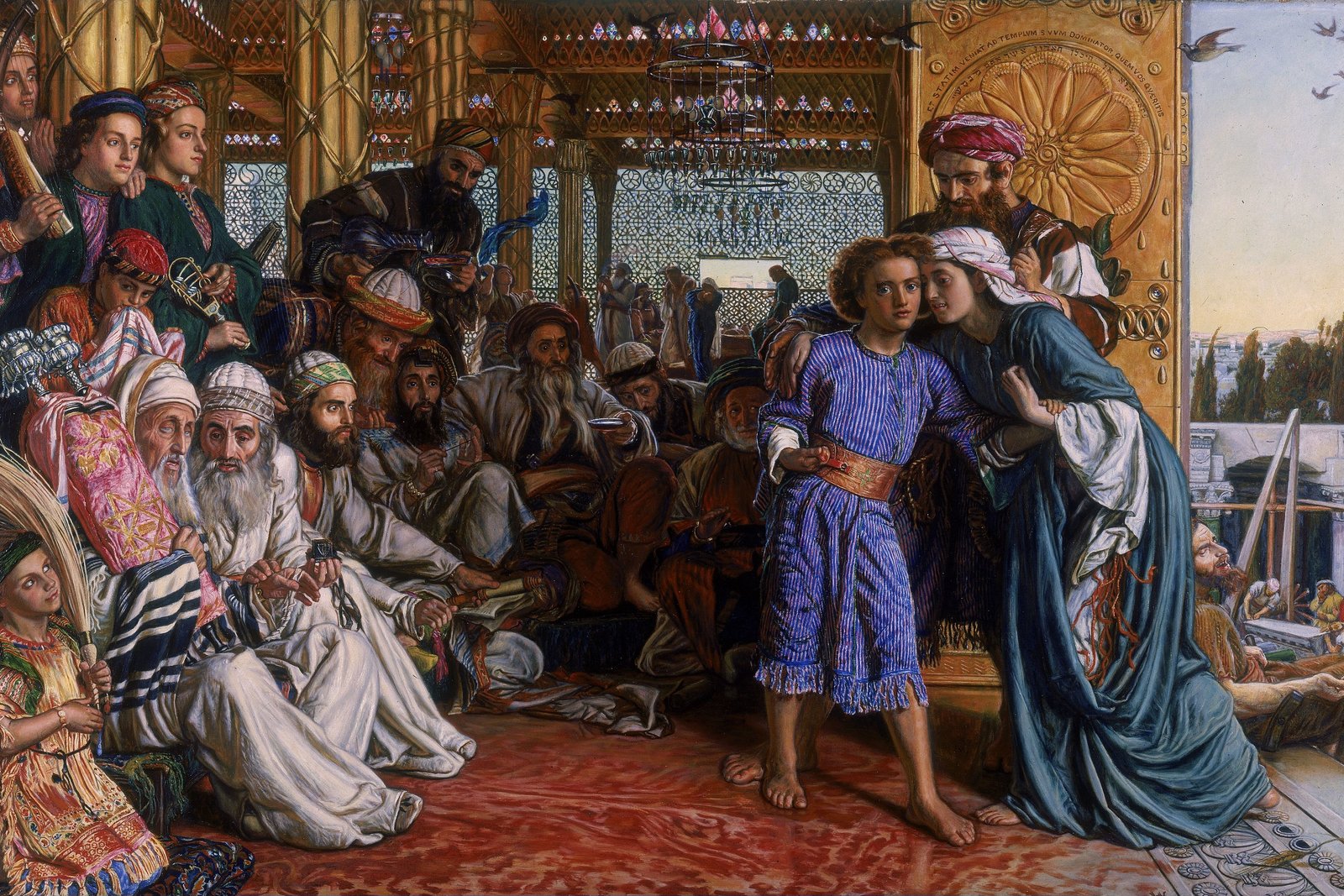
Artists across the centuries have returned again and again to this stretch of road between the judgment and the execution — sometimes centering Simon, sometimes centering Jesus alone beneath the weight of the crossbeam, sometimes, as in the somber painting above, focusing tightly on faces rather than the physical burden itself. Whatever the composition, the scene occupies a distinct place in the Passion story: not the drama of the trial, not yet the finality of the cross itself, but the long, difficult walk in between — the part of the story where an uninvolved bystander became, for one afternoon, part of it.
Trivia
Who carried Jesus's cross to Golgotha?
Who was Simon of Cyrene?
Why would the soldiers have needed someone else to carry it?
Why does this detail matter, beyond the practical explanation?
Related Reading