The Rules of Byzantine Icon Painting

Not a picture, but a window
A Byzantine icon isn't trying to be a picture in the way a Renaissance painting is a picture. Orthodox theology describes icons as windows — openings through which the viewer looks toward heaven rather than at a realistic scene staged in front of them. That single idea underlies nearly every visual convention that can look strange or "wrong" to eyes trained on Western naturalistic painting: the flattened space, the gold instead of sky, the faces that don't quite match ordinary human anatomy. None of it is accidental, and very little of it was left to an individual painter's taste. Icon painting developed as a disciplined visual language, codified over centuries and defended, at real cost, against attempts to abolish it altogether.
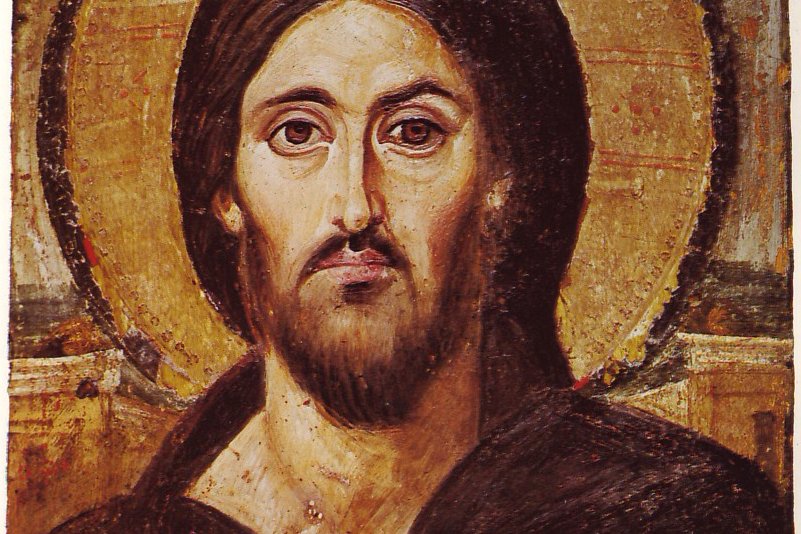
Christ Pantocrator icon, 6th century, Saint Catherine's Monastery, Sinai — public domain.
Reverse perspective: the vanishing point inside the room
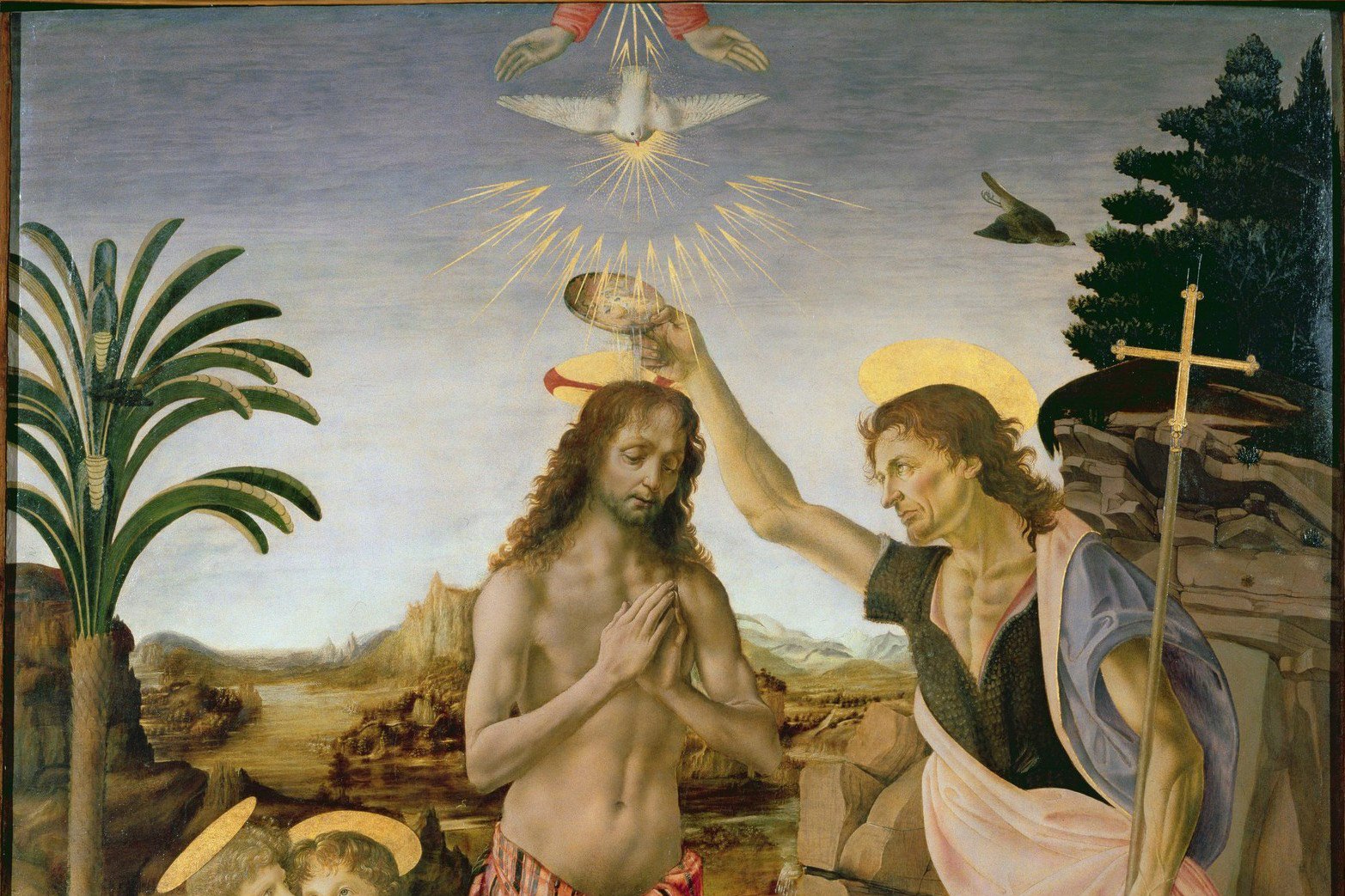
The most immediately noticeable rule is what art historians call reverse (or inverse) perspective. In the linear perspective developed in Renaissance Florence, parallel lines — the edges of a table, the walls of a room — appear to converge toward a single vanishing point deep within the picture, matching how a single fixed eye actually perceives depth. Byzantine icons often do the opposite: lines widen as they recede, so that a tabletop or throne seems to fan outward toward the viewer rather than narrow away.
The effect, intentional or not, places the implied vanishing point not inside the painted scene but out in front of it, roughly where the viewer is standing. Icon scholars have long read this as visually enacting the icon's theological claim: the sacred scene isn't a distant, self-contained world the viewer merely observes from outside, but a reality that opens directly into the viewer's own space. Whether every individual painter across a thousand years thought about it in exactly those terms is impossible to know, but the consistency of the technique across regions and centuries suggests it was understood as a rule, not a mistake.
Gold instead of sky, timelessness instead of a moment
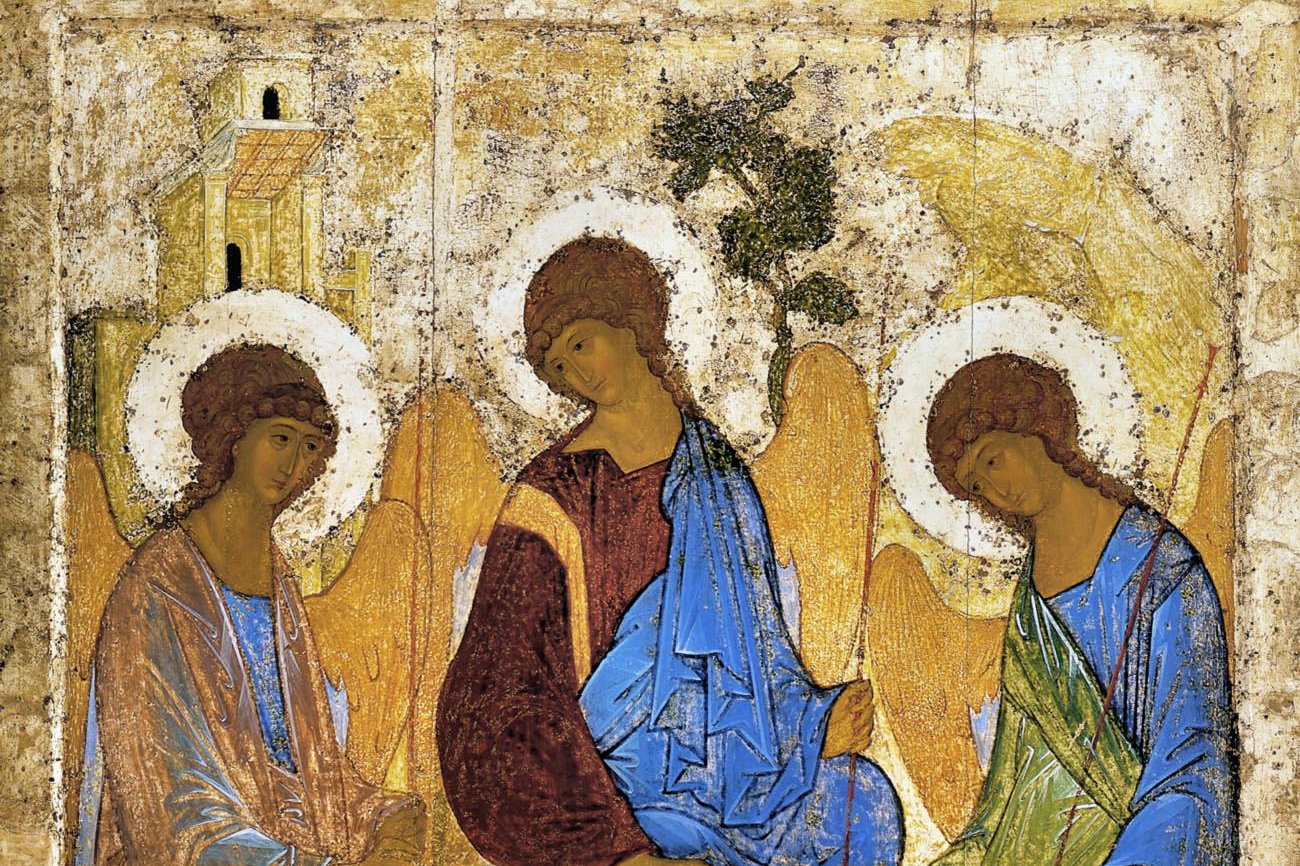
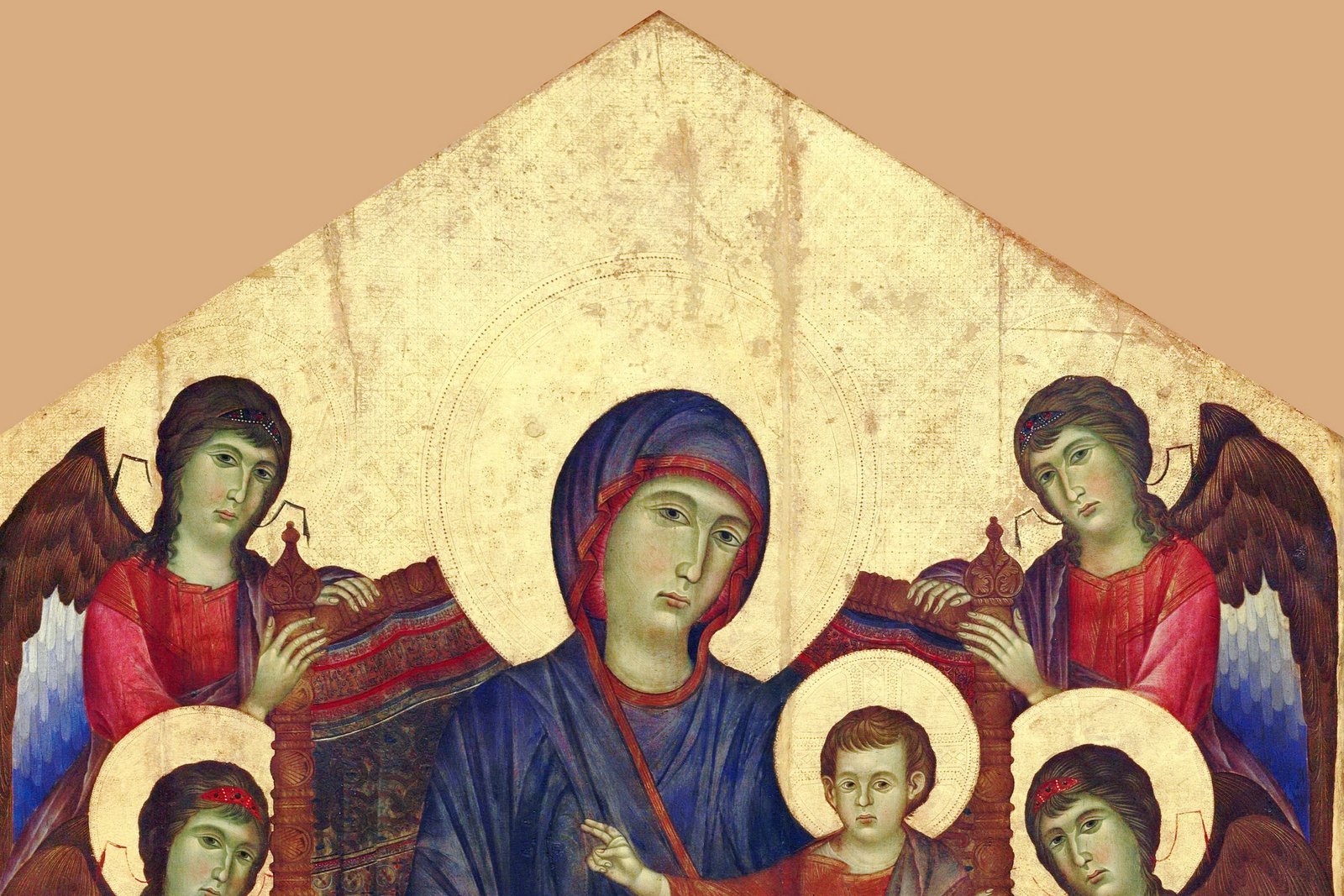
Where a Western religious painting might place its figures against a landscape, a room, or a sky rendered with atmospheric color, Byzantine icons traditionally use flat gold leaf as a background. The gold isn't standing in for sunlight or a golden hour — it represents the uncreated light of heaven itself, a theological category rather than a natural phenomenon. By removing any specific setting, time of day, or season, the icon lifts its subject out of ordinary history and into what Orthodox theology calls the eternal "now" of the Kingdom of God.
This matters because icons are not typically meant to illustrate a single narrative instant the way a Western history painting often does. A Nativity icon, for instance, frequently compresses several moments of the story — the birth, the shepherds, the bathing of the infant — into one composition, because the icon isn't narrating a sequence so much as presenting the entire mystery of the event at once, outside of ordinary chronological time.
Faces built to canon, not to a model
Icon painters have historically worked within strict proportional systems for the human figure, often called canons, passed down through monastic workshops and later codified in painting manuals such as the Russian podlinniki. These manuals prescribe ratios — the height of a figure measured against the length of the head, for instance, or standardized placement of eyes, nose, and mouth — that painters were expected to follow closely rather than sketch freehand from a live model.
The resulting faces often show elongated noses, large, deep-set eyes, and small mouths — features that can look stylized or even severe to viewers accustomed to naturalistic portraiture. Within the tradition, this isn't considered a limitation of skill. The large eyes are traditionally read as emphasizing spiritual vision and contemplation over ordinary sight, while the general avoidance of illusionistic modeling keeps attention on the person's sanctity rather than their physical likeness. An icon painter's technical mastery is judged less by how convincingly they can render a face in space and more by how faithfully they preserve the inherited pattern while achieving genuine luminosity and stillness in the finished image.
A tradition defended by councils, not just custom
These conventions weren't simply an evolving regional style — they survived a direct theological and political fight. In the eighth and ninth centuries, the Byzantine Empire went through periods of Iconoclasm, when emperors ordered the destruction of religious images on the grounds that any physical representation of Christ or the saints amounted to idolatry. The Second Council of Nicaea in 787 formally condemned this position and affirmed the veneration of icons, distinguishing carefully between the honor given to an image and the worship reserved for God alone — a distinction still central to Orthodox and Catholic teaching on sacred images today.
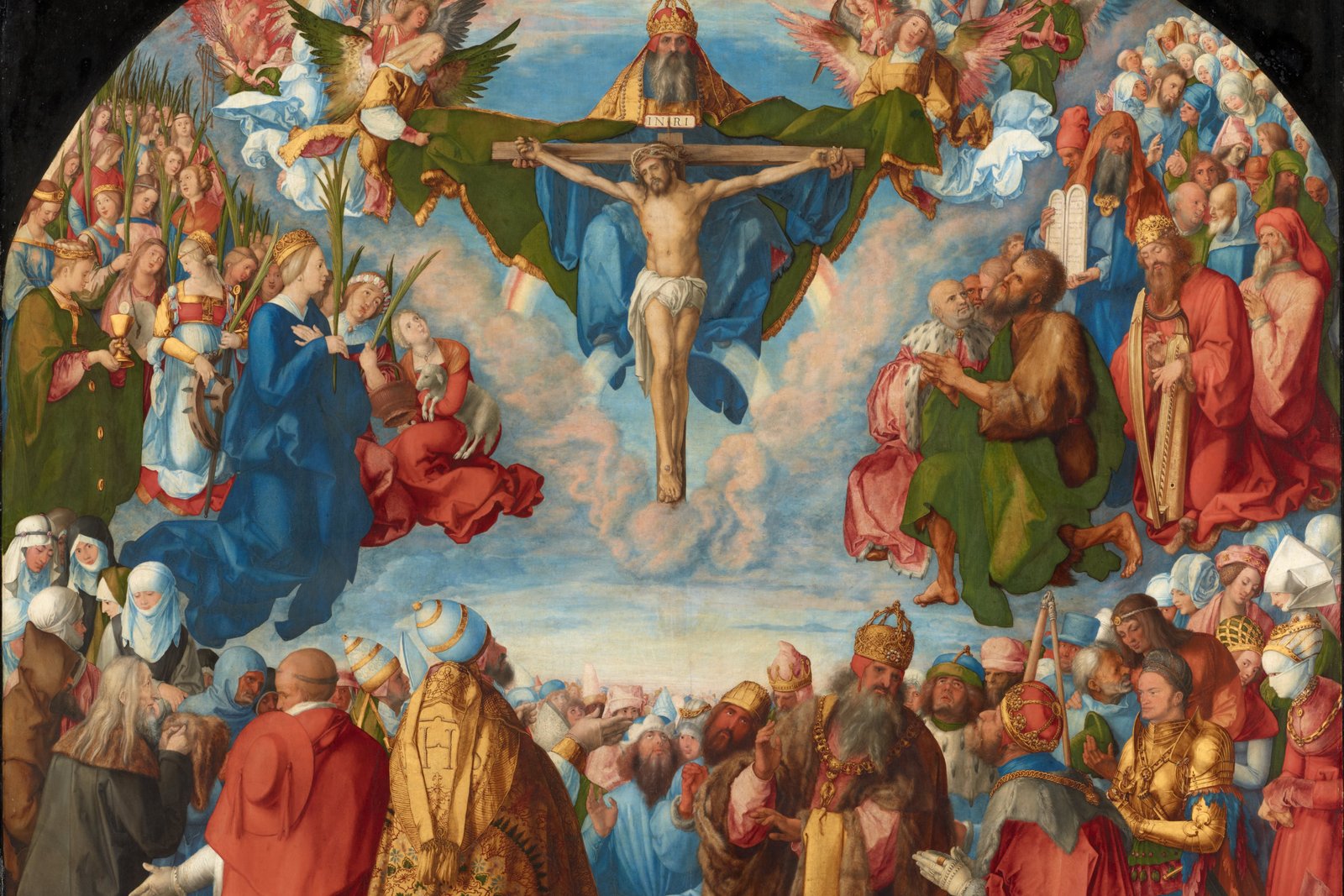
That controversy left a lasting mark on how icons are made. Because icon painting had to be theologically defensible, not merely decorative, painters were expected to work within an inherited, communally verified visual vocabulary rather than introduce personal innovations that might blur the line between honoring a holy figure and simply admiring an artist's originality. This is a major reason icon painting still emphasizes copying and continuity with older prototypes far more than Western religious art traditions typically do.
From Sinai to Moscow — a living rule-set
The oldest surviving panel icons, including the sixth-century encaustic Christ Pantocrator preserved at Saint Catherine's Monastery on Mount Sinai — the very image used as this article's hero — already show many of these conventions in place: the asymmetrical face (traditionally read as expressing Christ's dual human and divine natures), the plain gold-toned background, the direct, frontal gaze meeting the viewer rather than looking off to the side. The tradition carried these same rules forward through the Byzantine Empire into Russia, where painters like Andrei Rublev worked within — and occasionally deepened — the same inherited system centuries later, producing icons still venerated across the Orthodox world today.
Unlike the rapid stylistic evolution of Western Renaissance Madonna painting, Byzantine and Orthodox icon painting deliberately resists reinvention — its rules exist precisely to keep each new generation of icons recognizably continuous with the ones that came before, a visual theology built to last rather than to surprise.
Trivia
What is reverse perspective in Byzantine icon painting?
Why do Byzantine icons use gold backgrounds instead of painted skies or rooms?
Are Byzantine icon painters allowed to invent new compositions freely?
Why do icon figures often look stylized rather than realistic?
Is it true that Orthodox icon painters follow strict proportion rules for faces and bodies?
Related Reading