The Parable of the Mustard Seed

A parable told three times
Of all the parables Jesus told, few are as short as this one — barely two verses in Matthew, and almost identical in Mark and Luke. Its brevity is part of the point. Jesus doesn't build an elaborate narrative here, the way he does with the prodigal son or the sower. He simply holds up the smallest thing a Galilean farmer would recognize and asks his listeners to imagine what it becomes. Matthew places it in a chapter thick with kingdom parables — the sower, the weeds among the wheat, the yeast, the hidden treasure — each one answering the same unspoken question the crowds around Jesus were surely asking: what exactly is this kingdom you keep talking about, and when is it coming?
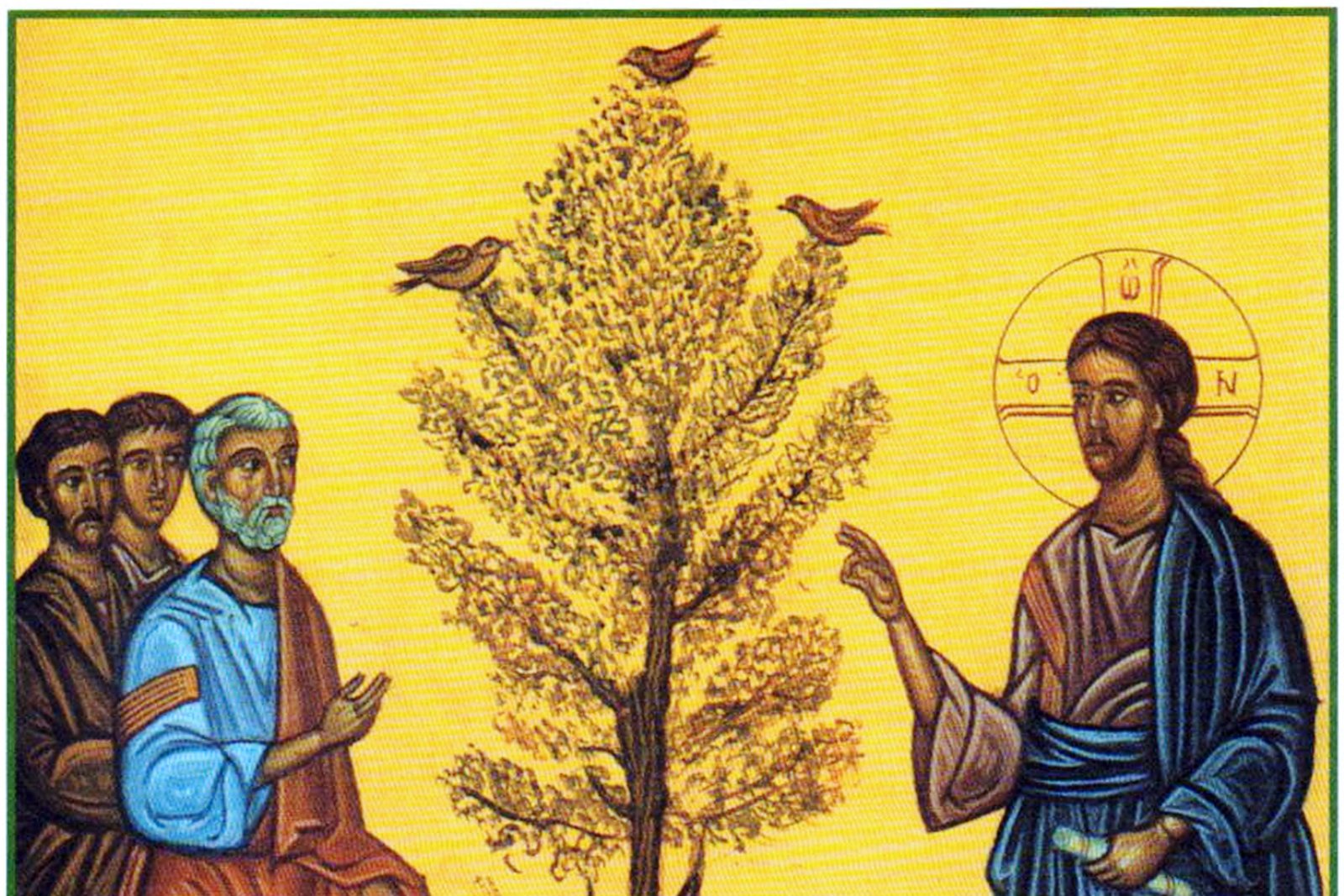
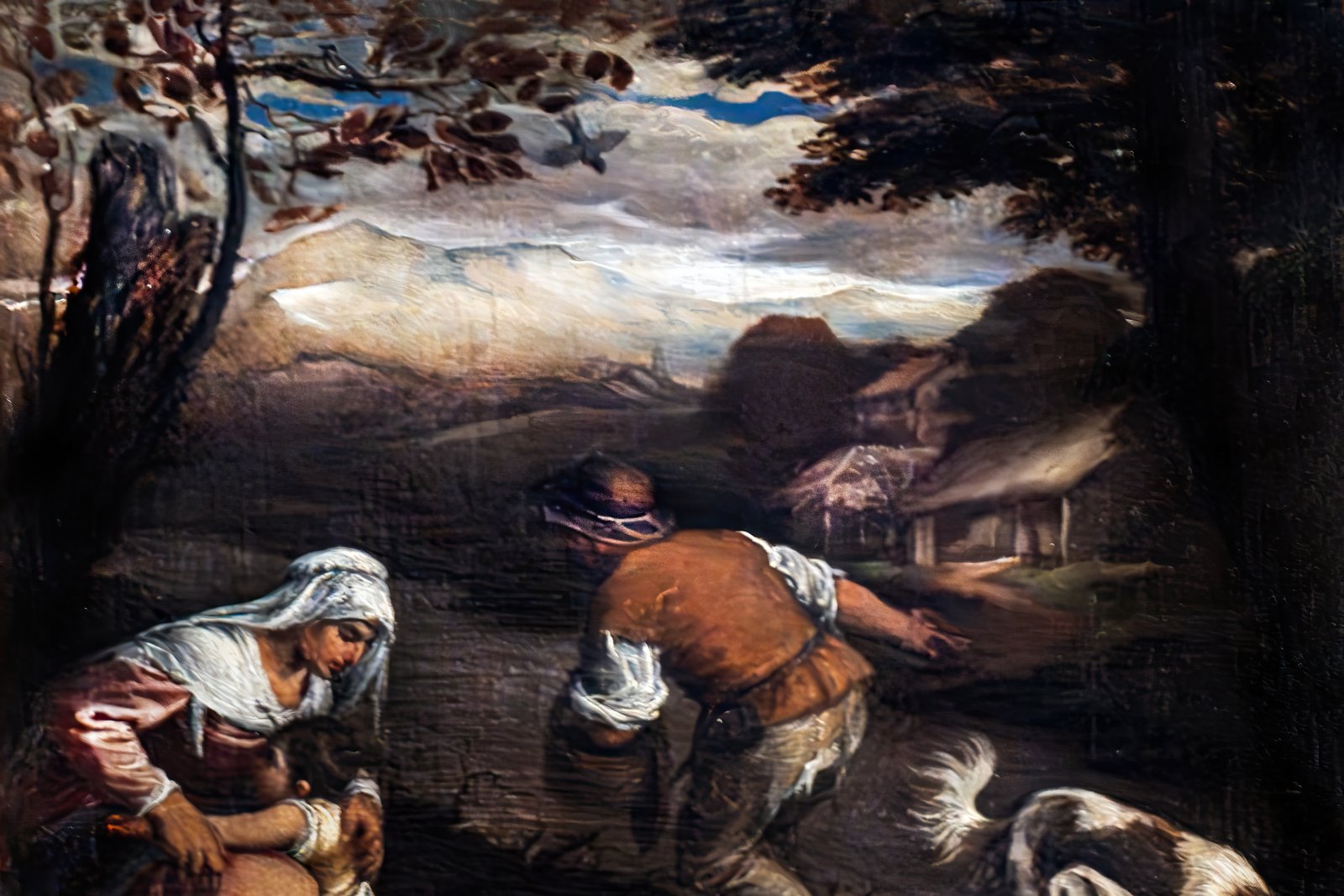
Byzantine-style icon, "Jesus and the Parable of the Mustard Seed," artist and date unknown. Public domain.
The smallest seed a farmer would plant
"The kingdom of heaven is like a mustard seed that a person took and sowed in a field. It is the smallest of all the seeds, yet when full-grown it is the largest of plants" (Matthew 13:31-32, NABRE). Mark's version adds a vivid detail: once sown, "it springs up and becomes the largest of plants and puts forth large branches, so that the birds of the sky can dwell in its shade" (Mark 4:32, NABRE). Modern readers sometimes get stuck on whether the mustard seed is really the smallest seed on earth — botanically, it isn't. But Jesus isn't cataloguing every seed in existence. He's speaking as a first-century teacher to a first-century farming audience, for whom the mustard seed was proverbially tiny, the smallest thing anyone actually planted in a field. The comparison works because everyone listening had planted one, or watched someone else do it, and knew exactly how unimpressive that first moment looked.
A weed that becomes a shelter
There's a detail easy to miss here that ancient listeners would have caught immediately: the mustard plant wasn't a stately garden tree. It was closer to a fast-spreading shrub, the kind a careful farmer might have been wary of letting loose in a field at all, since it could take over. Jesus takes something almost weedy and unglamorous and makes it the image for the kingdom of God — not a cedar of Lebanon, not an oak, but a plant nobody would have chosen to represent royal splendor. And yet by the end of the parable it becomes "the largest of plants," with branches substantial enough for birds to nest in. The kingdom, Jesus is saying, won't arrive looking like power. It will arrive looking almost accidental, and only in hindsight will its scale become obvious.
An image borrowed from the prophets
The picture of a great tree sheltering birds wasn't new to Jesus' audience. The prophet Ezekiel had used almost the same image centuries earlier, describing a tender shoot that God himself would plant on a high mountain, one that would become "a majestic cedar" under which "every winged bird" would dwell, finding shade in the shadow of its branches (Ezekiel 17:22-23, NABRE). The Book of Daniel uses a similar tree, sheltering "the birds of the sky," to describe a kingdom vast enough to hold every nation (Daniel 4:9-12, NABRE). In both prophetic texts, a great sheltering tree stands for a kingdom that becomes a refuge for many peoples, not just the nation that planted it. When Jesus reaches for that same image and pointedly starts it from the smallest seed imaginable, he's making a claim his listeners would have recognized as audacious: the kingdom he's inaugurating, beginning right there among a handful of fishermen and tax collectors in Galilee, will grow into exactly the kind of world-sheltering kingdom the prophets had promised.
Paired with a parable about yeast
Matthew and Luke both follow the mustard seed immediately with the parable of the yeast — a woman mixes a small amount of leaven into a large quantity of flour "until the whole batch was leavened" (Matthew 13:33, NABRE). The two parables work as a matched pair. The mustard seed pictures visible, external growth — something small becoming something large enough to see from a distance. The yeast pictures hidden, internal growth — something small working invisibly through the whole until its effect is everywhere at once. Together they cover both ways the kingdom of God takes hold: publicly, in a Church and a mission that spread from a dozen men to reach, within a few centuries, the entire Roman world; and privately, in the quiet way grace works through an individual life or a single household long before anyone notices from outside.
Why Jesus taught in parables at all
Immediately before this parable, Matthew records the disciples asking Jesus directly why he teaches the crowds in parables rather than plain speech, and Jesus answers by quoting Isaiah — that though the people "look but do not see" and "hear but do not listen or understand" (Matthew 13:13-14, NABRE), those with open hearts will find the deeper meaning waiting for them. A parable like the mustard seed rewards exactly that kind of attention. Read quickly, it's a pleasant little agricultural image. Sat with, it becomes a claim about how God works — rarely through dramatic, undeniable displays of force, and much more often through beginnings so small that faith is required just to notice them, let alone trust where they're headed. For more of Jesus' parables and the way they build on one another, see our guide to gospel stories and parables of Jesus.
A seed that reappears as a measure of faith
The mustard seed shows up again elsewhere in the Gospels, this time not as an image for the kingdom but as a measure of faith itself. When the disciples ask Jesus to increase their faith, he tells them that faith "the size of a mustard seed" would let them say to a mulberry tree, "'Be uprooted and planted in the sea,' and it would obey you" (Luke 17:6, NABRE); Matthew's version applies the same image to moving mountains (Matthew 17:20, NABRE). The connection between the two teachings isn't accidental. In both cases, the point isn't the size of the seed for its own sake — it's the gap between how small and unremarkable the starting point looks and how disproportionate the result turns out to be. A little genuine faith, like a little mustard seed sown in ordinary soil, carries within it far more than its size suggests.
Small beginnings in the history of the Church
Christians reading this parable across the centuries have often applied it directly to the growth of the Church itself. What began with one itinerant rabbi and a handful of followers in a minor Roman province — a movement so small it barely registered outside Judea — became, within three centuries, the officially recognized faith of the empire that had crucified its founder. Later missionary efforts, from Patrick evangelizing Ireland to the small religious communities that would eventually become vast monastic networks shaping the intellectual and spiritual life of medieval Europe, follow the same pattern the parable describes: an almost invisible beginning, planted often in unlikely or hostile soil, growing over generations into something that shelters far more people than its founders could have imagined. The parable offers no promise about how fast that growth will happen — only that smallness at the start says nothing reliable about size at the end.
Reading the parable as an invitation, not just an explanation
It's worth remembering that Jesus told this to real people trying to reconcile his humble, unimpressive ministry — an itinerant preacher, no army, no throne, arrested and executed within a few years — with the towering promises of the prophets about God's coming kingdom. The mustard seed parable doesn't argue them out of that tension; it reframes it. Smallness isn't evidence against the kingdom's reality — it's exactly what the kingdom's beginning was always going to look like. For anyone whose own faith feels more like a single planted seed than a full-grown tree — a habit of prayer just started, a return to the sacraments after years away, a single decision to forgive — the parable offers less a lesson than a promise: what looks unremarkable today is not a measure of what it will become.
Trivia
What does Jesus compare the kingdom of heaven to in this parable?
Is the mustard seed actually the smallest seed in the world?
Where in the Gospels does this parable appear?
What is the main point of the parable?
Why does the detail about birds nesting in the branches matter?
Is the mustard seed parable connected to any other teaching of Jesus about mustard seeds?
Related Reading