Gospel Stories and Parables of Jesus

Three years, and everything since
The four Gospels together cover a public ministry that scholars generally place at somewhere between one and three years, yet that short window produced the source material for most of what Christian art, preaching, and prayer have returned to ever since. Part of the reason is structural: the Gospels aren't one genre but three woven together. There are miracle accounts — events the Church holds as real, historical, and reported by eyewitnesses (CCC 547-548), not legend dressed up as fact. There are parables — brief fictional stories Jesus told on purpose, built to reveal the kingdom of God to anyone genuinely listening. And there are turning points — specific moments where the narrative itself changes direction, usually toward Jerusalem and the Cross.
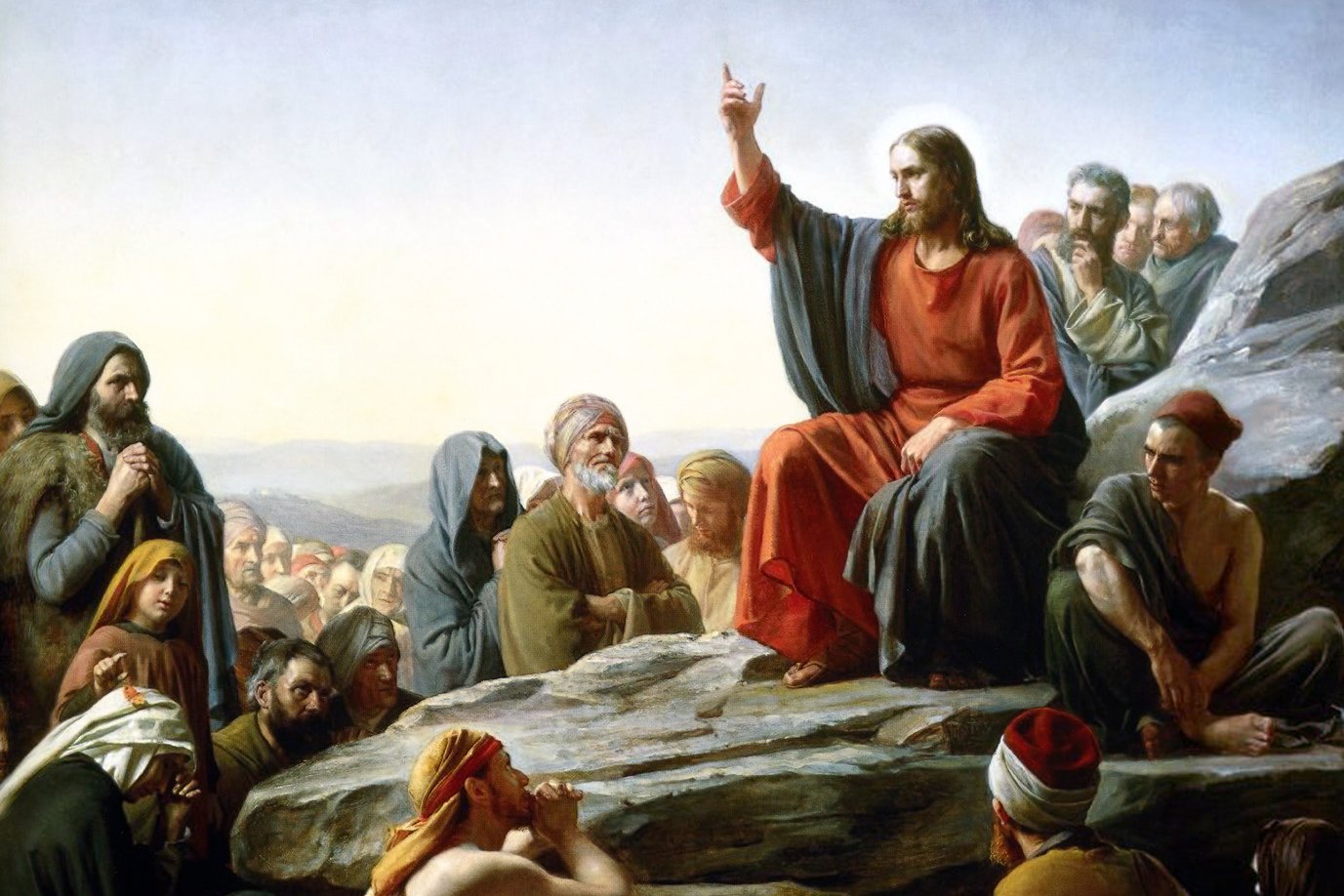
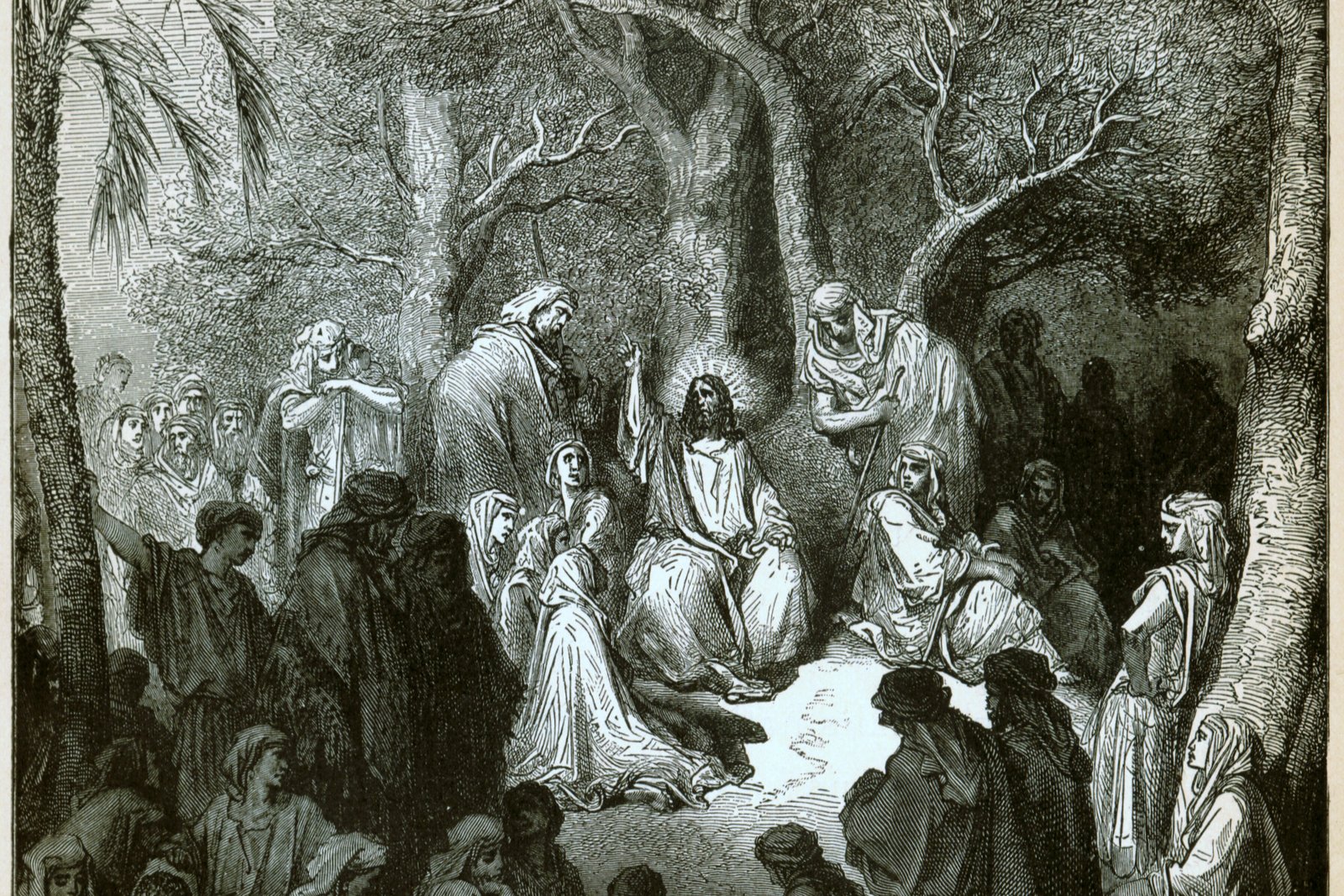
Carl Heinrich Bloch, The Sermon on the Mount, 1877 — public domain.
Below is a guided tour through some of the most important passages in each category, with a look at how they fit together into one continuous story.
Miracles that revealed who he was
The Gospel miracles were never staged simply to impress a crowd. John's Gospel even calls them "signs" rather than wonders — events pointing past themselves toward something about Jesus's identity that words alone couldn't fully carry. Each one answers, in a different way, the question the disciples kept circling back to: who is this man?
- Jesus Walking on Water — in the middle of a storm on the Sea of Galilee, Jesus approaches the disciples' boat on foot across the waves, and Peter's brief, faltering attempt to walk out to meet him becomes its own small parable about faith and doubt.
- Zacchaeus in the Tree — not a miracle of nature but of the heart: a despised, wealthy tax collector climbs a sycamore just to see Jesus pass by, and ends the day giving half his goods to the poor.
- The Woman Caught in Adultery — dragged before Jesus by accusers hoping to trap him, she's met instead with a single line that dismantles the crowd's righteous certainty: "Let him who is without sin among you be the first to throw a stone."
What links these three very different scenes is timing. Each happens at the exact moment someone's certainty is about to fail — a boat about to capsize, a life about to be dismissed as unredeemable, a woman about to be executed by a mob acting as judge and jury. The miracle, in every case, isn't a magic trick layered on top of the story; it's the story's entire turning point.
Parables about the Kingdom
Jesus's parables are deceptively simple stories — a lost coin, a mustard seed, a wedding banquet — that reward a second and third reading precisely because they were never meant to hand over their meaning easily.
- The Parable of the Talents — three servants entrusted with money in different amounts, judged not by how much they were given but by what they did with it, a story that has shaped Christian thinking about stewardship and personal gifts for centuries.
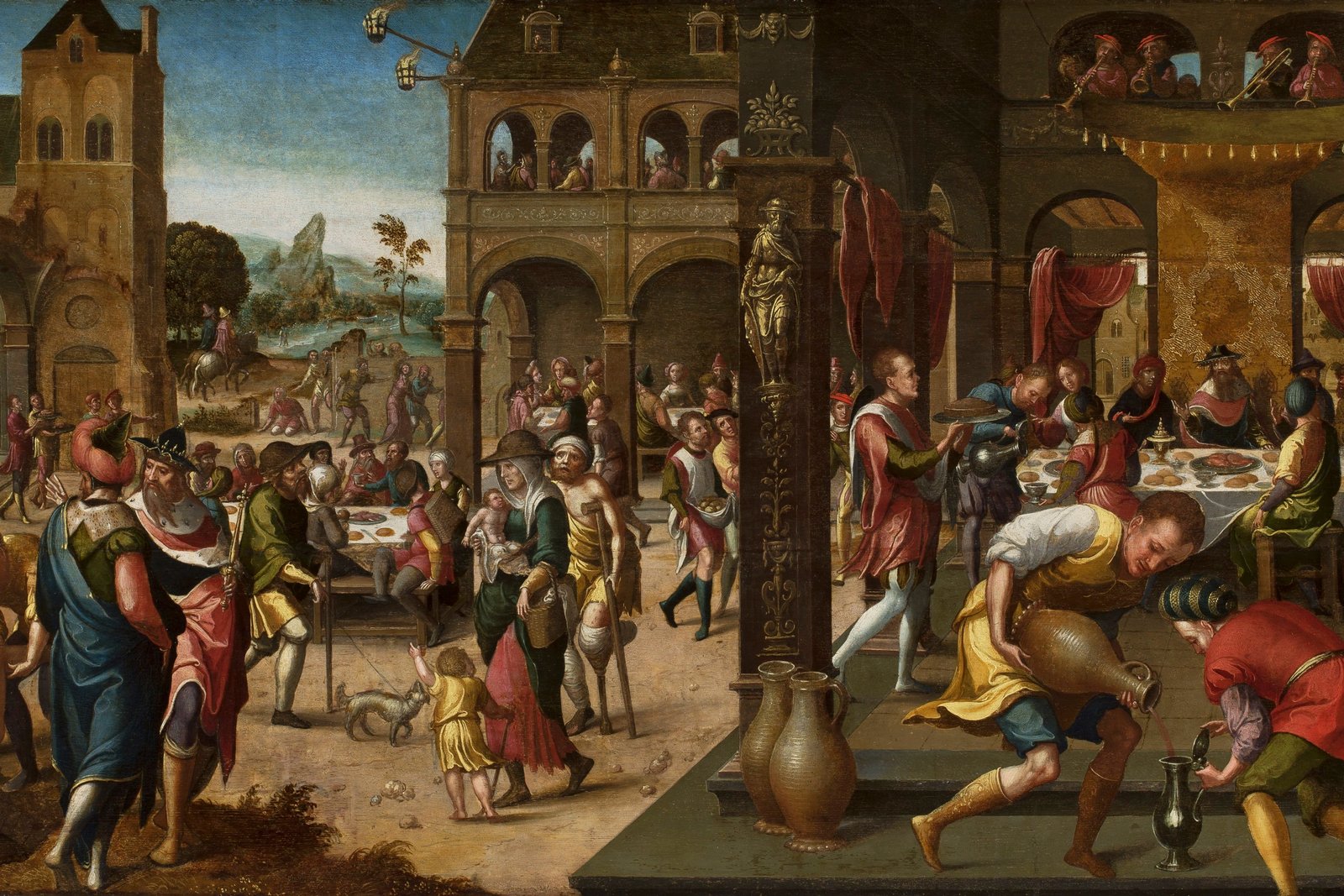
- The Rich Man and Lazarus — a parable about a wealthy man who ignores the poor beggar at his own gate, and the reversal of fortune that follows both men into the next life.
Both parables share a warning buried inside a story rather than delivered as a lecture — Jesus rarely tells his listeners directly what to conclude. The servant who buried his single talent out of fear, and the rich man who never so much as noticed Lazarus at his gate, are both condemned for the same failure: doing nothing with what they'd already been given. That indirect approach is deliberate. The Gospels record Jesus explaining to his own disciples that parables reveal the kingdom's meaning to those who are genuinely listening, while leaving it a closed riddle to those who aren't (Matthew 13:10-13) — the form itself does some of the sorting.
Turning points toward the Cross
Woven through the miracles and parables is a narrative arc — Jesus calling followers, building a public identity, and eventually setting his course deliberately toward Jerusalem.
- The Calling of the First Apostles — Peter, Andrew, James, and John leave their nets on the shore of Galilee the moment Jesus calls them, the opening move that assembles the group who will carry his ministry forward after he's gone.
- The Life of Saint Peter: Fisherman to Pope — the arc of the apostle Jesus renamed "Rock," from an impulsive fisherman to the leader the Catholic Church traces its papacy back to.
- The Most Holy Name of Jesus — the meaning embedded in the name itself ("God saves"), and the devotion the Church has built around invoking it directly.
- The Ascension of Jesus — forty days after the Resurrection, Jesus is taken up before his disciples' eyes, the event that closes his visible earthly ministry and hands the mission fully to the apostles.
Reading the Gospels as one story, not four separate ones
It helps to remember that Matthew, Mark, Luke, and John weren't writing independent biographies competing for the same market — each evangelist arranged and emphasized material for a distinct audience and purpose, which is why the same event can read slightly differently across two Gospels without either being wrong. Mark moves fast and stresses action; Luke lingers over mercy shown to outsiders and the poor; Matthew organizes teaching into structured blocks that echo Moses delivering the Law; John steps back for long theological reflection built around a handful of carefully chosen "signs."
What unites all four is the same underlying claim: that in these miracles, these parables, and this specific unfolding sequence of events, God himself walked into ordinary history. That's why a fisherman's dropped net, a coin swept for in a dark house, and a hand raised toward a hillside crowd have all remained, two thousand years later, stories people still turn to first.
Trivia
What's the difference between a Gospel miracle story and a parable?
Why did Jesus so often teach in parables instead of speaking plainly?
Do Catholics read Gospel miracles as literal historical events?
What was the turning point that set the Gospels' second half in motion?
Which Gospel event does the Church treat as Jesus's final earthly appearance to his followers?
You May Also Like
Related Reading