The Parable of the Sower

A crowd too large for the shore
Mark sets the scene with an almost logistical detail: the crowd around Jesus has grown so large that he "got into a boat on the sea and sat down. And the whole crowd was beside the sea on land" (Mark 4:1, NABRE). It's a small, practical image — a rabbi using a boat as a floating pulpit — but it also frames what follows as public teaching aimed at everyone within earshot, not a private lesson for the inner circle. What Jesus tells that crowd is deceptively simple: "A sower went out to sow" (Mark 4:3, NABRE). No introduction, no explanation up front. Just a farmer, a field, and seed.
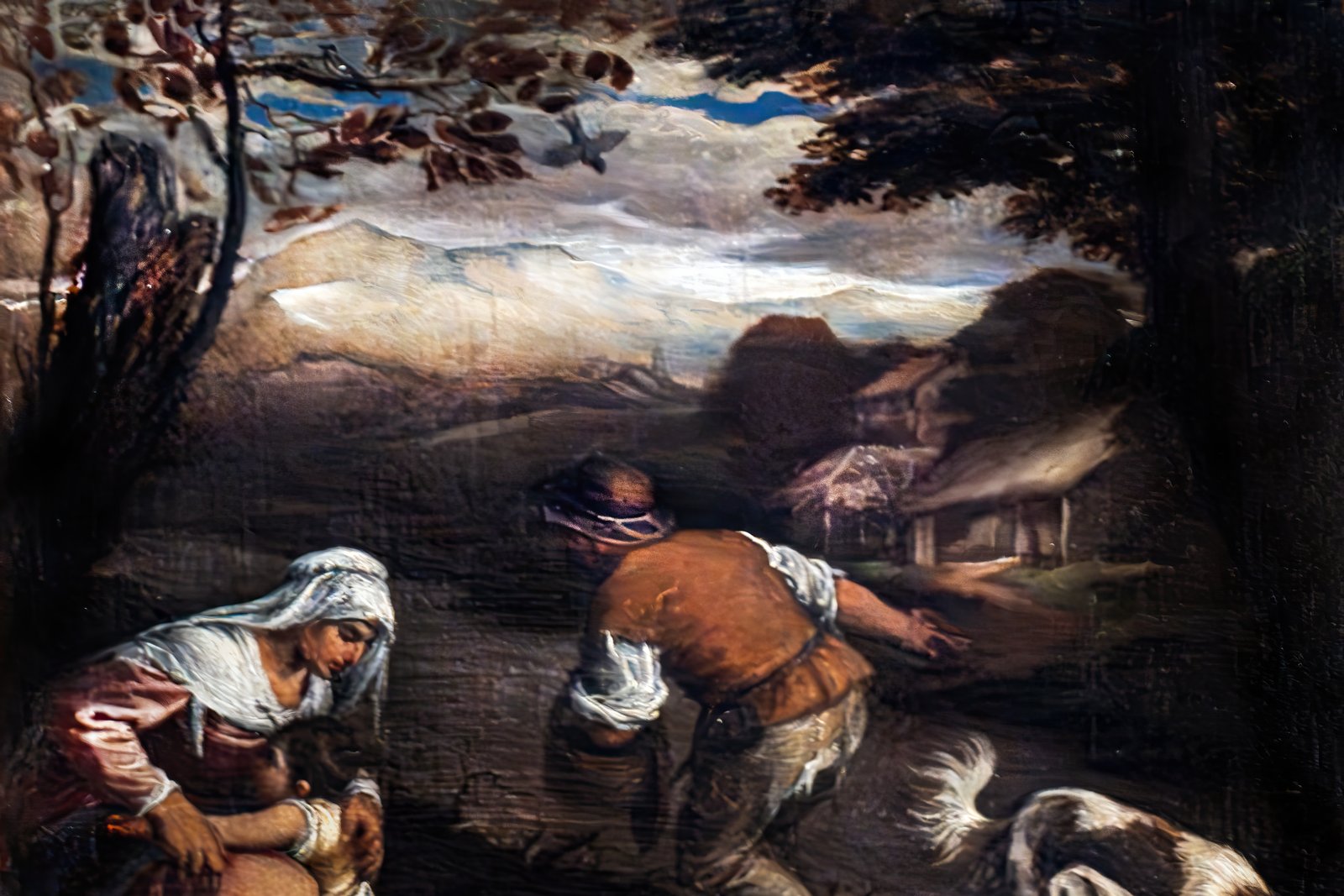
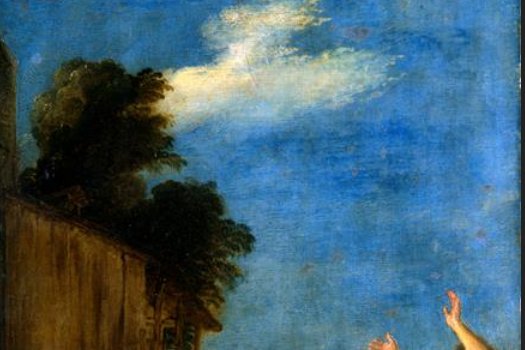
Jacopo Bassano, "The Parable of the Sower," c. 1566, Gallerie dell'Accademia, Venice — public domain.
Four kinds of ground, one kind of seed
The story itself is short enough to fit in a single breath. Some seed "fell on the path, and the birds came and ate it up." Some fell on rocky ground, sprang up quickly, and then withered once the sun rose, "for lack of roots." Some fell among thorns, which grew up and choked it out entirely. And some fell on rich soil, where it "yielded thirty, sixty, and a hundredfold" (Mark 4:4-8, NABRE). Jesus ends the public telling with a single instruction, almost an afterthought: "Whoever has ears to hear ought to hear" (Mark 4:9, NABRE) — a line that, on reflection, is doing more work than it first appears, since it implicitly divides the crowd into those who will bother to think further about what they just heard and those who won't.
A story about listening, told to people who might not listen
What happens next is one of the more striking structural choices in the Gospels: Jesus doesn't explain the parable to the crowd at all. Only once he's alone with the Twelve and a smaller circle of followers do they ask him what it means, and his answer is unusually candid about why he teaches this way in the first place. "The mystery of the kingdom of God has been granted to you," he tells them. "But to those outside everything comes in parables" (Mark 4:11, NABRE). It's a hard saying, and Catholic commentary has generally been careful not to read it as God arbitrarily locking some people out of understanding. The parable form itself does the sorting: it's simple enough that anyone can walk away with a pleasant agricultural story, but it only yields its deeper meaning to those curious enough to stay and ask, as the disciples do here. The parable about hearing, in other words, is itself a test of whether its audience will actually listen further.
The explanation Jesus gives his own disciples
Once asked, Jesus is direct about what each element of the story represents. "The sower sows the word," he says, and each type of ground becomes a different way a person can receive it (Mark 4:14, NABRE). The path represents people from whom the word is snatched away almost instantly, "as soon as they hear," before it has any chance to settle (Mark 4:15). Rocky ground represents an enthusiastic but shallow response — people who "receive it at once with joy" but have "no root," so that the first real pressure, tribulation or persecution, causes them to fall away just as quickly as they took it up (Mark 4:16-17). Thorny ground represents something quieter and, in some ways, more relatable: not outright rejection or persecution, but slow suffocation by "worldly anxiety, the lure of riches, and the craving for other things" (Mark 4:19) — distractions that don't destroy faith outright so much as choke it out gradually, almost without the person noticing.
The ground that finally produces something
Only the fourth ground bears fruit, and Jesus describes it in terms that emphasize both reception and action: people who "hear the word and accept it and bear fruit thirty and sixty and a hundredfold" (Mark 4:20, NABRE). It's worth pausing on that yield. A first-century farmer would have considered a tenfold harvest excellent and anything beyond that extraordinary; a hundredfold return was the stuff of legend, not ordinary agriculture. The parable's ending isn't a modest, realistic payoff to balance out the earlier failures — it's deliberately, almost absurdly generous, suggesting that whatever losses occur along the way, the harvest that does come is disproportionately, even extravagantly, abundant.
A parable that keeps teaching after its own explanation
Even after Jesus explains the parable to his own disciples, Mark follows it immediately with two more short teachings about hearing and receiving — a warning about the "measure" one uses being measured back (Mark 4:24) and a brief parable about seed that grows "he knows not how" once it's planted (Mark 4:26-29). The cluster of teachings suggests Mark himself understood the Sower not as a single stand-alone story but as an entry point into a whole way of thinking about how the kingdom of God takes root — slowly, unevenly, and largely outside anyone's direct control once the seed has left the sower's hand. Jacopo Bassano's painting, reproduced above, situates the scene in a recognizably rural Venetian landscape rather than first-century Galilee, a choice typical of Renaissance religious art that quietly universalizes the story: this is not a scene locked in one place and time, but one meant to feel as though it could be happening in any field, to any listener, right now.
A parable that shares its family with other stories about listening
The Sower belongs to a cluster of Gospel parables concerned less with rules than with the posture of the listener — a theme it shares with the Parable of the Lost Sheep, where Jesus again uses an ordinary rural image to make a point about how God responds to what's found and what's lost, and with the Prodigal Son, another story that leaves its audience to decide, on their own, what kind of ground they've actually been.
Trivia
What are the four types of ground in the Parable of the Sower?
Why did Jesus say he taught in parables instead of speaking plainly?
What did Jesus say each type of ground actually represents?
Why does the sower scatter seed so carelessly, even onto a path and among thorns?
Is the Parable of the Sower found in more than one Gospel?
Related Reading