The Parable of the Ten Virgins

A wedding party that keeps everyone waiting
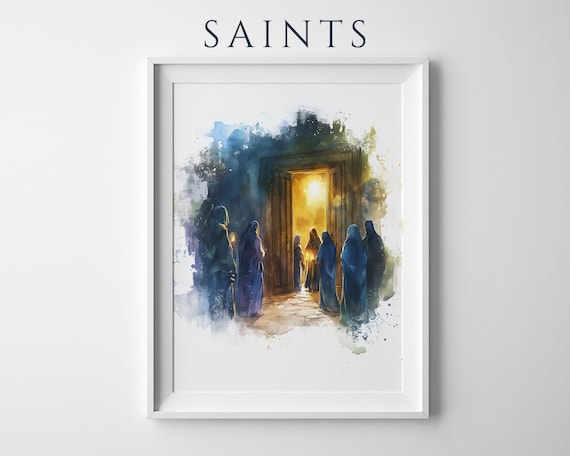
The scene Jesus describes would have been immediately familiar to his listeners. Ten young women — bridesmaids, in effect — are waiting to greet a bridegroom and walk him into the wedding feast, lamps lit for what was normally a nighttime procession. "Then the kingdom of heaven will be like ten virgins who took their lamps and went out to meet the bridegroom" (NABRE, Matthew 25:1). Five, the text says, "were foolish and five were wise" (NABRE, Matthew 25:2): the foolish ones brought their lamps but no extra oil, while the wise ones brought flasks of oil along with the lamps themselves (Matthew 25:3-4).
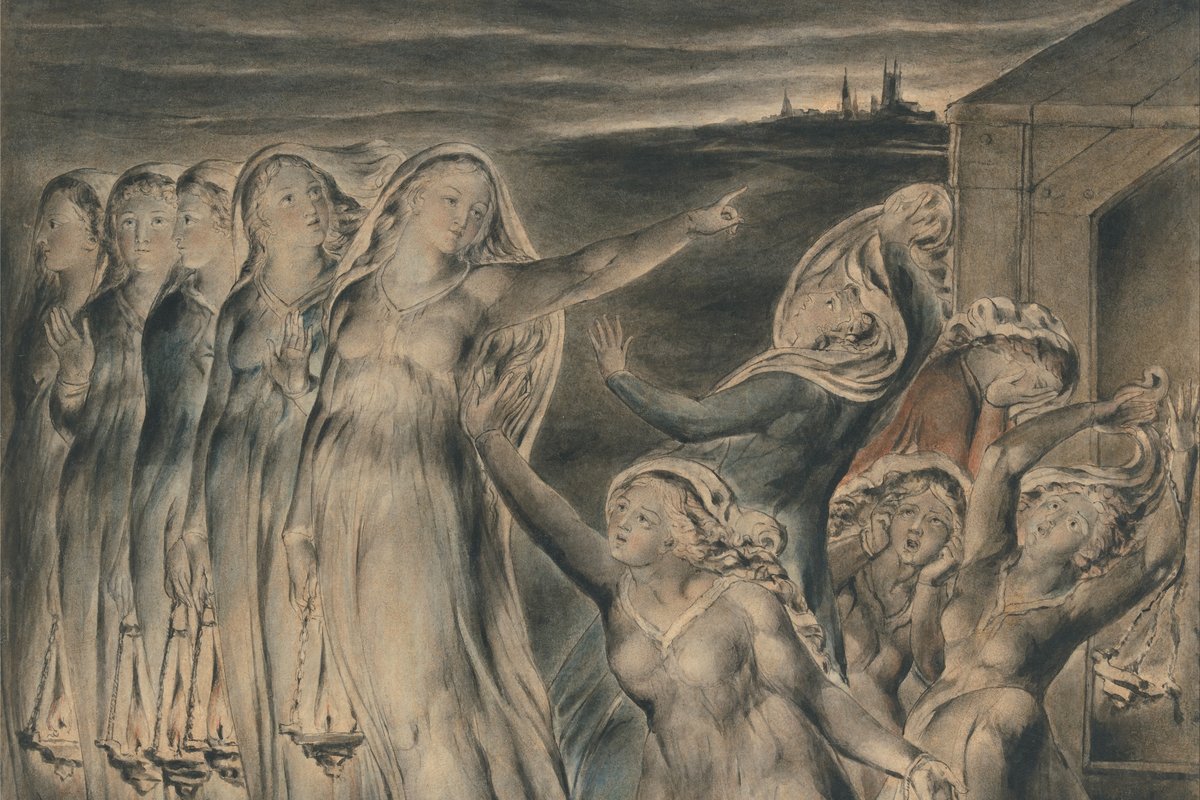
William Blake, "The Parable of the Wise and Foolish Virgins," c. 1822, Tate — public domain.
The bridegroom takes his time. "Since the bridegroom was long delayed, they all became drowsy and fell asleep" (NABRE, Matthew 25:5) — all ten, wise and foolish alike, which is worth pausing on. Falling asleep isn't the failure in this story. Nobody is condemned for drowsing off during a long wait. What separates the two groups happens earlier, in what they packed before they ever sat down to wait.
Midnight, and a door that closes
"At midnight, there was a cry, 'Behold, the bridegroom! Come out to meet him!'" (NABRE, Matthew 25:6). The ten scramble up and trim their lamps — and immediately the five foolish ones discover the problem: "our lamps are going out" (NABRE, Matthew 25:8). They ask the other five to share. The wise virgins refuse, not out of stinginess but arithmetic: "there may not be enough for us and you" (NABRE, Matthew 25:9), and they send the unprepared five off to find a merchant, in the middle of the night, to buy more.
It's while they're gone that the bridegroom arrives. "Those who were ready went into the wedding feast with him. Then the door was locked" (NABRE, Matthew 25:10). When the other five finally return and knock, the answer they get is blunt: "Amen, I say to you, I do not know you" (NABRE, Matthew 25:12). The parable ends on that closed door, and on Jesus's own one-sentence takeaway: "Therefore, stay awake, for you know neither the day nor the hour" (NABRE, Matthew 25:13).
Oil that can't be borrowed
Christian readers have puzzled over the refusal to share oil for centuries, because on its face it can look ungenerous. But most traditional interpretation reads the oil as standing for something that, by its nature, isn't transferable in a moment of crisis — a life of faith, prayer, and good works sustained over years, not something a friend can hand you at the last minute the way you might lend a cup of sugar. The wise virgins aren't refusing charity; they're pointing out, correctly, that this particular kind of preparation has to belong to the person who needs it.
This parable sits inside a longer stretch of teaching in Matthew 24-25 that scholars often call the "eschatological discourse" — a set of parables and warnings Jesus gives about the unknown timing of the kingdom's arrival, delivered just days before his own arrest and crucifixion. Read alongside the parables that follow it in the same chapter, including the Parable of the Talents, the ten virgins fits a consistent theme: readiness isn't a single dramatic act, it's a discipline maintained through an uncertain, sometimes very long, wait.
A parable about numbers, too
It's worth noticing the specific number Jesus chooses, since first-century listeners would likely have caught something modern readers usually miss. Ten was a common minimum quorum figure in Jewish communal life of the period — a small enough group to represent a complete, functioning community rather than an isolated individual, similar to the way ten adult men constituted the minimum for a synagogue prayer quorum in later rabbinic practice. By setting the story at exactly ten, evenly split between wise and foolish, Jesus wasn't describing a freak statistical accident where half a group happened to be careless. He was describing the ordinary condition of any community of faith: readiness and unreadiness sitting side by side, indistinguishable from the outside, until the moment that actually tests them arrives. That reading fits neatly with the parables that flank it in Matthew 24-25, several of which, including the neighboring teaching on faithful and unfaithful servants, turn on the same quiet point: belonging to the same household, or waiting at the same gate, guarantees nothing about what each person carries inside.
Why the parable still unsettles readers
What makes this story land harder than some of Jesus's other teaching is its refusal to soften the ending. The five foolish virgins aren't wicked. They don't reject the bridegroom, mock him, or plot against him — they're simply unprepared for how long the wait would run, and by the time they realize it, the window has closed. That's a harder truth than a story about villains getting what they deserve; it's a story about ordinary carelessness catching up with ordinary people.
It's part of why this scene has remained such a durable subject in Christian art and reflection for two thousand years, appearing on medieval cathedral facades, in Reformation-era sermons, and in countless devotional images contrasting the wise and foolish virgins side by side, lamps lit or lamps dark. For readers curious about other teaching moments from this same stretch of Jesus's ministry, this blog's article on the Sermon on the Mount covers an earlier block of his teaching built around similarly memorable, image-driven instruction.
Read plainly, the parable isn't really about wedding customs at all. It's about the ordinary temptation to assume there will always be more time to get ready later — and the quietly devastating possibility that, for reasons entirely of our own making, there might not be.
Trivia
Where in the Bible is the Parable of the Ten Virgins found?
What do the ten virgins and their lamps represent?
Why couldn't the wise virgins just share their oil?
What does the parable mean by 'the door was locked'?
Is this parable meant to be a literal wedding custom from Jesus's time?
Related Reading