The Creation of the Stars and Moon

"Let there be lights" — but not "the sun" and "the moon"
By the fourth day, the world Genesis describes already has light and darkness, sky and sea, dry land and vegetation. Now God turns his attention to the sky itself: "Let there be lights in the dome of the sky, to separate day from night. Let them mark the seasons, the days and the years, and serve as lights in the dome of the sky, to illuminate the earth" (Genesis 1:14-15, NABRE). Then comes the detail that has caught readers' attention for centuries: "God made the two great lights, the greater one to govern the day, and the lesser one to govern the night, and the stars" (Genesis 1:16, NABRE).
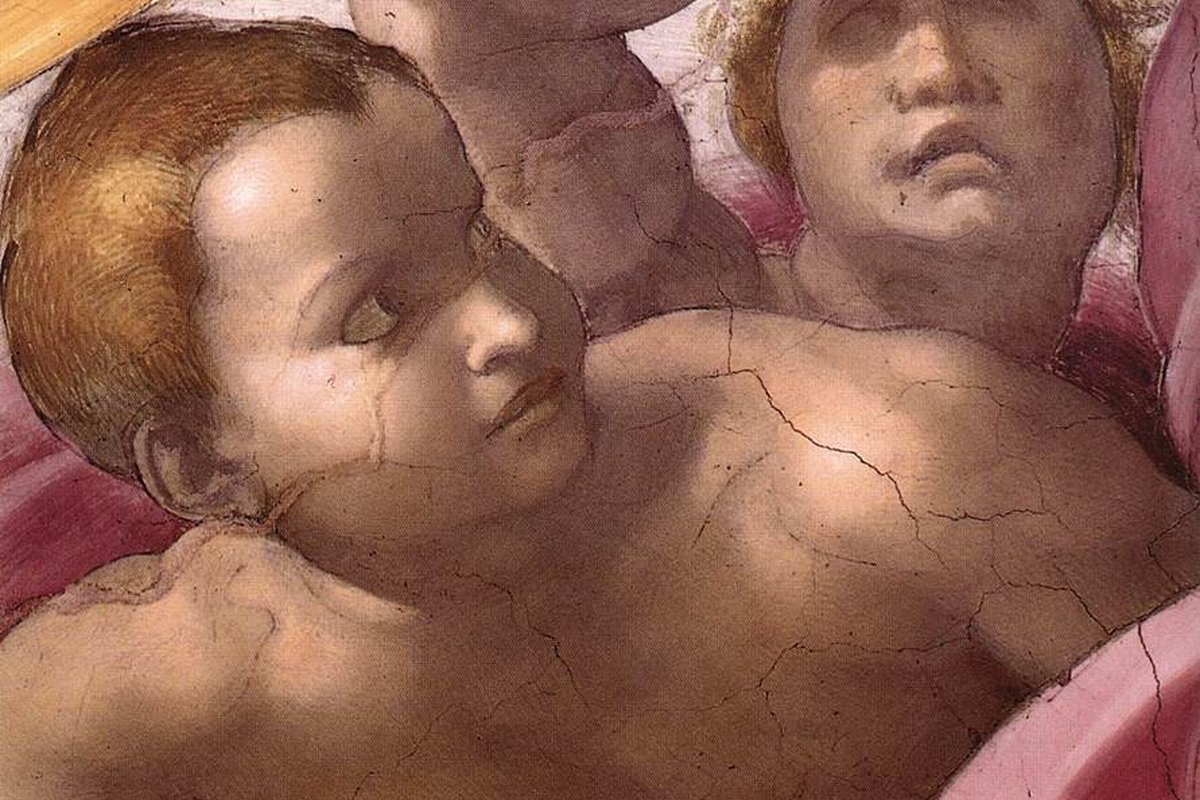
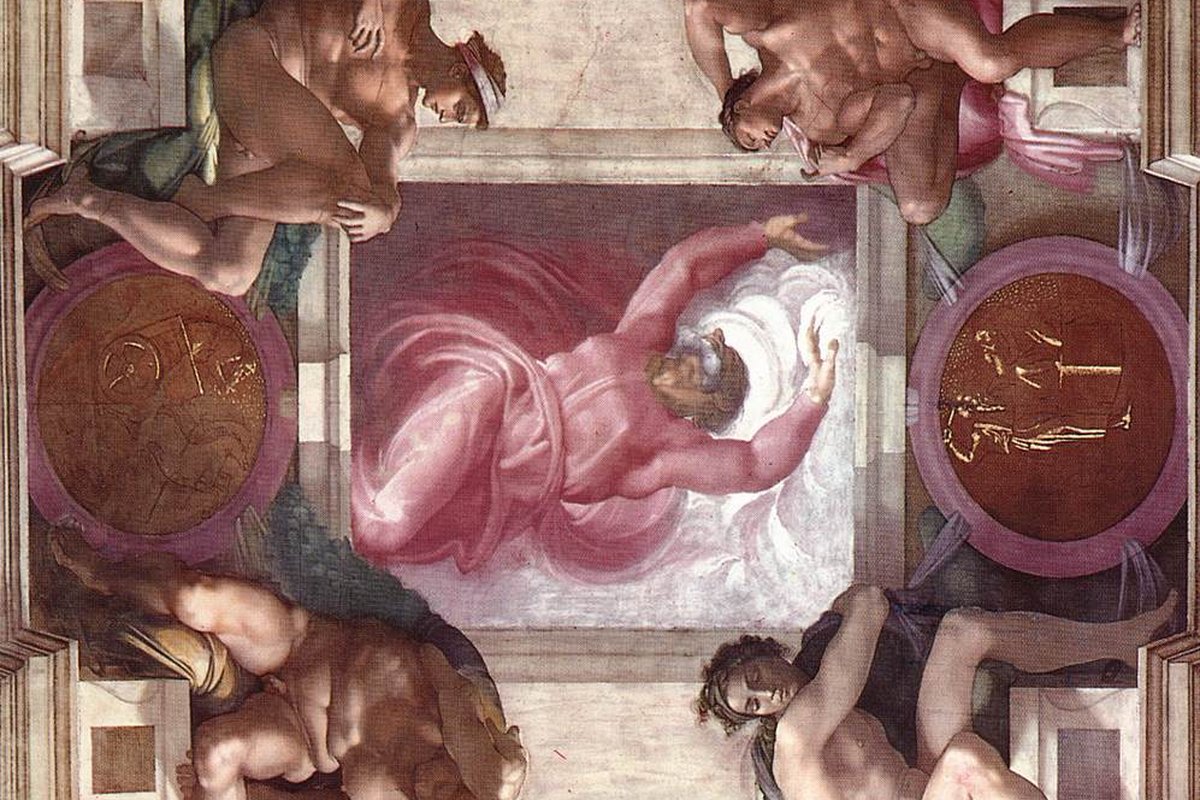
Michelangelo, "Creation of the Sun, Moon, and Plants," Sistine Chapel ceiling (Wikimedia Commons, public domain)
Notice what is missing. Hebrew has perfectly good words for "sun" (shemesh) and "moon" (yareach), and the author of Genesis knew them well — they appear elsewhere in the Old Testament without any hesitation. Here, though, the text calls them only "the greater light" and "the lesser light." That is not an accident of poetic style. It is, most scholars agree, a quiet but pointed argument.
A world that worshiped the sky
To an Israelite audience living in the shadow of Egypt, Babylon, and Canaan, the sun and moon were not background scenery. They were gods with names, temples, and calendars built around them — Shamash the Mesopotamian sun god, Sin the moon god, and a whole astral cult that read the movements of sun, moon, and stars as messages from the divine world. Genesis 1 was written into that world, and its silence is loud: the "greater light" and "lesser light" are not named because naming them would have granted them a kind of status Genesis refuses to give. They are objects, set in place, doing a job. Verse 16 says as much directly — God "made" them, the same ordinary verb used for the dome of the sky and the dry land in the days before.
This is sometimes called a demythologizing move: taking the most powerful, most worshiped forces in the ancient sky and quietly reclassifying them as creatures. They don't rule time on their own authority; they were given the job of governing day and night, seasons and years, by someone else. The stars, too, get folded into the same sentence almost as an afterthought — "and the stars" — a strikingly modest treatment for objects that entire cultures built their religious calendars around.
Lights for telling time, not powers to fear
The practical language of verses 14 and 15 matters as much as what's left unsaid. The lights are "for signs and for seasons, and for days and years" — they exist to structure human life, marking festivals, planting seasons, and the rhythm of the week, rather than to be consulted as oracles or feared as fate. Verse 18 restates their function once more: "to govern the day and the night and to separate the light from the darkness." Three times in six verses, Genesis circles back to the same point — these are functional lights, not sovereign powers.
That framing carried real weight for later biblical writers. The prophets who mocked the astrologers of Babylon (see Isaiah 47:13) and the psalmist who marveled that God "made the moon to mark the seasons" while "the sun knows the time for its setting" (Psalm 104:19) were both drawing on the same conviction Genesis 1 lays down first: the sky is a creation to be admired, not a pantheon to be placated.
Evening and morning, the fourth day
Like each day before it, day four closes with the same steady refrain: "Evening came, and morning followed — the fourth day" (Genesis 1:19, NABRE). It's easy to read past that line, but it is doing real work. The sun and moon that Genesis has just carefully avoided naming as gods are, in the very next breath, used to measure the passage of ordinary time — evening, morning, one day closer to the Sabbath rest that caps the whole account. They are useful. They are beautiful. They are not divine.
Readers who follow the creation account through to the call of Abraham will notice how often the rest of Genesis returns to this same insistence — that the sky, the land, and the nations around Israel are creatures under God, not powers to be worshiped in their own right. Day Four rewards a slower look for exactly that reason: it's less about astronomy than about which things in the universe get to be worshiped, and Genesis draws that line with remarkable clarity, three thousand years before anyone needed a word like "science" to describe the difference.
Lights that still keep Israel's calendar
The functional language of day four had a long practical afterlife in Jewish worship. The Hebrew calendar that governs Passover, Yom Kippur, and every other feast in the liturgical year is lunar, tracking the moon's phases rather than the sun's, precisely because Genesis 1:14 assigns the lights in the sky the job of marking "seasons" and "days and years" in the first place. A festival calendar built on watching the sky was, in that sense, already written into creation's fourth day — not because the moon has any power of its own, but because God gave it a role to play in structuring worship, the same modest, functional role the whole passage insists on.
Michelangelo's fresco on the Sistine Chapel ceiling, which illustrates this article, captures that same idea in paint rather than words. He shows God in a single sweeping gesture calling both sun and moon into being at once — not two separate acts of creation but one, underscoring the biblical text's own insistence that neither light outranks the other in a cosmic hierarchy. Both are creatures, both are useful, and both, in Michelangelo's rendering, exist because a single will called them into place.
Trivia
What does Genesis 1:14-19 say God created on the fourth day?
Why doesn't Genesis 1 call the sun and moon by name?
What purpose does Genesis say the lights in the sky serve?
Is the creation of the stars and moon the same as the creation of light on day one?
Related Reading