Ichthys: The Fish That Became a Secret Christian Password

A whole creed folded into one Greek word
The word behind the symbol is ichthys, the ordinary Greek word for "fish." Early Christians noticed — or deliberately constructed — that its five letters could be read as an acronym: Iesous Christos, Theou Yios, Soter, meaning "Jesus Christ, Son of God, Savior." That phrase packs together several of the most central claims of Christian belief — Jesus's identity as the Messiah, his divine sonship, and his role as savior — into a single compact statement, and the fish shape became the natural visual stand-in for the whole sentence. Anyone who knew the acronym could look at a fish outline scratched into stone and effectively read a miniature creed. Anyone who didn't simply saw a fish, an object with no obvious religious weight at all in the visual culture of the ancient Mediterranean world.

Ichthys symbol carved in stone, Ephesus — CC BY-SA 3.0 (photo: David Bjorgen).
Why a fish, specifically
Beyond the acronym itself, the fish carried resonances that made it feel like a natural choice rather than an arbitrary one. Fish and fishing appear repeatedly throughout the Gospels — several of the apostles were fishermen by trade, Christ called his disciples to become "fishers of men," and fish feature in miracle accounts including the feeding of the multitude and the post-Resurrection meal on the shore of the Sea of Galilee. Water and fish also carried associations with baptism in early Christian thought, linking the symbol to the specific rite by which a person entered the Christian community. Whether the acronym came first and the biblical associations reinforced it, or whether those associations helped inspire the acronym in the first place, is debated among historians, but the two reinforced each other either way, giving the symbol a depth beyond simple wordplay.
A password used under threat of persecution
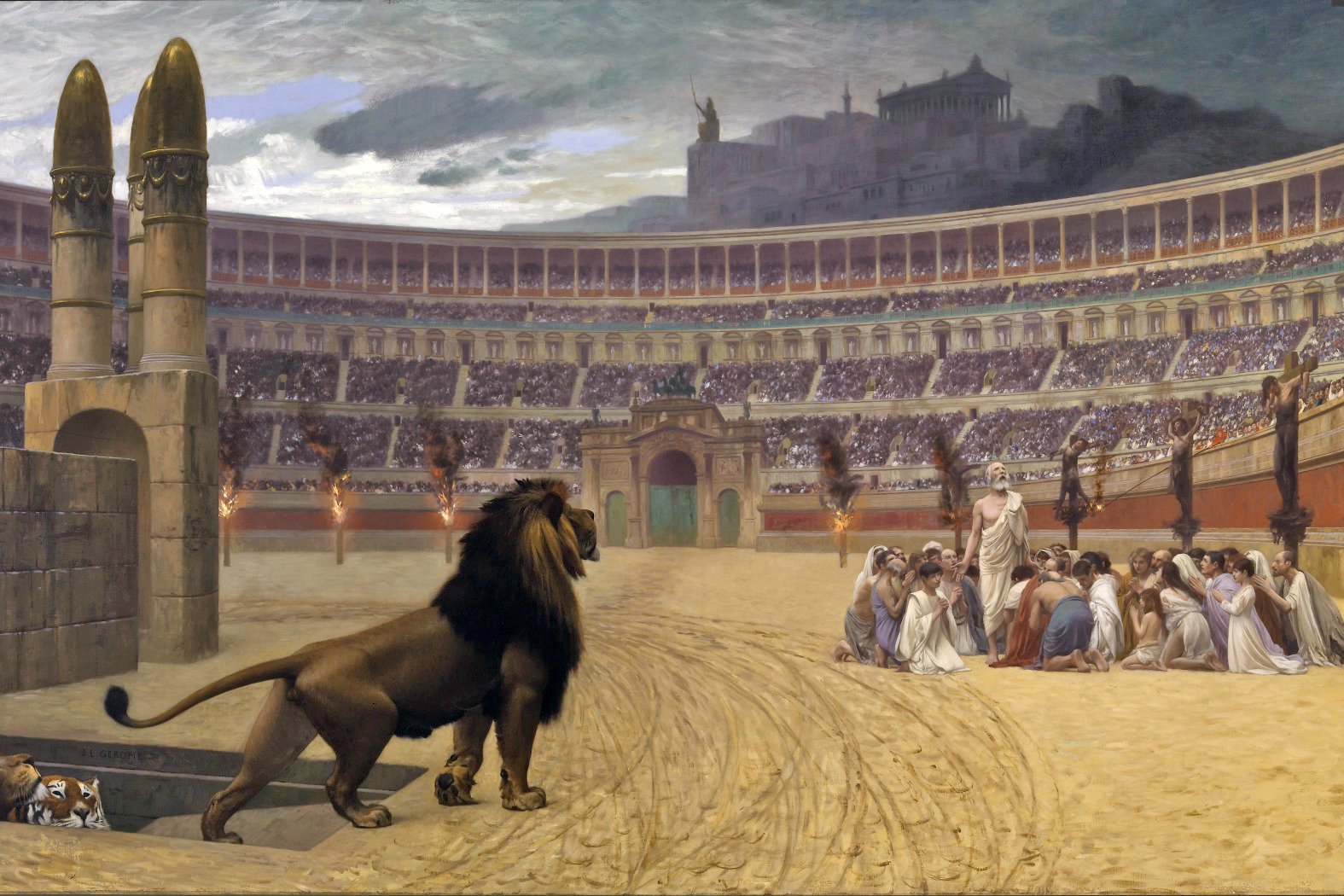
Roman authorities periodically treated Christianity as an illegal or suspect movement across the first three centuries, with waves of active persecution under emperors including Nero, Decius, and Diocletian. In that climate, a small, easily deniable symbol served a genuinely practical purpose: it let believers identify one another, mark meeting places, and memorialize Christian burials without an outsider recognizing anything unusual. A frequently repeated tradition describes one Christian drawing a single arc in the dirt when meeting a stranger, and the other completing it into a full fish shape if they, too, were a believer — a simple, wordless exchange confirming shared faith. That specific story comes down through later tradition rather than a documented eyewitness account, so it's best understood as a well-established piece of Christian lore about the symbol's use rather than a verified historical event, though it captures accurately enough how such coded symbols likely functioned in practice.
Alongside the anchor and other hidden signs
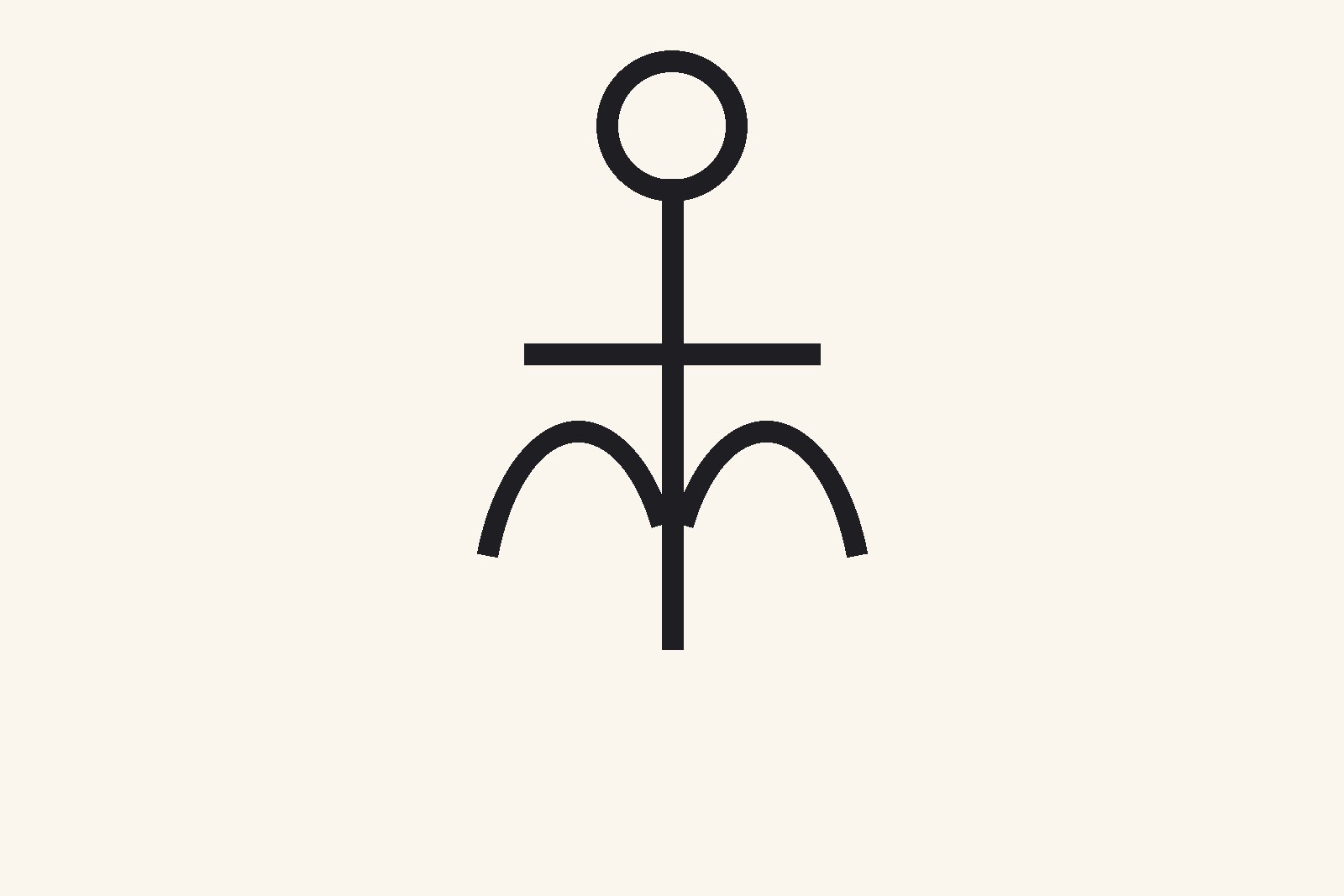
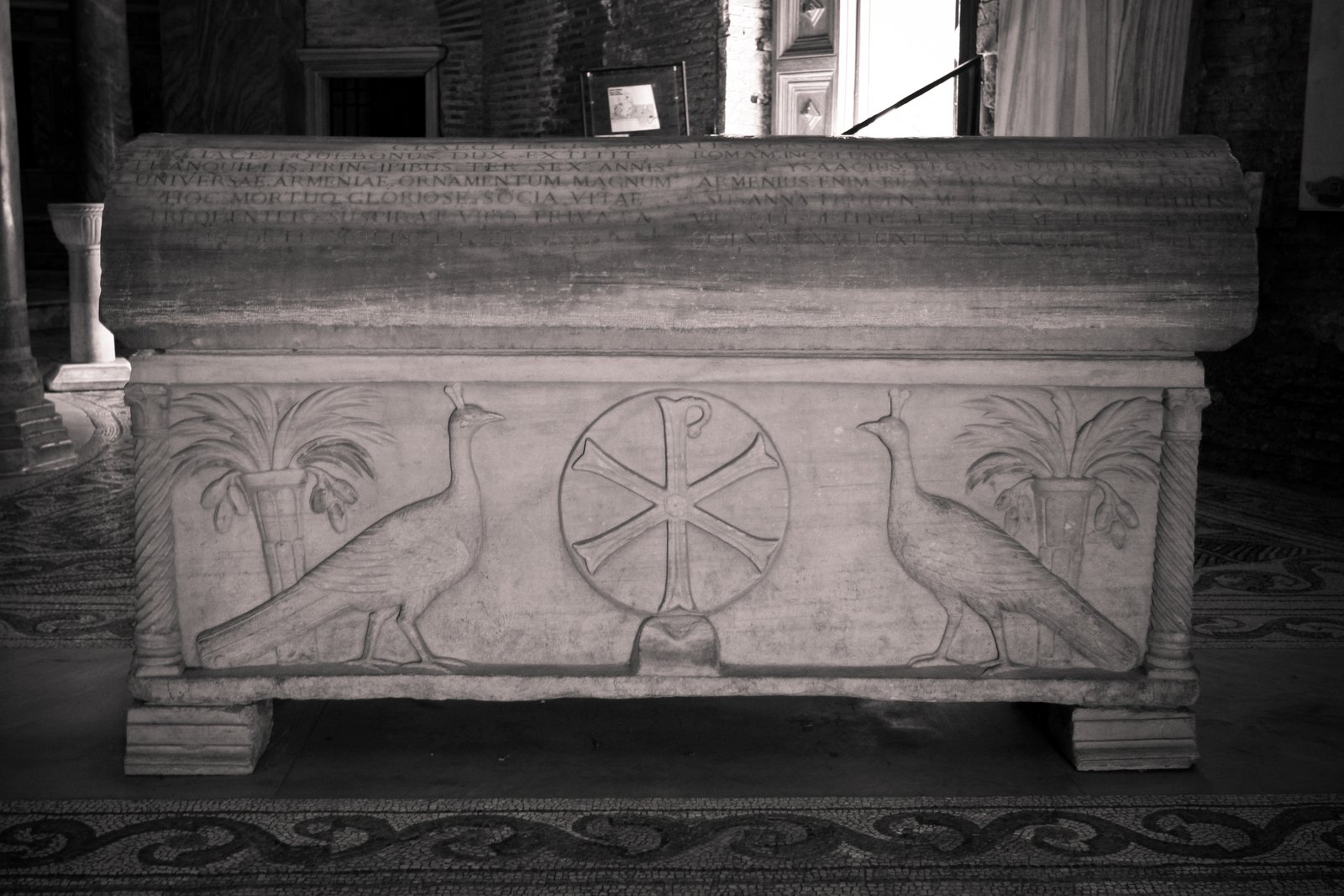
The fish wasn't the only coded symbol early Christians relied on. The anchor, whose shape closely echoes a cross, served a closely related purpose, often appearing in the same catacomb inscriptions alongside fish, doves, and the chi-rho monogram formed from the first two Greek letters of "Christ." Together these symbols formed a shared visual vocabulary that let a persecuted, geographically scattered community recognize and support one another across the Roman world, long before any single centralized authority could have coordinated such a system deliberately.
Where the earliest fish symbols survive
Archaeologists have documented Ichthys symbols carved into the Roman catacombs — including the Catacombs of San Callisto and the Catacombs of Domitilla — on funerary inscriptions, oil lamps, seal rings, and small personal objects dating from roughly the second and third centuries. These survivals give historians direct physical evidence of how widely and consistently the symbol was used across ordinary Christian communities, not just among a small elite, reinforcing how central it had become to early Christian identity well before Christianity gained legal protection.
The fish in vesica piscis and church architecture
The two overlapping arcs that form the Ichthys outline also produce a distinct almond shape where they intersect, known in geometry as the vesica piscis, literally "the bladder of the fish." That same pointed-oval form turns up throughout medieval and Renaissance church art in a different but related role: as the mandorla, a full-body halo of radiant light surrounding depictions of Christ in Majesty or the Virgin Mary at the moment of her Assumption, seen for instance in countless tympana carved above cathedral doorways across medieval Europe. Whether the two uses of the shape are historically connected or arrived at independently is debated among art historians, but the visual echo between the earliest, simplest Christian fish-sign and one of the grandest framing devices in later sacred art is hard to miss once it's pointed out — a small doodle in the catacombs and a golden almond of light surrounding an enthroned Christ, built from the same two curves.
A symbol that never went out of use
Unlike some early Christian coded symbols that faded once persecution ended, the fish never really disappeared. It remained a recognizable Christian symbol throughout the medieval period and has enjoyed a significant revival in modern popular Christian culture, appearing today on car bumpers, jewelry, and church signage around the world. Few symbols in Christian history have traveled so far, so simply, while still carrying almost exactly the same meaning their earliest users intended nearly two thousand years ago.
Trivia
What does Ichthys mean, and why is it connected to the fish symbol?
Why did early Christians need a coded symbol like the fish?
Is there a specific legend about how the fish symbol was used to identify fellow Christians?
Where can early examples of the Ichthys symbol still be found?
Is the fish symbol still used by Christians today?
Related Reading