The Anchor: Christianity's Secret Cross

A symbol built for concealment
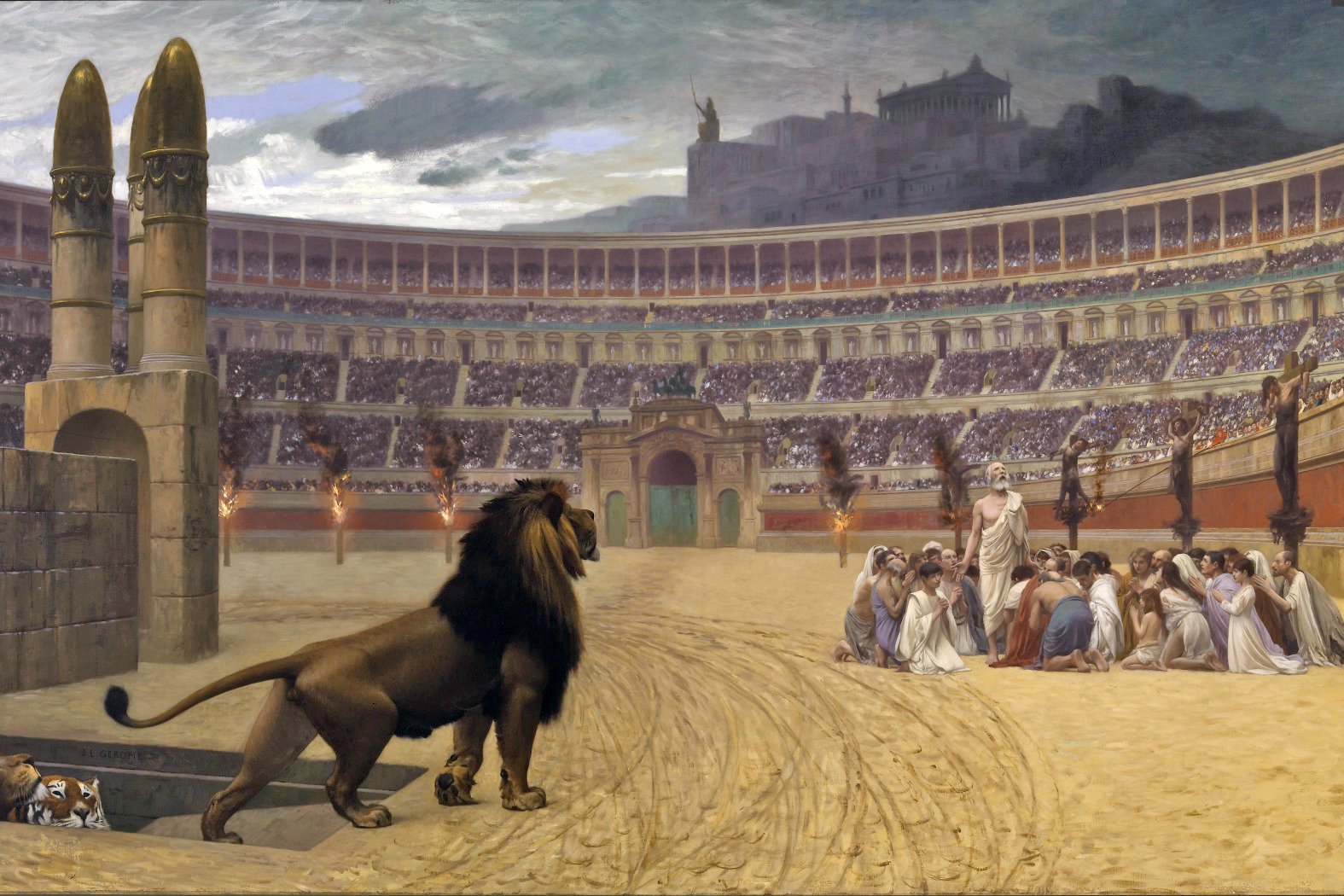
For roughly the first three centuries of Christianity's existence, being identified as a follower of Christ could carry serious legal danger under Roman law, ranging from social exclusion to outright execution during periods of active persecution, particularly under emperors like Nero, Decius, and Diocletian. In that environment, Christians developed a vocabulary of coded visual symbols — the fish, or Ichthys, being the most famous, alongside the anchor — that let believers identify one another, mark sacred meeting places, and memorialize the dead without openly declaring their faith to a hostile authority. The anchor served this purpose particularly well: its shape, a vertical shaft crossed by a horizontal bar near the top, closely echoes the form of a cross, while remaining completely unremarkable as an everyday maritime object that carried no religious connotation to an outside observer.
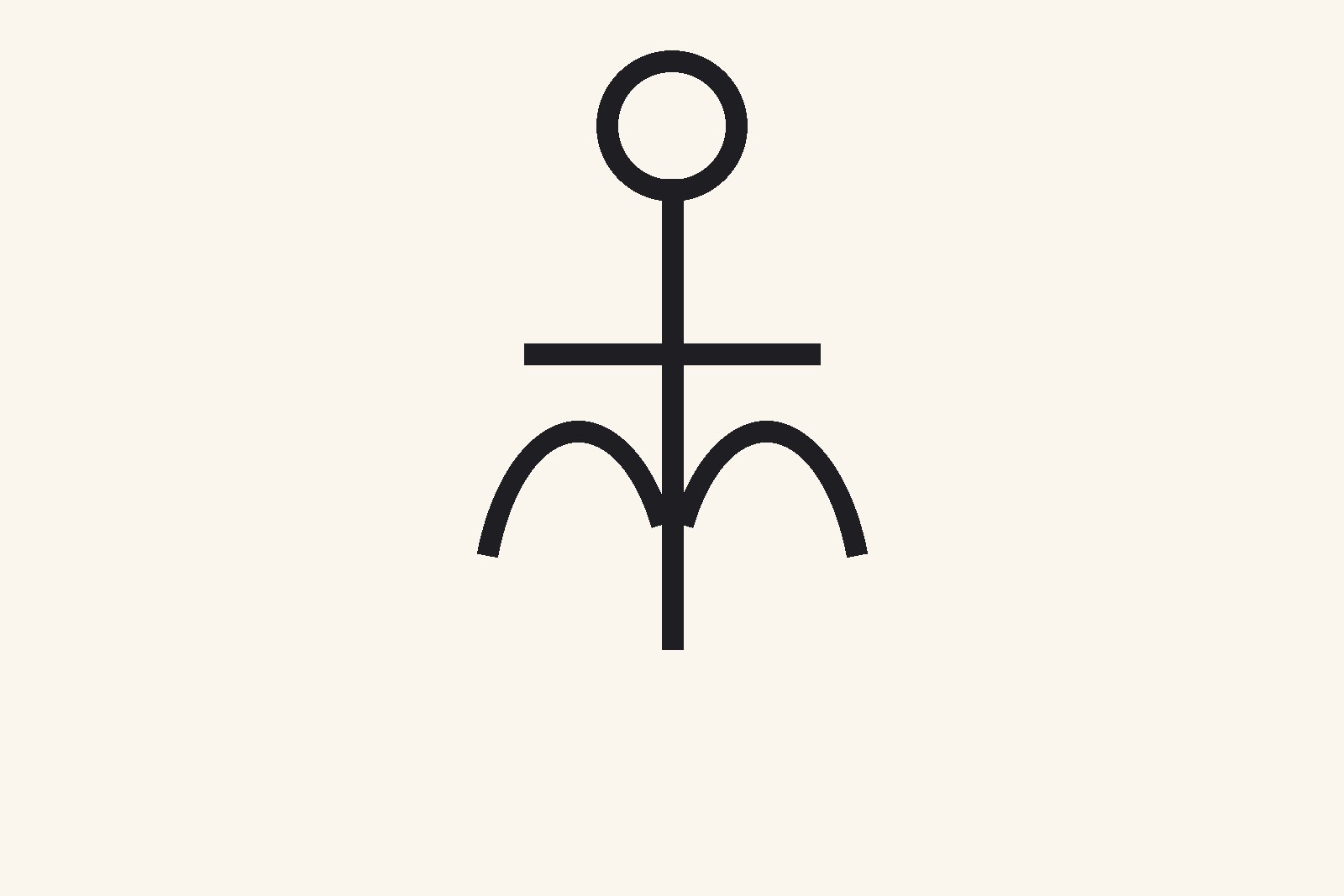
Saints Store original illustration.
The biblical hope behind the image
The anchor's meaning wasn't purely visual disguise — it also carried a direct scriptural reference. The Letter to the Hebrews describes the Christian hope of salvation as "an anchor of the soul, both sure and steadfast," a metaphor drawing on the anchor's practical function of holding a ship steady against storms and currents. Early Christians facing real physical danger for their faith found that image especially resonant: hope in Christ as something that held firm regardless of the surrounding turmoil. Carved above a grave, the anchor communicated not just "a Christian is buried here" to those who recognized it, but a specific claim about that person's confidence in life beyond death — making it, in a sense, one of the earliest visual expressions of Christian hope in the resurrection.
Where the symbol survives today
The clearest surviving evidence of the anchor's early Christian use comes from the Roman catacombs, the vast underground burial networks outside ancient Rome where Christians, alongside pagans and Jews, buried their dead. In the Catacombs of Priscilla and the Catacombs of Domitilla in particular, archaeologists have documented dozens of anchor symbols carved into tomb inscriptions and wall niches, often alongside other coded symbols like the fish, the dove, or the chi-rho monogram. These weren't isolated individual choices — the recurrence of the anchor across many separate burials, spanning roughly the second and third centuries, indicates a shared, understood visual language circulating among Christian communities well before Christianity's legal status changed.
From secrecy to open symbol
Everything changed with the Edict of Milan in 313, when Emperor Constantine extended official toleration to Christianity throughout the Roman Empire. Once believers no longer needed to hide their faith, the openly recognizable cross rapidly became the dominant Christian symbol, appearing on churches, public monuments, and eventually imperial insignia. The anchor's role as a disguised cross became largely unnecessary, and its use in that specific coded sense faded. It didn't disappear from Christian art altogether, though — it persisted, particularly in maritime communities and Marian devotional imagery, as a more general symbol of hope and steadfast faith, a meaning it retains in Christian iconography to this day, related in spirit to other early coded symbols explored in the symbolism of the fish in Christian art.
How the anchor is used devotionally today
Modern Christian use of the anchor symbol draws directly on its Hebrews 6:19 origin, appearing in jewelry, tattoos, and devotional artwork specifically to represent steadfast hope through difficulty, often without any reference at all to its original function as a hidden cross. Some maritime parishes and seafarers' chapels retain the anchor as a specific patronal or architectural motif, a lineage that traces in an unbroken if quiet line back to those Roman catacomb walls, where a symbol chosen for its ordinary appearance ended up carrying an extraordinary amount of meaning for the people who carved it.
Clement of Alexandria's advice on signet rings
One of the clearest pieces of surviving evidence for how deliberately Christians chose the anchor comes not from an anonymous catacomb carving but from a named theologian. Clement of Alexandria, writing in his work known as the Paedagogus around the end of the second century, advised Christians on which images were appropriate to engrave on the personal signet rings used across the Roman world to seal letters and documents. He recommended against images drawn from pagan mythology or associated with idolatry, and suggested instead a short list of acceptable alternatives that included a dove, a fish, a ship "running before the wind," and an anchor. That instruction shows the anchor wasn't simply a symbol that happened to recur — it was actively recommended by at least one influential Christian teacher as a safe, meaningful choice for everyday personal use, which helps explain why it appears so consistently across scattered burials and objects from communities that had no central authority coordinating their imagery.
A saint remembered by the symbol he shares
The anchor also became permanently attached to the memory of one particular martyr: Pope Clement I, an early bishop of Rome traditionally said to have been executed by being bound to an anchor and thrown into the Black Sea during the reign of the Emperor Trajan. Whether every detail of that account reflects verified history or later hagiographic embellishment is debated among historians, but the tradition was influential enough that the anchor became Clement's standard attribute in later Christian art, and it is the reason anchors appear in imagery connected to seafarers and to Clement's own patronage of mariners — a case where the symbol's older, general meaning of hope and its narrower connection to one saint's legendary death became intertwined over the centuries.
A reminder of how early Christian symbolism worked
The anchor's story is a useful lens for understanding early Christian visual culture more broadly: symbols were rarely arbitrary decoration, but were chosen deliberately for how they functioned — theologically, socially, and sometimes for outright physical safety. Its persistence across centuries, outlasting the very persecution that made it necessary, says something about how durable a well-chosen symbol can be, carrying meaning long after the original danger that shaped it has passed into history.
Trivia
Why did early Christians use an anchor as a coded symbol instead of the cross?
What Bible verse is the anchor symbol connected to?
Where can early Christian anchor symbols still be seen today?
Did the anchor symbol disappear once Christianity was legalized?
Is the anchor still used as a Christian symbol today?
Related Reading