Gideon and the Angel of the Lord


A commission disguised as small talk
The Book of Judges sets the scene with deliberate detail: seven years of Midianite raids had reduced Israel to hiding in mountain dens and caves, their crops stripped bare each harvest by camel-riding raiders who came "like locusts" (Judges 6:5). Against that backdrop, a young man named Gideon is found doing something almost comic in its caution — threshing wheat inside a wine press, a sunken stone basin meant for treading grapes, so the telltale cloud of grain-dust wouldn't give away his family's last stores to anyone watching from a ridge.
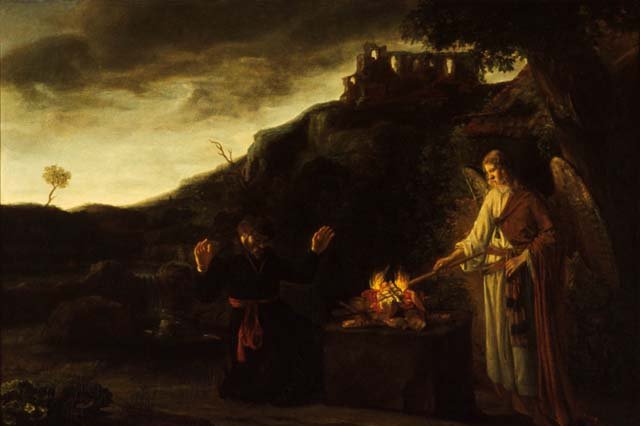
Constantijn van Renesse, "Gideon and the Angel," c. 1651 — public domain.
It's into this scene of quiet desperation that "the messenger of the Lord" arrives and sits down under a terebinth tree at Ophrah, watching Gideon work before saying a word (Judges 6:11, NABRE). When the visitor finally speaks, the greeting lands almost as a joke against the setting: "The Lord is with you, you mighty warrior!" (Judges 6:12). Gideon, unimpressed, answers with the question every generation of the afflicted has asked — if the Lord is with us, why has all this happened, and where are the wonders our ancestors told us about?
Not flattery — a commissioning
What follows is not reassurance so much as a direct order. "The Lord turned to him and said: Go with the strength you have, and save Israel from the power of Midian. Is it not I who send you?" (Judges 6:14). Gideon protests, in terms that read like a man trying every excuse available: his clan is the weakest in the tribe of Manasseh, and he is the least significant member of his father's house. The angel's answer doesn't dispute any of that. It simply promises presence: "The Lord said to him: I will be with you, and you will cut down Midian to the last man." (Judges 6:16).
This pattern — an unimpressive, reluctant figure objecting to a divine call before accepting it — echoes through the Old Testament, from Moses at the burning bush to Jeremiah protesting he is too young. What makes Gideon's story distinct is how physical and immediate the confirmation becomes.
Fire from the rock
Gideon asks the visitor to wait while he prepares an offering: a young goat, unleavened bread made from an ephah of flour, and broth, brought out and set on a rock. The angel instructs him to lay the meat and bread on the rock and pour out the broth, then touches the offering with the tip of his staff. Fire springs up from the rock itself and consumes everything — and the angel vanishes from sight (Judges 6:19-21).
Only then does the full weight of what happened hit Gideon. "Gideon, now aware that it had been the messenger of the Lord, said, 'Alas, Lord God, that I have seen the messenger of the Lord face to face!'" (Judges 6:22, NABRE). The fear here reflects a belief, widespread in the ancient Near East and reflected elsewhere in the Old Testament (most famously when Moses is told no one can see God's face and live), that direct contact with the divine was mortally dangerous. The Lord answers him directly: "You are safe. Do not fear. You shall not die" (Judges 6:23). Gideon's response is to build an altar on the spot, naming it Yahweh-shalom — "The Lord is peace."
Who exactly was speaking?
Readers have puzzled for centuries over a detail in this account that recurs throughout the Old Testament: the narrator calls the visitor "the messenger of the Lord" (traditionally rendered "the angel of the Lord," from the Hebrew malak Yahweh and Greek angelos Kyriou, both words simply meaning "messenger"), yet the visitor sometimes speaks in God's own first-person voice, and Gideon himself reacts as though he has seen God directly. This same ambiguity appears in the stories of Hagar in the wilderness, the binding of Isaac, and Moses at the burning bush.
Catholic biblical scholarship has generally treated these "angel of the Lord" appearances as a special, theologically loaded category distinct from the ordinary angelic messengers who appear elsewhere in Scripture — a way for the sacred text to describe an encounter with God's own presence and authority without violating the conviction that no one sees God's face directly and survives. Whether this messenger is best understood as a created angel speaking with delegated divine authority, or as a theophany (a direct but veiled manifestation of God) is a question the text itself leaves somewhat open, and readers should hold that ambiguity honestly rather than resolve it more neatly than the Bible does.
From reluctant farmer to judge
The angelic encounter at Ophrah is only the opening scene of Gideon's story. In the chapters that follow, he tears down his father's altar to Baal under cover of night, tests God twice with the sign of a fleece left out overnight (a separate episode from the angelic commissioning, worth reading on its own), and eventually leads just three hundred men armed with trumpets and torches to rout the entire Midianite camp. None of that campaign, as the text presents it, would have happened without the angel's insistence — repeated three times in the dialogue — that Gideon's own weakness was never the deciding factor.
Iconography and legacy
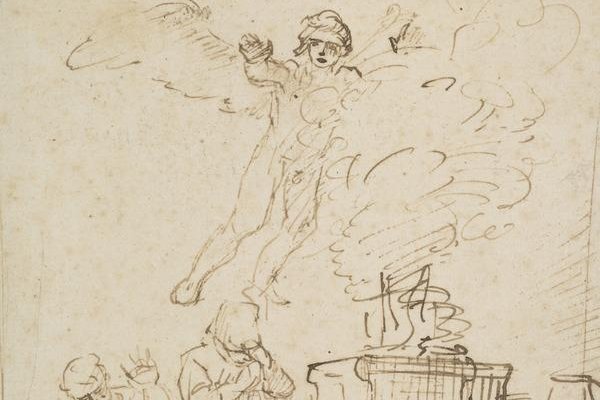
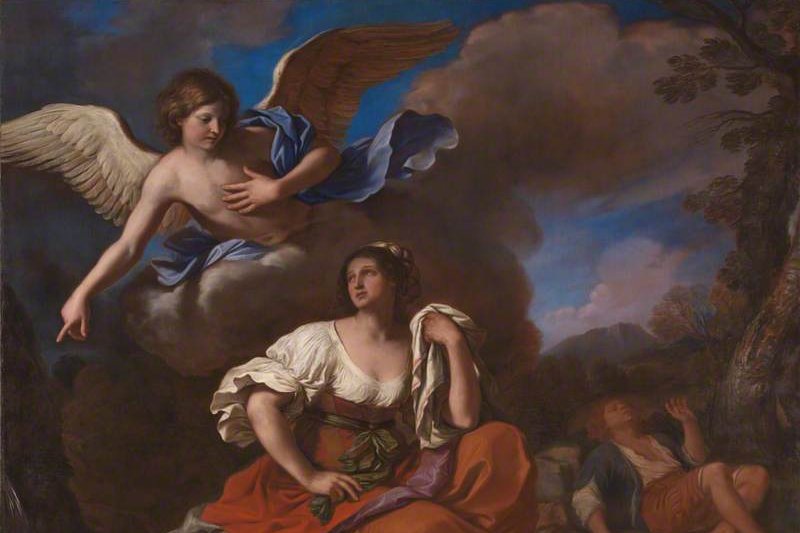
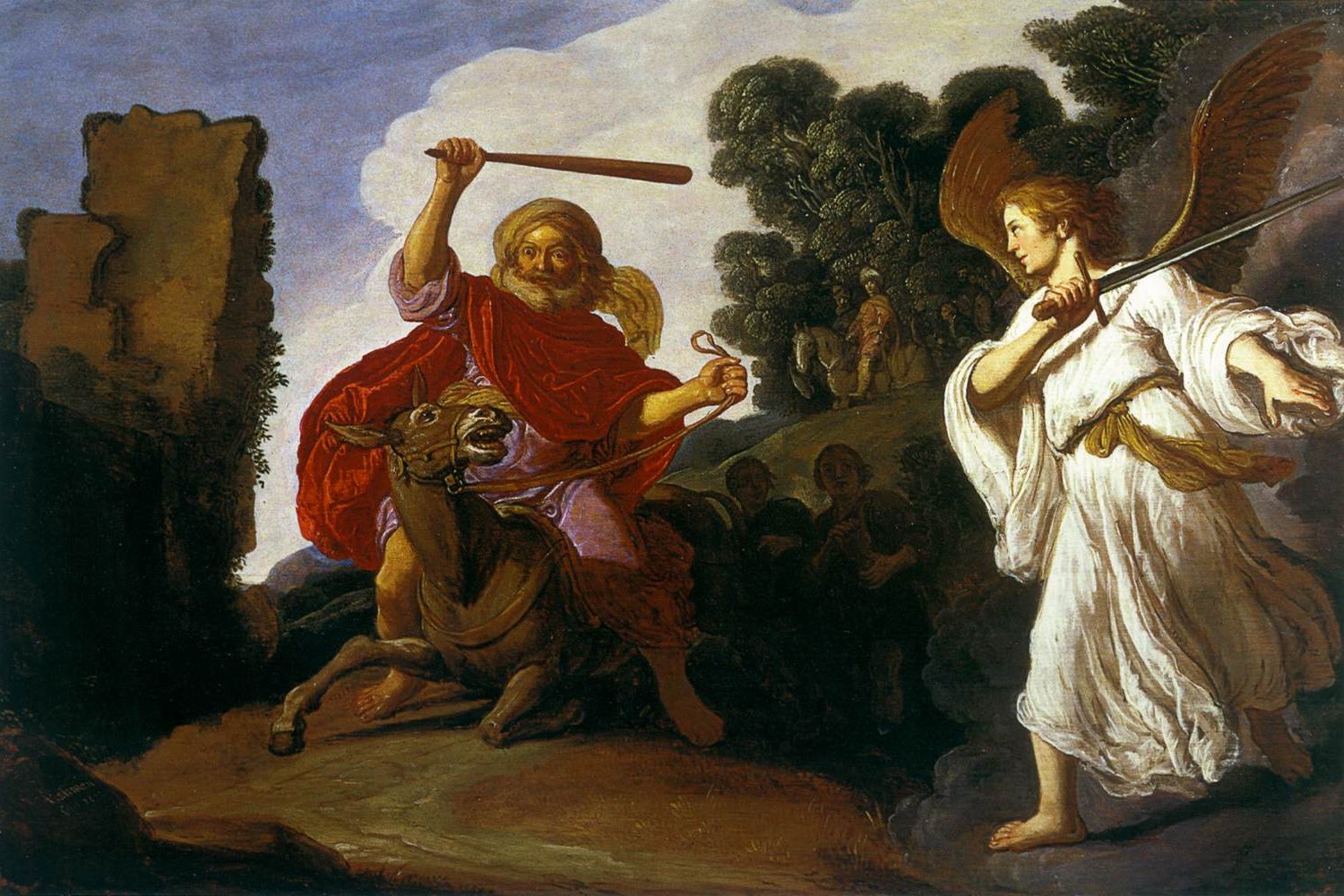
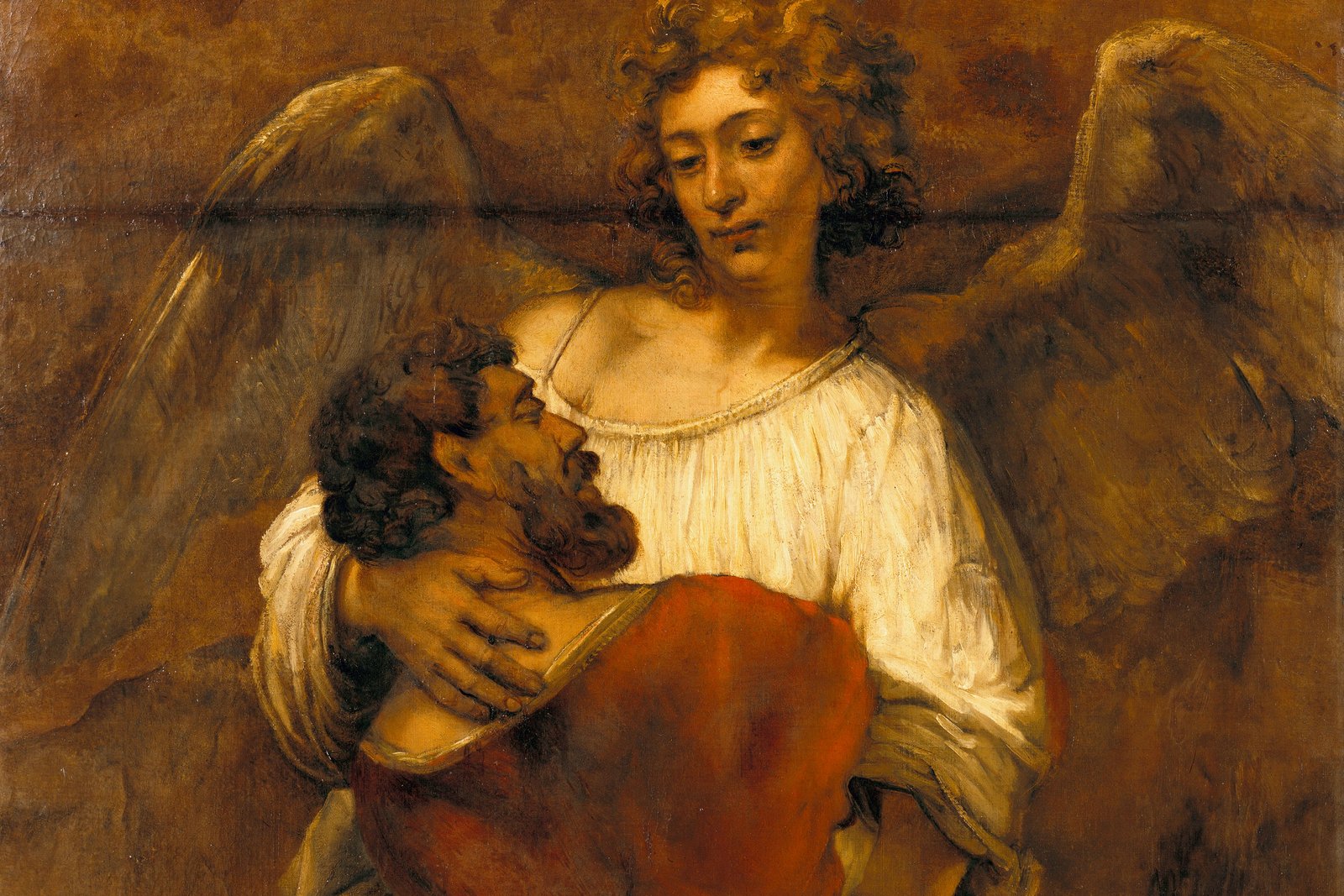
Gideon and the angel became a popular subject for Dutch Golden Age painters in the seventeenth century, drawn to the quiet, almost domestic intimacy of the scene — an unremarkable young man interrupted at ordinary labor by a seated, patient visitor. Rembrandt's students and circle, including Constantijn van Renesse, returned to the subject more than once, favoring candlelit or golden, late-afternoon tones that emphasize the hidden, unshowy nature of the calling. The story also appears in medieval typological art as a foreshadowing of the Annunciation, since both scenes involve an angel greeting an unsuspecting figure with a startling declaration about future deliverance.
For readers of the Book of Judges more broadly, Gideon's calling sits alongside other angelic appearances to otherwise ordinary Israelites in that same book — most notably the angel who appeared to Manoah, promising the birth of Samson a few chapters later. Read together, the two stories show a consistent scriptural pattern: God's messengers seek out the overlooked and afraid, not the already powerful, when a deliverer is needed.
Trivia
Who appeared to Gideon under the oak tree at Ophrah?
Why was Gideon threshing wheat in a wine press?
What sign did Gideon ask for before he believed the angel?
Is 'the angel of the Lord' in this story the same as an ordinary angel?
What did Gideon do immediately after the angel left?
Related Reading