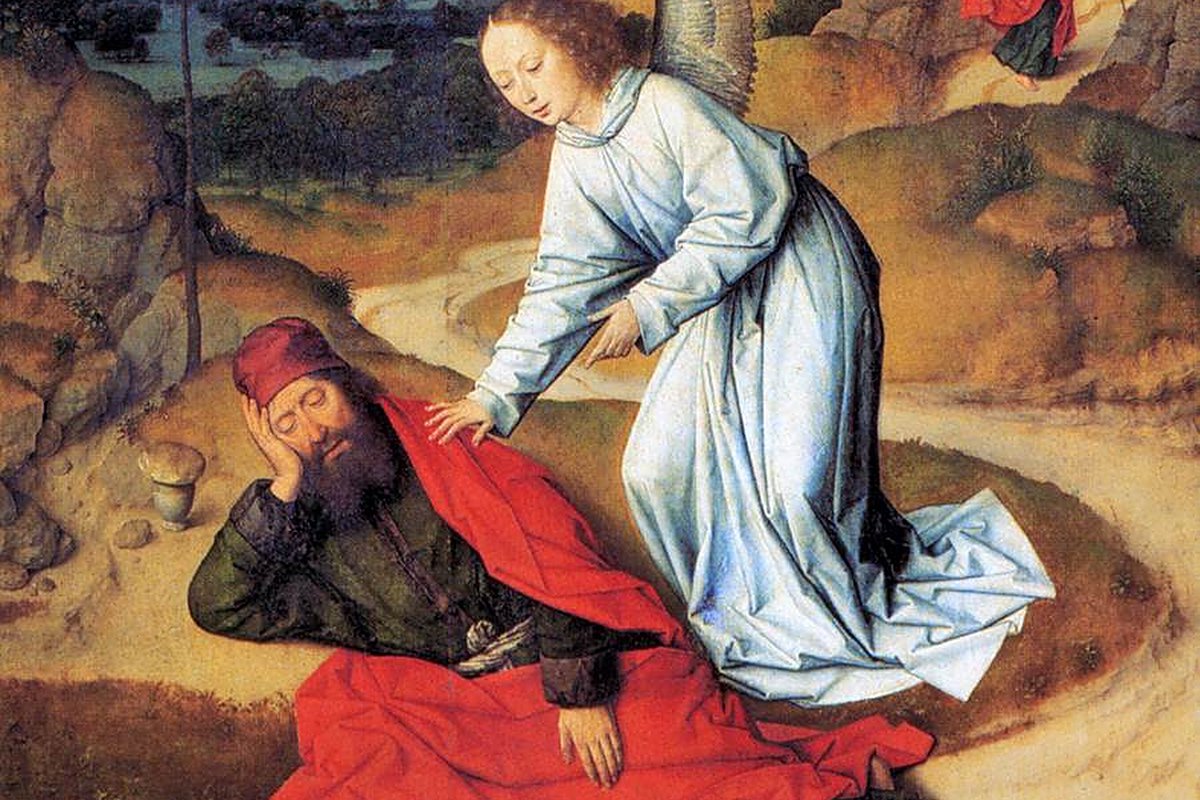
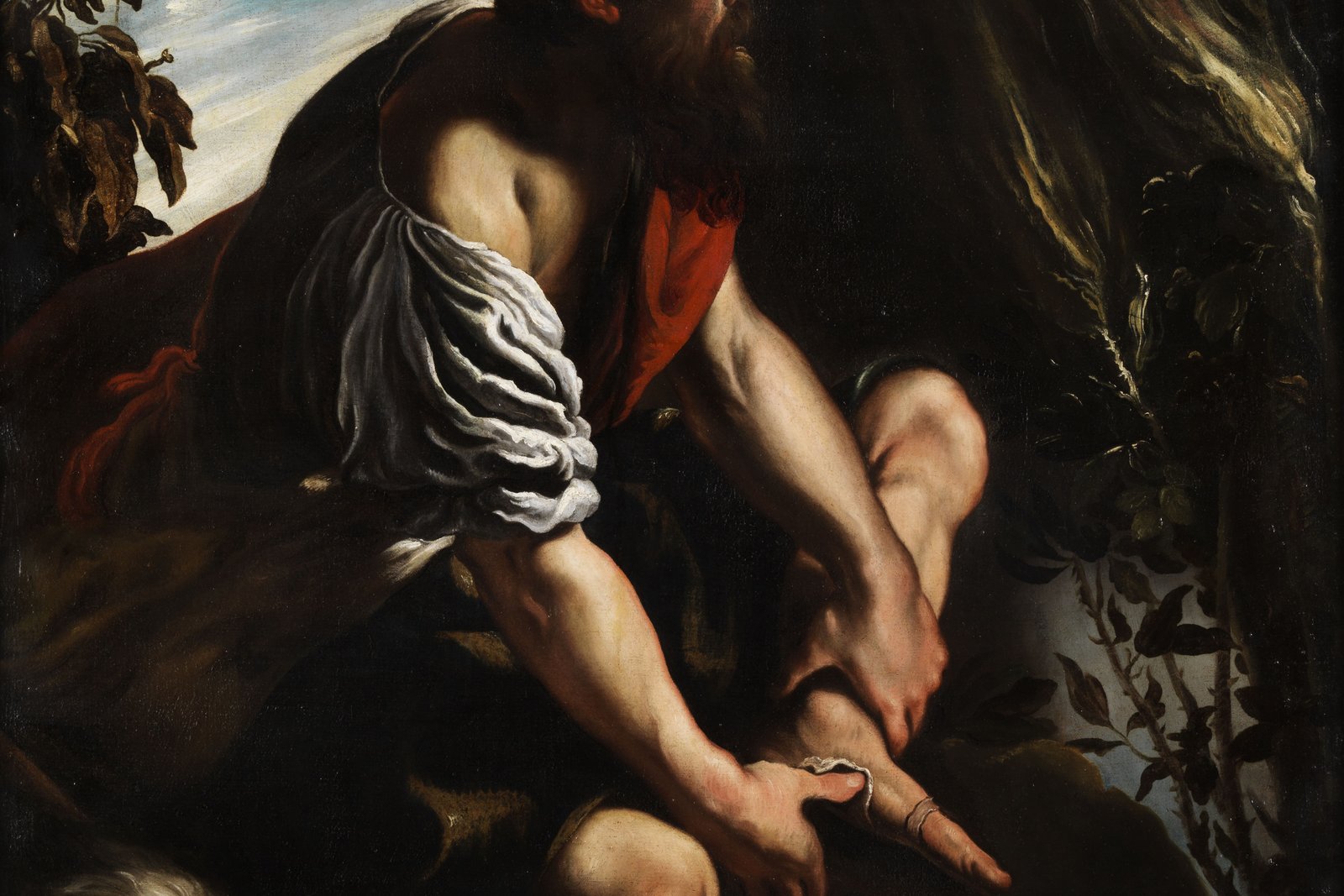
Jacob Wrestling with the Angel All Night Long

A night alone before a dreaded reunion
Genesis places this strange, intense episode at one of the most anxious moments in Jacob's entire life. After years away from home, Jacob is returning to the land of his birth, and word has reached him that his brother Esau — whom Jacob had deceived out of both his birthright and their father's blessing decades earlier — is approaching with four hundred men. Terrified, Jacob sends his family and possessions ahead across the Jabbok river, and stays behind alone, on the far bank, for one final night before the reunion he cannot avoid.
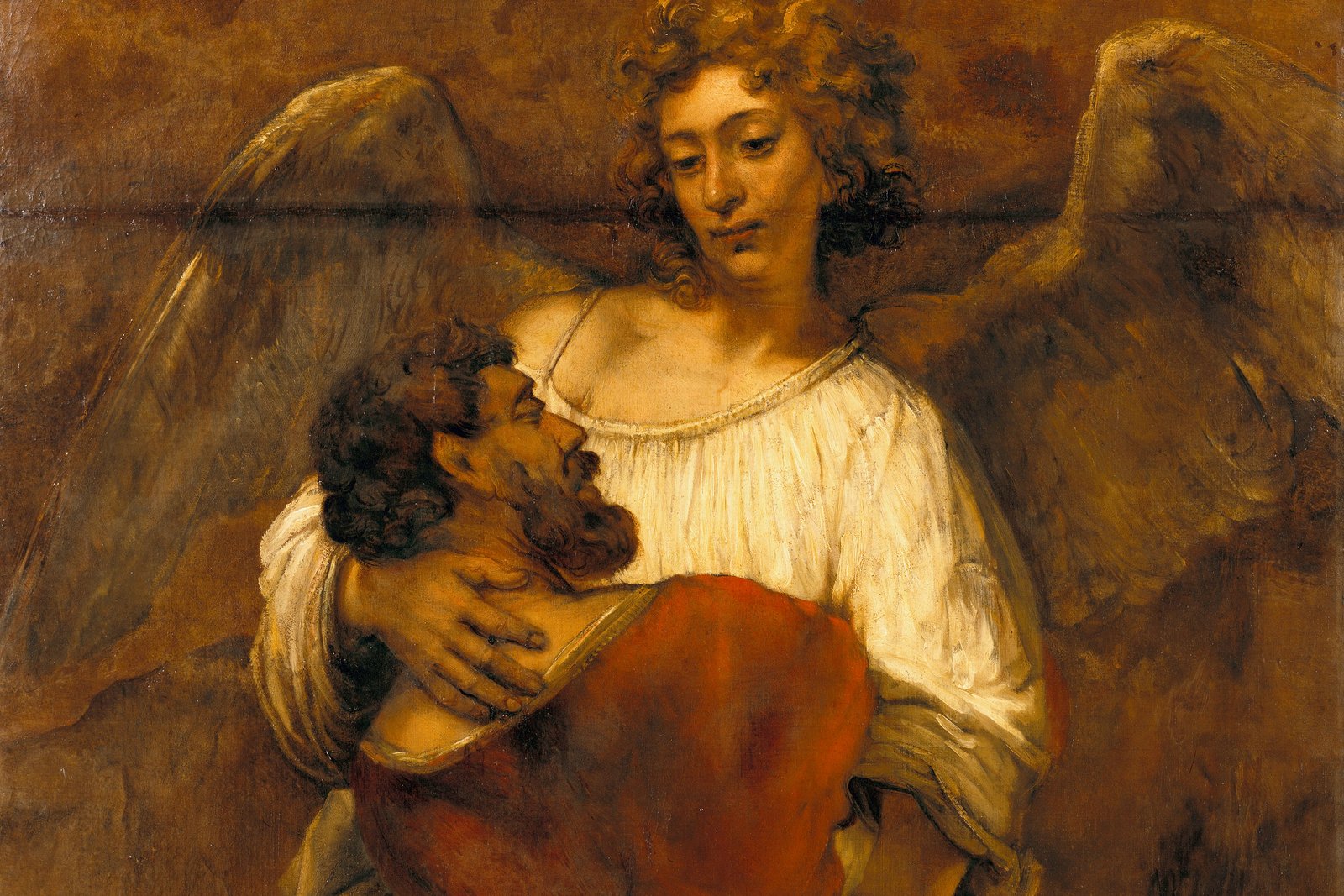
Public domain devotional painting of Jacob wrestling the angel.
It's in that solitary darkness that the encounter happens. "Jacob was left there alone. Then a man wrestled with him until the break of dawn" (Genesis 32:25, NABRE). No explanation is given for who this figure is or why the fight begins; the text simply drops the reader, alongside Jacob, into the middle of a struggle that will last the entire night.
A struggle neither side can win outright
What follows is described with unusual physical directness for a biblical encounter with a divine or angelic figure. "When the man saw that he could not prevail over him, he struck Jacob's hip at its socket, so that Jacob's socket was dislocated as he wrestled with him" (Genesis 32:26, NABRE). Even wounded, Jacob doesn't release his hold. As dawn approaches, the man asks to be let go — and Jacob, in one of the most quoted lines of the whole episode, refuses outright: "I will not let you go until you bless me" (Genesis 32:27, NABRE).
It's a startling moment of persistence directed at a figure of clear supernatural power, and Genesis doesn't soften Jacob's determination into something more reverent or passive. He holds on, injured, exhausted, and insists on a blessing before releasing his grip — behavior that later biblical and rabbinic tradition would come to read as emblematic of Jacob's entire character: relentless, willing to strive even against overwhelming odds, for something he believed mattered.
A new name for a changed man
The blessing Jacob receives comes in the form of a new name. "Then the man said, 'You shall no longer be named Jacob, but Israel, because you have contended with divine and human beings and have prevailed'" (Genesis 32:29, NABRE). The name Israel — traditionally understood to carry the sense of "one who strives with God" or "God strives" — would go on to become far more than a personal name; it becomes the name of the entire nation descended from Jacob's twelve sons, making this nighttime wrestling match, in a real sense, the naming moment for the whole people of Israel.
Jacob, for his part, asks a direct question in return: "Please tell me your name." The answer he receives is a refusal wrapped in a question: "Why do you ask for my name?" — and then, without further explanation, the figure blesses him and the encounter ends (Genesis 32:29-30, NABRE). The stranger's identity is never spoken aloud within the passage itself.
Man, angel, or God — what the text suggests
Genesis calls the figure simply "a man" for the whole account, and yet Jacob's own conclusion, once the struggle ends, points toward something considerably greater: "Jacob named the place Peniel, 'Because I have seen God face to face,' he said, 'yet my life has been spared'" (Genesis 32:31, NABRE). Centuries later, the prophet Hosea references this same episode and resolves the ambiguity in a different direction, describing Jacob as having "contended with an angel and prevailed" (Hosea 12:5, NABRE, paraphrased in context).
Traditional Jewish and Christian commentary has generally read these two descriptions as compatible rather than contradictory, understanding the figure as "the angel of the Lord" — a recurring Old Testament figure who appears elsewhere in Genesis and Exodus as a being who is somehow both distinct from God and yet who speaks and acts with God's own full authority, making an encounter with him functionally an encounter with God's presence itself. The text's deliberate refusal to name or fully explain the figure has long been read less as an oversight than as an intentional signal that some divine encounters resist easy categorization.
A limp carried for life, and a lesson carried further
Genesis notes that Jacob "limped along because of his hip" as he crossed over toward his reunion with Esau the very next morning (Genesis 32:32, NABRE), and adds that the Israelites, in memory of this event, refrained from eating a specific muscle near the hip in animals they slaughtered — a dietary practice the text presents as a direct, tangible link between this single nighttime struggle and the ongoing life of the nation that would carry Jacob's new name forward.
The wrestling match at the Jabbok remains one of the most psychologically rich angelic encounters in the entire Bible — an episode that resists tidy resolution, refuses to explain exactly whom Jacob fought, and yet leaves him, by morning, both permanently marked and permanently renamed. It's a striking image that has resonated across centuries of art, literature, and spiritual reflection: a man who would not release his hold on the divine until he had received a blessing, even at real cost to himself.
Trivia
Where in the Bible does Jacob wrestle with an angel?
Who did Jacob actually wrestle — an angel, a man, or God himself?
Why did the stranger strike Jacob's hip during the struggle?
What new name did Jacob receive, and what does it mean?
Did Jacob ever learn the name of the one he wrestled?
Related Reading