Gideon and the Fleece

A Reluctant Deliverer
Midian had oppressed Israel for seven years, raiding crops and livestock so thoroughly that the Israelites had taken to hiding in mountain dens and caves. When an angel of the Lord found Gideon, he was threshing wheat inside a wine press, out of sight, trying to keep what little grain he had from Midianite raiders. The angel's greeting was almost ironic under the circumstances: "The Lord is with you, you mighty warrior!" (Judges 6:12).
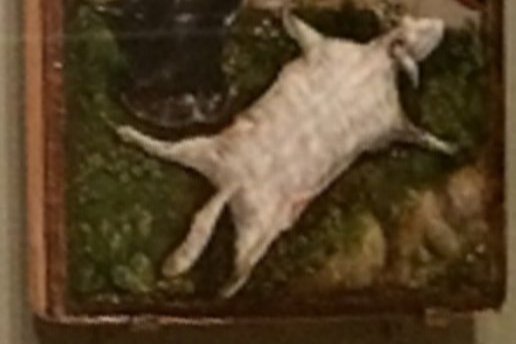
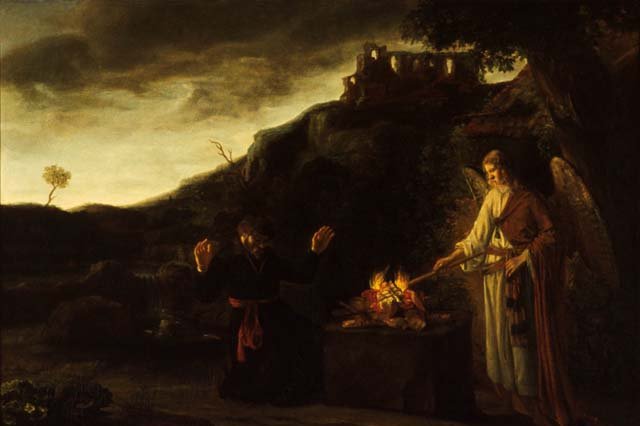
Maarten van Heemskerck, Gideon and the Fleece (c. 1550) - Wikimedia Commons, public domain
Gideon's response is not confidence but complaint and disbelief. If the Lord is with us, he asks, why has all this happened, and where are the wonders our ancestors used to tell us about? When the angel commissions him directly to save Israel from Midian, Gideon protests his own unfitness: "My clan is the weakest in Manasseh, and I am the most insignificant in my family" (6:15). God does not argue him out of his fear. He simply promises to be with him.
The First Sign
Even after an offering Gideon presents is consumed by fire that shoots from a rock at the angel's touch — proof enough, one would think, that this encounter is real — Gideon still hesitates before the larger task ahead of him: leading Israel into open war. Before committing, he lays out a test for God.
"I am putting this woolen fleece on the threshing floor," he says, "and if dew is on the fleece alone, while all the ground is dry, I shall know that you will save Israel through me, as you have said" (Judges 6:36-37). The next morning, "he wrung out the fleece, he squeezed enough dew from it to fill a bowl," while the surrounding ground remained dry (6:38).
The Second Sign, Reversed
A wet fleece on a dry morning could, in principle, be explained by ordinary weather — wool absorbs moisture more readily than bare ground. Gideon, whether out of genuine caution or simple human doubt, seems to sense this and asks for one more confirmation, this time reversed, and asks it carefully: "Do not be angry with me if I speak once more. Let me make just one more test with the fleece. Let the fleece alone be dry, but let there be dew on all the ground" (6:39). God grants this too, without rebuke: "the fleece alone was dry, but there was dew on all the ground" (6:40) — a result no ordinary weather pattern could produce, since dew normally settles more readily on the wool than the ground, not less.
From 32,000 to 300
Having received his confirmation, Gideon assembles an army of 32,000 men — and God immediately tells him it's too many. "The Lord said to Gideon: You have too many soldiers with you for me to deliver Midian into their power, lest Israel vaunt itself against me and say, “My own power saved me." (Judges 7:2). Through two rounds of selection — first sending home anyone afraid, then a strange test involving how the remaining men drank water from a stream — Gideon's force is whittled down to just 300 men.
That night-time raid, using torches hidden inside jars, trumpets, and a sudden shout in the darkness, threw the vastly larger Midianite camp into panicked confusion, and Israel won a victory that could not plausibly be attributed to numbers or tactics alone.
The water test that produced the final 300 is stranger than a simple headcount. God instructs Gideon to bring his remaining ten thousand men down to a stream: "Everyone who laps up the water as a dog does with its tongue you shall set aside by himself; and everyone who kneels down to drink raising his hand to his mouth you shall set aside by himself" (Judges 7:5). Only three hundred men drank by scooping water to their mouths with cupped hands rather than kneeling directly down to the stream, and God tells Gideon plainly, "By means of the three hundred who lapped up the water I will save you and deliver Midian into your power. So let all the other soldiers go home" (7:7). Commentators have long debated exactly what distinguished the two groups — some read the cupped-hand drinkers as more alert, still watching their surroundings rather than kneeling with their faces down at the water's edge — but the text itself never explains the criterion, leaving the selection as arbitrary-seeming as the fleece itself, which is likely the point: the choosing was God's to make, not a matter of Gideon identifying his best soldiers by ordinary military judgment.
Catholic Reading: Honest Doubt, Patient God
Gideon's fleece has entered common usage as shorthand for asking God for a sign before acting — and Christian tradition has generally treated the episode with more nuance than either blanket endorsement or condemnation. What distinguishes Gideon's requests from presumptuous "testing" of God, which Scripture elsewhere warns against, is context: Gideon is not idly demanding proof for its own sake, but is a frightened man facing a genuinely dangerous mission, asking humbly and even apologetically ("do not be angry with me") for confirmation of a call he has already, in large part, accepted.
God's patience with him — granting both signs without complaint, then further stripping his army down to demonstrate the victory was never about human strength — reads in Catholic commentary as an illustration of grace meeting real human weakness where it stands, rather than demanding a confidence the person does not yet have. Gideon does not become fearless by the end of the story; he becomes obedient despite remaining fear, which Scripture treats as its own form of courage.
Related reading: see Samson and Delilah for another judge of Israel whose story explores strength and human weakness together, and The Crossing of the Red Sea for an earlier moment when Israel's deliverance depended on trusting God rather than numbers.
Trivia
Who was Gideon and why was he reluctant to lead Israel?
What was the sign of the fleece?
Why did Gideon ask for the sign a second time, reversed?
Did Gideon go on to win the battle?
How does Catholic tradition read Gideon's request for a sign?
Related Reading