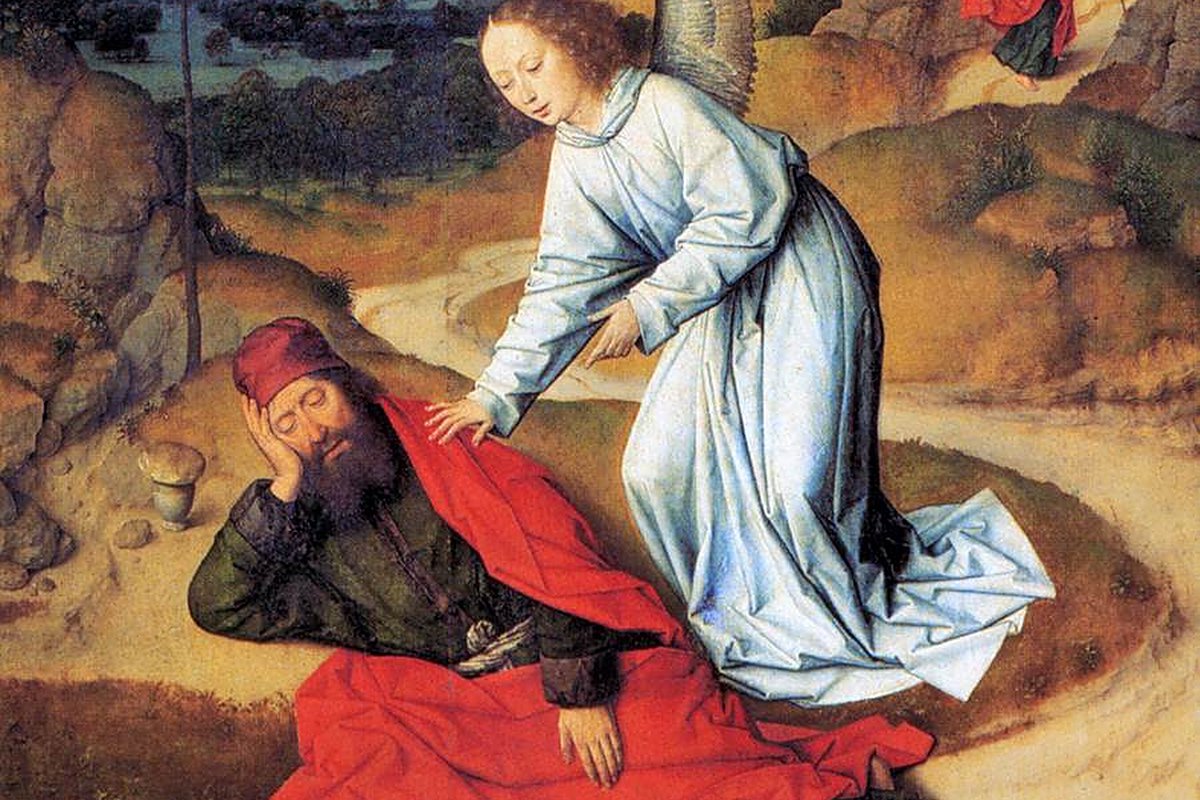
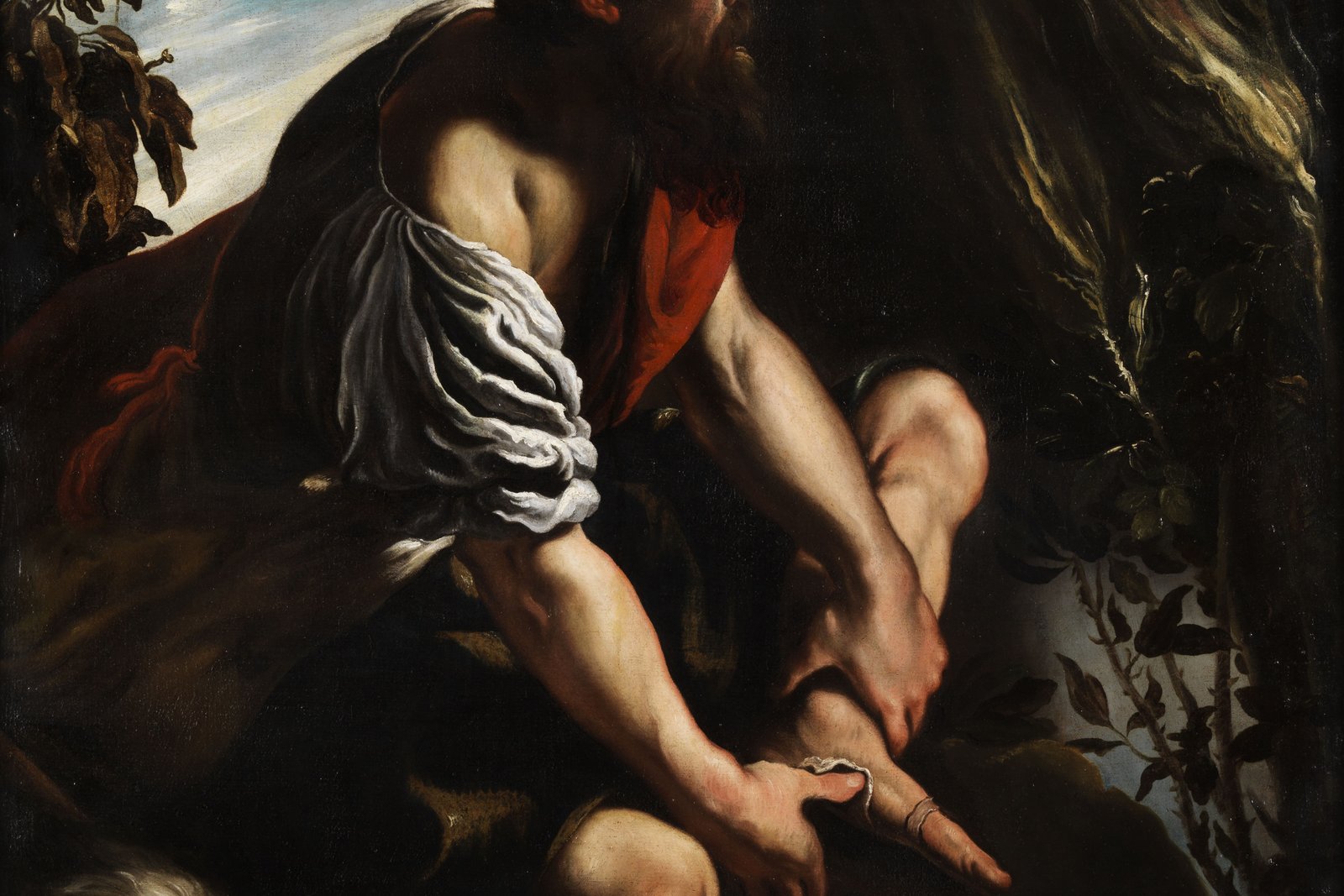
Hagar and the Angel in the Desert

A servant, a promise, and a broken household
Hagar enters the story of Genesis not as a free agent but as property — an Egyptian servant belonging to Sarai, given to Abraham as a secondary wife specifically so that Sarai, unable to conceive, could have a child through her. It's an arrangement drawn from ancient Near Eastern legal custom, uncomfortable to modern readers but familiar to Genesis's original audience, and the text doesn't hide that it goes badly almost immediately: once Hagar becomes pregnant, tension flares between the two women, Sarai deals harshly with her, and Hagar runs.
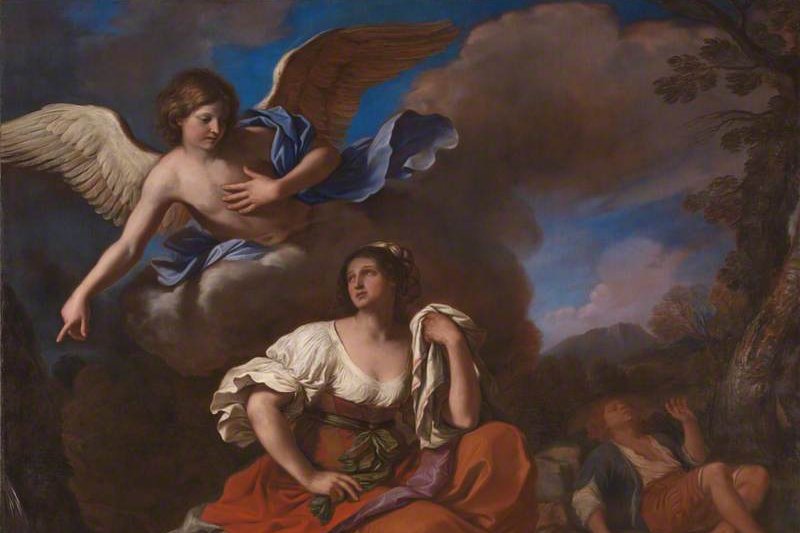
Guercino, The Angel Appears to Hagar and Ishmael, 1652-1653 — public domain.
She flees into the wilderness with essentially nothing — no protector, no plan, and, as a pregnant woman alone in the desert of that era, very little realistic chance of survival on her own. It's at this exact point of total vulnerability, not at some later moment of higher status, that the angel of the Lord finds her.
"You are God who sees me"
"The Lord's angel found her by a spring in the wilderness, the spring on the road to Shur, and he asked, 'Hagar, maid of Sarai, where have you come from and where are you going?'" (Genesis 16:7-8, NABRE). The question isn't rhetorical — Hagar answers honestly, "I am running away from my mistress, Sarai." What follows is a mixture that can feel jarring to modern readers: the angel instructs her to return and submit to Sarai, but pairs that hard instruction with an enormous promise, telling her, "I will make your descendants so numerous... that they will be too many to count," and instructing her to name her coming son Ishmael — meaning "God hears" — "For the Lord has heeded your affliction" (Genesis 16:10-11, NABRE).
It's what Hagar does next that makes this scene so remarkable within the wider sweep of Genesis. She doesn't just receive the angel's message; she names the God who sent it. "To the Lord who spoke to her she gave a name, saying, 'You are God who sees me'; she meant, 'Have I really seen God and remained alive after he saw me?'" (Genesis 16:13, NABRE). In Hebrew this name is El Roi. Nowhere else in the Old Testament does a person — man or woman, patriarch or servant — coin a name for God themselves. It happens here, in the wilderness, given by an enslaved foreign woman with no standing in the household she's fleeing. Genesis doesn't editorialize about the significance of that; it simply lets the detail stand.
A second angel, a second desert, a second rescue
Hagar's story with angels doesn't end there. Years later, after Isaac's birth, Sarah insists that Abraham send Hagar and Ishmael away permanently, and Abraham — reluctantly, and only after God assures him Ishmael will also be cared for — does so. Provisions run out quickly in the wilderness of Beersheba, and Genesis describes Hagar placing her dying son under a bush and moving off so she won't have to watch him die, weeping.
"God heard the boy's voice, and God's angel called to Hagar from heaven: 'What is the matter, Hagar? Do not fear; God has heard the boy's voice in this plight of his. Get up, lift up the boy and hold him by the hand; for I will make of him a great nation.' Then God opened her eyes, and she saw a well of water. She went and filled the skin with water, and then let the boy drink" (Genesis 21:17-19, NABRE). The well, notably, doesn't appear to be newly created — the text implies it was there the whole time, and what changes is Hagar's ability to see it, once God "opened her eyes." It's a quietly powerful detail: divine rescue here isn't described as intervention from nowhere, but as revelation of provision that already existed.
Why Hagar's story matters
Hagar occupies an unusual place in the biblical narrative — genuinely sympathetic, genuinely wronged by the people around her, and yet also the ancestor, in the text's own telling, of a great nation in her own right through Ishmael. Islamic tradition, separately, holds Hagar and Ishmael in deep honor, connecting them to the origins of Mecca and the Zamzam well, giving her story a significance that extends well beyond Christian and Jewish readings alone.
Within the specific context of angels in Scripture, Hagar's two encounters establish a pattern worth noting: the angel of the Lord appears here not to a patriarch making covenant history, but to an outsider in crisis, twice, in the wilderness, at the precise moment survival itself is in doubt. It's a pattern that recurs throughout the Old Testament — angelic care arriving not for the powerful but for those who have run out of options — and it's part of what makes Hagar's brief, vivid story one of the most quietly moving angelic encounters in all of Genesis.
Trivia
Who was Hagar in the Bible?
Why did Hagar flee into the wilderness?
What did the angel say to Hagar at the spring?
What name did Hagar give to God?
Did an angel appear to Hagar a second time?
Related Reading