The Angel Crowning Saint Cecilia and Valerian

A wedding night confession
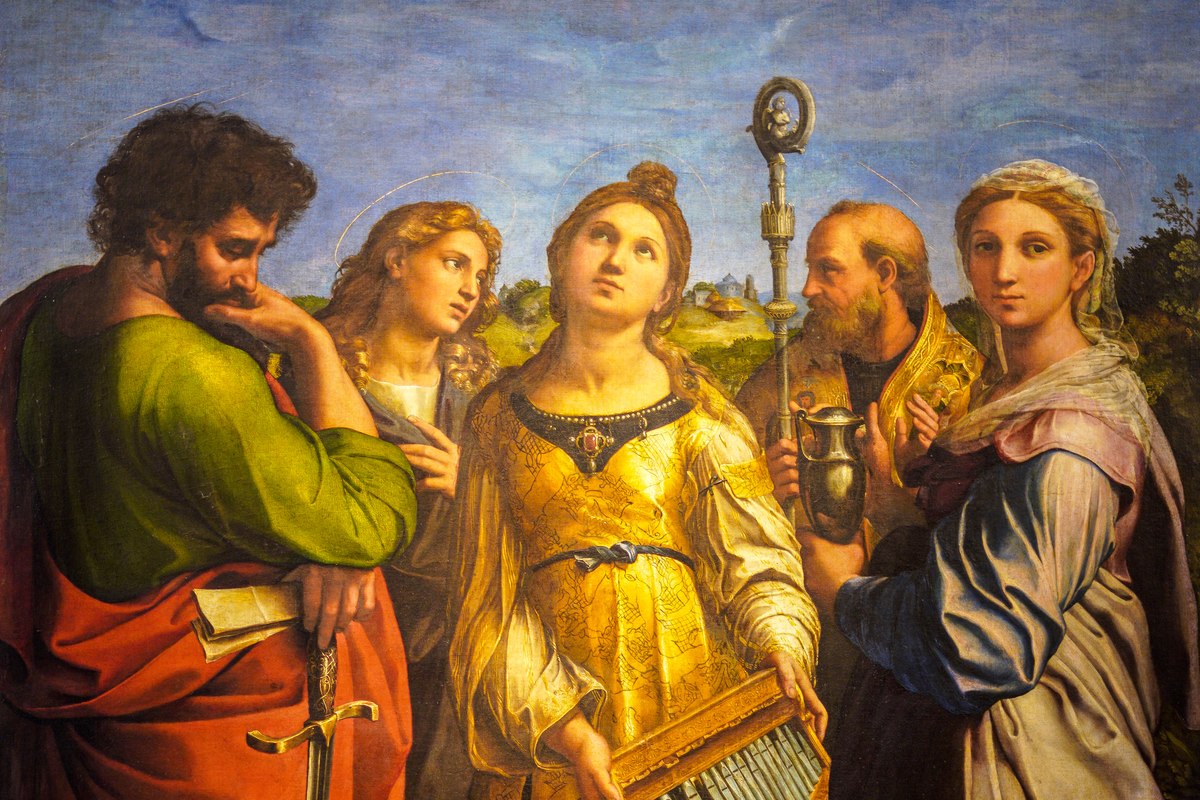
Saint Cecilia is remembered today chiefly as the patron of musicians — a devotion rooted in the story that she sang to God in her heart during her own wedding feast. But an older, stranger thread runs through her legend, one centered not on music but on an angel she claimed guarded her chastity even inside marriage.
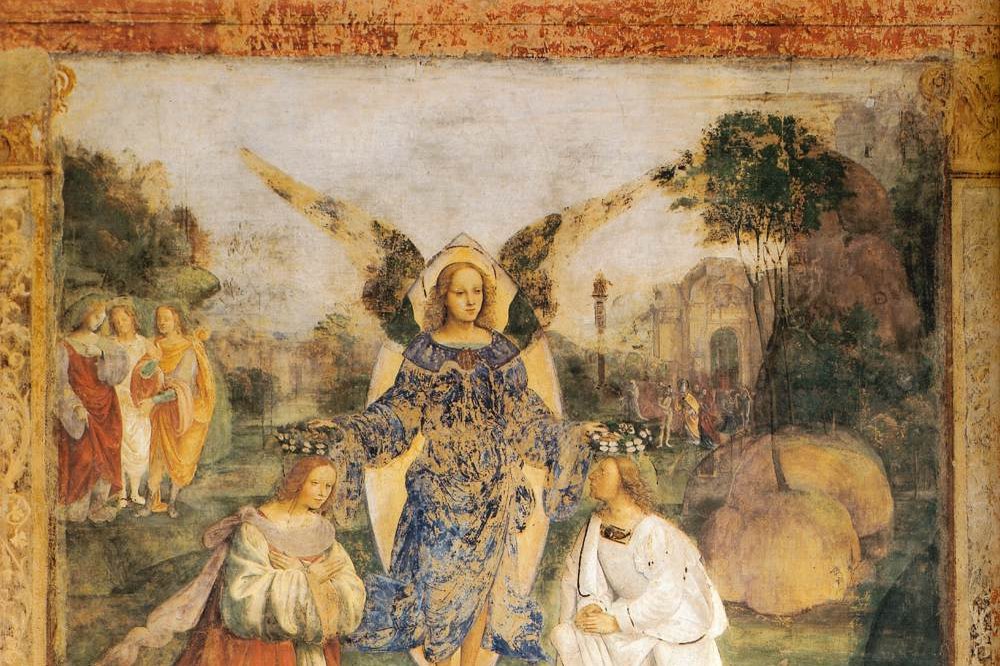
Francesco Francia, Oratorio di Santa Cecilia, Bologna, 1504-1506 — public domain.
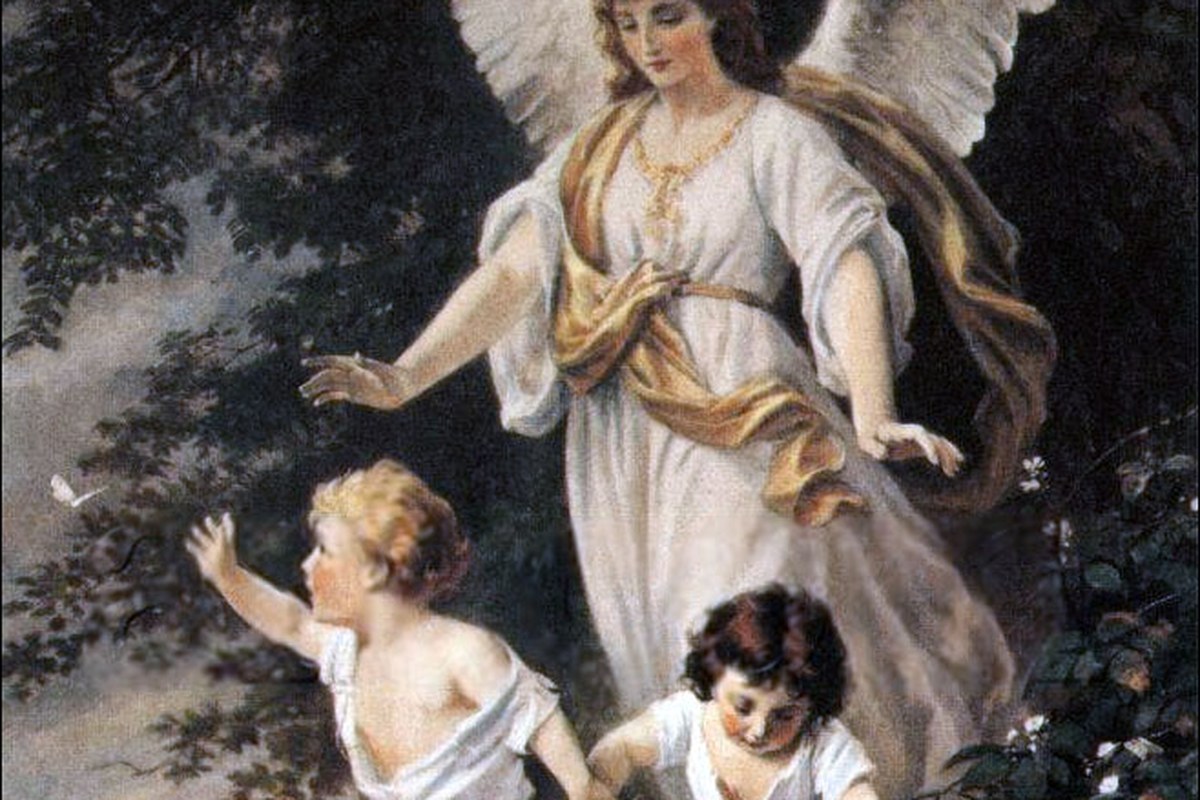
According to the Passio Sanctae Caeciliae, the traditional Acts recording her life and martyrdom, Cecilia had privately consecrated her virginity to God before her family arranged her marriage to a young Roman nobleman named Valerian. On their wedding night, rather than simply consummating the marriage as expected, she told her new husband a startling secret: an angel of the Lord watched over her body, and would punish him — the tradition says with death — should he ever approach her with impure desire.
"Let me see this angel"
Valerian's reaction is the hinge on which the entire legend turns. He does not dismiss the claim as a bride's excuse, nor does he react with anger. Instead, according to the Acts, he asks a direct and reasonable question: if this angel truly exists, let him see it for himself — and if what she says is false, he warns, he will kill them both.
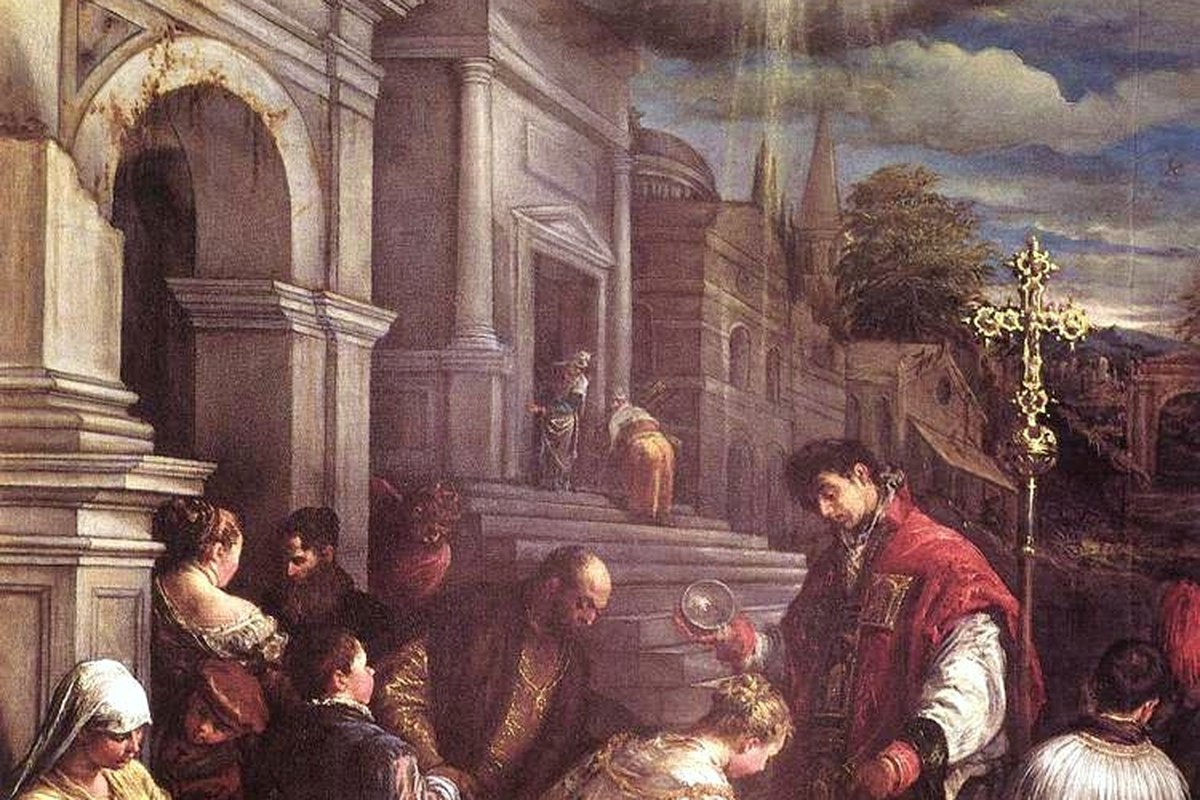
Cecilia's answer sends him out of the city entirely. She tells him he can see the angel only once he has been made "clean and pure," and directs him to the third milestone along the Via Appia, the great road leading south out of Rome, where he will find "the poor who ask alms." There, the tradition holds, Valerian meets Pope Urban I — hiding among the poor to avoid the persecution of Christians then underway — who instructs and baptizes him. It is a striking narrative choice: the path to the angelic vision Valerian demands runs not through spectacle but through instruction, conversion, and an ordinary sacrament.
The crowning
Returning to Cecilia, Valerian finds an angel standing beside her, holding two crowns woven of roses and lilies — flowers that never fade, the legend specifies, and are visible only to those with pure hearts. The angel places one crown on each of their heads, in a scene that Renaissance painters would later render as the visual centerpiece of Cecilia's whole story: two young newlyweds, kneeling or standing side by side, an angel between them completing a marriage transformed from ordinary union into a shared vocation of consecrated purity.
Valerian's brother, Tiburtius, is soon drawn into the story as well — he notices the fragrance of the flowers, cannot see their source at first, and upon hearing the account from his brother, likewise converts and is baptized. According to the tradition, both brothers went on to devote themselves to recovering and burying the bodies of Christians executed under Roman persecution, a dangerous ministry that eventually led to their own arrest and martyrdom — men whose entire Christian lives, in the story as told, trace back to one angel neither of them had believed in until they went looking for him directly.
Legend, not confirmed history
It's important to be precise about what kind of source this story comes from. Cecilia's Acts were composed well after her traditional death — most scholars date the surviving text to the fifth century, centuries after the third-century setting it describes — and belong to a genre of hagiography that prioritized spiritual instruction and edification over the kind of verified, contemporaneous documentation modern historians look for. The Catholic Church has long recognized this distinction itself: Cecilia's veneration as a martyr is ancient and well attested by the existence of a titular church in Rome bearing her name from an early date, but the specific details of the angel, the crowning, and even some elements of Valerian's conversion belong to pious tradition rather than confirmed historical record. Readers can hold both truths at once — a devotion old and deep enough to have shaped centuries of art and prayer, built on a narrative whose precise historical details cannot be independently verified.
A fresco cycle built around one image
The fullest surviving visual telling of this legend covers the walls of the Oratorio di Santa Cecilia in Bologna, decorated in the early sixteenth century by a group of painters including Francesco Francia, Amico Aspertini, and others, commissioned to illustrate scenes from her life in sequence. The crowning scene — angel standing between the newly baptized Valerian and Cecilia, wreaths of roses in hand — appears as one of the cycle's central panels, and similar treatments of the subject appear scattered across other churches and collections associated with her cult, a testament to how central this single image became to her visual identity even alongside her later, better-known patronage of music.
For Cecilia's fuller biography, including the more famous account of her singing at her own wedding and the details of her martyrdom, see Saint Cecilia — Heavenly Music. Her feast is celebrated on November 22.
Trivia
What did Cecilia tell Valerian about the angel on their wedding night?
How did Valerian come to see the angel himself?
Is this story historical fact or pious legend?
What happened to Valerian and his brother Tiburtius after the vision?
Why did this scene become popular in Renaissance art?
Related Reading