Saints Marcellinus and Peter, Martyrs

An exorcist, a priest, and the last great persecution
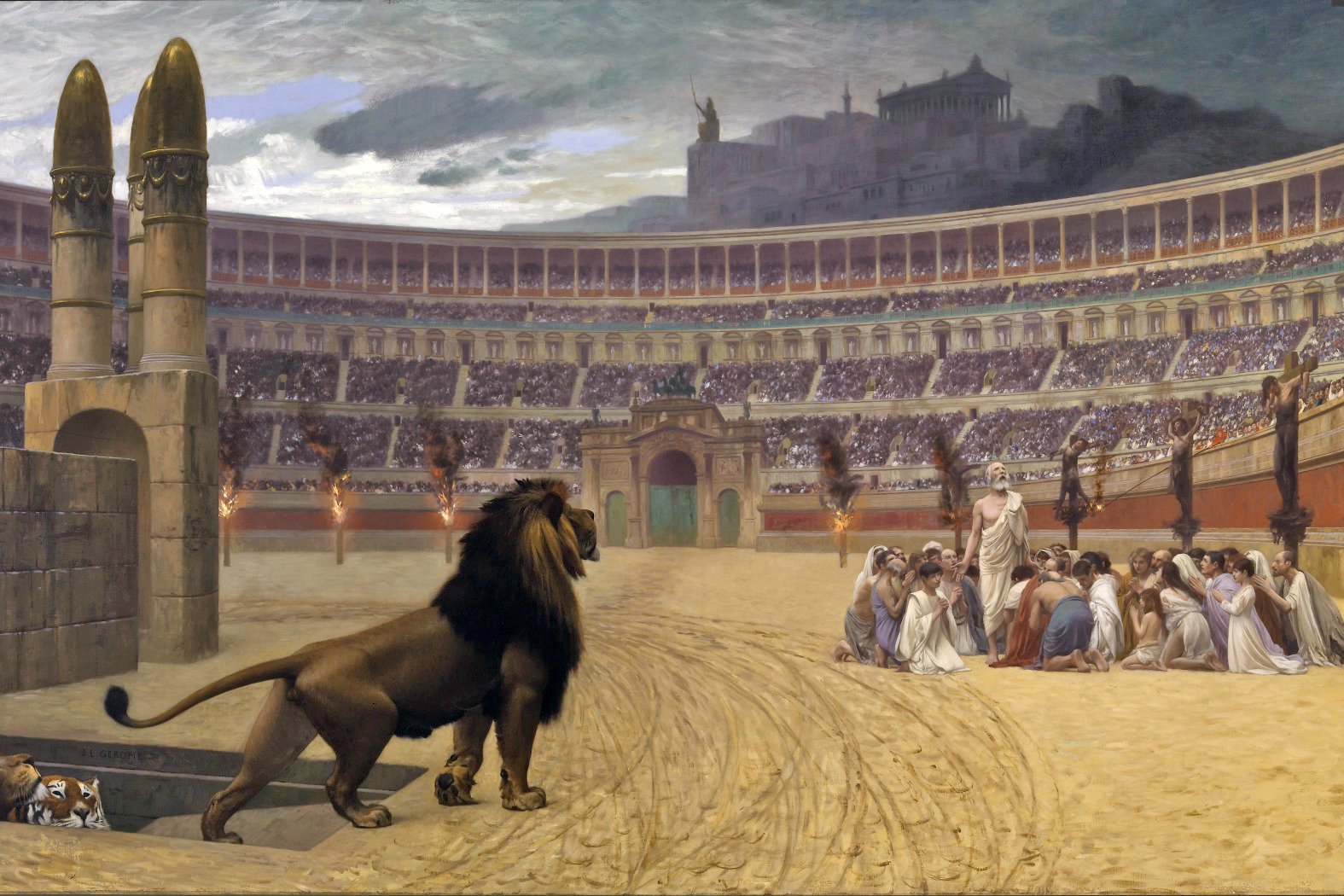
Almost nothing survives about the early lives of Marcellinus and Peter beyond their roles within the Roman Church. Marcellinus was a priest, and Peter held the office of exorcist — one of the "minor orders" of the early Church, a formally recognized ministry devoted to praying over catechumens preparing for baptism and, when needed, over those believed to be afflicted by evil spirits. Both men were arrested and executed in Rome during the persecution launched by the emperor Diocletian beginning in 303, widely regarded by historians as the most severe and systematic of the persecutions Christians faced under Roman rule, and the last before Constantine's Edict of Milan in 313 brought Christian worship into the open with legal toleration.
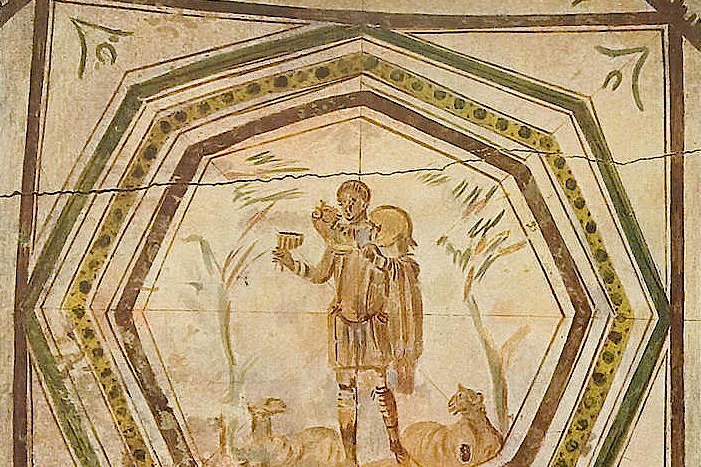
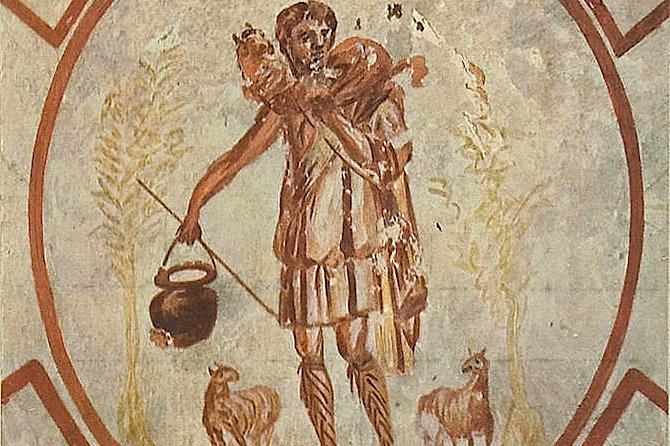
Fresco depicting a baptism, Catacombs of Saints Marcellinus and Peter, Rome, 3rd–4th century AD — public domain.
The most detailed surviving account of their deaths comes not from a formal court record — none survives — but from Pope Damasus I, who served as bishop of Rome from 366 to 384 and took a particular personal interest in honoring the city's early martyrs. Damasus recorded that as a boy he had heard the story of Marcellinus and Peter's execution directly from the executioner who carried it out, a detail that, if accurate, places Damasus remarkably close to a living eyewitness of one of Rome's last pre-Constantinian martyrdoms. According to that account, the two men were beheaded in a wooded area outside the city known as the "Black Forest" (Silva Nigra) or, in some versions, at a location along the Via Labicana — the executioner reportedly chose a hidden, wooded execution site specifically so that Christians would be unable to locate the bodies afterward and give them honorable burial.
A grave the executioner himself later revealed
The story, as later Christian tradition — as distinct from any contemporary legal record, which does not survive — preserves it, took an unusual turn from there. The same executioner who had carried out the killing was reportedly so moved by witnessing the two men's courage and evident faith that he became a Christian himself, and later revealed the location of their hidden burial place to the Roman Christian community, allowing their bodies to be recovered and given proper burial along the Via Labicana outside Rome. Their tomb became a site of Christian pilgrimage and was later expanded into a catacomb complex, part of the extensive network of underground burial galleries that surrounded Rome and sheltered the graves of many of the city's early martyrs.
When Pope Damasus later identified and restored the site during his pontificate, he had a commemorative poem, or epigram, inscribed at the tomb in his own distinctive verse style — Damasus commissioned similar inscriptions at numerous martyrs' graves throughout Rome, part of a broader effort to preserve and publicize the memory of the city's earliest Christian witnesses at a moment, the later fourth century, when direct living memory of the persecutions was beginning to fade. Constantine's mother, Helena, is traditionally associated with building a basilica over the site as well, part of the same imperial family's broader patronage of major Christian shrines across Rome and the Holy Land during the fourth century.
A place in the Church's oldest surviving prayer
The clearest sign of how significant Marcellinus and Peter's cult became in ancient Rome is their continued presence, to this day, in the Roman Canon — the eucharistic prayer known liturgically as Eucharistic Prayer I, one of the oldest continuously used texts in Christian worship. The Canon includes a list of early Roman martyrs invoked by name after the consecration, and Marcellinus and Peter appear there alongside such figures as Saints Cosmas and Damian and other early Roman martyrs — a roll call that reflects which martyrs' cults were most firmly established in the city of Rome by the time the Canon took its enduring form, generally dated by liturgical scholars to somewhere between the fourth and sixth centuries. Being named in that list placed Marcellinus and Peter, in the eyes of the Roman Church, in remarkably close company with the apostles and earliest witnesses to the faith.
Relics carried north by Charlemagne's court
Marcellinus and Peter's story took an unexpected later turn in the ninth century, well outside Rome. In 827, Einhard — the scholar, courtier, and biographer of the emperor Charlemagne, best known today for his biography Vita Karoli Magni — arranged for monks acting on his behalf to secretly obtain the relics of Marcellinus and Peter from their catacomb near Rome and transport them north into Frankish territory, eventually installing them at a monastery Einhard had founded at Seligenstadt, near Frankfurt in modern Germany. Einhard himself later wrote an account of the relics' journey and of miracles reportedly associated with them along the way, a text that offers modern historians a rare, detailed window into the wider ninth-century Carolingian practice of translating — a term used for the formal, sometimes secretive relocation of a saint's relics — venerated remains from Italy into the growing Frankish Christian world.
Remembered without a story, honored just the same
What makes Marcellinus and Peter distinctive among early Roman martyrs is how little narrative detail survives about them personally compared to how firmly established their veneration became — a pattern that recurs among several of Rome's earliest martyr-saints, including figures such as Saints Nereus and Achilleus, whose stories were likewise reconstructed centuries later largely from tomb inscriptions and inherited local memory rather than a full contemporary biography. Their feast, kept on June 2, and their enduring place within the words of the Roman Canon stand as a reminder that the Church's memory of its earliest martyrs often survives less through detailed written record than through unbroken liturgical practice — the same prayer, spoken at the same point in the Mass, carrying two Roman names forward for more than a thousand years.
Trivia
Who were Saints Marcellinus and Peter?
Why are Marcellinus and Peter named in the Roman Canon of the Mass?
What did Charlemagne have to do with Saints Marcellinus and Peter?
What is the source for the story of their execution and burial?
What is the feast day of Saints Marcellinus and Peter?
You May Also Like
Related Reading