The First Martyrs of the Holy Roman Church

A city on fire, and a search for someone to blame
Rome in the summer of 64 AD was a city of wood, narrow streets, and packed apartment blocks — exactly the kind of place a fire could turn catastrophic in hours. When flames broke out near the Circus Maximus on the night of July 18, they burned for six days and, after a brief lull, flared up again for three more. Ten of Rome's fourteen districts were damaged or destroyed. Ancient sources disagree on how the fire started, but they agree on what happened next: rumors spread that the emperor Nero had set it himself, perhaps to clear ground for a lavish new palace complex, the Domus Aurea, that he built on the ruins soon afterward.
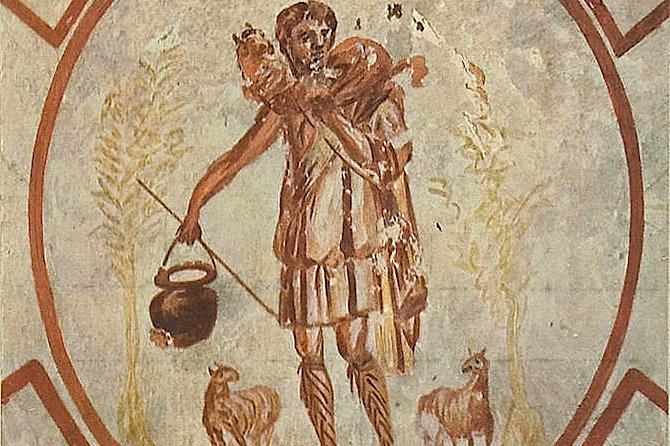
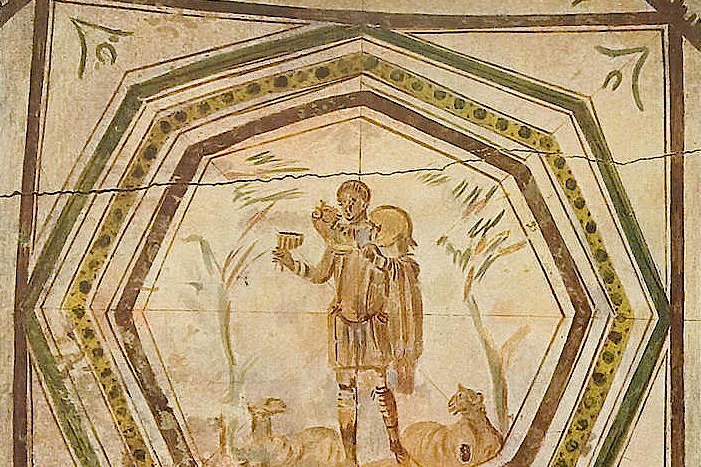
The Good Shepherd, fresco in the Catacomb of Priscilla, Rome, 3rd century AD — public domain.
Nero needed to redirect that suspicion, and according to the Roman historian Tacitus — writing about fifty years later in his Annals, our single most important source for this episode — he found his target in a religious sect already regarded with suspicion by ordinary Romans: the Christians. Tacitus describes them as "a class of men, hated for their abominations," a line that tells us less about actual Christian belief than about how deeply misunderstood the new faith still was in Rome only three decades after Christ's death and resurrection. Nero had them rounded up, tried first simply for the "crime" of being Christian, and then, once a number had confessed or been named by others under torture, condemned as a group on the added charge of arson — a charge Tacitus himself plainly did not believe.
An execution designed to entertain
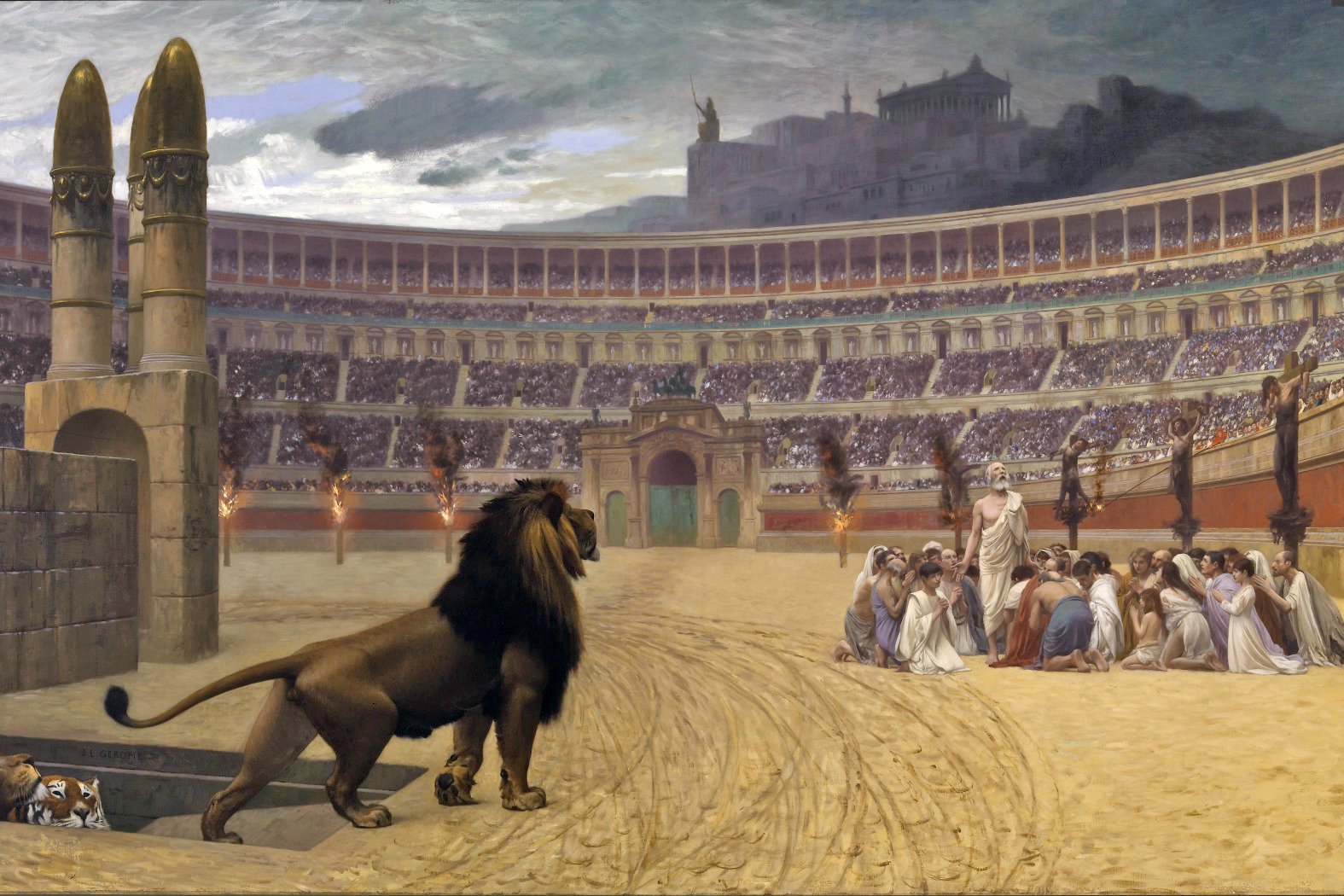
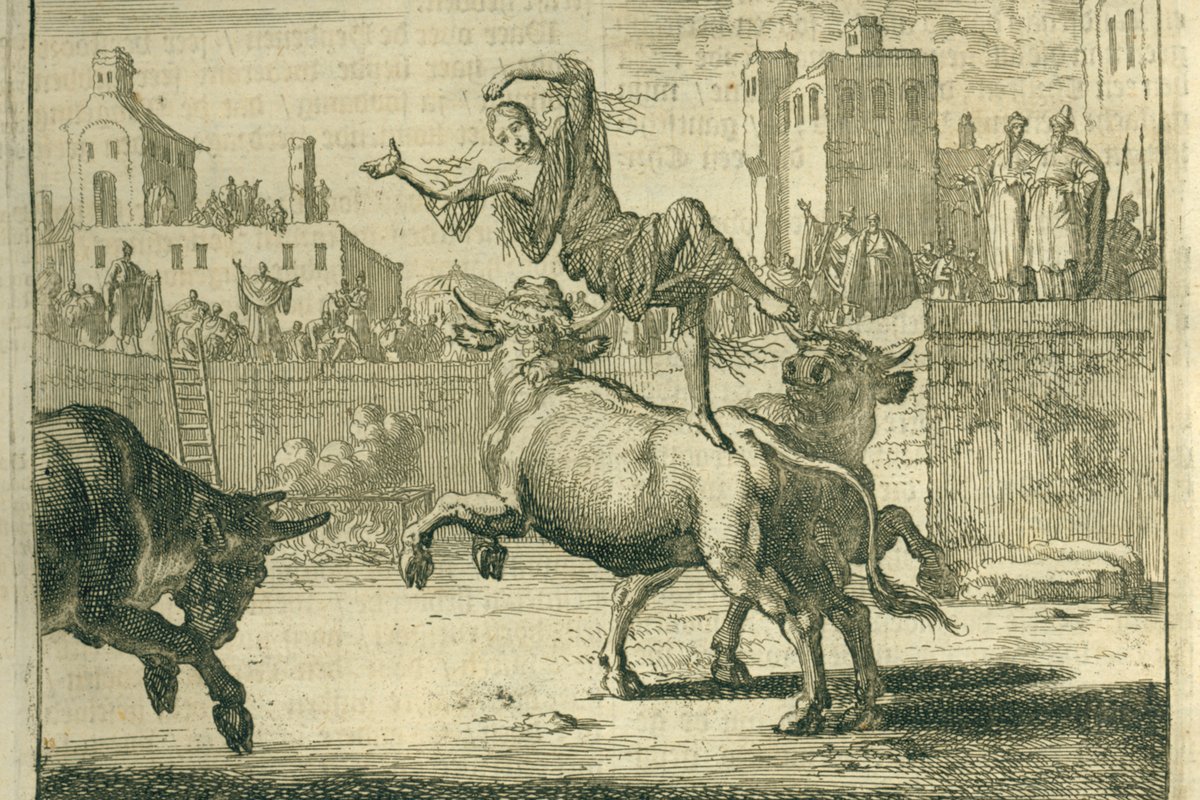
What followed was not a quiet series of trials but a public spectacle staged for maximum cruelty. Tacitus records that some of the condemned were sewn into the skins of wild animals and thrown to dogs to be torn apart in the arena. Others were crucified. Still others were coated in pitch and set alight after dark, used as human torches to light Nero's own gardens while he rode among the crowds in a chariot, dressed as a charioteer, putting on a public show of his own. It is one of the most horrifying passages in all of ancient historical writing, and Tacitus — no friend to Christians himself — notes that the sheer excess of it began to turn public sympathy toward the victims. People started to suspect that these Christians were being destroyed "not for the public good but to glut one man's cruelty."
This is the first time in surviving Roman records that the imperial state itself, rather than a local mob or provincial governor, organized the mass killing of Christians as a matter of policy — even if the immediate motive was political cover rather than religious persecution as such. It set a grim precedent. Waves of localized persecution would recur under later emperors over the following two and a half centuries, but Nero's massacre in 64 AD stands as the opening chapter of Christian martyrdom on Roman soil, the reason the Church calls this group, collectively, the First Martyrs of the Holy Roman Church.
Names lost, but not forgotten entirely
Almost none of the individual men, women, and probably children killed in 64 AD are known to us by name. This is itself significant: unlike later, better-documented martyrs such as Saint Ignatius of Antioch or Saint Agnes of Rome, whose stories were preserved in detail by later Christian writers, the victims of Nero's persecution were, for the most part, ordinary members of the small Roman Christian community — recent converts, freedmen, slaves, tradespeople — whose names simply were not recorded by anyone with reason to remember them individually. What survived instead was the collective memory of the event itself, carried forward first by oral tradition within the Roman church and then fixed in writing by Tacitus, a pagan historian with no interest in flattering Christianity, which if anything makes his account more credible as an outside confirmation of what the Church had always claimed.
Ancient and enduring tradition holds that both Saint Peter, the leader of the apostles, and Saint Paul, the great missionary to the Gentiles, were put to death in Rome during roughly this same period of persecution, though the two are commemorated on their own solemnity on June 29 rather than folded into the anonymous group remembered the next day. The Church's decision to place the feast of the First Martyrs immediately after that of Peter and Paul is not accidental — it deliberately links the two most famous deaths of the early Roman church to the much larger, nameless crowd of ordinary believers who died alongside them, or in the same wave of violence shortly after.
Why the Church still keeps their feast
The Catechism of the Catholic Church describes martyrdom as "the supreme witness given to the truth of the faith" (CCC 2473), and few episodes illustrate that definition as starkly as this one. These Roman Christians were not offered any particular honor for their deaths, no biography, no shrine built quickly in their names — most of them left behind nothing but the fact that they had died, and that a pagan historian thought the manner of their deaths worth recording as an example of excessive cruelty. Their commemoration on June 30 is, in a real sense, a feast dedicated to anonymity itself: a reminder that the early Church's growth rested not on famous figures alone but on countless unrecorded believers who held to their faith under direct threat of torture and death.
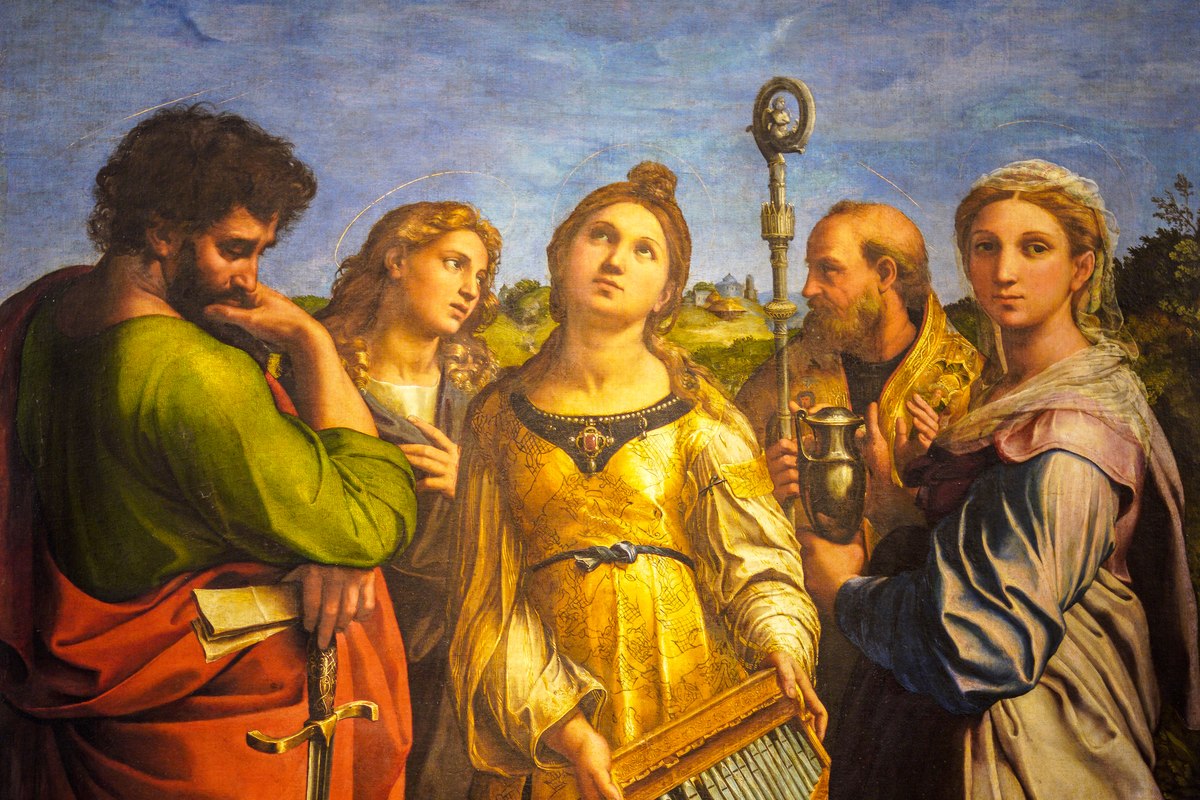
Devotionally, this feast has long resonated with anyone drawn to the wider company of early Roman martyrs — figures like Saint Lawrence and Saint Cecilia, whose stories were preserved in far more detail but who belonged to the same city and the same tradition of Christian witness under Roman persecution. The catacombs beneath Rome, where later generations of Christians buried their dead and gathered in times of danger, stand as the physical trace of that broader community — the same community whose earliest known collective sacrifice is what the Church remembers on June 30.
A feast for the forgotten
There is something quietly powerful in a feast day built around people we cannot name. Most saints' days celebrate an individual whose life, virtues, and final words have come down to us in rich detail. This one does the opposite: it asks the faithful to hold in memory an entire community, defined not by any single act of heroism but by the shared fact of having died together, burned or torn apart in a Roman arena, for a faith that was, at the time, barely a generation old in the city where it would eventually become the seat of the papacy itself. In an age of listicles and named biographies, the First Martyrs of the Holy Roman Church remain a reminder that sanctity does not require a name recorded — only a faith that held under fire, quite literally.
Trivia
Who were the first martyrs of the Church of Rome?
Did Nero really blame Christians for the fire of Rome?
What is the feast day of the First Martyrs of the Holy Roman Church?
How were these early Christian martyrs executed?
Is Saint Peter counted among the First Martyrs of Rome?
You May Also Like
Related Reading