The Angel Who Led Israel Through the Wilderness


A promise made before the journey even begins
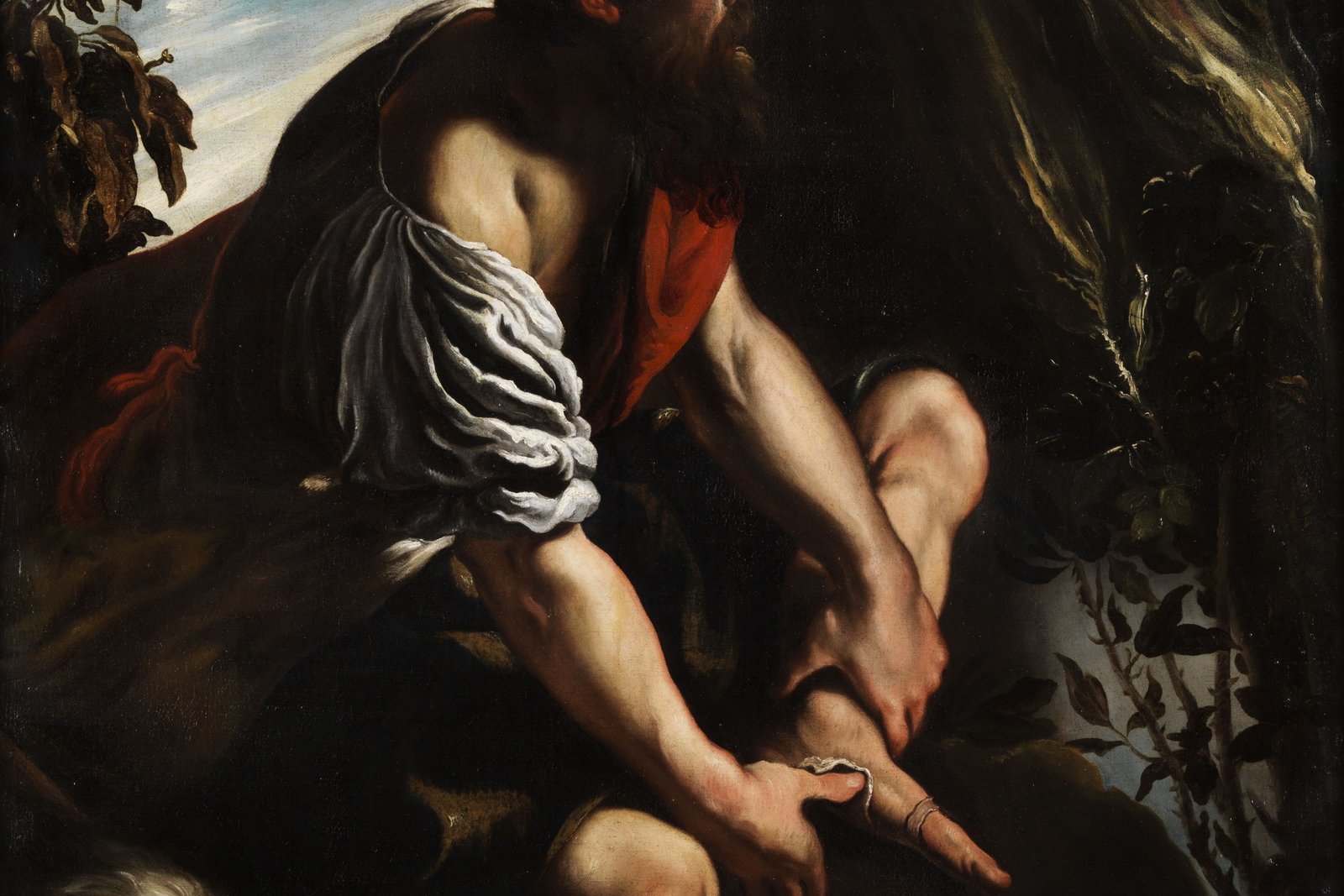
The idea of an angel leading Israel through the wilderness doesn't appear as a single dramatic episode — it runs as a thread through several different moments across Exodus, changing shape and meaning as Israel's relationship with God changes. It starts early, while the people are still camped at Sinai, with a promise that sounds entirely reassuring: "See, I am sending an angel before you, to guard you on the way and bring you to the place I have prepared. Be attentive to him and obey him. Do not rebel against him, for he will not forgive your sin. My authority is within him" (Exodus 23:20-21, NABRE). This is a guide carrying delegated divine authority — obedience owed to the angel is, in effect, obedience owed to God himself, since "my authority is within him."
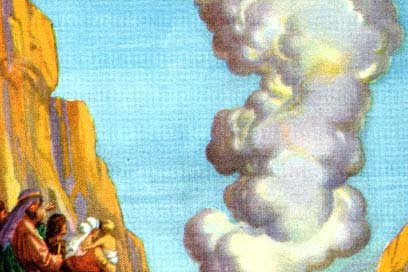
The Providence Lithograph Company, "He Led Them by a Pillar of Cloud," Bible study card, c. 1896-1913 -- public domain.
The promise comes with real teeth attached, too: "If you obey him and carry out all I tell you, I will be an enemy to your enemies and a foe to your foes" (Exodus 23:22, NABRE), tying Israel's future conquest of Canaan directly to how seriously they take this angelic guide.
Standing between Israel and Pharaoh's army
That guiding role turns physically protective at the most dangerous moment of the entire Exodus narrative — Pharaoh's army closing in on a people trapped against the Red Sea. Scripture describes an extraordinary repositioning: "The angel of God, who had been leading Israel's army, now moved and went around behind them. And the column of cloud, moving from in front of them, took up its place behind them, so that it came between the Egyptian army and that of Israel. And when it became dark, the cloud illumined the night; and so the rival camps did not come any closer together all night long" (Exodus 14:19-20, NABRE). The angel who had been leading from the front moves, deliberately, to shield from behind — buying Israel the night it needed before the sea itself opened a path forward.
After the golden calf, a demotion disguised as mercy
The tone shifts sharply after Israel's worst failure in the wilderness narrative: the golden calf, built and worshiped while Moses was still on the mountain receiving the Law. God's response to Moses afterward reintroduces the promised angel, but in a strikingly different register. "Now, go and lead the people where I have told you. See, my angel will go before you. When it is time for me to punish, I will punish them for their sin" (Exodus 32:34, NABRE) — the same offer of guidance as before, now delivered immediately after a warning about punishment still to come.
The full weight of what's changed becomes explicit a chapter later. God tells Moses the people are to continue toward the land promised to Abraham, Isaac, and Jacob, "Driving out the Canaanites, Amorites, Hittites, Perizzites, Hivites and Jebusites, I will send an angel before you to a land flowing with milk and honey. But I myself will not go up in your company, because you are a stiff-necked people; otherwise I might consume you on the way" (Exodus 33:2-3, NABRE). What had been offered earlier as reassurance is now framed as a necessary substitution — God's own direct presence, traveling that closely with a people who had just broken faith so completely, is described as a danger to Israel itself, not a comfort. An angel, in this framing, isn't an upgrade on God's presence; it's what's left once God's own company has become too risky to offer.
Moses refuses the substitute
What happens next is one of the more remarkable exchanges of intercession anywhere in the Old Testament. Rather than accepting the angelic guide as a reasonable compromise, Moses presses God directly: "See, you are telling me: Lead this people. But you have not let me know whom you will send with me...Now, if I have found favor with you, please let me know your ways" (Exodus 33:12-13, NABRE). God's answer, "I myself will go along, to give you rest" (Exodus 33:14, NABRE), might have settled the matter — but Moses pushes further still, refusing to let the offer of an angel stand even as a fallback: "If you are not going yourself, do not make us go up from here" (Exodus 33:15, NABRE). It's a bold ultimatum from someone in Moses's position, and it works — God's presence, not merely an angelic proxy, continues with Israel through the rest of the wilderness years.
What the pattern says about the angel's role
Read across these episodes together, the wilderness-guiding angel isn't a single static figure so much as a recurring option — genuinely protective at the Red Sea, genuinely authoritative in the promise at Sinai, and yet, after the golden calf, something Moses himself judges to be not enough. The Catechism of the Catholic Church, summarizing this and other Old Testament episodes together, teaches that angels have "communicated the law by their ministry" and "led the People of God" throughout salvation history (CCC 332) — a general statement about angels' role across the whole of the biblical narrative rather than a specific ruling on this angel's exact identity. What Exodus itself makes unmistakably clear is the value placed on the alternative Moses insisted on instead: not simply a guide sent ahead, however faithful, but God's own presence traveling in the middle of the camp, all the way to the land that had been promised.
Trivia
When does God first promise to send an angel to lead Israel?
What role did an angel play at the Red Sea?
Why did God offer to send only an angel after the golden calf?
How did Moses respond to God's offer of an angel instead of his own presence?
Does the Catholic Church teach anything official about this guiding angel?
Related Reading