Manna and Quail in the Wilderness

Freedom, and then hunger
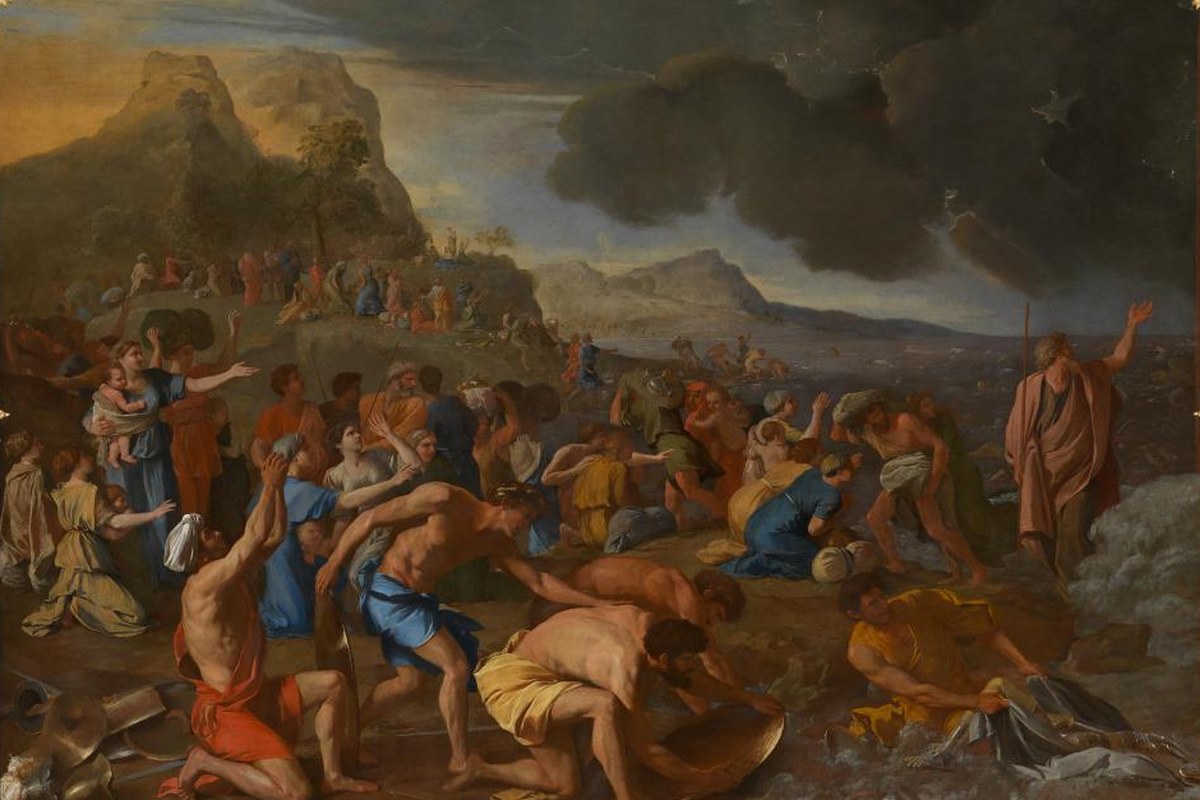
Not long after the drama of the Red Sea crossing, Exodus records a much less triumphant scene: the whole community of Israel, roughly six weeks into their journey out of Egypt, grumbling against Moses and Aaron in the wilderness. Their complaint is specific and understandable — they're afraid of starving, and in their fear, Egypt's slavery starts to look better than freedom's uncertainty, remembering "our fleshpots" and bread eaten "our fill" back in the land they'd just left. It's a sobering detail this early in Israel's journey: the same people who had just witnessed the sea part are, weeks later, ready to trade freedom back for food security.
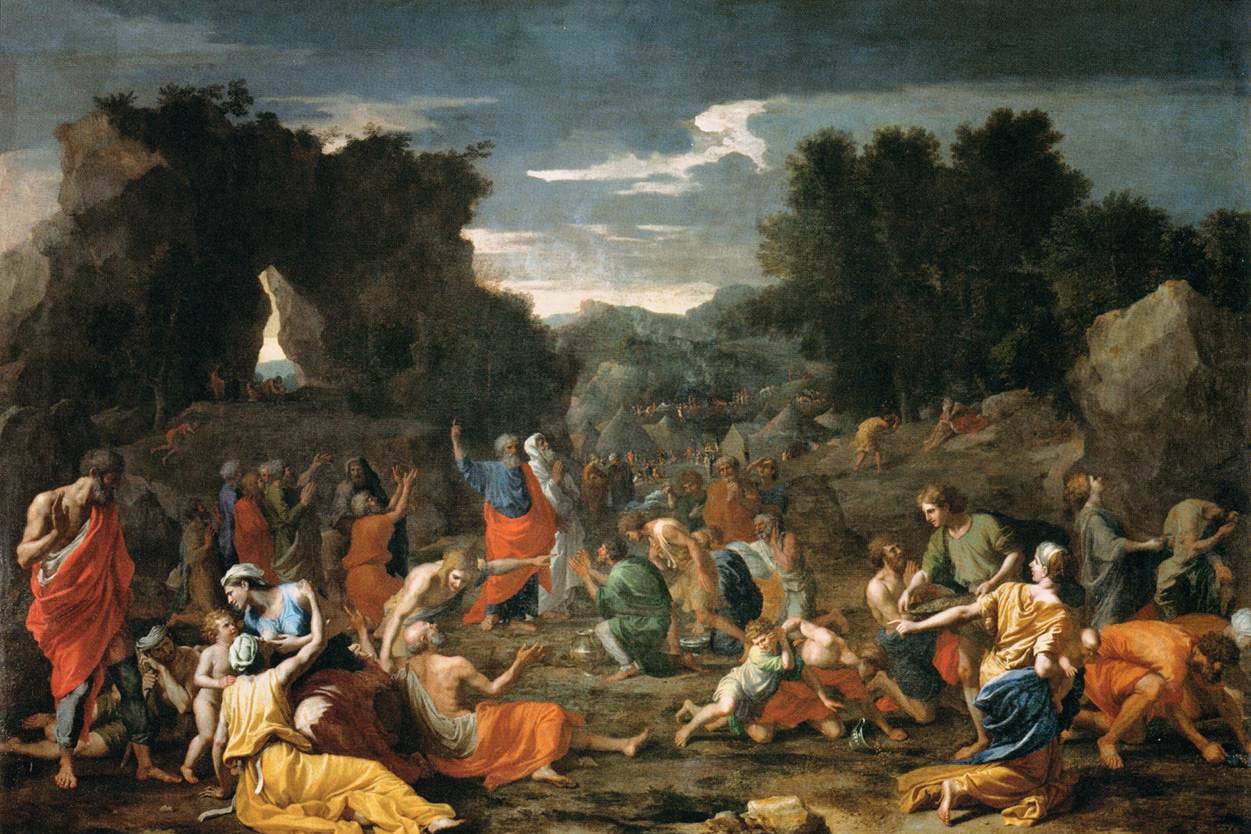
Nicolas Poussin, The Jews Gathering Manna in the Desert (1637-1639), public domain via Wikimedia Commons
Bread that falls, and a test attached to it
God's response comes with an explicit purpose stated up front. "I am going to rain down bread from heaven for you. Each day the people are to go out and gather their daily portion; thus will I test them, to see whether they follow my instructions or not" (Exodus 16:4, NABRE). The provision itself is remarkable, but the text is equally interested in what it's designed to reveal about the people receiving it — this isn't simply a gift, it's a gift with a specific daily discipline built into it, one the text frames from the outset as a test of trust and obedience.
"What is this?"
When the substance actually appears, the Israelites' first reaction is confusion rather than recognition. In the morning, once the dew that had covered the camp evaporated, "fine flakes were on the surface of the wilderness, fine flakes like hoarfrost on the ground," and "on seeing it, the Israelites asked one another, 'What is this?' for they did not know what it was" (Exodus 16:14-15, NABRE). Moses has to explain it to them: "It is the bread which the Lord has given you to eat" (Exodus 16:15, NABRE). Later in the same chapter, Scripture describes its taste and appearance more fully — "like coriander seed, white," and "it tasted like wafers made with honey" (Exodus 16:31, NABRE) — small, sweet, and apparently pleasant, whatever the people's initial bewilderment at finding it scattered across the ground each morning.
Gather only what you need
The rule attached to the manna is simple but strictly enforced: each household gathers only enough for that day, nothing more. Moses tells them directly, "Let no one leave any of it over until morning" (Exodus 16:19, NABRE) — and the consequence for ignoring the instruction is immediate and unpleasant: "some kept a part of it over until morning, and it became wormy and stank. Therefore Moses was angry with them" (Exodus 16:20, NABRE). The daily provision couldn't be stockpiled or hoarded against future uncertainty; it required trusting, morning after morning, that tomorrow's portion would also be provided. "Morning after morning they gathered it, as much as each needed to eat; but when the sun grew hot, it melted away" (Exodus 16:21, NABRE) — a provision that resisted both hoarding and delay in equal measure.
Quail, arriving the same evening
The manna wasn't the whole answer to the people's complaint, which had named both bread and meat as things they missed from Egypt. That same evening, before the manna even appeared the next morning, "quail came up and covered the camp" (Exodus 16:13, NABRE), providing meat alongside the bread that would follow with the dawn. Read together, the two provisions answer the people's fear almost point for point — meat in the evening, bread in the morning, a daily rhythm of provision that continues, Exodus and later texts indicate, for the full duration of Israel's wilderness years.
A jar kept as a sign
Before the forty years of wilderness wandering were even finished, God told Moses to set some of the manna aside permanently — not to eat, but to remember. "Keep a full omer of it for your future generations, so that they may see the food I gave you to eat in the wilderness when I brought you out of the land of Egypt" (Exodus 16:32, NABRE). Aaron placed that jar "in front of the covenant" — meaning before the Ark that would later hold the tablets of the Law — "to keep it for your future generations" (Exodus 16:33-34, NABRE). The detail matters: this was never meant to be a story people simply heard about once. It was built, from the very week it happened, to be handed down, generation after generation, as physical proof that the desert years had been survived on bread nobody planted.
Forty years, and then it stopped
Scripture is precise about how long the arrangement lasted: "The Israelites ate the manna for forty years, until they came to settled land; they ate the manna until they came to the borders of Canaan" (Exodus 16:35, NABRE). The ending is just as abruptly plain as the beginning. Once Israel crossed into Canaan and began eating from that land's own produce, the book of Joshua records the provision simply ending: "after they ate of the produce of the land, the manna ceased. No longer was there manna for the Israelites" (Joshua 5:12). No farewell speech, no final miracle — the daily bread that had fallen every morning for four decades stopped the moment it was no longer needed, which is perhaps the clearest evidence in the whole account that it was never about the substance itself, but about a people being carried through a specific stretch of need.
Echoes in the Gospel of John
The manna didn't stay confined to the Exodus narrative. In the New Testament, Jesus draws on the same memory directly, telling a crowd in Capernaum, "Your ancestors ate the manna in the desert, but they died; this is the bread that comes down from heaven so that one may eat it and not die. I am the living bread that came down from heaven" (John 6:49-51). Catholic tradition reads this passage — part of what's often called the Bread of Life discourse — as pointing toward the Eucharist, with the daily, perishable manna of Exodus serving as a foreshadowing contrast to a bread that, in the Church's teaching, does not spoil or need to be gathered fresh each morning. It's worth noting this typological reading is the Church's theological interpretation of the Gospel text, not a claim that the Exodus generation itself understood the manna that way.
A daily discipline, not a single miracle
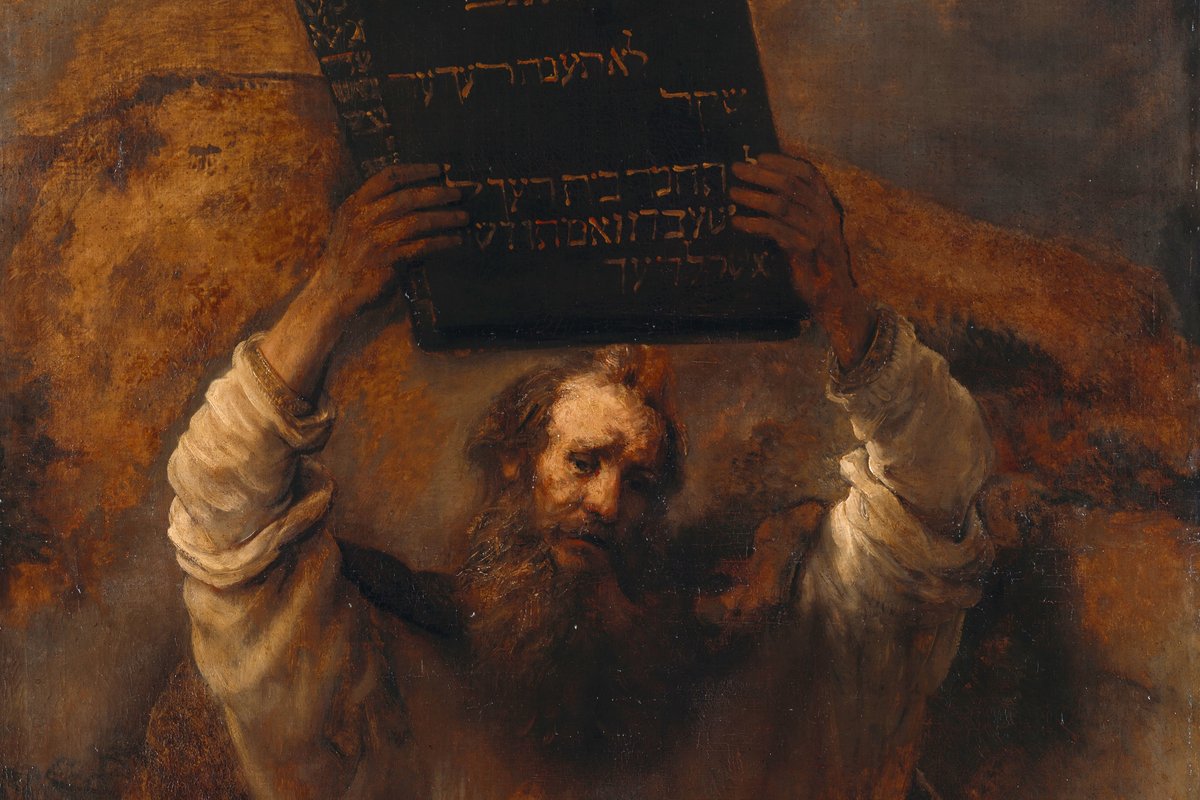
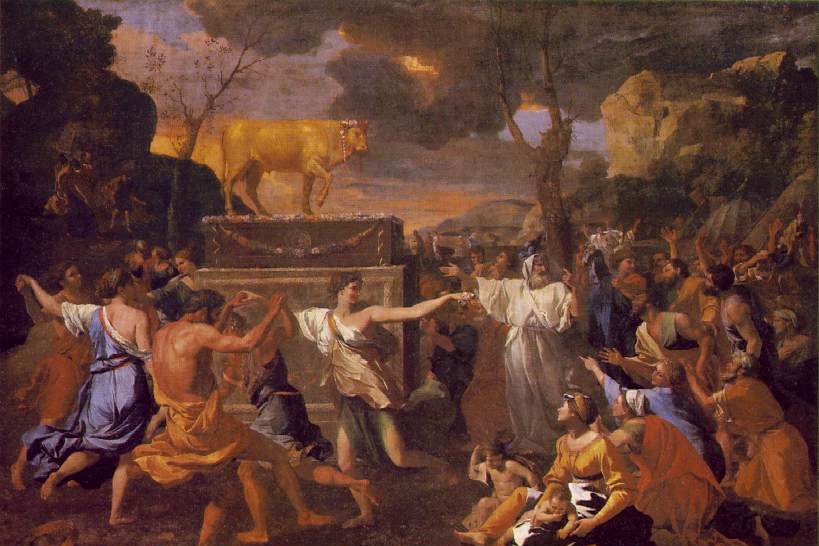
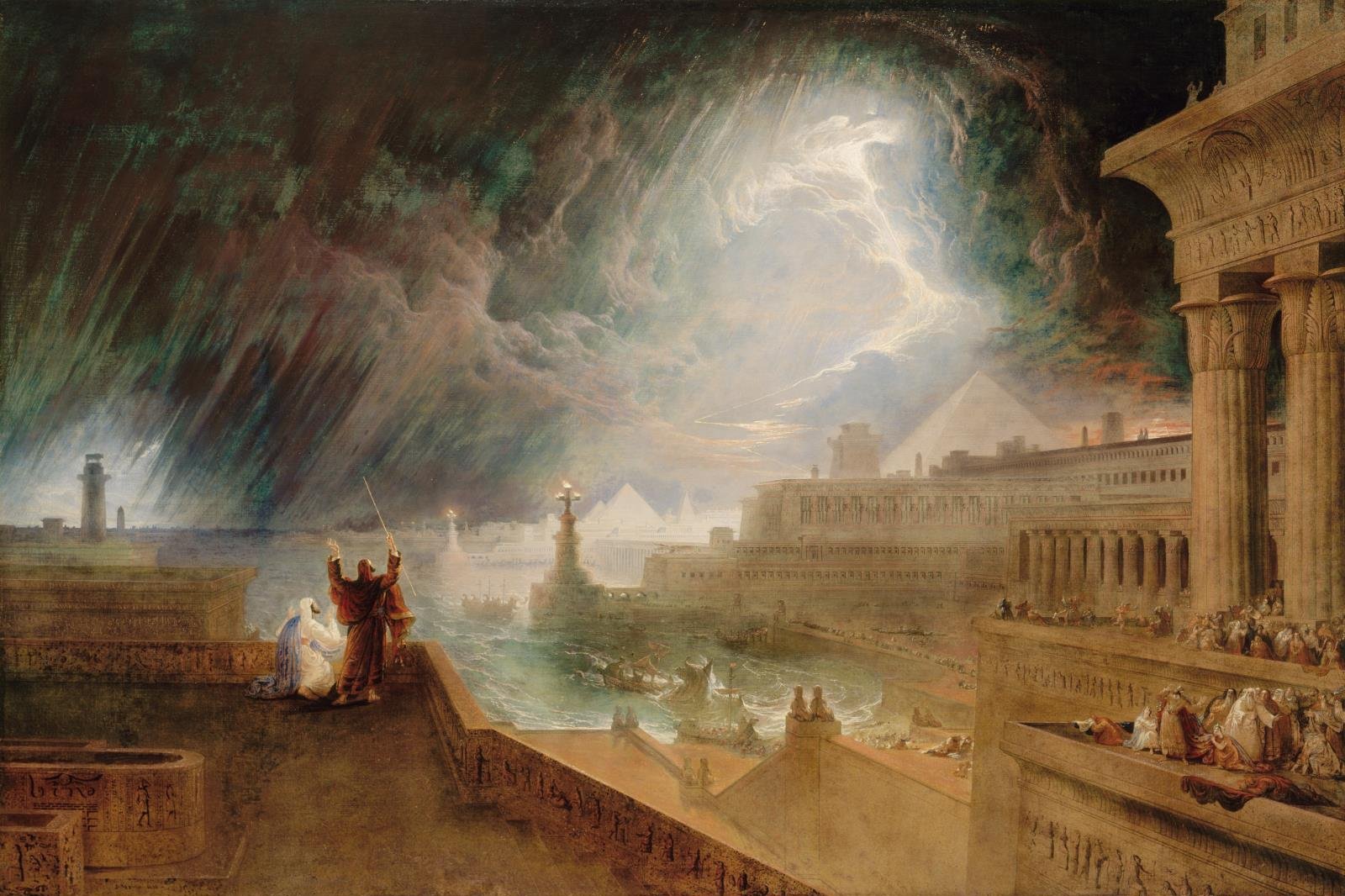
What distinguishes the manna story from many of the wilderness period's other dramatic, one-time events — the plagues, the sea crossing, the giving of the Ten Commandments — is its sheer repetition. This wasn't a single spectacular rescue but a provision renewed every single morning, requiring trust renewed just as often, with the explicit exception of a double portion allowed before the Sabbath so the day of rest wouldn't require gathering. That daily, unglamorous rhythm — falling bread, gathered fresh, unable to be stored against tomorrow's fear — is very likely why the manna became, across both Jewish and Christian tradition, one of Scripture's most enduring images for providence: not a single grand rescue remembered once, but something that had to be trusted all over again with each new day.
Trivia
Why were the Israelites complaining before the manna appeared?
What did the manna actually look like, and where did the name come from?
What rule did God attach to gathering the manna?
Did the same hoarding rule apply every day?
What happened to the quail, and how does that fit into the story?
You May Also Like
Related Reading