The Gate of Dawn, Vilnius: A Shrine Built Into a City Wall

The last gate standing
Vilnius's city walls, built in the early sixteenth century to defend the growing capital of the Grand Duchy of Lithuania, once had nine fortified gates controlling passage in and out of the town. Wars, fires, and later urban redevelopment removed most of them over the following centuries, and by the early nineteenth century only one remained: the gate on the road leading south toward Medininkai, known in Lithuanian as Aušros Vartai — literally, the Gate of Dawn. Traffic still moves beneath its archway today, making it one of the rare European city gates that never stopped functioning as an actual passage even as it became something else entirely: one of the most visited pilgrimage sites in the Baltic region.

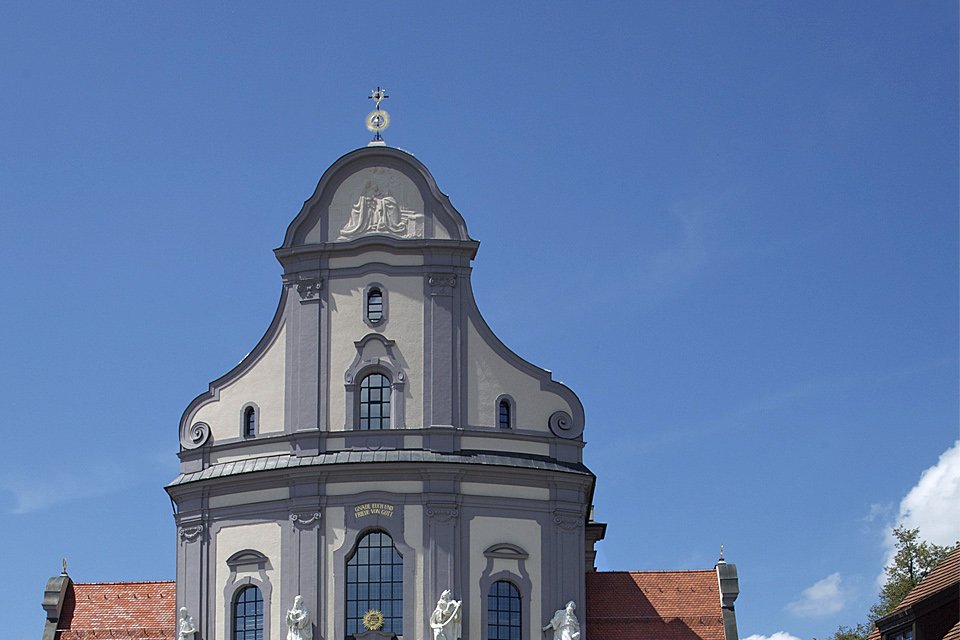
Photograph by David Iliff, Gate of Dawn, Vilnius, 2015 — CC BY-SA 3.0, Wikimedia Commons.
The gate's survival wasn't primarily architectural preservation for its own sake. What protected it, more than any city planning decision, was the small chapel built into its upper level sometime in the early seventeenth century, housing an image of the Virgin Mary that had already begun attracting devotion. As the shrine's reputation grew, so did the practical reasons to leave the gate itself standing.
The icon and its early history
The painting at the center of the shrine — known variously as Our Lady of the Gate of Dawn or Our Lady, Mother of Mercy — depicts Mary alone, without the infant Christ, her head tilted gently to one side and her hands crossed over her chest in a gesture of humility. Art historians generally date the work to the early seventeenth century and note its stylistic debt to Northern Renaissance devotional painting, particularly Netherlandish models that were circulating in prints and copies across Central and Eastern Europe at the time. The precise circumstances of its creation and its arrival at the gate are not documented with full certainty, and much of what is said about its earliest years belongs to pious tradition rather than confirmed historical record — a distinction worth holding onto, since popular retellings sometimes present later legend as established fact.
What is well documented is the trajectory of devotion that followed. By the later seventeenth century, the image had already become a significant pilgrimage destination, and the Discalced Carmelites, who took over care of the shrine and the adjoining Church of St. Teresa in the early eighteenth century, formalized and expanded its cult considerably, commissioning a more elaborate chapel setting and encouraging its promotion across the region.
A shrine shared across confessional lines
One of the more distinctive features of the Gate of Dawn is how thoroughly its veneration has crossed confessional boundaries. Vilnius sat for centuries at a crossroads of Roman Catholic, Eastern Orthodox, and Uniate (Eastern Catholic) populations, and the image at the gate drew devotion from across that spectrum in a way relatively few Marian shrines in Europe have managed as consistently. Orthodox Christians venerate the image as well, under their own traditions surrounding Marian icons, and the shrine has functioned for centuries as something closer to shared sacred ground than a strictly denominational site — a pattern echoed, in a different way, at shrines like the Basilica of Our Lady of Kevelaer, where a modest image became a magnet for pilgrims well beyond its immediate region.
The custom of removing one's hat, or simply pausing briefly, while passing beneath the gate at street level has persisted among Vilnius residents for generations, an informal gesture of respect toward the sacred space directly overhead even for people simply going about their day. It is one of those small, durable habits that outlasts most official religious instruction — passed down more through observed example than through any formal catechesis.
Recognition, restoration, and status today
Pope John Paul II, during his 1993 pastoral visit to Lithuania — one of his first trips to a former Soviet republic after the country regained independence — formally crowned the image of Our Lady of the Gate of Dawn, a significant papal recognition that reinforced the shrine's status within the wider Catholic world. The visit itself carried considerable symbolic weight: Lithuania had only recently emerged from decades of Soviet religious suppression, during which public devotion at sites like the Gate of Dawn had continued quietly, often at real personal risk to those involved.
Today the shrine remains an active pilgrimage destination and a defining landmark of Vilnius's historic center, itself inscribed by UNESCO as a World Heritage Site in 1994 for its remarkably intact medieval and Baroque urban fabric. Visitors reach the small chapel via a staircase from inside the adjoining monastery building, entering a compact, richly decorated space suspended directly above the working gate below — traffic and prayer occupying, quite literally, the same structure, on different levels, as they have for roughly four centuries.
The image itself is venerated by both Roman Catholics and Eastern Orthodox believers, a shared devotion unusual for a single Marian image and reflective of Vilnius's long history as a genuinely multi-confessional city, where Catholic, Orthodox, and Jewish communities lived and worshipped within a few streets of one another for centuries before the upheavals of the twentieth century reshaped the city's religious landscape.
Trivia
What is the Gate of Dawn in Vilnius?
What is significant about the icon inside the Gate of Dawn?
Why do people still remove their hats when passing under the gate?
Is the Gate of Dawn shrine associated with any particular religious order?
Is the Gate of Dawn part of Vilnius's UNESCO-recognized old town?
You May Also Like

Related Reading