The Basilica of Our Lady of Altötting

A small chapel at the center of Bavarian devotion
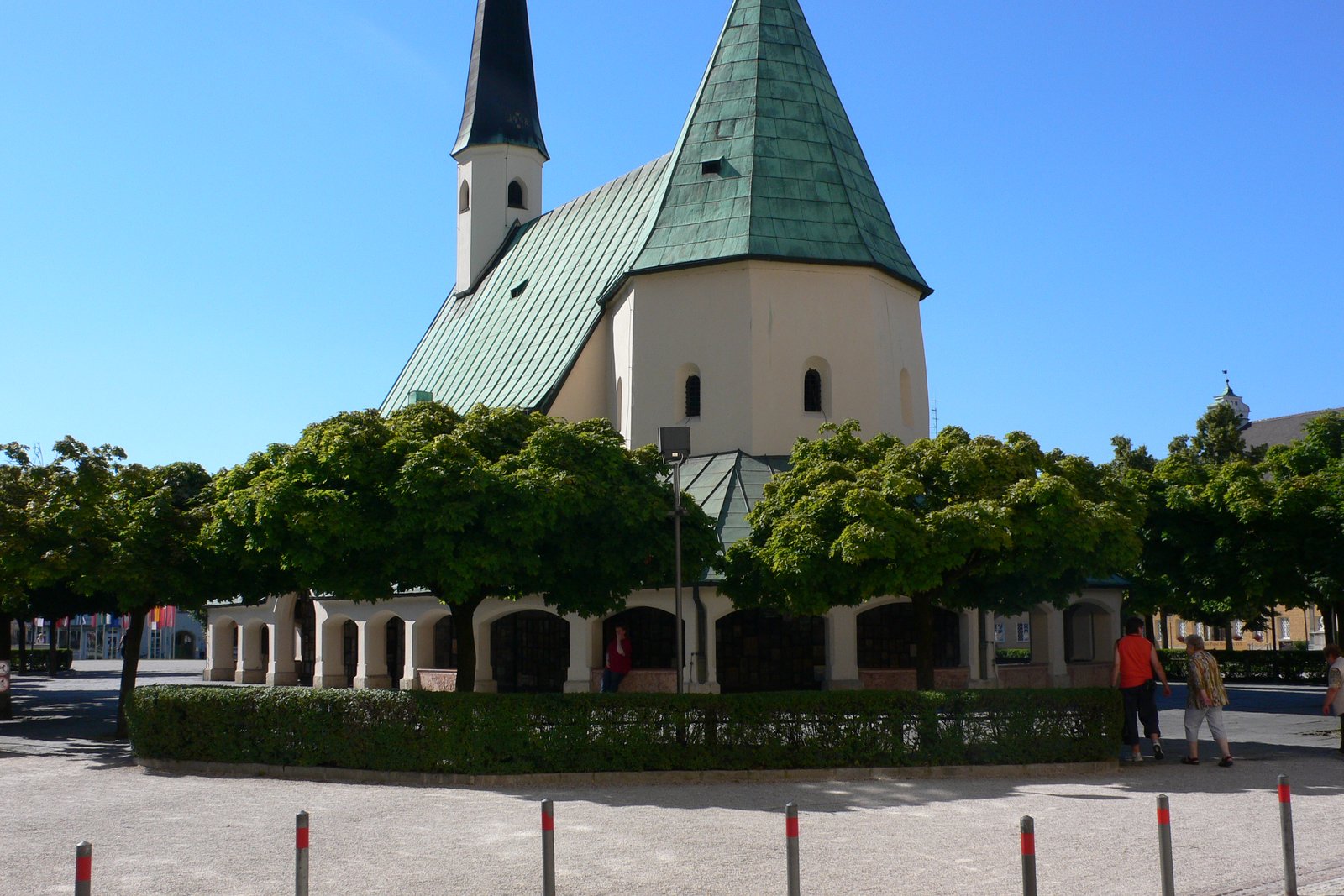
Most great pilgrimage churches announce themselves with scale — soaring naves, monumental facades, towers visible for miles. Altötting inverts that expectation. Its spiritual core is the Gnadenkapelle, the Chapel of Grace, a modest octagonal structure that predates most of the elaborate basilicas and monastery buildings that later grew up around it. The chapel itself has ancient roots, likely originating as an early medieval baptistery, and it survived largely intact through the centuries even as the town around it was rebuilt and expanded repeatedly, including after a fire that devastated much of Altötting in 1587.
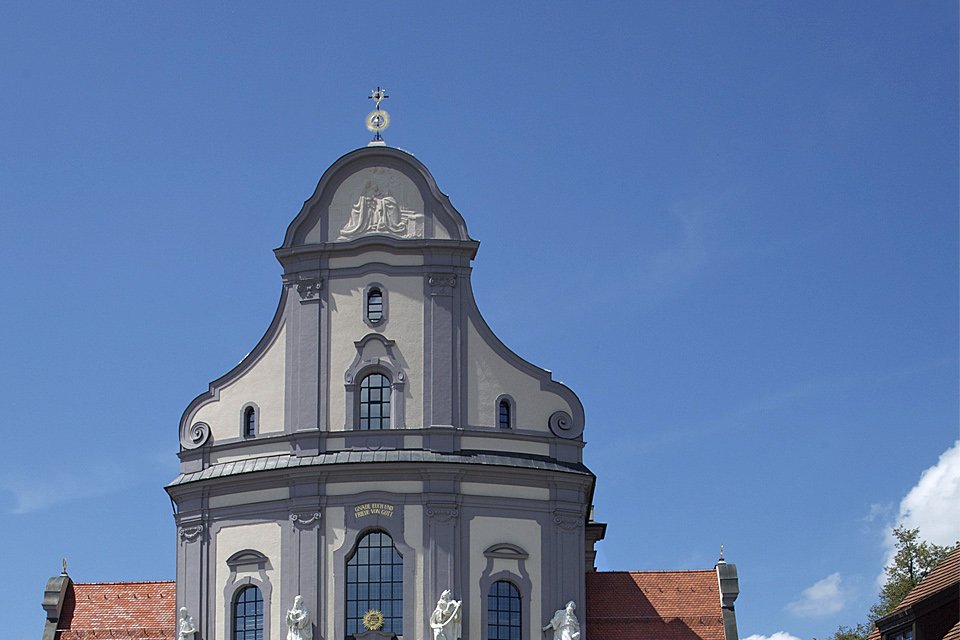
Photograph by W. Bulach, Basilica of St. Anne and the Chapel of Grace, Altötting, 2013 — CC BY-SA 4.0, Wikimedia Commons.
Inside this small space stands the object of centuries of pilgrimage: a wooden statue of the Virgin Mary holding the Christ Child, roughly 65 centimeters tall and dated by art historians to around the thirteenth century. Like the venerated images at Einsiedeln in Switzerland and Le Puy-en-Velay in France, the statue's surface has darkened considerably over the centuries — a combination, most likely, of the natural aging of the wood, centuries of candle smoke in an enclosed devotional space, and the wear of countless hands and lips in contact with the image over generations of pilgrims.
The miracle that launched a pilgrimage
Altötting's transformation into a major pilgrimage destination is traditionally traced to a specific and dramatic event in 1489. According to the account that circulated afterward, a young child drowned nearby and was brought, lifeless, before the statue in the chapel — and was reportedly restored to life. Word of the event spread quickly through Bavaria and beyond, and pilgrims began arriving at Altötting in numbers that only grew over the following decades and centuries.
It is worth being careful here about the nature of the claim: the 1489 account belongs to the shrine's devotional tradition and to the historical record of what pilgrims and chroniclers reported and believed at the time, rather than to something formally and doctrinally defined by the Church in the way a canonization or a dogma is defined. That distinction doesn't diminish the event's importance to the shrine's history — the miracle account is precisely what drove Altötting's rise from a regional chapel to one of the major pilgrimage centers of Central Europe — but it is a different category of claim than settled Church teaching, and the shrine's own literature is generally careful to present it as received tradition.
Bavaria's royal connection and the Heart Crypt
Few Marian shrines anywhere in Europe developed as close and enduring a relationship with a specific ruling dynasty as Altötting did with the House of Wittelsbach, the family that governed Bavaria for over seven centuries. That relationship produced one of the shrine's most unusual features: the Herzgruft, or Heart Crypt, a small chamber beneath the Chapel of Grace where the preserved hearts of numerous Bavarian dukes, electors, and kings have traditionally been placed in individual urns after their deaths, their bodies buried elsewhere but their hearts returned symbolically to the shrine they and their family had long venerated. The custom, however striking it may seem to modern visitors, reflects a broader European tradition of separate heart burial practiced among royal and noble families in the medieval and early modern periods, and at Altötting it endured, in modified form, into the twentieth century.
The shrine's connections to prominent Bavarians continued into recent memory. Pope Benedict XVI — born Joseph Ratzinger in Marktl am Inn, a town not far from Altötting — had a lifelong personal connection to the shrine, having visited it repeatedly as a child, priest, and bishop before returning as pope on his 2006 apostolic visit to Bavaria, a trip widely reported as deeply personal for him given the shrine's place in his own religious formation.
A living pilgrimage site today
The chapel now stands alongside a considerably larger complex, including the Basilica of St. Anne, built in the twentieth century to accommodate the crowds the small Gnadenkapelle alone could no longer hold, along with several other churches and monastic buildings that make up Altötting's pilgrimage precinct. Hundreds of thousands of pilgrims continue to visit each year, particularly during the town's major devotional periods, and the chapel itself remains open to a continuous stream of visitors who circle its exterior walls — themselves covered in votive plaques left by pilgrims over centuries — before stepping inside to the small interior where the Black Madonna still stands.
Altötting's enduring pull lies precisely in that contrast between scale and significance: a chapel small enough to walk around in under a minute has shaped the religious life of an entire region for more than five hundred years, and shows no sign of losing that pull today.
Pope Benedict XVI, himself Bavarian, visited Altötting in 2006 during his papal trip to his home region, praying before the Black Madonna in a visit widely covered in the German press and understood locally as a personal homecoming as much as an official papal appearance — a moment that further cemented the shrine's place at the center of Bavarian Catholic identity for a new generation of pilgrims.
Trivia
Why is Altötting significant to Catholics?
What is the Black Madonna of Altötting?
What sparked the pilgrimage to Altötting?
Are any notable historical figures connected to Altötting?
What is kept in the Herzgruft, or Heart Crypt, at Altötting?
Related Reading