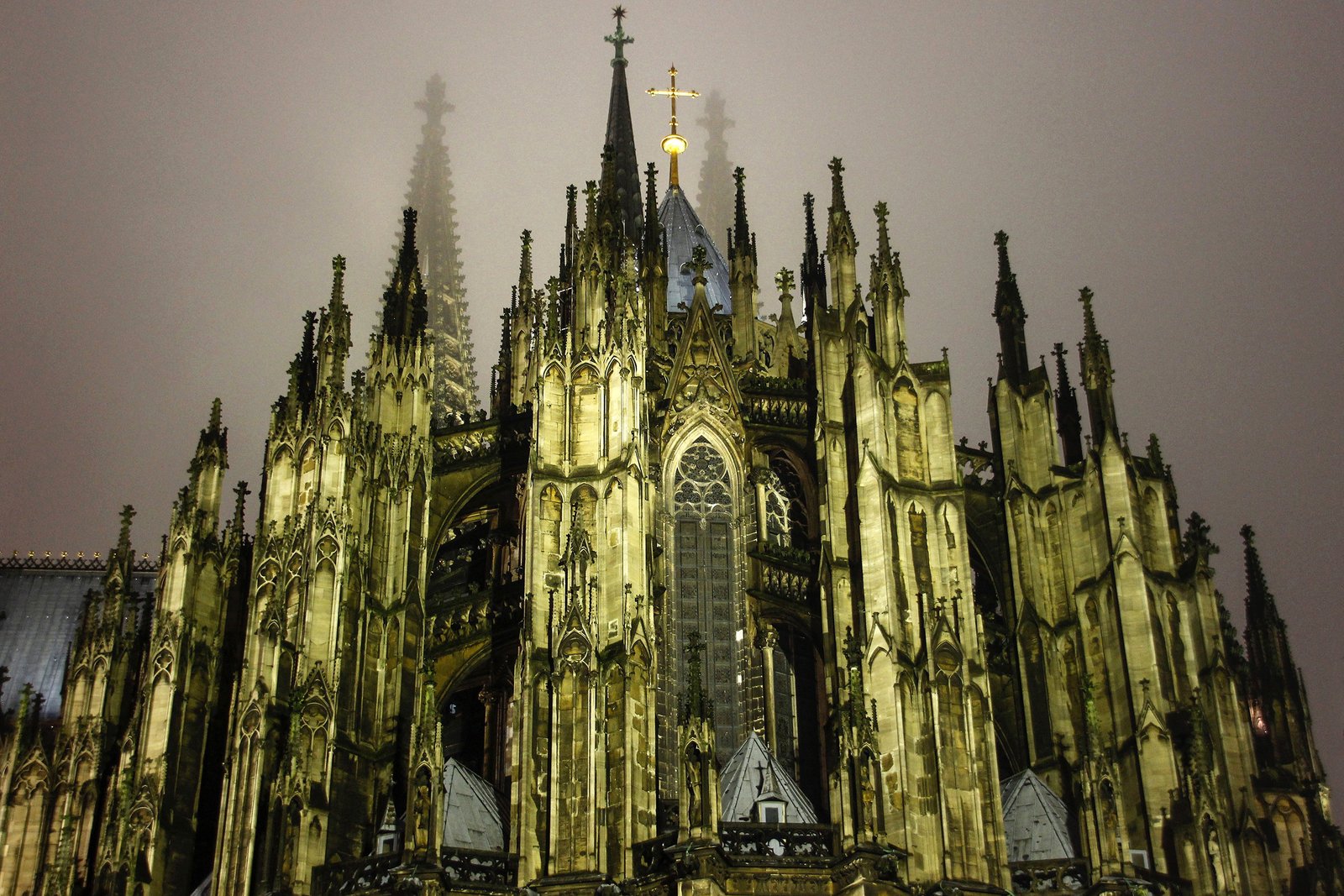
The Basilica of Kevelaer

A voice at a wayside cross
The origin story of Kevelaer's pilgrimage is unusually well documented for a seventeenth-century shrine, thanks largely to a written account left by the man at its center. Hendrick Busman, a traveling merchant from Geldern, reported that in 1641, while passing a wayside cross near the small town of Kevelaer, he heard a voice twice instruct him to build a chapel at that spot for "Our Dear Lady." Busman, by his own account, wasn't sure what to make of the experience and initially did nothing about it.
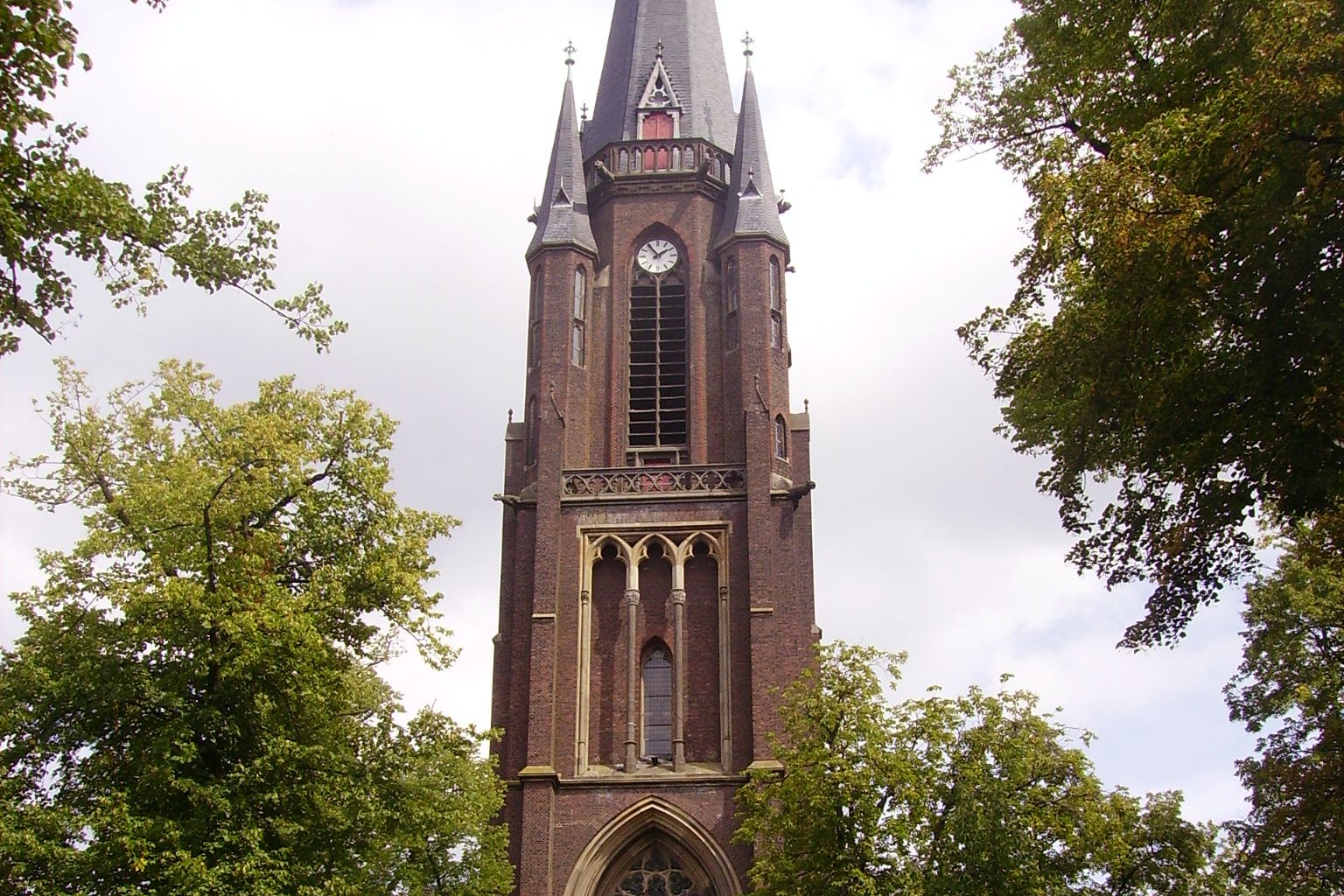
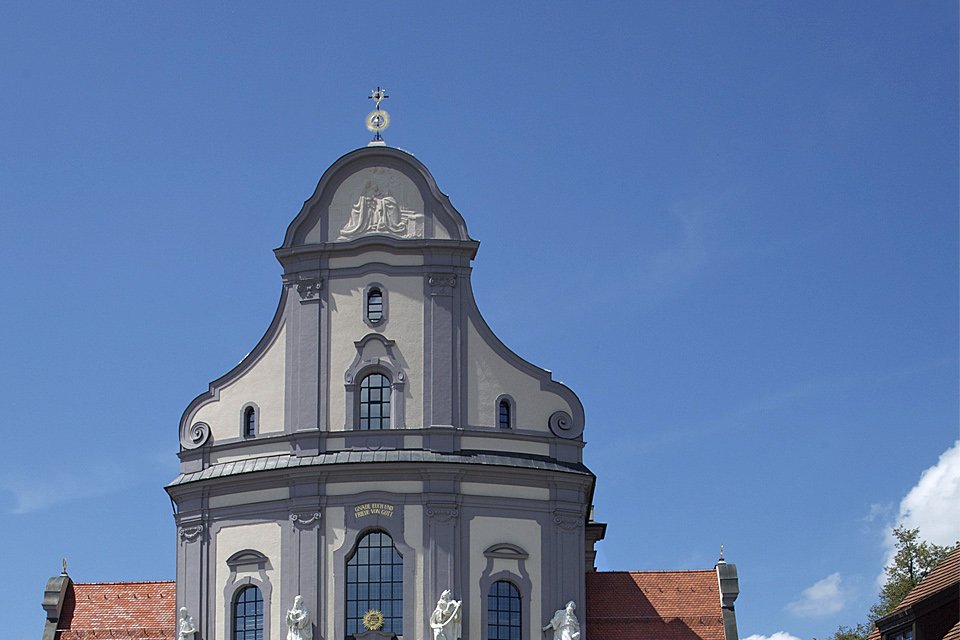
Photograph by Zairon, Basilica of St. Mary, Kevelaer, 2010 — CC BY-SA 3.0, Wikimedia Commons.
The following year, in 1642, his wife Mechel reportedly had a vision of a small chapel that matched, in striking detail, a devotional image she recalled having seen twice before on soldiers passing through the area — a small printed picture of Our Lady of Luxembourg. Taking the two experiences together as confirmation, Busman obtained a copy of that print and had it mounted in a small wooden shelter at the site of the original cross. Pilgrims began visiting almost immediately, and within a few years the modest shelter had to be replaced with an actual chapel to accommodate the growing crowds — the beginning of what would become, over the following centuries, the largest Marian pilgrimage site in Germany.
The image at the center of the shrine
What makes Kevelaer's central devotional object unusual among major European Marian shrines is its modesty and its clear, traceable origin. Unlike the ancient carved statues venerated at sites such as Einsiedeln or Altötting, the image at Kevelaer is a small printed picture — Our Lady of Luxembourg, titled Consolatrix Afflictorum, or Comforter of the Afflicted — only a few centimeters across, of a type that would have been mass-produced and widely circulated among Catholics traveling through the Low Countries and the Rhineland in the early seventeenth century. Its devotional power at Kevelaer, in other words, came not from age or artistic uniqueness but from the specific circumstances under which it arrived at the site and the rapid growth of belief that followed.
That connection also ties Kevelaer's shrine directly into an existing devotion rather than an isolated local phenomenon: the image is explicitly a copy of one already venerated in Luxembourg, meaning the pilgrimage at Kevelaer effectively extended and localized a devotion that predates the 1642 events by decades. This kind of transplantation of an existing Marian devotion to a new site, through a copied image, was not unusual in the period, though few examples grew to the scale Kevelaer eventually reached.
Growth into Germany's largest Marian shrine
The pilgrimage at Kevelaer grew steadily through the seventeenth and eighteenth centuries despite periods of political and religious disruption in the region, including tensions during the Reformation-era religious conflicts that affected much of the Rhineland. By the nineteenth century, the small original chapel could no longer accommodate the numbers arriving, and a larger neo-Gothic basilica, the Basilica of St. Mary, was constructed alongside it, consecrated in 1864 and later elevated to the status of a minor basilica by the Holy See — a formal recognition given to churches of particular historical or spiritual significance within the Catholic world.
The pilgrimage precinct today is organized around several distinct structures rather than a single grand church: the small original Chapel of Grace still housing the venerated print, the larger basilica for major liturgical celebrations, and the broad open Kapellenplatz, or Chapel Square, capable of holding the large crowds that gather for major pilgrimage days and processions, particularly during the traditional pilgrimage season running from May through October.
Kevelaer today
Kevelaer remains, by a wide margin, the most visited Marian pilgrimage site in Germany, drawing roughly 800,000 pilgrims annually — a figure that includes both individual visitors and the large organized parish and diocesan pilgrimage groups that have traveled to Kevelaer, often on foot from considerable distances, as an established annual tradition in many German Catholic communities for generations. The town itself has grown up almost entirely around its role as a pilgrimage destination, its economy and civic identity still closely tied to the shrine nearly four centuries after a merchant's report of a voice at a roadside cross set the whole tradition in motion.
The pilgrimage season traditionally runs from May through October, with organized parish groups arriving on foot in processions that can stretch for days depending on their starting point, following routes that in some cases have been walked by the same communities for well over a hundred years. Kevelaer's basilica and its surrounding candle chapel, built specifically to hold the thousands of votive candles pilgrims leave behind, remain vivid, ongoing evidence of a devotion that has never significantly waned since its seventeenth-century origins, drawing not only individual visitors but entire generations of the same families returning year after year to walk the same well-worn approach into town.
Trivia
How did the pilgrimage at Kevelaer begin?
What image is venerated at Kevelaer?
How many pilgrims visit Kevelaer each year?
Is the shrine at Kevelaer connected to any other Marian devotions in Europe?
What architectural features define the Basilica of Kevelaer?
Related Reading