Mount Tabor: The Mountain of the Transfiguration

A mountain that stands alone
Most mountains in the Holy Land rise as part of a range, one ridge folding into the next. Mount Tabor does not. It stands by itself above the flat expanse of the Jezreel Valley in Lower Galilee, a rounded, tree-covered dome about 575 meters high, visible from a great distance in almost every direction. That isolation has shaped how people have understood the mountain for thousands of years — it appears in the Hebrew Scriptures as a natural boundary marker and a staging ground for Israelite forces under the judge Deborah and the general Barak (Judges 4), long before it became associated with an event in the life of Jesus.
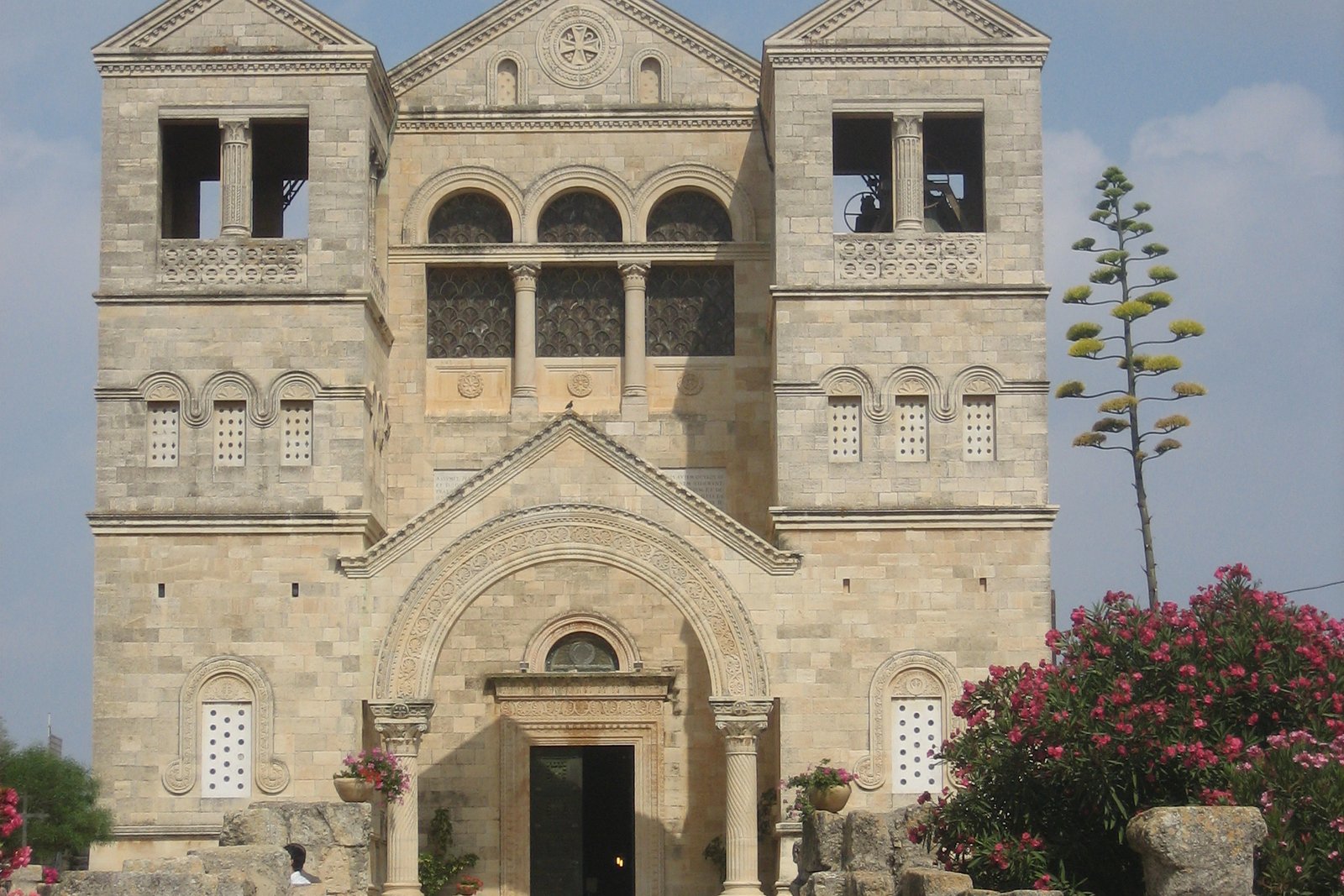
Photograph by Anne-Sophie GV, Basilique de la Transfiguration, Mont Thabor, 2007 — CC BY-SA 3.0, Wikimedia Commons.
By the early centuries of Christianity, Tabor's singular profile had made it the traditional setting for one of the more mysterious episodes in the Gospels: the Transfiguration, the moment when Jesus's appearance was suddenly and dramatically altered in front of three of his disciples. None of the three Synoptic Gospel accounts actually names the mountain — each simply says Jesus led Peter, James, and John up a "high mountain" by themselves. The identification with Tabor emerges in early Christian writing, with the theologian Origen and, later, Cyril of Jerusalem among the writers who connected the story to this specific site by the third and fourth centuries.
What happened on the mountain
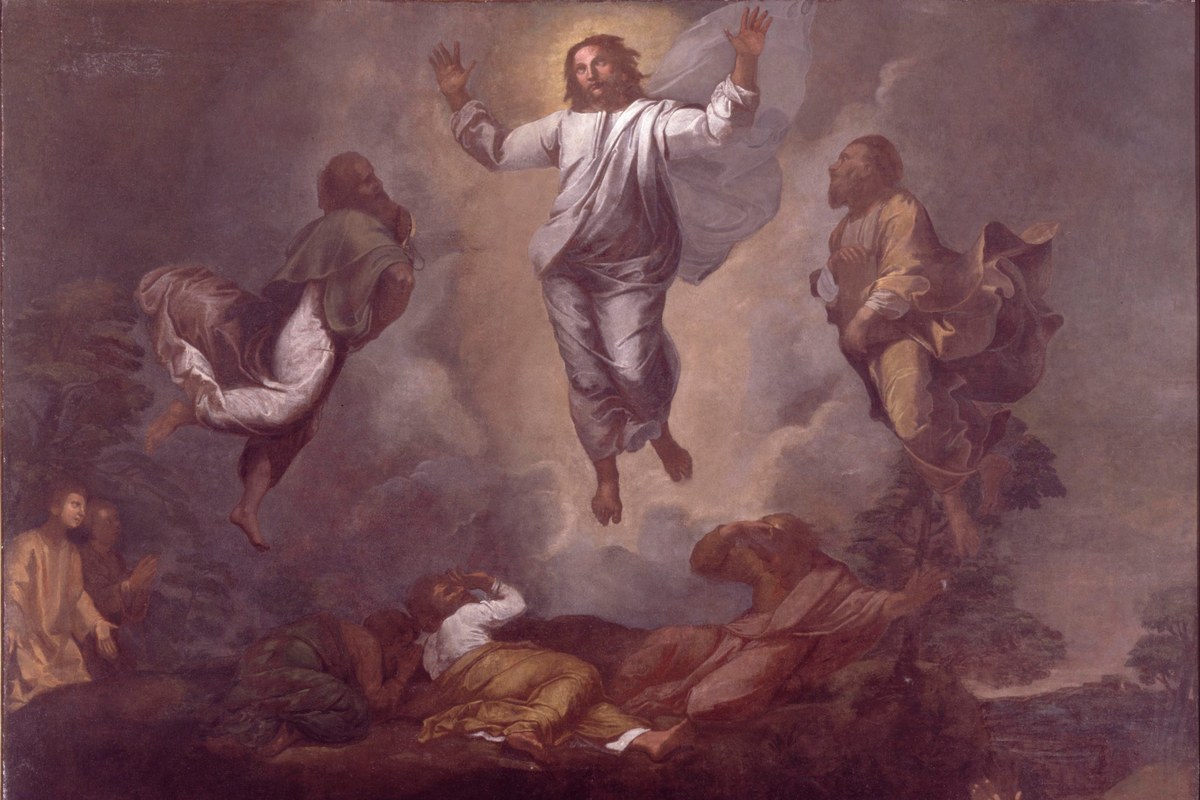
The Gospel of Matthew describes the scene directly: "he was transfigured before them; his face shone like the sun and his clothes became white as light" (RSV-CE, Matthew 17:2). Moses and Elijah then appeared, speaking with Jesus — representing, in traditional Christian reading, the Law and the Prophets of the Hebrew Scriptures affirming Jesus's identity. Peter, overwhelmed, offered to build three tents to mark the moment, before a bright cloud overshadowed them and a voice declared, "This is my beloved Son, with whom I am well pleased; listen to him" (RSV-CE, Matthew 17:5) — language that deliberately echoes the voice heard at Jesus's baptism in the Jordan.
For Christian tradition, the Transfiguration functions as a pivot point in the Gospel narrative: a moment in which Jesus's divine nature became visibly, if briefly, apparent to his closest followers, shortly before he set his path toward Jerusalem and the events of his Passion. The episode is commemorated in the Church's liturgical calendar with its own feast day, August 6, and it has long been a popular subject in Christian art and iconography, typically depicting Jesus radiant between the two Old Testament figures with the three disciples shielding their eyes below.
Uncertain geography, enduring tradition
It's worth being honest about the historical uncertainty here. Some modern scholars have questioned whether Tabor fits the Gospel narrative's geography as well as tradition assumes, noting that a Roman-era fortress reportedly occupied the summit around the time of Jesus's ministry, which would make it an odd choice for a private, secluded moment. Others have proposed a spur of nearby Mount Hermon, further north and much higher, as an alternative candidate. Yet no rival site attracted anything like the sustained tradition Tabor did, and the identification with Tabor had already become widely accepted by the time of the Byzantine Empire, when the first churches were built on its summit.
Archaeological excavation has confirmed that Mount Tabor was a site of continuous Christian building activity from at least the fourth century onward. Byzantine-era remains include the foundations of churches associated with the sixth-century pilgrim accounts describing three separate shrines on the summit — a detail some scholars connect to Peter's suggestion of three tents. Crusader forces fortified the mountain in the twelfth century, building a monastery and defensive walls, before the site changed hands repeatedly in the ongoing conflict between Crusader and Muslim forces through the following century, with periods of destruction and abandonment along the way.
The basilica that stands today
The Franciscan order, which has held custody of many of the Holy Land's Christian sites since the medieval period, acquired rights to the summit in the seventeenth century, though it took until the early twentieth century for a major new church to be built there. The present Basilica of the Transfiguration was designed by the Italian architect Antonio Barluzzi, whose work also shaped several other prominent Holy Land churches, and was completed in 1924. Barluzzi's design deliberately incorporated surviving Byzantine and Crusader stonework into the new structure, visually layering the site's long architectural history into a single building — the older masonry visible in the crypt and lower chapels beneath the main basilica.
The interior features large-scale artistic depictions of the Transfiguration and, in side chapels, of related biblical moments involving Moses and Elijah, tying the New Testament event to its symbolic Old Testament witnesses. A smaller Greek Orthodox monastery, dedicated to Elijah, sits nearby on the same summit, reflecting the shared Christian significance of the site across traditions.
A living pilgrimage site
Mount Tabor remains an active place of Christian pilgrimage today, drawing visitors especially around the August 6 Feast of the Transfiguration, when both Catholic and Orthodox communities hold services on the summit. The approach itself has become part of the site's character: the narrow, winding road up the mountain is too steep and tight for large tour buses, so visitors typically transfer to small local taxis for the final ascent, a practical quirk of geography that has shaped pilgrimage logistics for generations.
From the summit, the view stretches out over the Jezreel Valley and toward the Sea of Galilee and the hills of Nazareth in the distance — a landscape that connects Mount Tabor visually to much of the wider setting of Jesus's Galilean ministry, and one that continues to draw pilgrims seeking to stand, however uncertainly, where three disciples once saw their teacher's face shine like the sun.
Trivia
Where is Mount Tabor and why is it associated with the Transfiguration?
Does the Bible name Mount Tabor as the site of the Transfiguration?
What happened at the Transfiguration?
What can visitors see on Mount Tabor today?
Why couldn't cars always reach the summit of Mount Tabor?
You May Also Like
Related Reading