The Jordan River: Where Jesus Was Baptized

An unremarkable river with an extraordinary history
Travelers who expect the Jordan River to look like something out of a grand biblical epic are often surprised. For much of its length through the lower Jordan Valley, it's a narrow, muddy, slow-moving waterway, hemmed in by dense reeds and tamarisk trees, nothing like the wide, dramatic rivers people sometimes picture. And yet few rivers anywhere carry as much accumulated religious weight. It's the river the Israelites crossed under Joshua's leadership to enter the Promised Land (Joshua 3), the river where the prophet Elijah was taken up into heaven in a whirlwind (2 Kings 2:11), the river where his successor Elisha instructed the Aramean commander Naaman to wash seven times and be healed of leprosy (2 Kings 5) — and, according to all four Gospels, the river where John the Baptist was preaching and baptizing when Jesus came to him.
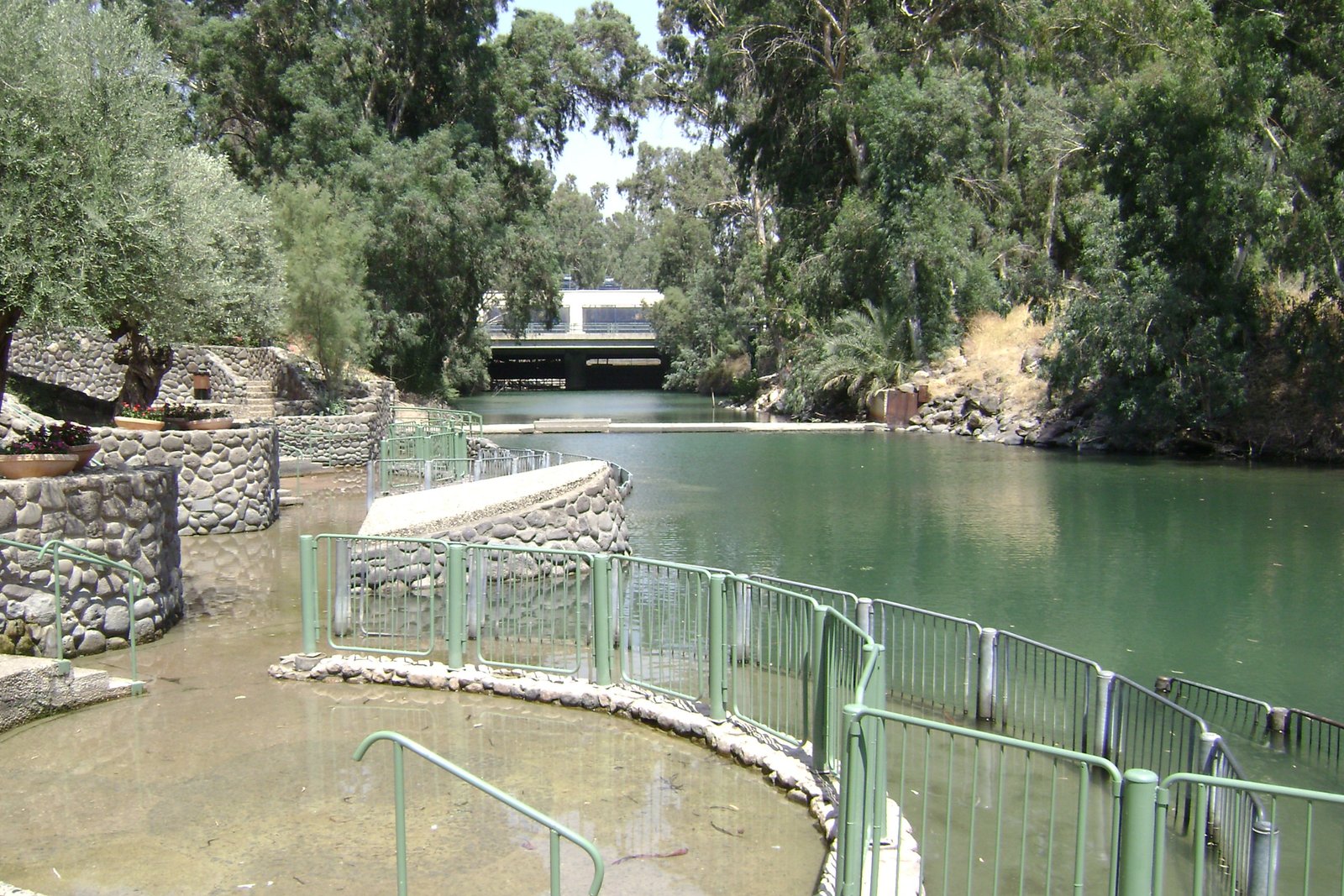
Photograph by Star Mississippi, Yardenit baptismal site on the Jordan River, 2009 — CC BY-SA 3.0, Wikimedia Commons.
That density of meaning is part of why the Baptism of Jesus resonates as it does within the larger biblical story: a river already associated with crossing over, healing, and prophetic transition becomes the setting for what Christian tradition regards as the formal beginning of Jesus's public ministry.
John the Baptist and a ministry of repentance
The Gospels introduce John the Baptist as a striking, ascetic figure — dressed in camel's hair, living on locusts and wild honey, preaching in the wilderness of Judea with an urgency that drew crowds out from Jerusalem and the surrounding region. His message centered on repentance in preparation for a coming figure greater than himself, and he used ritual washing in the Jordan as a visible, physical sign of that repentance, a practice with roots in existing Jewish purification rites but given new, pointed meaning by John's preaching.
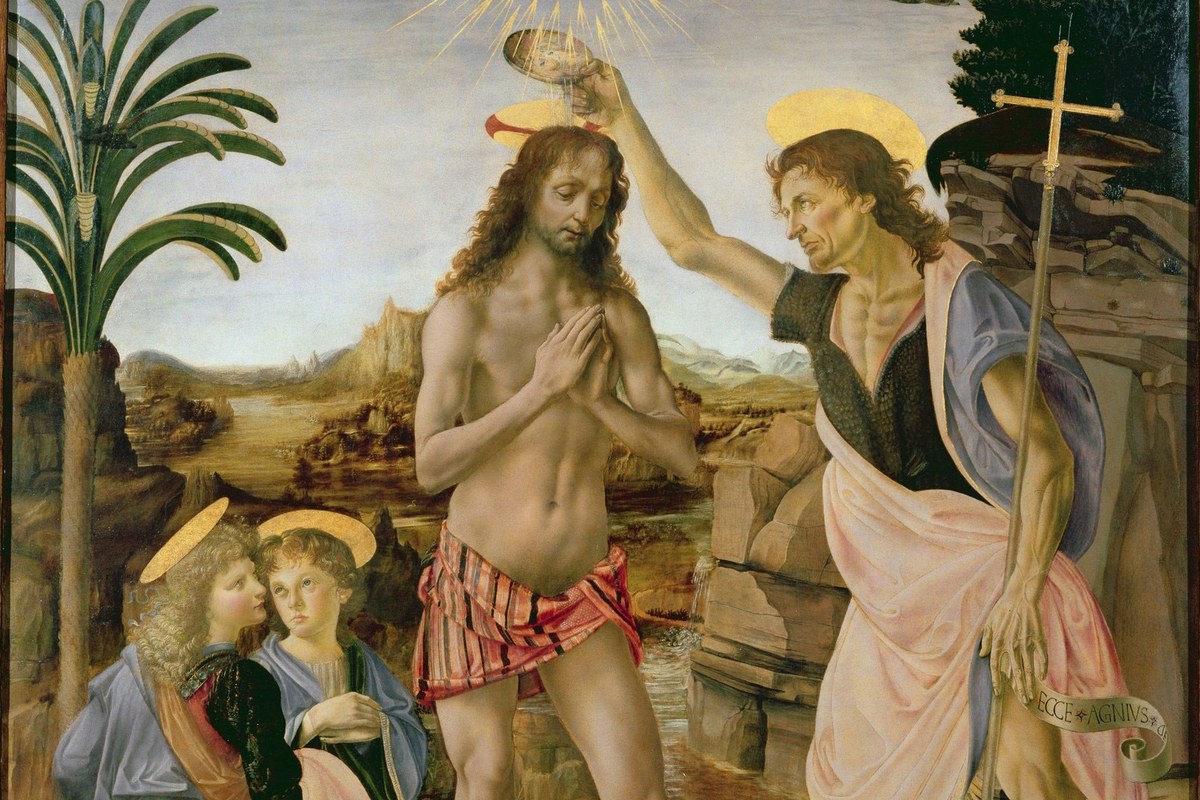
When Jesus arrives at the river to be baptized, the Gospel of Matthew records a moment of hesitation on John's part: recognizing Jesus as someone he should himself be baptized by rather than the reverse, John initially tries to prevent it, and only proceeds after Jesus insists it is necessary "Allow it now, for thus it is fitting for us to fulfill all righteousness." (Matthew 3:15). The exchange has drawn centuries of theological reflection, since Jesus, understood by Christian doctrine to be without sin, had no personal need for a baptism of repentance — reinforcing the reading that the event serves primarily as a public revelation of who Jesus is, rather than a cleansing he required.
A voice from heaven
The baptism itself is described with restrained but striking language across the Synoptic Gospels. Matthew records: "After Jesus was baptized, he came up from the water and behold, the heavens were opened [for him], and he saw the Spirit of God descending like a dove [and] coming upon him. And a voice came from the heavens, saying, 'This is my beloved Son, with whom I am well pleased'" (RSV-CE, Matthew 3:16-17). Christian tradition has long read this moment as one of the clearest scriptural revelations of the Trinity — the Son standing in the water, the Spirit descending visibly, and the Father's voice heard from heaven, all within a single scene.
The event marks a clear narrative turning point in the Gospels: immediately afterward, in each account, Jesus withdraws into the wilderness to be tempted for forty days before beginning his public teaching and healing ministry in earnest. For that reason, the Baptism of Jesus is commemorated liturgically — in the Catholic Church, on the feast that closes the Christmas season — as marking the formal start of his mission.
Where along the river?
Two principal traditional sites compete, gently, for association with the baptism, situated on opposite banks of the river near ancient Jericho: Qasr al-Yahud on the western, West Bank side, and Al-Maghtas (also known by its Byzantine name, Bethany Beyond the Jordan) on the eastern, Jordanian side. Both locations have been venerated by pilgrims since at least the Byzantine period, when the historian Eusebius and later pilgrim accounts already identified this stretch of the river near Jericho as the traditional baptism site, and archaeological excavation on the Jordanian side has uncovered the remains of numerous ancient churches, baptismal pools, and monastic settlements dating from the fourth century onward, offering strong material evidence of very early and sustained Christian veneration there.
Al-Maghtas was recognized as a UNESCO World Heritage Site in 2015, cited specifically for its exceptional concentration of well-preserved religious and archaeological remains connected to the baptism tradition. As with several Holy Land sites where a river or landscape has shifted somewhat over two millennia, the exact original point of the baptism cannot be established with absolute geographic precision — but the sustained, ancient, cross-tradition veneration of this particular stretch of the Jordan gives the identification considerably more historical weight than many later or more speculative site traditions.
A living tradition on the water
The Jordan River remains an active site of Christian baptism and pilgrimage today. Further north, near where the river exits the Sea of Galilee, the modern facility at Yardenit was developed specifically to accommodate the large numbers of Christian visitors who wish to be baptized or to renew their baptismal vows in the Jordan's waters, even though this stretch of river is geographically distinct from the traditional Jericho-area baptism site. Visitors to Qasr al-Yahud and Al-Maghtas today can walk down to the riverbank itself, standing at the edge of the same waterway where, in a moment the Gospels treat as pivotal, a voice from heaven identified Jesus before he began the ministry that would define the rest of his recorded life.
Trivia
Where exactly was Jesus baptized in the Jordan River?
What happened when Jesus was baptized?
Who was John the Baptist and why was he baptizing people in the Jordan?
Is the Jordan River still used for baptisms today?
Why is the Jordan River significant beyond the New Testament?
You May Also Like

Related Reading