Bethany and the Tomb of Lazarus

A village of friends
Bethany sits on the eastern slope of the Mount of Olives, close enough to Jerusalem to be a natural stopping point for anyone traveling to or from the city, but far enough to feel like a retreat from it. The Gospels describe it as home to three siblings Jesus knew well and visited more than once: Martha, Mary, and their brother Lazarus. It's a rare thing in the Gospel narrative to see Jesus in a setting this domestic and relational — not preaching to crowds or debating religious leaders, but sitting in a friend's house, drawn into an ordinary sibling disagreement about hospitality (Luke 10:38-42), or, in Bethany's most famous episode, grieving alongside a family in mourning.
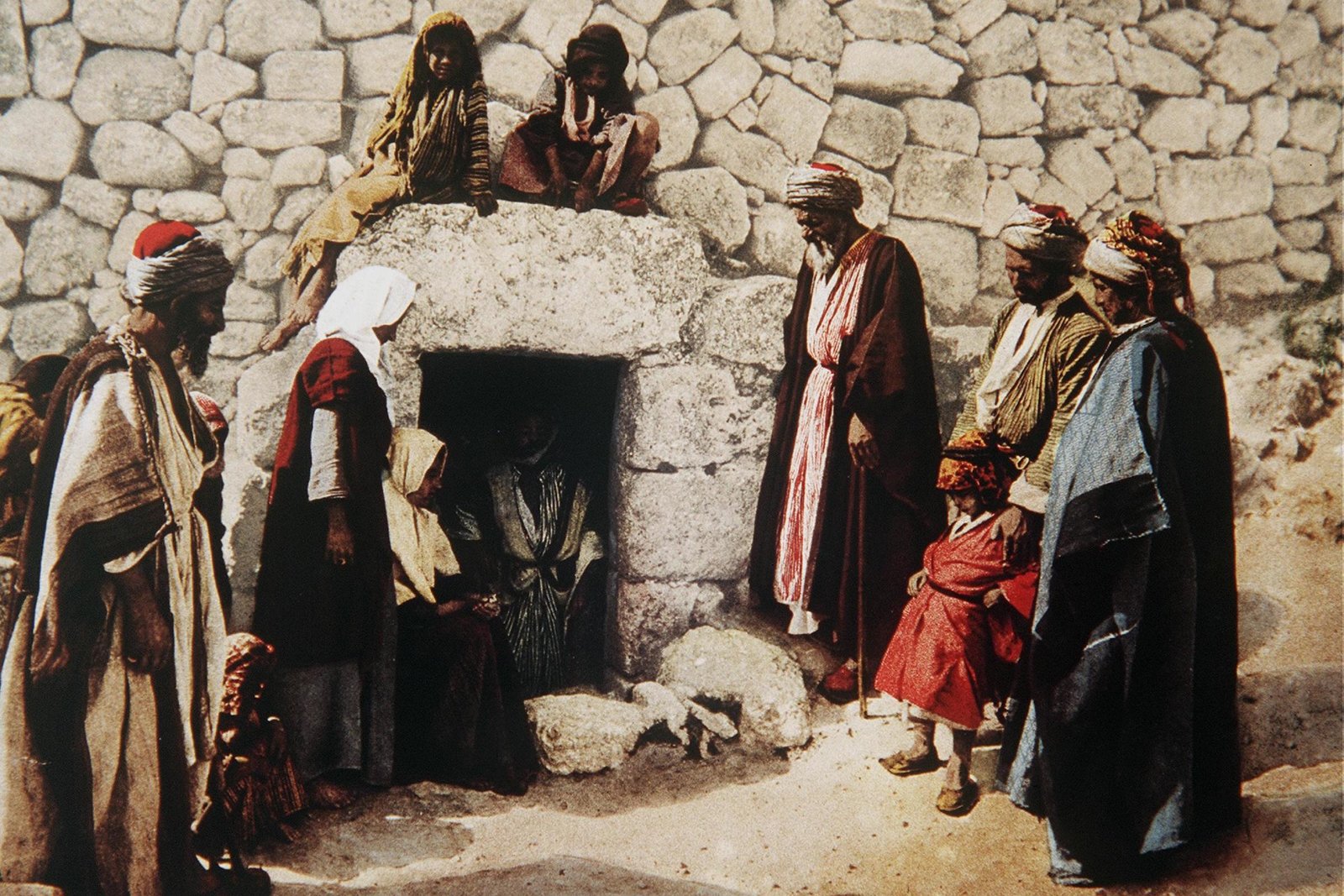
Photograph by Félix Bonfils, Tomb of St Lazarus in Bethany, 1878 — Public Domain, Wikimedia Commons.
Illness, delay, and grief
John's Gospel tells the story of what happened when Lazarus fell seriously ill. His sisters sent word to Jesus, who was elsewhere at the time, but rather than rushing to Bethany, Jesus deliberately stayed where he was for two more days, telling his disciples that the illness was "for the glory of God, that the Son of God may be glorified through it" (John 11:4). By the time Jesus finally arrived in Bethany, Lazarus had already been dead and buried for four days — a detail the Gospel underscores precisely because, in the Jewish burial customs of the time, four days was understood as long enough that decomposition would have unmistakably begun, ruling out any possibility that Lazarus had merely been in a coma or appeared dead.
Martha meets Jesus on the road with a mixture of grief and faith, telling him plainly, "Lord, if you had been here, my brother would not have died" (John 11:21), before affirming her belief in the resurrection to come. Mary, when she meets him, repeats almost the same words through her weeping, and Jesus himself, moved by the scene of mourning around him, is recorded weeping too (John 11:35) — the shortest verse in most English translations of the Bible, and one long noted by commentators for its stark, direct witness to Jesus's genuine human grief.
"Lazarus, come out"
The raising of Lazarus that follows is described in vivid, almost theatrical detail. Jesus goes to the tomb — described in the text as a cave sealed with a stone — and orders it opened, over Martha's practical objection that "by now there will be a stench; he has been dead for four days" (John 11:39). After a prayer of thanksgiving directed to his Father, Jesus cries out in a loud voice: "Lazarus, come out!" And, as John records it, "The dead man came out, tied hand and foot with burial bands, and his face was wrapped in a cloth. So Jesus said to them, 'Untie him and let him go'" (RSV-CE, John 11:43-44).
John's Gospel frames this miracle as the last and greatest of the public signs Jesus performs before his own death — and, pointedly, as a direct catalyst for it. The same chapter goes on to record that news of the miracle led directly to a meeting of the chief priests and Pharisees, at which the high priest Caiaphas argued it was better for one man to die for the people than for the whole nation to be endangered (John 11:47-50), a plan John explicitly identifies as the moment the authorities resolved to kill Jesus. Bethany, in other words, sits at a genuine hinge point in the Gospel narrative — the site of the miracle that both revealed Jesus's power most dramatically and set the final events of his life into motion.
Simon the Leper's house, and an anointing
Bethany appears again shortly afterward in the Gospel accounts, as the setting for the house of a man identified as Simon the Leper, where, according to Matthew and Mark, a woman anointed Jesus's head with costly perfumed oil in an act of devotion he defended against criticism as preparation for his burial (Matthew 26:6-13). John's account places a similar anointing, at Lazarus's own house, in the hands of Mary specifically. These layered traditions, whether describing one event or two closely related ones, reinforce Bethany's role in the Gospels as a place of both hospitality and quiet, anticipatory grief in the days leading toward the Passion.
The tomb and the town today
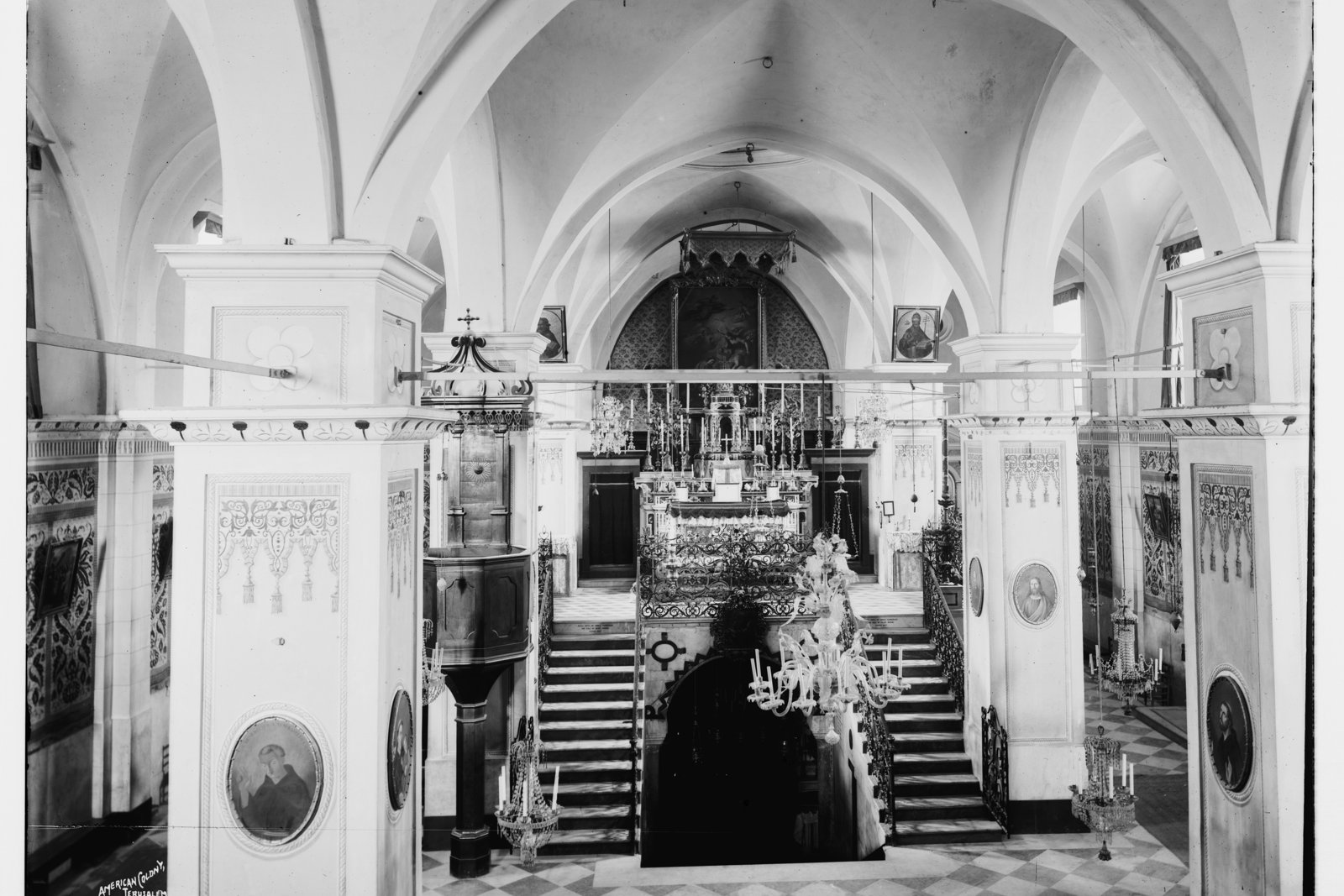
The site traditionally identified as the Tomb of Lazarus has been venerated by Christian pilgrims since at least the fourth century, when early pilgrim accounts already describe visiting it, and it has been marked by a succession of churches — Byzantine, Crusader, and later Franciscan and other structures — built and rebuilt at the site across the centuries. Visitors today descend a narrow flight of uneven stone steps to reach a small burial chamber below street level, an experience that gives a tangible, physical sense of the tomb's depth and enclosure even if the precise ancient structure has been altered many times over.
The modern town occupying the site, in the West Bank, is called Al-Eizariya, an Arabic name directly derived from "Lazarus" (via the Greek Lazaros), a linguistic thread connecting the contemporary town's very name back across nearly two thousand years to the Gospel event that first made it significant. A Franciscan-administered Catholic church, along with a nearby mosque and a Greek Orthodox church, all mark different aspects of the site's long, layered religious history — a continuity of memory not unlike the story it commemorates, of a man called back out of the darkness of the tomb into the light.
Trivia
What happened at Bethany according to the Gospel of John?
Who lived in Bethany in the Gospels?
Why did Jesus wait before going to Lazarus?
Where is Bethany located today, and what can visitors see there?
Is the raising of Lazarus connected to the events leading to Jesus's crucifixion?
Related Reading