The Transfiguration on Mount Tabor

Three witnesses, chosen deliberately
Matthew is specific about who is present: Jesus "After six days Jesus took Peter, James, and John his brother, and led them up a high mountain by themselves." (Matthew 17:1, RSV-CE) — the same inner circle of three who appear again at some of the most significant moments in the Gospels. These same three men will later be the ones Jesus brings deepest into the garden of Gethsemane, on the night before his death, as if their presence on the mountain was meant to prepare them for something far darker still. Nothing in the text suggests the climb itself was unusual; whatever followed clearly was not something the disciples had any reason to expect.
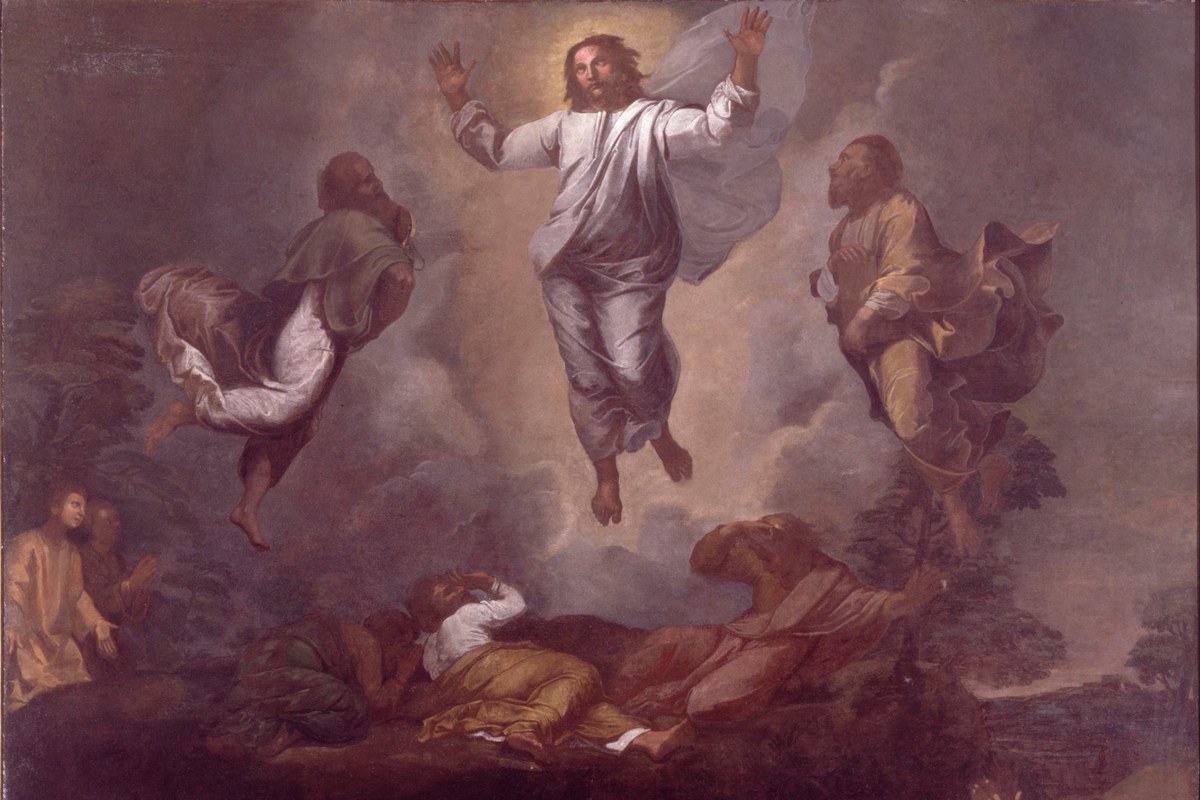
Raphael, "The Transfiguration," c. 1516–1520 — public domain.
Tradition, though not Scripture itself, has long identified the "high mountain" as Mount Tabor, a rounded, free-standing peak rising abruptly out of the plain of Galilee, visible for miles in every direction. By the fourth century, pilgrims and early Christian writers were already associating the site with the event, and a church has stood at its summit in one form or another for over a thousand years — the current Basilica of the Transfiguration, completed in 1924, was built by the Franciscans directly atop the ruins of Byzantine and Crusader-era churches that came before it. Some modern scholars have proposed Mount Hermon instead, given its proximity to Caesarea Philippi, where the preceding chapter of Matthew's Gospel is set — but the name "Tabor" has attached itself to the story so firmly, for so long, that it's the name almost everyone still uses.
A sudden, visible change
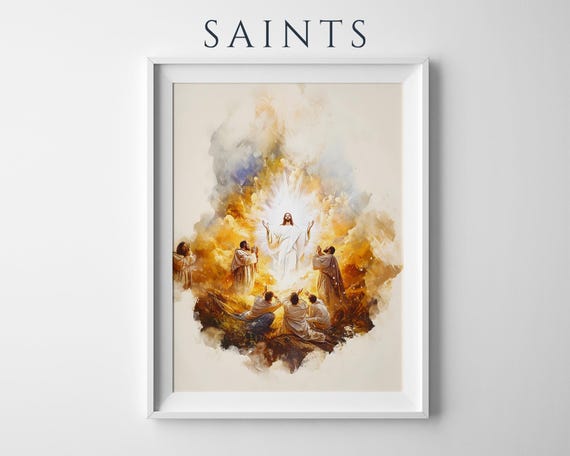
The event itself is described with unusual physical precision for a Gospel miracle: Jesus "And he was transfigured before them; his face shone like the sun and his clothes became white as light." (Matthew 17:2, RSV-CE). Then, without warning, two more figures appear: "And behold, Moses and Elijah appeared to them, conversing with him." (Matthew 17:3, RSV-CE) — two towering figures from Israel's past, long dead, now standing on the mountain in conversation with him as if there were nothing strange about it at all.
Why Moses and Elijah, of all people
Neither Moses nor Elijah is a random choice. Moses had led Israel out of slavery in Egypt and received the Law on Mount Sinai; Elijah had been Israel's fiercest defender of true worship against idolatry, and — most strikingly — hadn't died a normal death at all, but was carried up to heaven in a whirlwind, an episode you can read about in Elijah and the chariot of fire. Together, tradition has long read the two men as standing in for the entirety of the Hebrew Scriptures: Moses representing the Law, the first five books that gave Israel its identity and its commandments, and Elijah representing the Prophets, the long line of voices who called the people back to faithfulness. Their appearance beside Jesus, talking with him rather than simply observing, suggests that everything the Law and the Prophets pointed toward was now standing in front of the disciples in human form.
Peter's instinct, and the voice that answers it
Peter's reaction is almost endearingly human: rather than staying silent in the face of something this overwhelming, he offers to build three shelters, "If you wish, I will make three tents here, one for you, one for Moses, and one for Elijah." (Matthew 17:4, RSV-CE) — an attempt, perhaps, to hold onto the moment or give it some practical shape. He's cut off mid-thought. "While he was still speaking, behold, a bright cloud cast a shadow over them, then from the cloud came a voice that said, “This is my beloved Son, with whom I am well pleased; listen to him." (Matthew 17:5, RSV-CE) — language that echoes the voice heard at Jesus's baptism, but now adds a direct instruction aimed at the men standing there: listen to him.
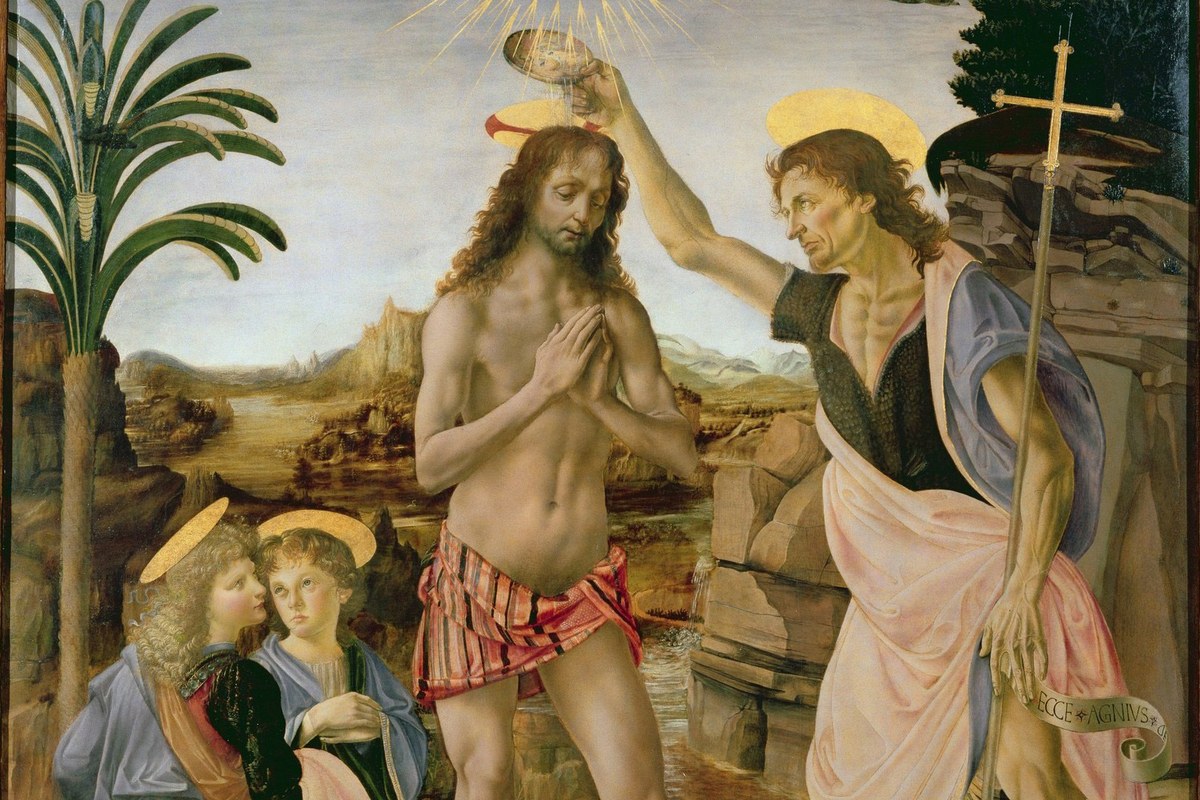
This isn't the first time a voice from heaven has spoken these words. At the baptism of Jesus, as he came up out of the Jordan River, a nearly identical voice declared him God's beloved Son. Scholars and preachers have long noticed the echo: the Transfiguration functions almost like a second, more dramatic confirmation of the same truth, delivered this time not at the start of Jesus's public ministry but partway through it, not long after Peter had first declared him the Christ at Caesarea Philippi and not long before Jesus would set his face toward Jerusalem and the suffering that awaited him there. The added command — "listen to him" — reads almost like an answer to Peter's offer to build shelters: not this, it seems to say, but simply pay attention.
Terror, and an ordinary hand on the shoulder
The disciples' response isn't wonder but fear: they "fell prostrate and were very much afraid" (Matthew 17:6, NABRE). What ends the moment isn't another vision but something almost startlingly plain: "But Jesus came and touched them, saying, “Rise, and do not be afraid.” And when the disciples raised their eyes, they saw no one else but Jesus alone." (Matthew 17:7-8, RSV-CE). The mountain, the light, Moses and Elijah, the voice from the cloud — all of it gives way, in the end, to an ordinary touch and an ordinary command to stand, with Jesus alone left standing in front of them, exactly as he'd been before they climbed.
Matthew adds one more detail worth noticing: as they came down the mountain, "Do not tell the vision to anyone until the Son of Man has been raised from the dead." (Matthew 17:9, RSV-CE). The disciples were being handed a glimpse of glory they weren't yet permitted to share — a preview of the risen Christ that would only make full sense once the resurrection had actually happened. In Eastern Christian tradition especially, the Transfiguration is read this way: not simply as a strange and dazzling episode, but as a deliberate foretaste, letting three ordinary men see, briefly and unbearably, what Jesus's glory would look like once his suffering was behind him.
A feast day, and a place in Christian art
The Church has kept a feast in honor of this event since at least the ninth century in the East, and it was extended to the universal Latin Church calendar in 1456, celebrated on August 6. Painters have returned to the scene again and again over the centuries precisely because it gives them so much to work with: a burst of light, two Old Testament figures suspended in mid-air, three disciples caught mid-collapse. Raphael's version, left unfinished at his death in 1520 and now hanging in the Vatican Museums, is often called one of the last great paintings of the Renaissance — it pairs the radiant scene on the mountain with a second, darker episode below it, showing the disciples who stayed behind struggling, and failing, to heal a possessed boy. The contrast was deliberate: glory above, human helplessness below, and Christ the only bridge between the two.
Trivia
What exactly did the disciples witness?
Why do Moses and Elijah appear with Jesus?
What did the voice from the cloud say?
How did the disciples react?
Related Reading