Niepokalanów: Saint Maximilian Kolbe's Friary

A friar with a vision for mass media
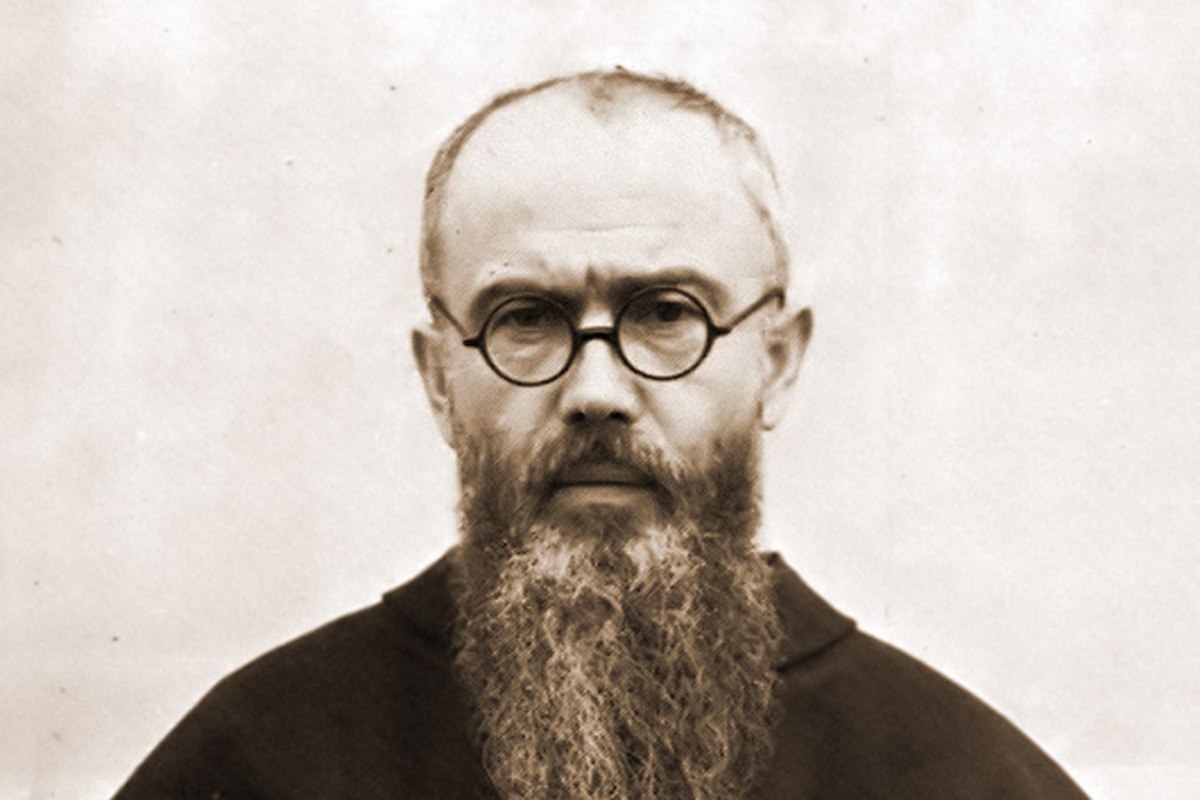
Maximilian Kolbe was a Polish Conventual Franciscan friar, ordained in 1918, whose deep devotion to the Virgin Mary and unusually forward-looking interest in using modern communications technology to spread that devotion set him apart from many of his contemporaries in religious life. Read the fuller account of his life, his imprisonment, and his death in our article on Saint Maximilian Kolbe. In 1927, after returning from missionary work in Japan, Kolbe secured land outside Warsaw — donated by a Polish prince, Jan Drucki-Lubecki — to establish a new kind of religious community, one organized specifically around printing, publishing, and eventually broadcasting, in service of what he called the Militia Immaculatae, a Marian devotional movement he had founded years earlier.
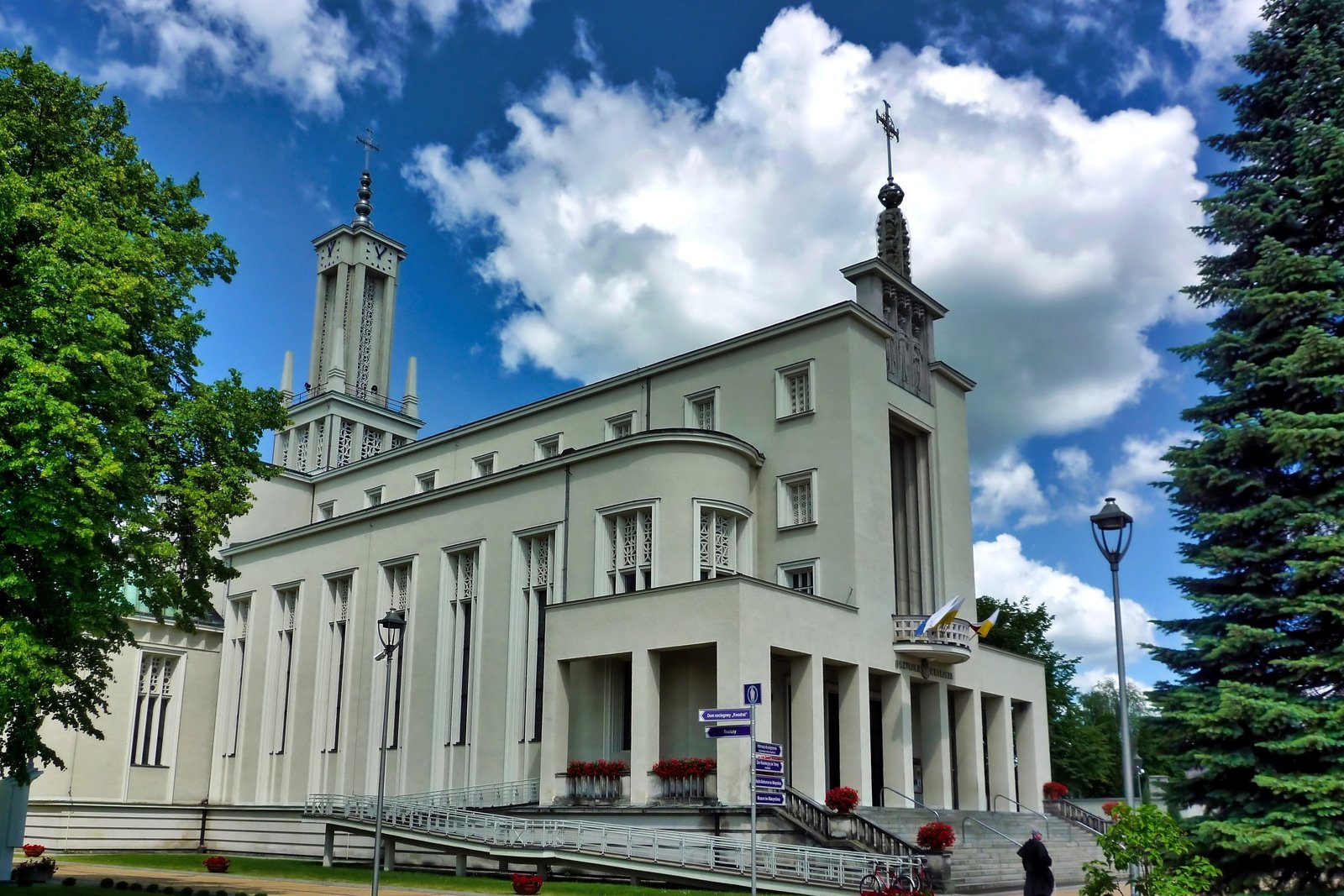
Photograph by Fczarnowski, Niepokalanow basilica — CC BY-SA 3.0, Wikimedia Commons.
He named the settlement Niepokalanów, meaning roughly "City of the Immaculate" in Polish, a reference to the Immaculate Conception of Mary that anchored the community's spiritual identity. What began as a modest foundation grew with remarkable speed over the following decade, driven by Kolbe's organizational energy and the friars' commitment to combining traditional Franciscan poverty and community life with genuinely industrial-scale publishing operations.
Growing into one of the world's largest religious communities
By the late 1930s, Niepokalanów had become extraordinary by almost any measure of religious community size and output. It housed close to 800 friars, making it one of the largest single Catholic religious communities anywhere in the world at the time, and its printing operations were substantial enough to rival major secular publishing houses: the friary produced a popular monthly magazine, "Rycerz Niepokalanej" (Knight of the Immaculate), with a circulation reportedly reaching into the hundreds of thousands, alongside a daily newspaper, "Mały Dziennik" (Little Journal), that at its peak achieved a circulation among the largest in Poland.
Kolbe pushed the community's media ambitions further still, establishing a radio station broadcasting from the friary and reportedly making preparations for a film studio before the outbreak of war interrupted those plans entirely. The friary functioned essentially as a self-sufficient town, with its own workshops, infirmary, and agricultural operations supporting the friars' publishing work — an unusual fusion of traditional Franciscan communal poverty with a genuinely modern, technologically ambitious mission of evangelization through mass media, unlike almost any other religious community of its era.
War, occupation, and Kolbe's arrest
Germany invaded Poland in September 1939, and Niepokalanów's fortunes changed abruptly. Most of the friars were initially dispersed or drafted, though Kolbe and a small remaining group used the friary in the war's early period to shelter refugees, including, according to multiple accounts, several thousand Jewish refugees at various points before German occupation authorities cracked down more fully on the community's activities. The friary was intermittently used by German occupation forces for their own purposes during the war, including at times as an internment facility, disrupting the community Kolbe had spent over a decade building.
In February 1941, the Gestapo arrested Kolbe directly, transferring him eventually to Auschwitz concentration camp, where he was assigned to forced labor under brutal conditions. In late July 1941, following an escape by a prisoner from Kolbe's barracks, camp authorities selected ten men to be executed by starvation as collective reprisal, a standard and deliberately terrorizing practice at the camp. When one of the selected men, Franciszek Gajowniczek, cried out in anguish over leaving behind his wife and children, Kolbe volunteered to take his place — a request the camp authorities, unusually, granted. Kolbe survived roughly two weeks in the starvation bunker before being killed by lethal injection on August 14, 1941.
Niepokalanów since the war
The friary survived the war's end and was gradually rebuilt and reoccupied by Franciscan friars in the postwar decades, though operating under the significant constraints Poland's subsequent communist government placed on religious institutions and publishing. Kolbe was beatified in 1971 and canonized in 1982 by Pope John Paul II — himself Polish, and a pope for whom Kolbe's story carried particular national and personal significance — with Kolbe recognized specifically as a martyr of charity, his death treated by the Church as an act of self-sacrificial love rather than martyrdom for the faith in the strict traditional sense, a nuanced distinction the canonization process addressed directly.
Niepokalanów today remains an active Franciscan friary and has become a substantial pilgrimage destination in its own right, anchored by a basilica and a museum documenting both Kolbe's life and the friary's own remarkable history as a prewar media operation and wartime refuge. The community has also revived aspects of its original publishing mission, continuing, on a smaller scale, the same basic vision Kolbe pursued nearly a century ago: using the communications tools of the age to spread the devotion at the heart of the community he built and gave his life defending, in a much darker context than he ever could have anticipated when he founded it.
Trivia
What was Niepokalanów originally built for?
What happened to Niepokalanów during World War II?
Why was Maximilian Kolbe canonized?
Is Niepokalanów still an active Franciscan community today?
Related Reading