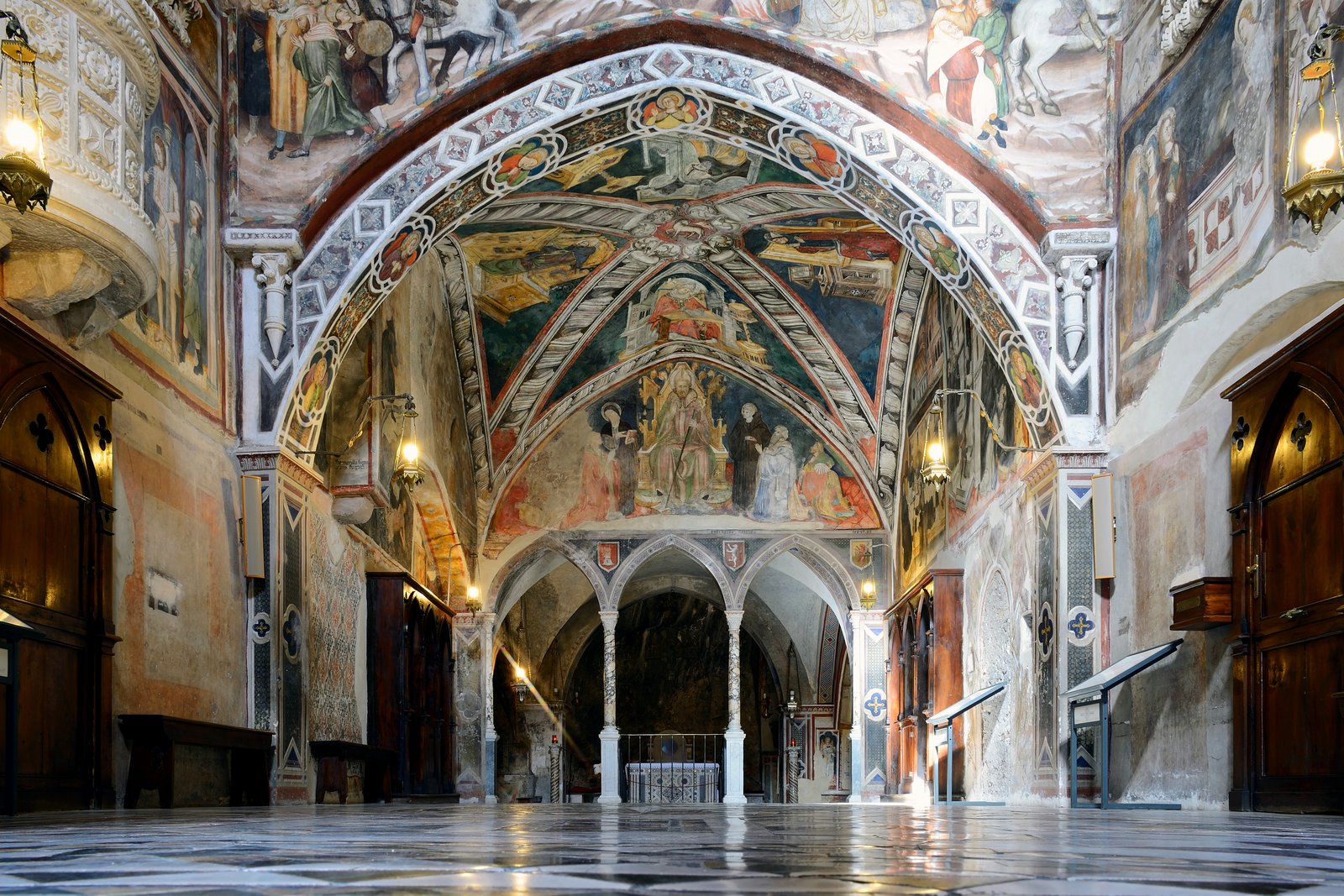
Monte Cassino Abbey — The Cradle of Western Monasticism

Built on the ruins of a pagan temple
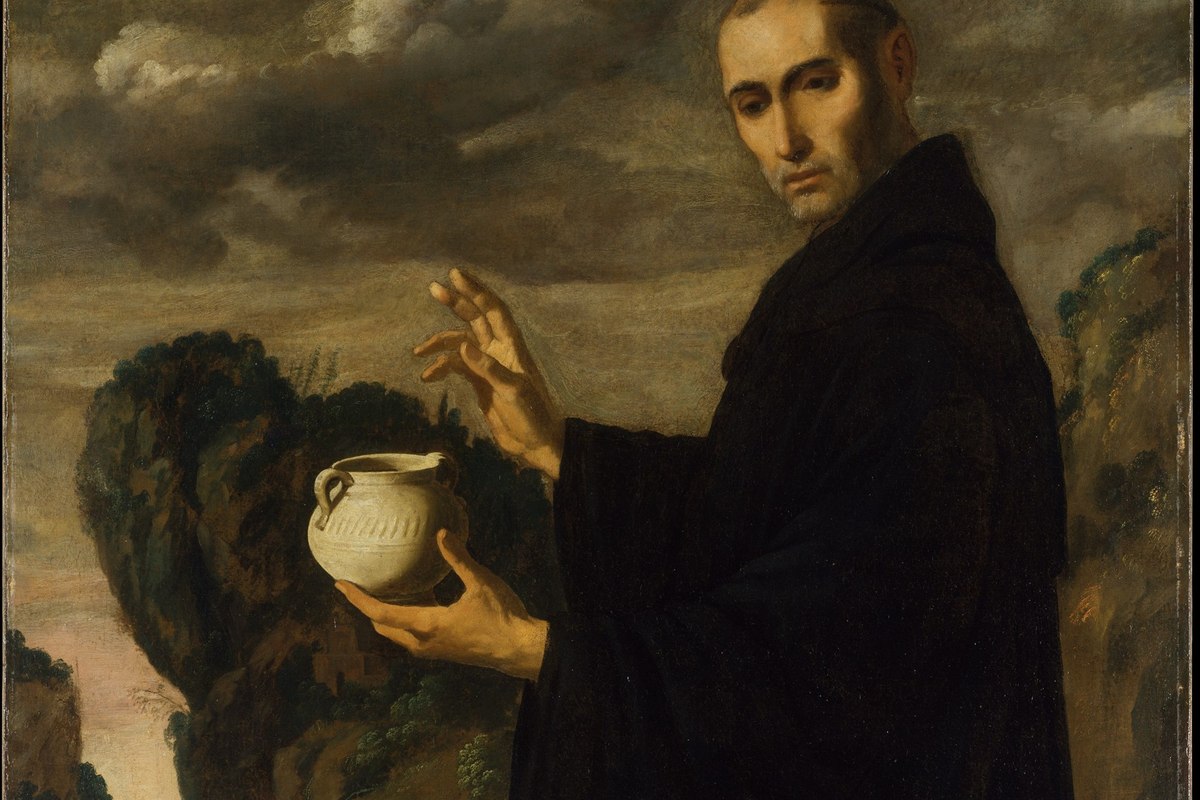
In the year 529, Saint Benedict of Nursia climbed a rocky hilltop roughly eighty miles southeast of Rome and founded a monastery on ground that, according to tradition, had previously held a temple dedicated to Apollo. Rather than simply building alongside the old shrine, Benedict is said to have destroyed it outright and raised his monastery directly on its foundation — a deliberate, symbolic replacement of one form of worship with another.
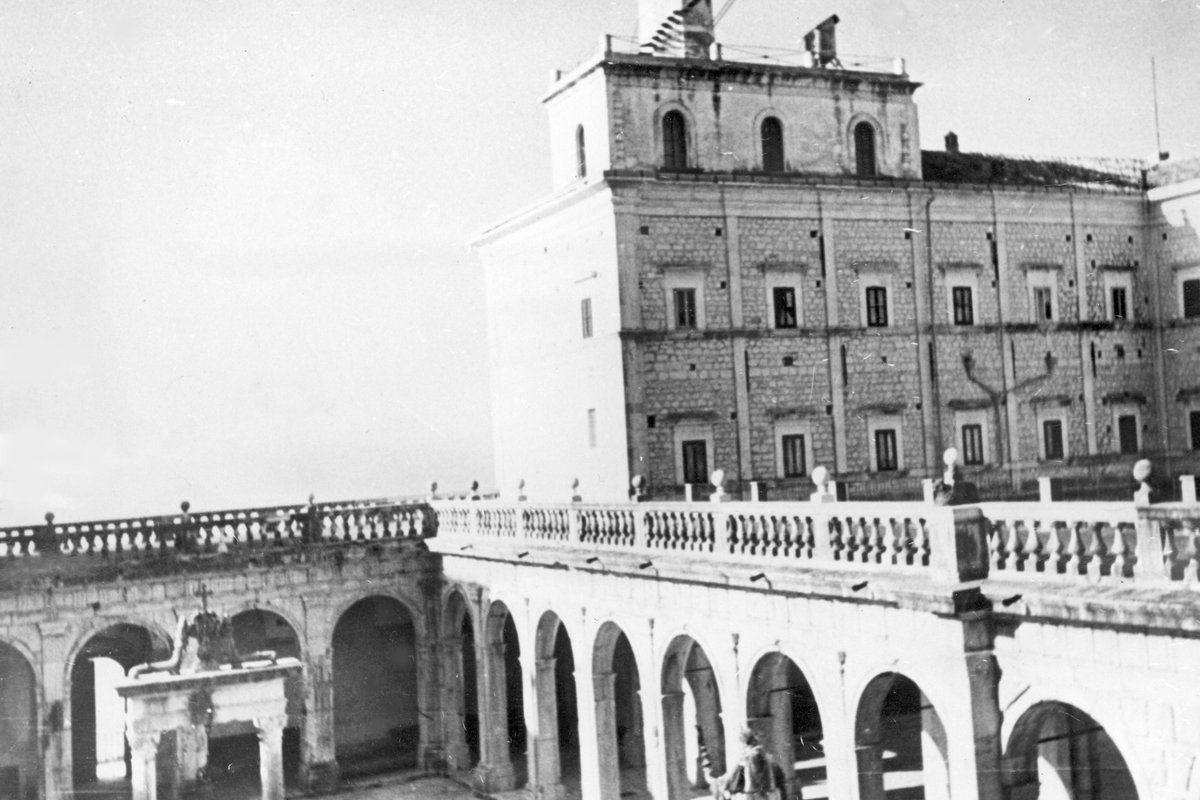
Frass, Abbey of Monte Cassino on its hilltop, February 1944 - public domain.
Benedict remained at Monte Cassino until his death around 547, and it was here, not in any of the earlier communities he had founded, that he wrote what became known simply as the Rule of Saint Benedict — a short, practical guide to communal monastic life organized around prayer, manual labor, and stability, built on the now-famous balance of ora et labora, "pray and work." Compared to some of the more austere monastic rules already circulating in the fourth and fifth centuries, Benedict's approach was notably moderate — it assumed monks were ordinary men in need of structure and encouragement rather than candidates for extreme physical self-denial, which is a large part of why it proved so durable and adaptable across such different times and places. The Rule would go on to become the single most influential document in the history of Western monasticism, adopted far beyond Monte Cassino itself and still followed by Benedictine communities today. For that reason, historians of religion routinely credit Monte Cassino as the founding site — the literal cradle — of monastic life in the Western Church.
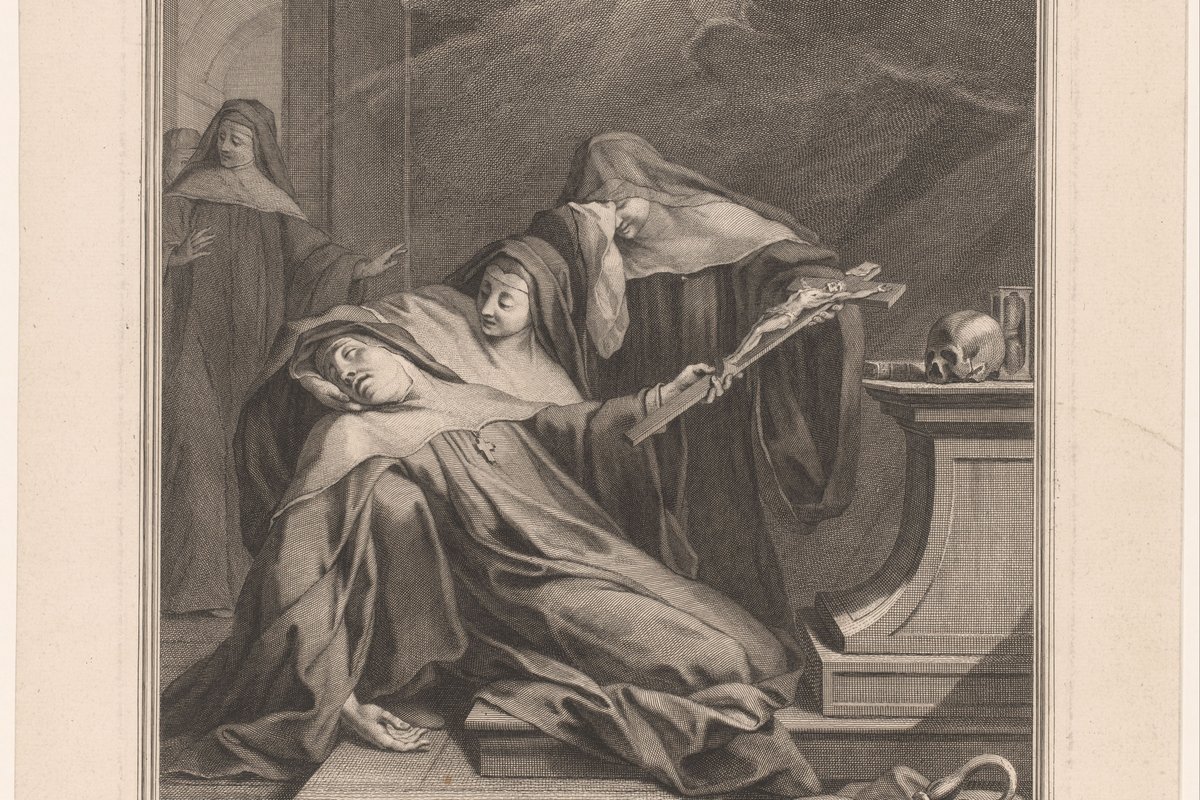
Benedict's twin sister, Saint Scholastica, founded her own community of nuns not far from Monte Cassino and followed a version of the same Rule, making the two siblings jointly responsible for shaping both the male and female branches of Western monastic life from the very beginning. Tradition holds that the two met once a year near the monastery to discuss spiritual matters, and that their final meeting, shortly before Scholastica's death, stretched through the night after she prayed for a storm that kept her brother from leaving — a story usually read as an early witness to the closeness, and occasional gentle contest of wills, between the two founding figures.
Destroyed, and rebuilt, again and again
Monte Cassino's fifteen centuries of history have been marked by a striking, recurring pattern: destruction followed by reconstruction, repeated across wildly different eras. The Lombards, a Germanic people who invaded Italy, sacked the abbey around 580, scattering its monks for over a century before it was reestablished in 718 under Abbot Petronax. Saracen raiders sacked it again in 884. An earthquake heavily damaged the complex in 1349. Each time, the community that had scattered or rebuilt around it returned and restored the abbey, treating its survival as inseparable from its identity.
None of those earlier disasters, however, compares in scale to what happened in February 1944.
The bombing of 1944
By early 1944, Monte Cassino sat directly on the Gustav Line, a heavily fortified German defensive position blocking the Allied advance toward Rome during the Italian campaign. Allied commanders came to believe — a belief that has remained contested by historians ever since regarding exactly how much the Germans were actually using the building itself — that German forces had turned the abbey into a military strongpoint. On February 15, 1944, Allied bombers dropped hundreds of tons of explosives on the monastery, reducing centuries of construction to rubble in a single day.
Remarkably, the oldest and most sacred part of the complex survived. The area containing Benedict's original cell, and the tomb holding the remains of Benedict and his sister Saint Scholastica, escaped serious damage even as the buildings constructed above and around it collapsed — a detail that Catholic accounts of the bombing have long treated as a small mercy amid an otherwise devastating loss.
A costly battle beyond the abbey itself
The Battle of Monte Cassino, of which the abbey's bombing was only one episode, ranks among the longest and bloodiest campaigns of the Italian theater in World War II, stretching across four separate Allied offensives between January and May 1944 and costing tens of thousands of casualties on both sides before the position finally fell. Troops from many nations fought and died on the surrounding slopes, including a notably costly and ultimately decisive assault by Polish forces in May 1944, commemorated today by a Polish military cemetery on the hillside below the rebuilt abbey. The scale of the human cost is part of why Monte Cassino remains, to this day, a place of both religious pilgrimage and wartime remembrance side by side.
Rising again, one more time
Reconstruction began after the war, following the abbey's original plans as closely as surviving records allowed, in an effort to rebuild Monte Cassino as faithfully as possible to what had stood there before, down to reusing salvaged stone and architectural fragments wherever they could be recovered from the ruins. The work took two decades, funded in significant part by the Italian state as a matter of national restoration. Pope Paul VI formally reconsecrated the restored abbey in 1964, marking its fifth rise from destruction across fifteen hundred years of history.
Today, Monte Cassino stands again on its hilltop much as it has, in one form or another, since the sixth century — a monastery that has now outlasted invading armies, natural disasters, and modern warfare alike, still home to a Benedictine community carrying forward the same Rule Benedict wrote there in the first place. Visitors today can descend to the crypt housing Benedict and Scholastica's tomb, walk the rebuilt cloisters, and see, in the abbey's museum, artifacts and manuscripts that survived the bombing because they had been evacuated by German officers to the Vatican before the fighting began — an unexpected act of preservation carried out by soldiers on the same side later blamed for the building's destruction.
Trivia
Who founded Monte Cassino Abbey and when?
How many times has Monte Cassino been destroyed?
Why did the Allies bomb Monte Cassino Abbey in World War II?
Were Saint Benedict's remains destroyed in the 1944 bombing?
Has Monte Cassino Abbey been rebuilt?
Related Reading