Saint Maximilian Kolbe

A monastery turned resistance press
Before his arrest, Kolbe ran Niepokalanów, a monastery near Warsaw that had grown into a substantial publishing operation, complete with an amateur radio station. Under German occupation, that same publishing network continued producing anti-Nazi material, making the monastery and its friars a clear target once occupation authorities moved to shut down any remaining organized resistance. Kolbe was arrested in 1941 and sent to Auschwitz.
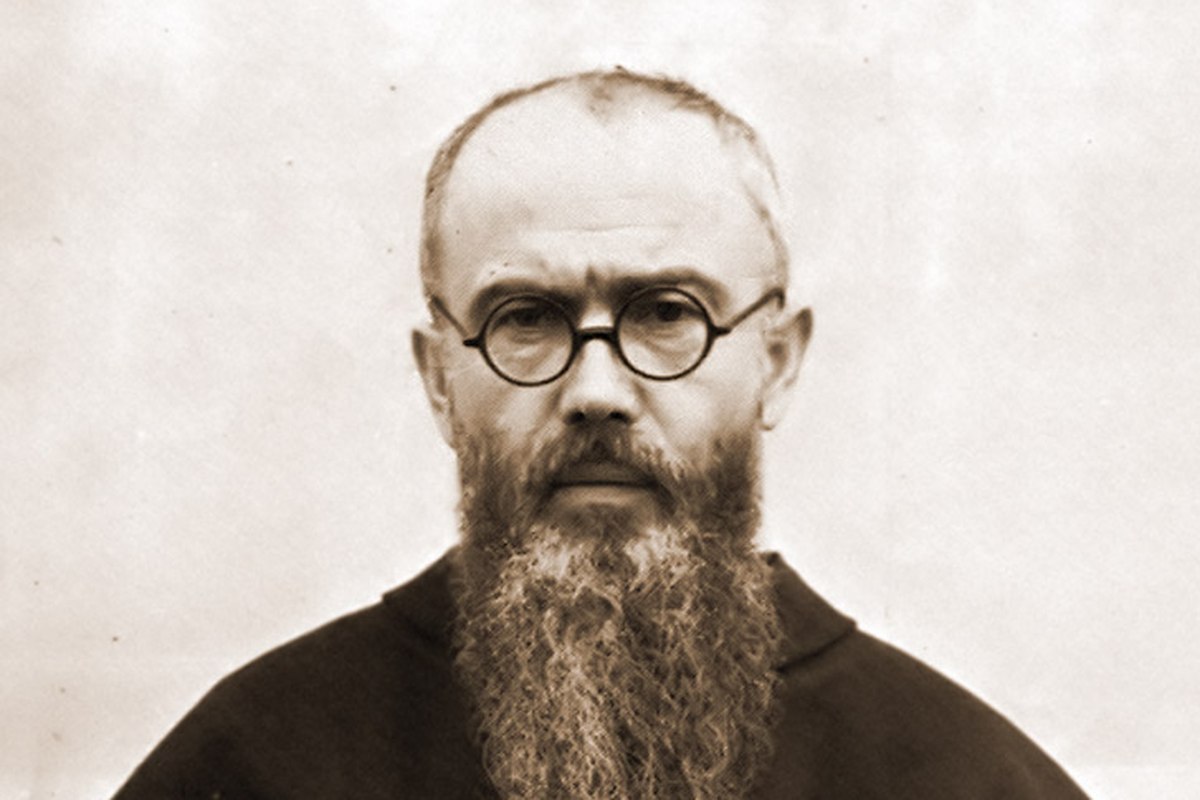
Photograph of Maximilian Kolbe, 1936 — public domain.
Continuing to serve inside the camp
Even inside Auschwitz's brutal conditions, Kolbe kept functioning as a priest — offering what comfort and spiritual support he could to prisoners enduring conditions designed specifically to strip away exactly that kind of dignity. It was within that setting that the camp's guards, retaliating after an escape, selected ten prisoners at random to be starved to death as a warning to the rest.
A volunteer no one asked for
One of the ten men selected, Franciszek Gajowniczek, begged for his life, pointing out that he had a wife and children waiting for him outside the camp. Kolbe, who had not been chosen at all, stepped forward and asked to take the man's place instead — an offer the guards, unusually, accepted. It's a decision with no practical explanation beyond the one Kolbe himself seemed to operate from: that his own life was one he was willing to spend on behalf of a stranger's.
Outlasting a death sentence built to be slow
In the starvation bunker, witnesses reported that Kolbe led the other condemned men in prayer and singing rather than despair, and survived roughly two weeks without food or water — longer than the guards appeared to expect. He was the last of the ten still alive, and was ultimately killed by lethal injection. Franciszek Gajowniczek, the man whose place Kolbe took, survived the war and was present decades later at both Kolbe's beatification and his canonization by Pope John Paul II in 1982 — a direct, living link between the sacrifice and its lasting recognition.
A vision of two crowns
Long before Auschwitz, Kolbe's own account of his childhood includes a moment that shaped everything after it. As a boy in Poland, troubled by his own mischievousness, he prayed to the Virgin Mary and later described her appearing to him holding two crowns, one white and one red, asking which he would choose — purity or martyrdom. He told her he would take both. Whether read as literal vision or as the kind of formative devotional memory a deeply Marian imagination produces in retrospect, it's the lens through which Kolbe's own religious order later read his life: a young man who entered the Conventual Franciscans, was ordained a priest in Rome in 1918, and organized a lay movement called the Militia Immaculatae — the "Army of the Immaculate" — dedicated to bringing people to Christ through Mary. That movement, not the camp, was the actual center of his life's work for over two decades.
Building a media empire for a religious cause
Kolbe's talent was organizational as much as spiritual. Starting from almost nothing, he built Niepokalanów into one of the largest publishing operations in prewar Poland, printing a monthly magazine that reached circulation in the hundreds of thousands and running a daily newspaper alongside the amateur radio station. He also spent several years as a missionary in Nagasaki, Japan, founding a monastery and a Japanese-language version of his magazine before poor health forced his return to Poland in 1936. It's worth noting how unusual that missionary detour makes him among the saints associated with World War II: by the time the war reached Poland, Kolbe was already an internationally minded publisher and founder, not merely a local parish priest swept into events beyond his control.
Iconography: the striped uniform and the syringe
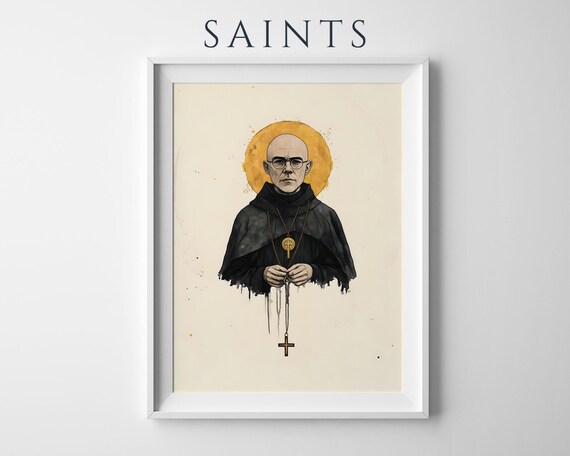
Because Kolbe is a twentieth-century saint whose martyrdom is documented, not legendary, his iconography differs from that of early or medieval saints — artists typically depict him in the striped prisoner uniform of Auschwitz, sometimes marked with his prisoner number, 16670, rather than in priestly vestments. Some images include a syringe, referencing the lethal injection that ended his life, or the two crowns from his childhood vision layered into the composition as a symbol of the purity and martyrdom he told Mary he would accept. This grounding in twentieth-century historical memory — a documented camp, a documented number, a documented cause of death — is part of what makes Kolbe's story land differently than that of saints whose record survives only through much later tradition.
From beatification to a title beyond "confessor"
Pope Paul VI beatified Kolbe in 1971 as a confessor — a saint recognized for holiness of life rather than for dying explicitly for the faith. Pope John Paul II, however, took the unusual step at Kolbe's 1982 canonization of declaring him a martyr, over some theological debate about whether volunteering to die in another prisoner's place technically fit the traditional definition of dying in odium fidei, "in hatred of the faith." John Paul II's answer was to name him instead a martyr of charity, extending the Church's understanding of martyrdom to cover a death chosen freely out of love for a neighbor rather than one imposed for refusing to renounce belief. That distinction — pious tradition and doctrinal precedent meeting each other in real time, within living memory — is itself part of what makes Kolbe's canonization historically significant beyond the story of the starvation bunker alone. His feast day, August 14, falls the day before the Assumption of Mary, a placement that connects his death directly back to the Marian devotion that shaped his entire adult life.
Trivia
What was Kolbe doing before his arrest?
Why was Kolbe sent to Auschwitz?
What exactly did Kolbe volunteer for?
What happened to Kolbe in the starvation bunker?
What is Saint Maximilian Kolbe remembered as a patron of?
Related Reading