The Triquetra: History of the Trinity Knot

A single line, three loops
The triquetra — from the Latin tri, three, and quetrus, cornered — is a geometric interlace formed from a single continuous line folded into three identical, overlapping loops, with no visible start or end point. In Christian devotional use, that structure carries an obvious appeal for representing the Trinity: three equal, interlocking parts, inseparably joined into one unbroken shape, offering a compact visual analogy for the doctrine that God is three distinct persons — Father, Son, and Holy Spirit — united in a single divine nature (Catechism of the Catholic Church, paragraphs 253-255). Much like the Chi-Rho compresses a theological title into two overlapping letters, the triquetra compresses an entire doctrine into one continuous geometric gesture.
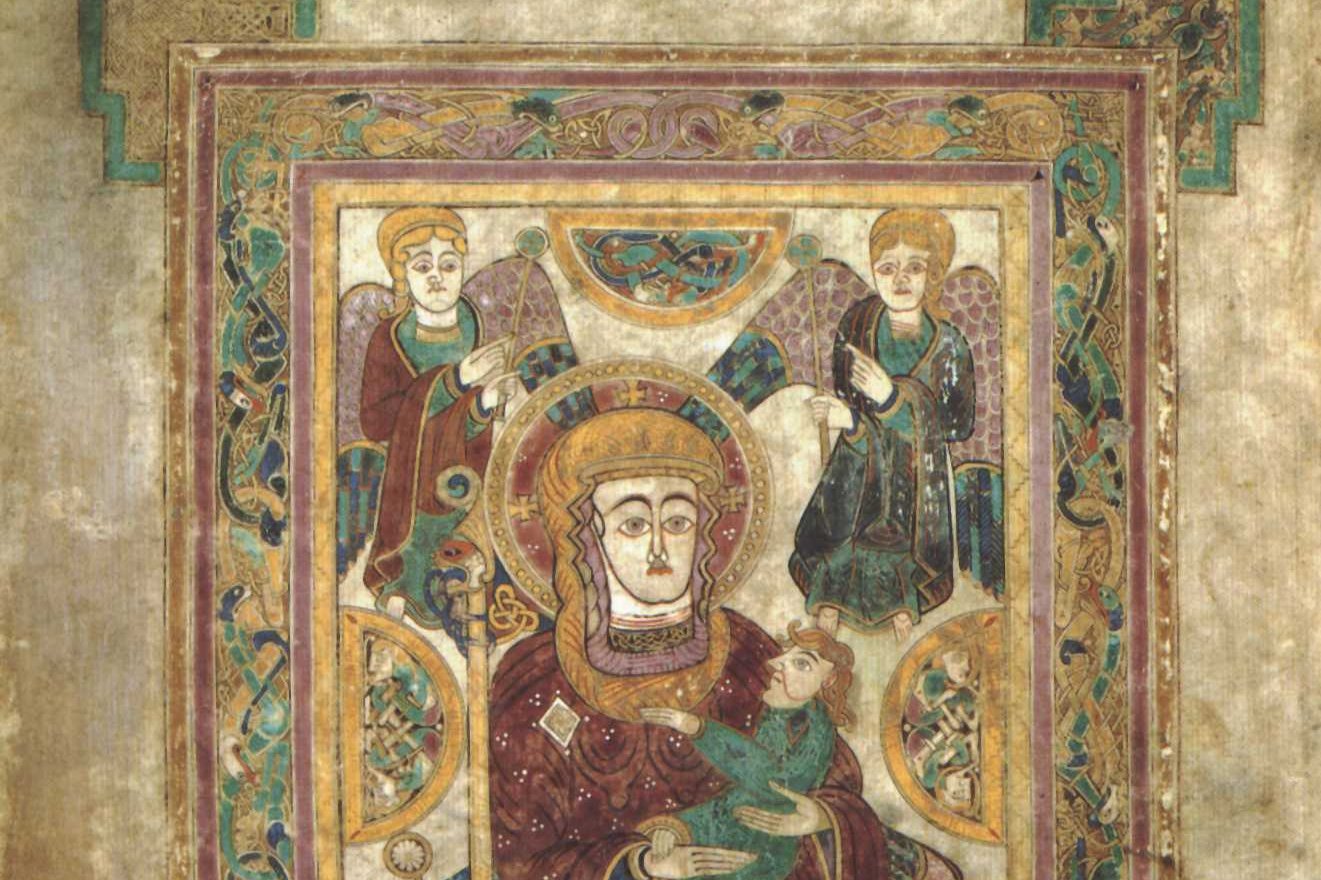
Book of Kells, Virgin and Child page (folio 7v), c. 800 AD, Trinity College Dublin — public domain.
Where the symbol actually shows up in history
The clearest, best-documented historical home for the triquetra is Insular Christian art — the distinctive artistic tradition that flourished in early medieval Ireland and parts of Britain, roughly the sixth through ninth centuries. Manuscript illuminators working in Irish and Northumbrian monasteries filled decorative borders, initial letters, and framing medallions with dense, precisely drawn interlace patterns, and three-lobed knots matching the triquetra's structure recur constantly throughout this tradition, alongside related spiral and key-pattern ornament.
The Book of Kells, an elaborately illustrated Gospel manuscript produced by Columban monks around 800 AD and now held at Trinity College Dublin, offers some of the richest surviving examples of this ornamental vocabulary. Its Virgin and Child page, one of the manuscript's most celebrated illuminations, surrounds the central seated figures with an elaborate decorative frame built largely from interlaced knotwork, including three-lobed patterns worked into corner medallions and border panels — part of the same dense geometric language that also produced the manuscript's famous Chi-Rho page. Stone crosses from the same broader Insular Christian world, carved across Ireland and parts of Scotland, likewise incorporate triquetra-based interlace into their surface decoration, suggesting the pattern was a shared design element across different media within this specific Christian artistic culture, rather than a symbol invented once and then copied.
The pagan-origin claim, examined
A very common modern claim holds that the triquetra started out as a pre-Christian pagan symbol — variously tied to Celtic goddess worship, Norse tradition, or generalized "ancient" spirituality — before Christians supposedly adopted and reinterpreted it. This claim circulates widely online and in popular books about symbolism, but it rests on much thinner evidence than its confident repetition suggests. Three-lobed interlace and triple-spiral motifs do appear in various pre-Christian European decorative art, including earlier Celtic La Tène-style metalwork, and triple symbolism generally (three-part gods, triple goddesses, and similar groupings) does appear across a range of ancient European religious traditions. But a documented, continuous chain of evidence linking those older, general triple motifs specifically to the triquetra's particular interlaced form, carrying a specific pre-Christian religious meaning that early Christians then knowingly repurposed, has not been established by mainstream archaeological or art-historical scholarship.
The more defensible historical statement is a narrower one: interlace and triple-part decorative patterns existed in pre-Christian European art in a general sense, geometric interlace of this kind is a natural and recurring design solution independently discovered in many decorative traditions worldwide, and the specific triquetra shape's well-documented, extensively surviving use as a deliberate Trinity symbol comes overwhelmingly from the Christian manuscript and stone-carving tradition described above. Readers encountering confident claims about the triquetra's "ancient pagan origins" should treat them as popular folklore rather than settled historical fact, distinguishing what the physical evidence actually supports from a widely repeated but under-documented modern narrative.
A modern afterlife
Long after the Insular manuscript tradition that produced the Book of Kells faded, the triquetra found new audiences through the twentieth and twenty-first centuries, appearing in jewelry, tattoos, and popular media, sometimes explicitly as a Christian Trinity symbol and sometimes stripped of any specific religious meaning at all, used simply as an appealing geometric design. Television and film have played a real role in this shift — a popular supernatural drama series in the late 1990s and 2000s used the triquetra as a recurring occult emblem stripped of any Trinity association, and that pop-culture association is likely part of why so many casual searches for the symbol today turn up vague, unsourced claims about ancient magical or pagan power rather than the better-documented Christian manuscript history. That flexibility is itself part of the pattern-origin confusion — a symbol simple and elegant enough to travel easily between contexts is also easy to reattach to whatever meaning a given culture or era finds most compelling, whether or not that meaning matches its documented history.
Reading the symbol carefully today
For anyone encountering a triquetra today — on a piece of jewelry, in a book of "Celtic symbols," or carved into a garden ornament — the honest answer to "what does this mean" depends entirely on context rather than the shape alone. The same three-lobed interlace can be a sincere, centuries-old Christian expression of the Trinity, a piece of modern jewelry chosen purely for its visual appeal, or a nod to a television show, with no reliable way to tell which meaning is intended just by looking at the knot itself. What the historical record does support clearly is the symbol's genuine, extensively documented role inside Celtic Christian art — carved into stone crosses and painted into the borders of Gospel manuscripts by monks who almost certainly did intend the three loops as a meditation on one specific doctrine, long before the symbol picked up any of its later, looser associations.
Trivia
What does the triquetra symbolize in Christianity?
Did the triquetra originate as a pagan symbol before Christianity used it?
Where does the triquetra appear in the Book of Kells?
Is the triquetra the same as the Celtic trinity knot?
Is the triquetra found only in Christian art?
Related Reading