The Dove as a Symbol of the Holy Spirit

A symbol with its own scripture verse
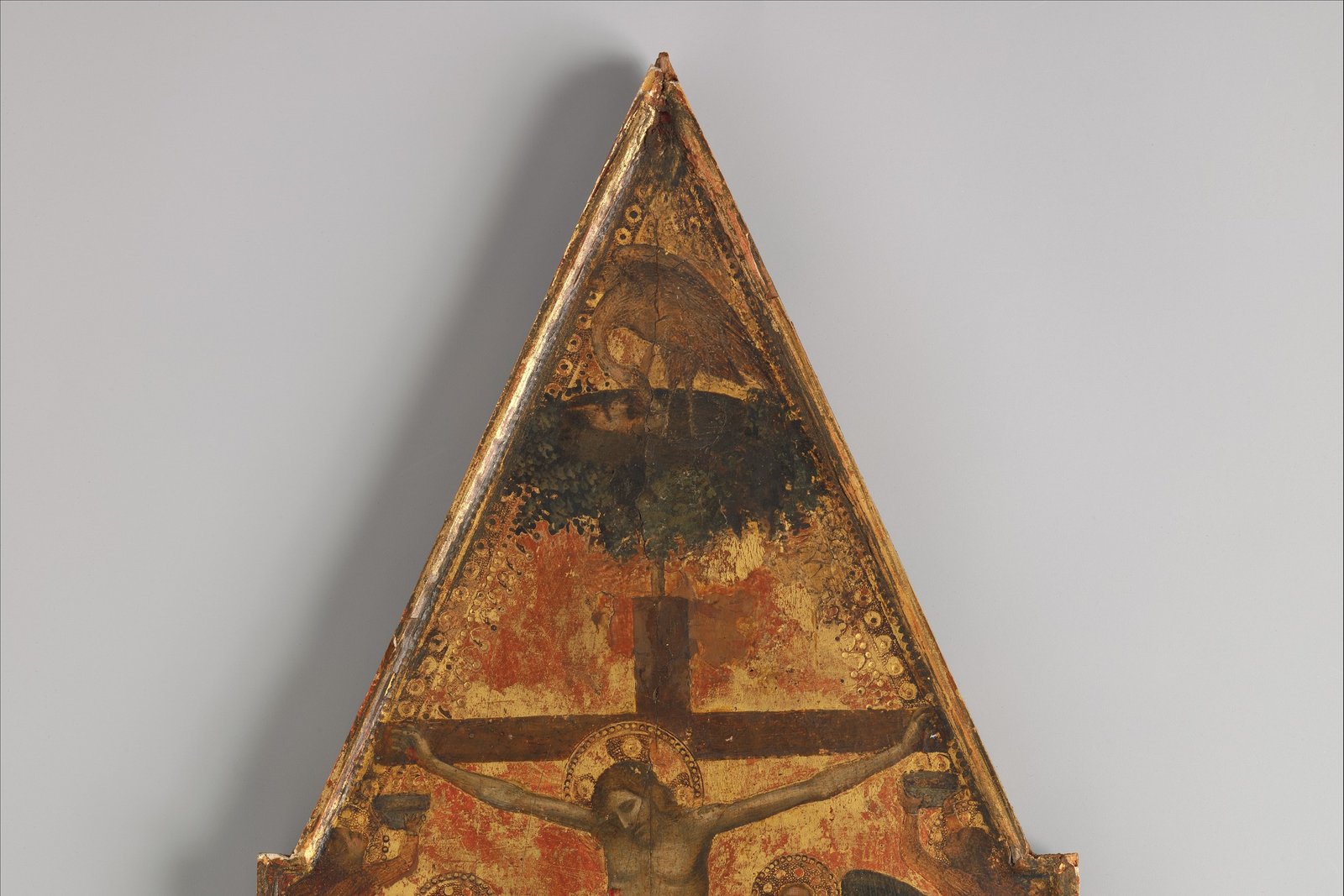
Most images in Christian sacred art developed gradually, shaped over generations by tradition, legend, and the accumulated choices of individual artists. The dove as a symbol of the Holy Spirit is unusually direct by comparison — all four Gospel writers describe the same visible sign at Christ's baptism in the Jordan River, giving artists an explicit textual instruction rather than a symbol they had to invent from scratch. Matthew records that "he saw the Spirit of God descending like a dove [and] coming upon him" (Matthew 3:16, NABRE), and Luke describes the same event even more concretely: "the holy Spirit descended upon him in bodily form like a dove" (Luke 3:22, NABRE). With language that specific, it's no surprise that painters across a thousand years of Christian art rendered the moment almost identically: a white bird, wings spread, descending in a beam of light directly above Christ's head.
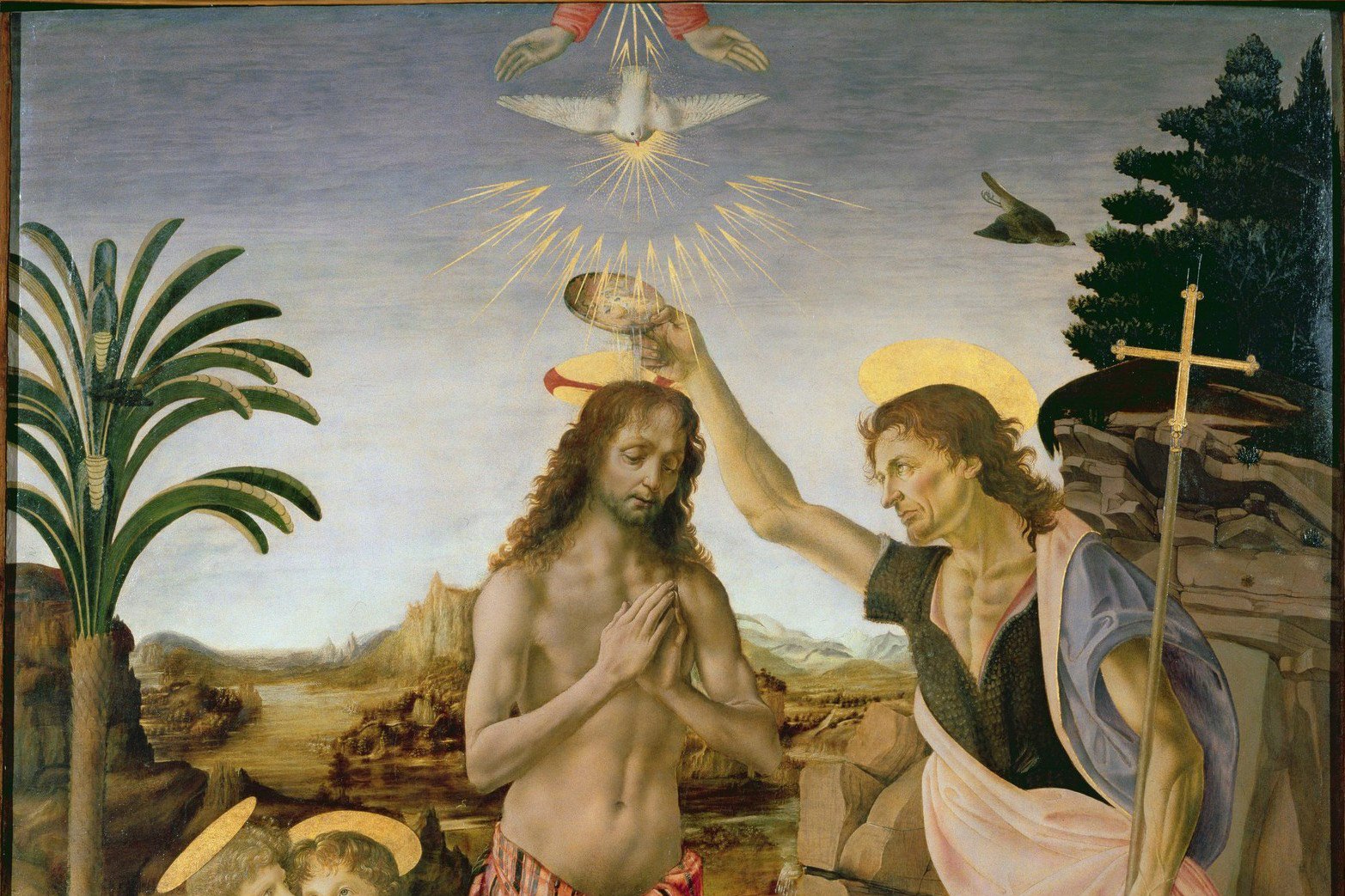
Andrea del Verrocchio and Leonardo da Vinci, "The Baptism of Christ," c. 1475, Uffizi Gallery, Florence — public domain.
The oldest bird in scripture
The dove's symbolic weight in Christian art didn't start with the New Testament. Its first major appearance in the Bible comes many centuries earlier, in the story of Noah, when a dove sent out from the ark returns carrying proof that the flood is finally receding: "In the evening the dove came back to him, and there in its bill was a plucked-off olive leaf! So Noah knew that the waters had diminished on the earth" (Genesis 8:11, NABRE). Genesis never identifies this dove as the Holy Spirit — that reading developed later, as Christian tradition looked back on the Old Testament for images that anticipated the New. But the connection was compelling enough to stick: a bird bringing peace and a sign of God's favor after judgment maps naturally onto the Spirit descending in peace at Christ's baptism, and the two doves have been read together, one prefiguring the other, since the early centuries of the Church.
Baptism scenes: the image at its purest
Nowhere does the dove appear more consistently than in paintings of Christ's baptism, and Andrea del Verrocchio and Leonardo da Vinci's version, shown above, is a textbook example of the formula: the dove hovers directly above Christ's head, wings fully extended, radiating lines of gold light streaming down toward him as John the Baptist pours water from a shallow bowl. Painters across very different eras and regions — Byzantine mosaicists, Northern Renaissance panel painters, Baroque muralists — kept returning to essentially this same composition, because the Gospel text left so little ambiguity about what the moment was supposed to look like. The dove's position, always above and always descending rather than static, reinforces the reading of the Spirit actively coming down upon Christ rather than simply being present nearby.
Beyond the Jordan River
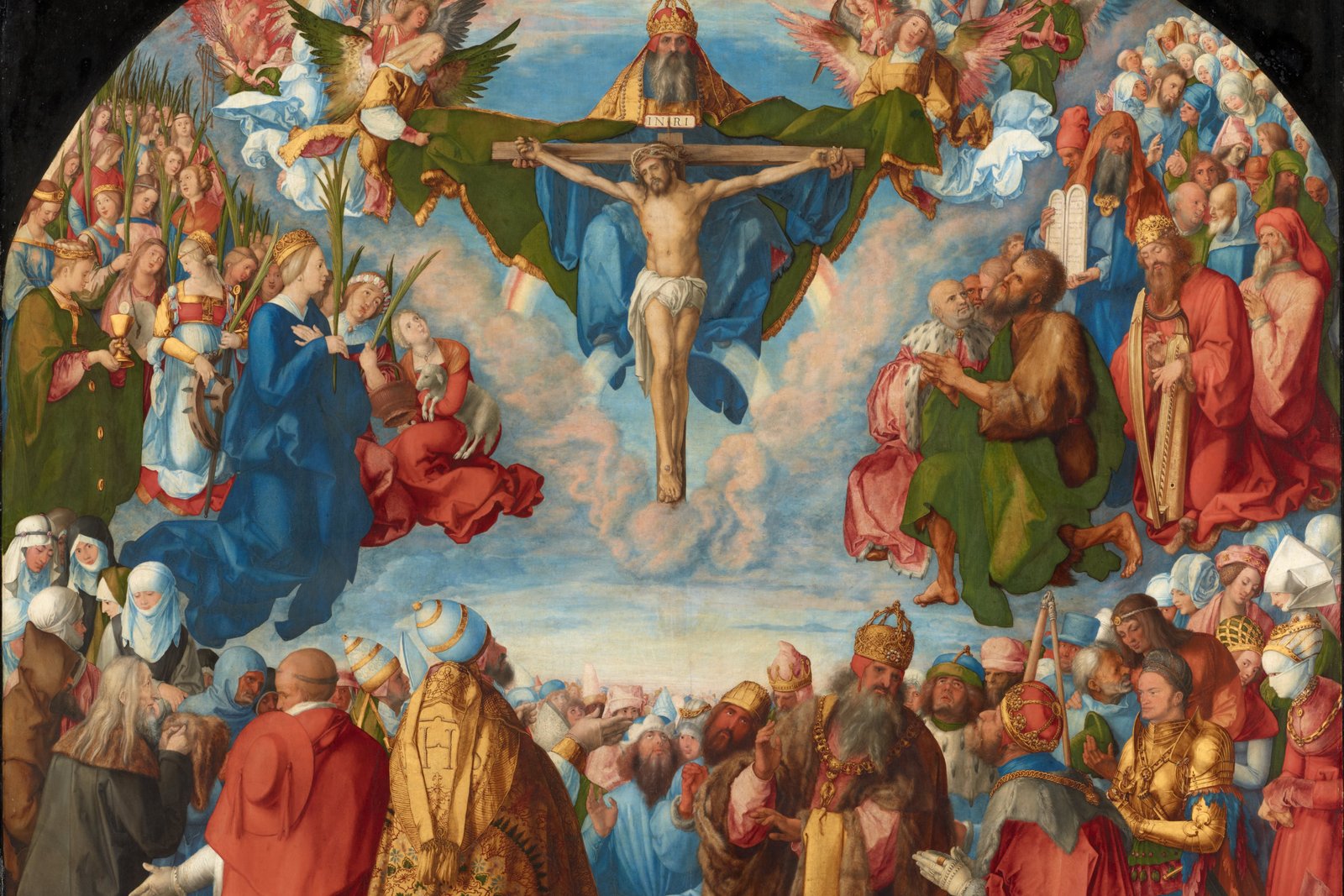
While baptism scenes are the dove's home territory, the symbol traveled into other subjects as Christian art matured. In paintings of the Annunciation, a small dove is frequently shown descending toward Mary, representing the Spirit's role in Christ's conception, usually rendered in miniature compared to the baptism scenes, tucked into a corner of light near her head or shoulder rather than dominating the composition. The dove also became a standard element in images of the Holy Trinity, positioned between the Father, often shown as an older bearded figure, and the Son, completing a vertical arrangement of Father above, dove in the middle, and Christ below or on the cross — a compact visual statement of three Persons in one Godhead. And at Pentecost, where the Spirit's coming is described in Acts through tongues of fire rather than a bird, artists sometimes still include a small dove overhead alongside the flames, blending the two scriptural images of the Spirit into a single scene.
Beyond painted images
The dove's reach extends past painting and into liturgical objects as well. In the early and medieval Church, some Eucharistic containers used to reserve consecrated hosts were crafted in the shape of a dove — a columba or peristerium — suspended above or near the altar, carrying the same symbolism of the Spirit's presence into three-dimensional metalwork rather than flat imagery. Stained glass windows picked up the motif too, where colored light passing through a small dove-shaped pane could turn an entire nave momentarily golden, a physical echo of the "radiating light" painters worked so hard to fake in oil and tempera. Even church architecture occasionally borrowed the image, with dove motifs worked into altar canopies, baptismal font covers, and confirmation chapels — settings tied directly to the sacraments most associated with the Spirit's activity.
Why the image never needed updating
Unlike symbols that shifted meaning or form over centuries, the dove's core Christian meaning has stayed remarkably stable since its earliest appearances in Christian art, precisely because it never drifted far from its scriptural source. A viewer doesn't need to decode a legend or trace a saint's biography to understand what a descending, radiant dove means in a painting — the Gospel text supplied the image directly, and artists have simply kept translating it faithfully, generation after generation, exactly as Noah's dove once returned to a waiting ark with news that could be trusted at a glance.
Trivia
Why is the Holy Spirit specifically shown as a dove?
Does the dove appear anywhere else in the Bible before the baptism of Jesus?
Is the dove used to represent the Holy Spirit outside of baptism scenes?
Why does the dove usually appear with rays of light around it?
You May Also Like
Related Reading