The Brown Scapular: Our Lady's Promise to Simon Stock

A promise too large to be left unexamined
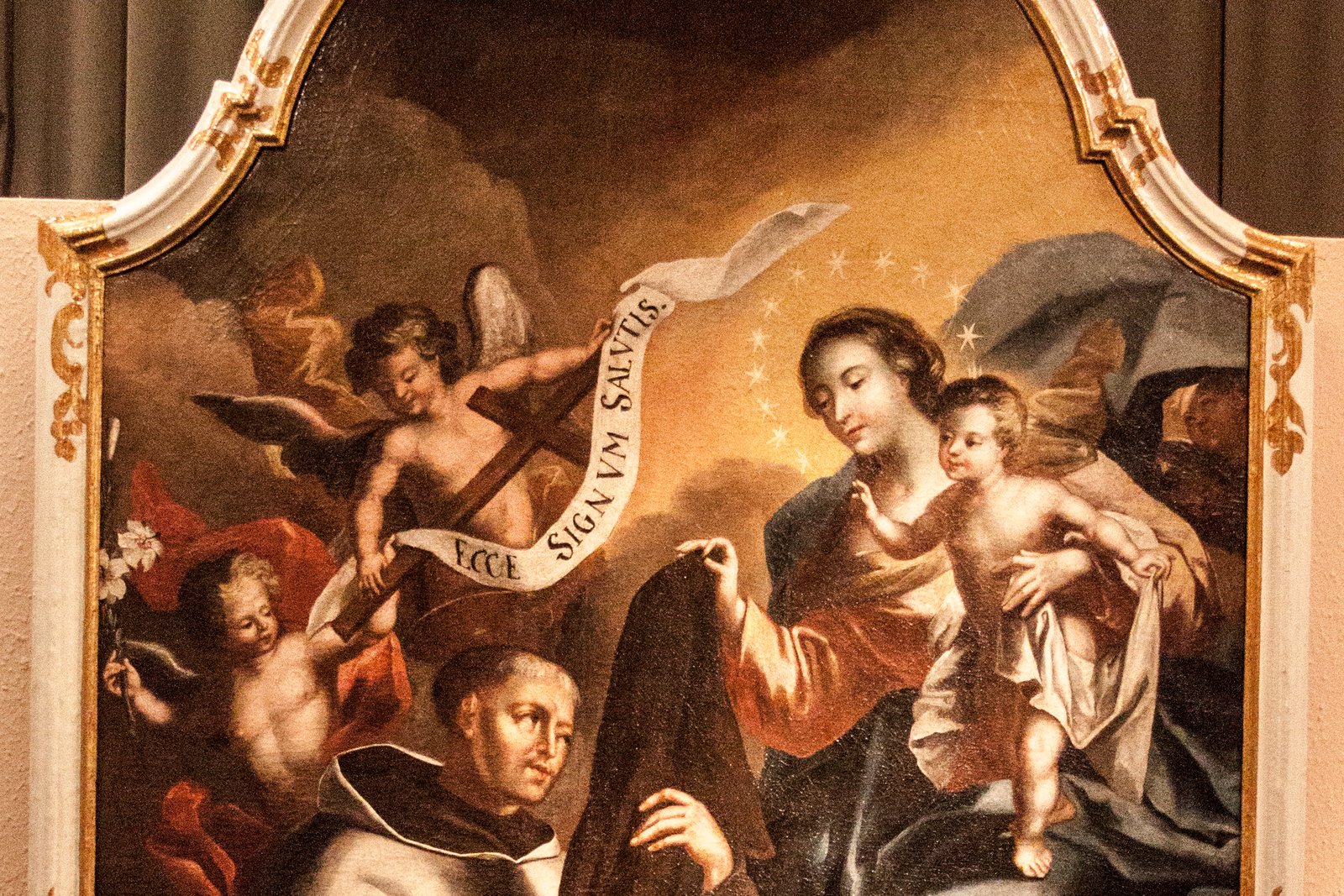
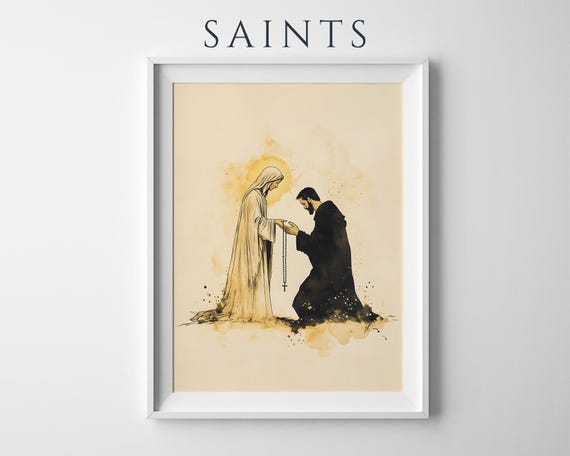
Carmelite tradition holds that on July 16, 1251, Simon Stock — an English friar who had risen to lead the Carmelite Order through a difficult period of persecution and uncertainty — appealed to the Virgin Mary for help. According to the account later attributed to him, she appeared holding a scapular and told him: "Take, beloved son, this scapular of thy order as a badge of my confraternity and for thee and all Carmelites a special sign of grace; whoever dies in this garment will not suffer everlasting fire. It is the sign of salvation, a safeguard in dangers, a pledge of peace and of the covenant." Those words, as recorded in Carmelite sources and preserved by the Catholic Encyclopedia, became the foundation of one of the most widely practiced Marian devotions in the Catholic world.
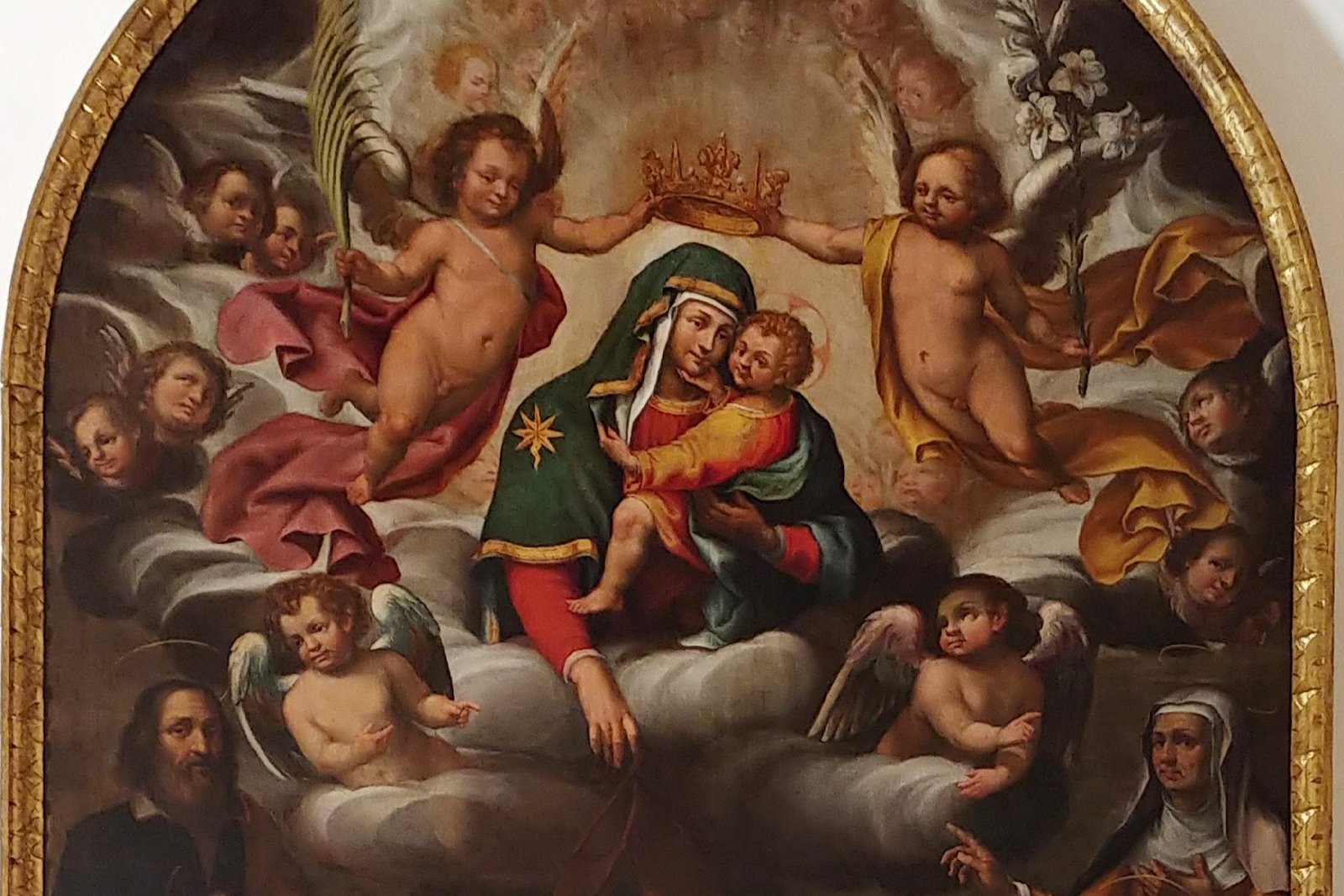
Spanish School, The Presentation of the Scapular to Saint Simon Stock, 17th century, Peterhouse, Cambridge. Public domain, via Wikimedia Commons.
It is worth being honest from the outset about what kind of historical claim this is. The Catholic Encyclopedia notes plainly that this precise, dated account of the vision does not appear in the historical record until 1642 — nearly four centuries after the event it describes supposedly took place, in a circular said to have been dictated by Simon Stock himself. Scholars have not been able to verify an unbroken documentary chain back to 1251. What the Church has consistently affirmed, instead, is something more modest and more durable: that the devotion itself — Mary's special care for those who wear her habit as a sign of consecration to her — rests on a "reliable pious tradition," in the Encyclopedia's own phrase, worthy of the Church's long encouragement, even while the vision's precise historical details cannot be documented with certainty.
What the object actually is
Strip away the legend for a moment and the scapular itself is a simple thing: two small rectangles of brown wool cloth, roughly palm-sized, joined by a pair of cloth strips or cords long enough to let one panel hang over the chest and the other over the back, resting on the shoulders in between. It is, in miniature, a direct echo of the full religious habit worn by professed Carmelite friars and nuns — the scapular having developed historically as the signature piece of any monastic habit, the garment most closely identified with belonging to a particular order. Wearing the small version is a way for a layperson, someone not bound by religious vows, to carry a visible, physical sign of that same spiritual belonging to Mary and to the Carmelite family's particular way of honoring her.
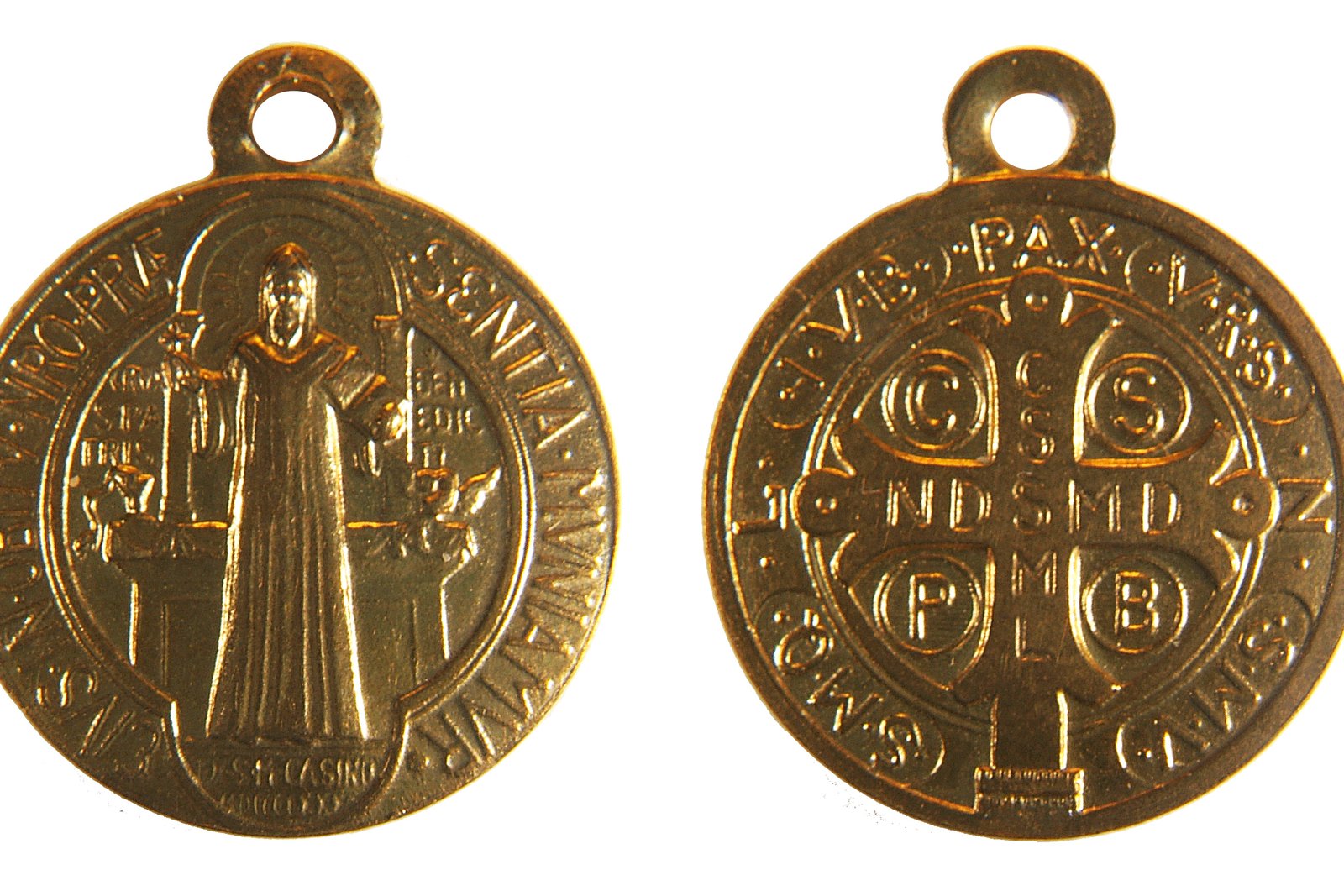
Some versions carry a small printed image of Our Lady of Mount Carmel on one panel, though the Catholic Encyclopedia is careful to note that no specific image is actually required for validity — the cloth itself, properly blessed and bestowed, is what matters.
The order that carried the devotion forward
None of this would have spread far without the Carmelite Order itself actively promoting it across the centuries that followed. The Carmelites trace their own origin to hermits living on Mount Carmel in the Holy Land in the twelfth century, later organizing into a formal religious order under a rule approved by the Church. Once the scapular devotion took hold, it was Carmelite friars and nuns — not a single papal decree — who carried the practice outward: establishing confraternities (lay associations attached to the order), writing the formulas priests would use to bless and invest new members, and petitioning Rome across the sixteenth, seventeenth, and eighteenth centuries for formal recognition of various indulgences attached to faithful observance. The devotion's staying power owes as much to that institutional persistence as to the original vision story.
What the Church actually requires
Here the devotion's popular reputation and the Church's own careful teaching part ways somewhat, and it is worth being precise about the difference. The Brown Scapular is classified by the Church as a sacramental — in the words of the Catechism of the Catholic Church (nos. 1667-1670), sacramentals are "sacred signs" instituted by the Church which "prepare men to receive the fruit of the sacraments and sanctify different circumstances of life." A sacramental is not a sacrament; it carries no automatic, guaranteed effect independent of the faith and disposition of the person using it. The grace associated with the scapular, in other words, works through the person's genuine devotion and ordinary Christian life, not through the cloth as a self-sufficient object.
Concretely, the Church's own requirements for the scapular have three parts. First, proper investiture: a priest, or someone given the faculty to do so, must bless the scapular and formally enroll the wearer — this initial ceremony is meant to happen only once in a person's life, after which a worn-out scapular can simply be replaced, including with the small metal scapular medal many Catholics now wear instead of cloth, without repeating the ceremony. Second, the scapular is meant to be worn constantly as a lived sign of ongoing consecration to Mary, not kept in a drawer and produced only in emergencies. Third — and this is the part most easily lost in popular retellings — the privileges attached to the scapular were never understood by the Church to operate independently of how a person actually lived. The Catholic Encyclopedia is explicit on this point, warning against anyone "presumptuously relying on the scapular as on a miraculous amulet" rather than "trustfully confiding in the power and goodness of Mary" through a life of genuine faith.
The Sabbatine Privilege and the Church's own caution
No part of the scapular devotion has drawn more scrutiny from the Church itself than the so-called Sabbatine Privilege — the belief that Mary's intercession would free faithful scapular wearers from purgatory with particular speed, especially on Saturdays, the day of the week traditionally set aside to honor her. The privilege's name comes from a document attributed to Pope John XXII in 1322, describing an apparition in which Mary supposedly asked the pope to ratify this promise. The Catholic Encyclopedia states the historical verdict without ambiguity: that 1322 bull is "today universally regarded by scholars as inauthentic," rejected even by the Carmelites' own official historical scholarship.
Rather than simply discarding the devotion attached to it, the Holy See's Holy Office took a more careful path in 1613: it permitted Carmelites to preach a revised, conditional version of the privilege, stripped of the disputed apparition story and tied instead to real, specific obligations — fidelity to one's state in life (including chastity), the daily recitation of certain prayers in Mary's honor, or, for those unable to read, the keeping of the Church's fast days along with abstinence from meat on Wednesdays and Saturdays. The lesson the Church drew from the episode was not that the devotion itself was worthless, but that even a centuries-old, widely believed pious tradition needs real conditions attached to it, clearly stated, rather than being left to popular imagination as an unconditional guarantee.
Still worn, still carefully explained
Despite — or perhaps partly because of — these repeated clarifications, the Brown Scapular remains one of the most commonly worn Catholic sacramentals in the world, alongside devotions like the Miraculous Medal and the rosary. Its feast, tied to Our Lady of Mount Carmel, falls on July 16, the traditional date of the Cambridge vision itself. Catholics continue to be formally invested with it at parishes, shrines, and Carmelite houses worldwide, often choosing the small cloth-medal version for everyday comfort while still receiving the same blessing and enrollment the full cloth scapular requires.
What has endured, across nearly eight centuries of retelling, correction, and careful theological qualification, is not a magic formula but a specific kind of relationship: a small, tangible reminder — worn against the skin, out of sight of anyone else — that someone has deliberately placed their life under Mary's particular care, on the terms the Church has always insisted actually matter: a lived faith, not a cloth charm.
Trivia
What is the Brown Scapular, exactly?
Did the Virgin Mary really appear to Saint Simon Stock?
Does wearing the Brown Scapular guarantee salvation?
What is the Sabbatine Privilege, and why is it controversial?
How do you properly receive the Brown Scapular?
Related Reading