The Brown Scapular Explained: Promise, Tradition, and Enrollment

A vision in a moment of crisis
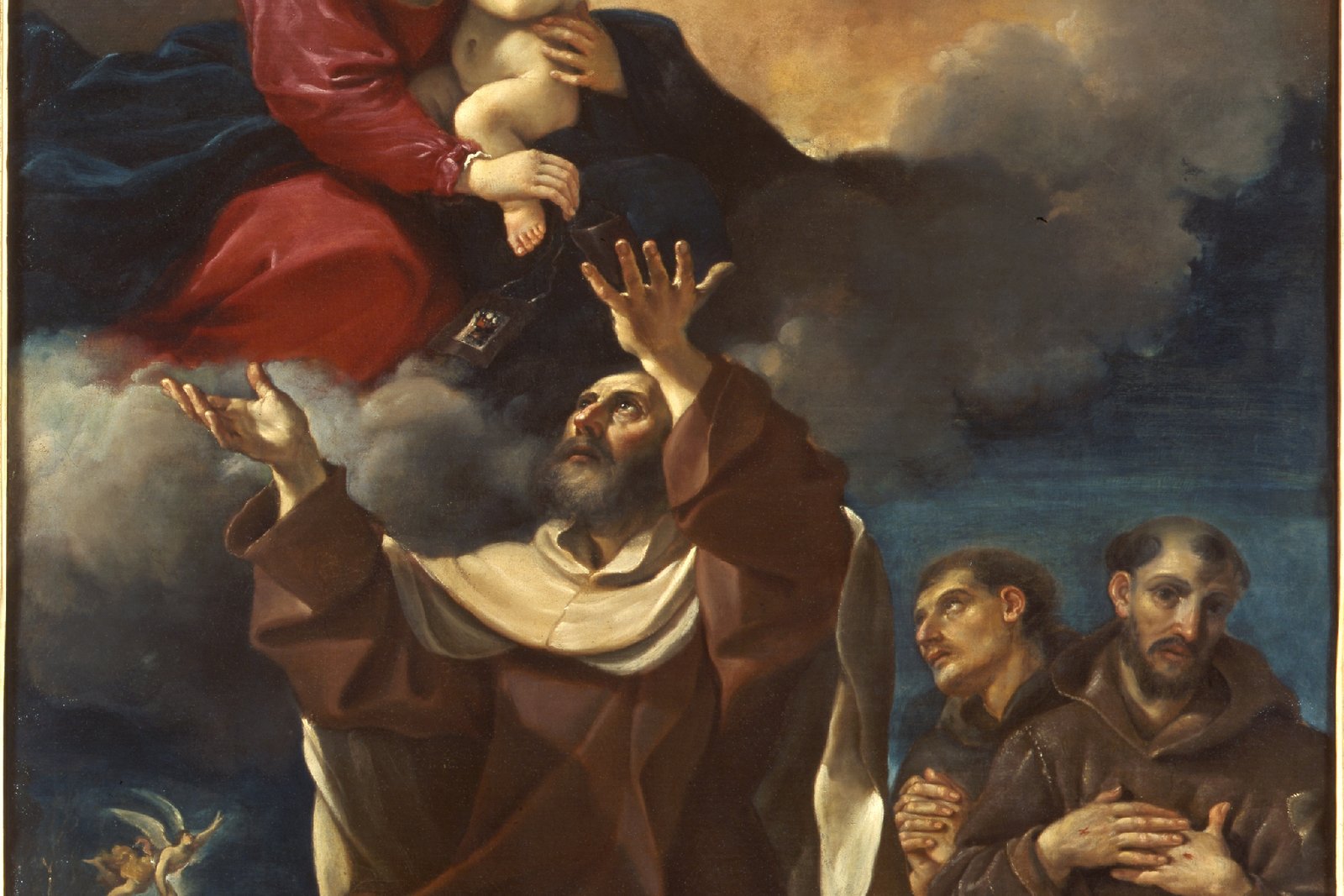
The Carmelite order, in the middle of the 13th century, was in real trouble. Founded by hermits on Mount Carmel in the Holy Land, the order had been forced to relocate to Europe as Crusader territories fell, and it faced suppression, suspicion, and internal struggle as it tried to establish itself in an unfamiliar continent. It was into this uncertain moment, tradition holds, that Saint Simon Stock — an English Carmelite prior — prayed for the Virgin Mary's help, and received, in return, a vision of her holding out a piece of brown cloth: the scapular, offered as a sign of her particular protection over the order and everyone who wore it with genuine devotion.
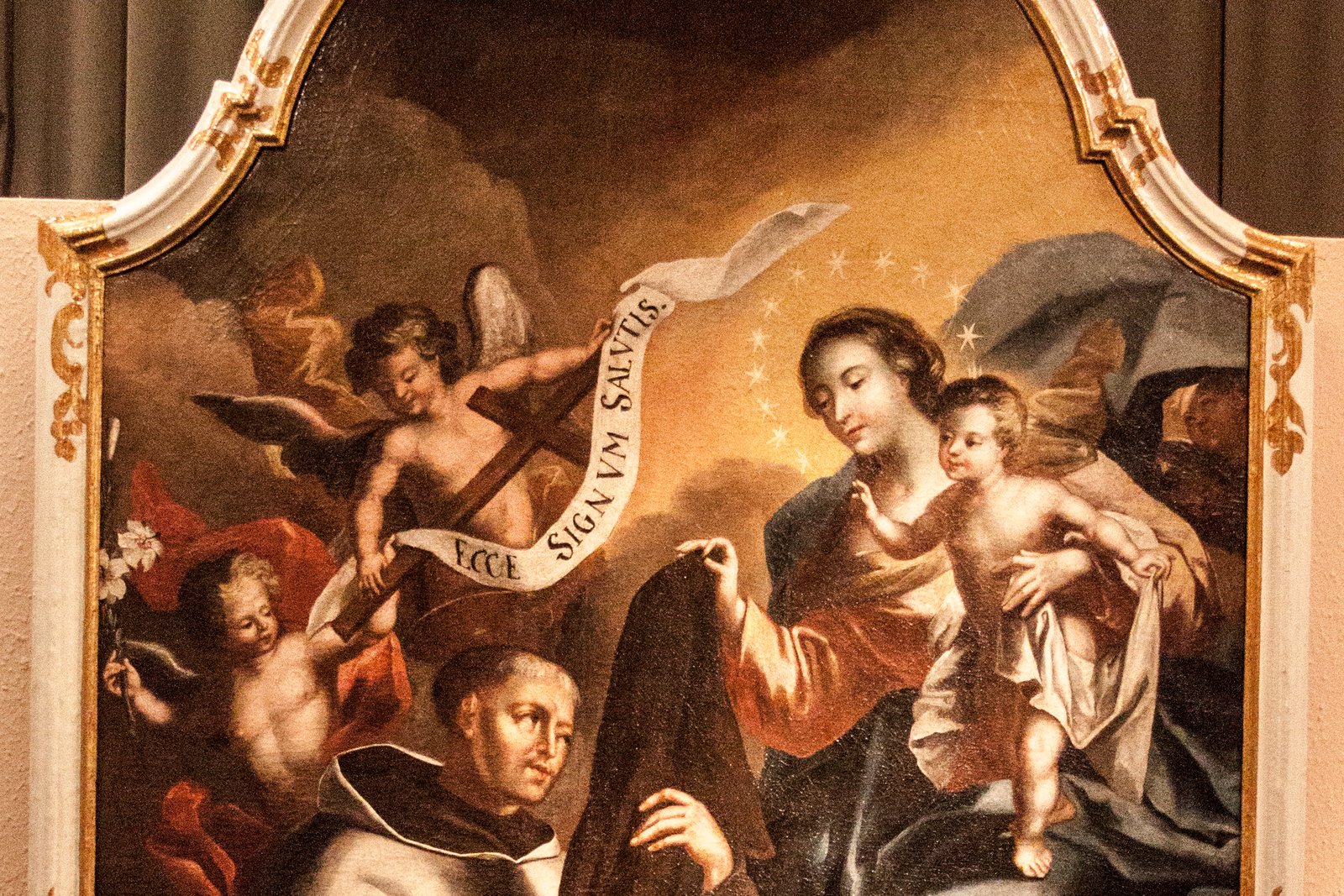
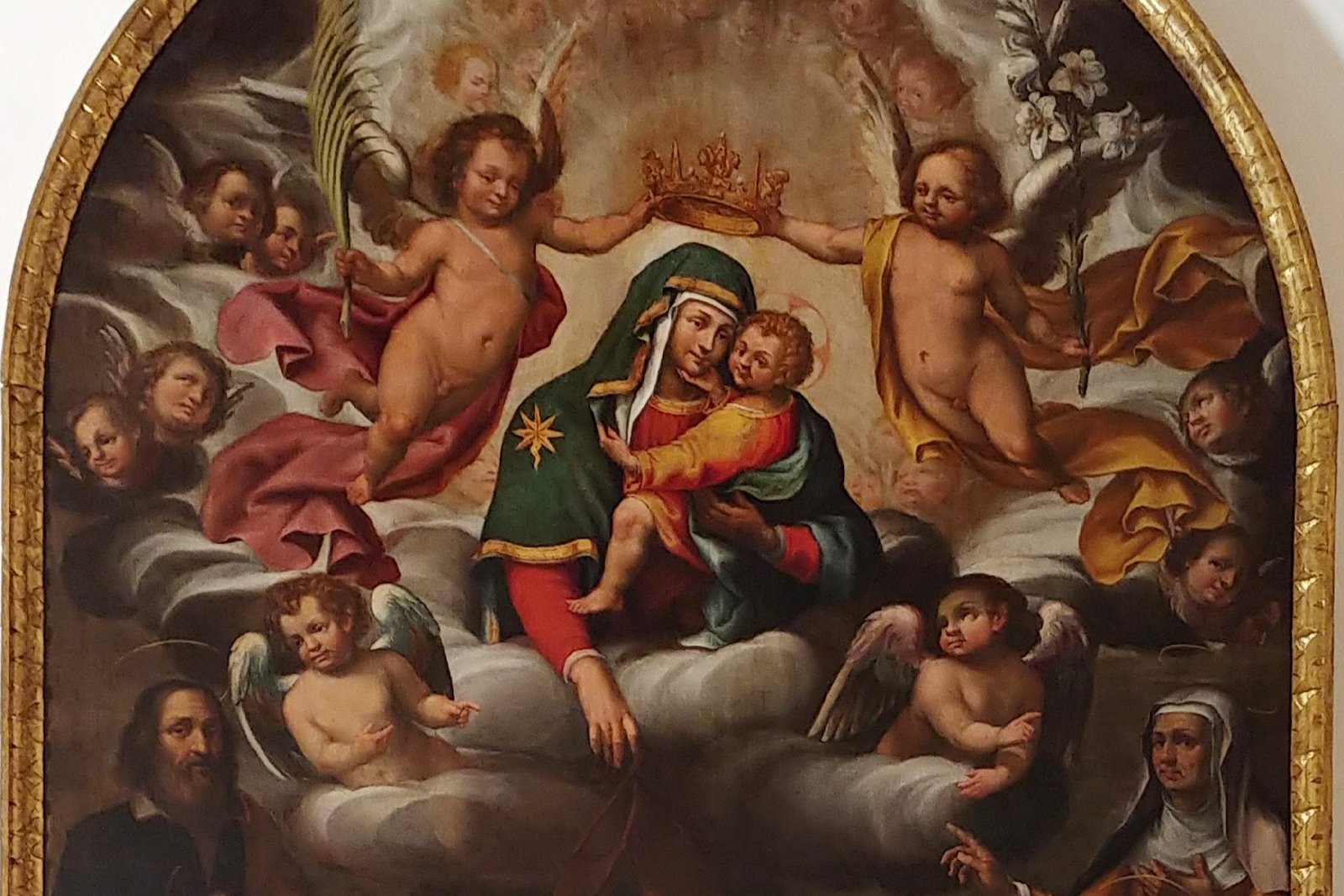
Sebastian Stettner, Madonna with the Scapular, 1740 — public domain, Wikimedia Commons.
The tradition dates this vision to July 16, 1251 — a date the Church still marks each year as the Feast of Our Lady of Mount Carmel. From that founding story, devotion to the Brown Scapular spread far beyond the Carmelite order itself, becoming, over the following centuries, one of the most widely adopted sacramentals among laypeople anywhere in the Catholic world.
The promise, and what it doesn't mean
The tradition's most famous element is a promise, often summarized as a guarantee of salvation for anyone who dies wearing the scapular. Stated that bluntly, it invites exactly the misunderstanding the Church has spent generations correcting: the scapular functions as a sacramental, not a magic charm, and it has never been taught to work independently of how a person actually lives.
Church teaching and Carmelite tradition alike frame the promise as conditional — a sign and reminder of ongoing consecration to Mary and a commitment to living according to the Gospel, not a shortcut around genuine faith, the sacraments, or moral conversion. Understood this way, the scapular operates the way other sacramentals do: it doesn't cause grace automatically the way a sacrament does, but it disposes a person toward grace by keeping a visible, physical reminder of their faith in near-constant contact with daily life.
Tradition, not dogma
It's worth being precise about where this devotion sits within the wider landscape of Catholic belief. The apparition to Simon Stock, its exact date, and the specific words attributed to Mary in the encounter come down through Carmelite tradition — historians have long debated how early the written accounts of the vision actually date, and some of the details now considered traditional developed gradually over subsequent centuries rather than appearing all at once in 1251.
What the Catholic Church has done, repeatedly and across many papacies, is formally approve and indulgence the Brown Scapular devotion as a legitimate and encouraged form of Marian piety. That approval affirms the practice's spiritual value; it does not require belief in every detail of the founding narrative as a matter of dogma. This distinction — between what the Church formally teaches and what belongs to devotional tradition — runs through a great deal of Catholic popular piety, and getting it right matters for understanding the scapular honestly.
How enrollment actually works
Historically, full participation in the Brown Scapular devotion involved a specific rite of enrollment: a priest with the proper faculties blesses the scapular and formally invests the person wearing it, an act that traditionally marked entry into the Confraternity of the Brown Scapular and extended a share in the prayers and spiritual benefits of the wider Carmelite family to laypeople who would never enter a monastery themselves.
In practice, many Catholics today simply wear a scapular purchased from a religious goods store without undergoing this formal rite, and it still functions as a genuine sacramental sign of devotion. For those seeking the fuller, historically intended experience — including the Carmelite spiritual family connection specifically — formal enrollment through a priest remains available at most parishes with any Carmelite presence, or directly through Carmelite religious houses.
Not the only scapular, but the most enduring
While several other scapulars exist — the Blue Scapular of the Immaculate Conception, the Red Scapular of the Passion, the Green Scapular tied to conversion — none has come close to matching the Brown Scapular's centuries-long, worldwide reach. Part of that staying power likely comes from the vividness of its founding story and the simplicity of the object itself: two small rectangles of wool, joined by cord, resting quietly under a shirt where they can't easily be forgotten. Whatever else it is, the Brown Scapular has never asked to be seen — only worn, and remembered.
The Sabbatine Privilege
Alongside the Simon Stock promise, Carmelite tradition also attaches a second, lesser-known assurance to the scapular, known as the Sabbatine Privilege, tied to a later tradition involving Pope John XXII. According to this tradition, Our Lady promised that those who wear the scapular faithfully, observe chastity according to their state in life, and pray certain additional prayers assigned by a priest (often a modified set in place of the Divine Office, for those not otherwise obligated to it) will be released from purgatory on the Saturday following their death — Saturday being the day traditionally dedicated to Mary. Like the better-known promise, the Church has never required belief in the historical specifics of this tradition as dogma; it is presented as a pious hope consistent with Mary's intercessory role, not a guaranteed timetable binding on God.
What the cloth itself represents
The scapular's two wool rectangles are deliberately plain — unbleached or dyed a simple brown, without ornament, meant to evoke the humble habit worn by Carmelite friars and nuns rather than any decorative religious jewelry. Enrollment traditionally requires the scapular to be made of wool specifically, since the symbolism ties directly to the Carmelite habit itself; the Scapular Medal alternative exists precisely because cloth can be impractical for everyday wear under modern clothing, not because the material no longer matters doctrinally. Many Catholics replace a worn-out cloth scapular without needing to repeat the enrollment rite, since the blessing and investiture are understood to apply to the person, not to that specific piece of cloth — a practical point that keeps the devotion sustainable as scapulars wear out over years of daily use.
A living Carmelite spirituality
The scapular is best understood not as an isolated object but as one visible thread within a much larger Carmelite spiritual tradition, one that also produced some of the Church's most significant mystical writers — Saint Teresa of Ávila and Saint John of the Cross among them, both Carmelite reformers of the 16th century, and Saint Thérèse of Lisieux, a Carmelite nun of the 19th century whose "Little Way" spirituality remains widely read today. Wearing the scapular, in Carmelite teaching, is meant to connect the wearer — however loosely, however far from a monastery — to this broader current of contemplative prayer and total consecration to Mary, not merely to a single apparition story or a single promise about the hour of death.
Trivia
What is the Brown Scapular?
What is the Brown Scapular's famous promise?
Is the Brown Scapular promise official Catholic dogma?
How is someone formally enrolled in the Brown Scapular?
Can a Brown Scapular be replaced with a medal?
Related Reading