The Titulus Crucis: The Sign Above Christ's Head on the Cross

A sign meant to be read, not hidden
Roman crucifixion was public theater, and part of its machinery was the titulus — a small wooden board, usually coated in white gypsum with the condemned man's charge painted in black, carried or nailed ahead of the procession to the execution site and then fixed above the victim's head. It wasn't unique to Jesus's case; it was standard practice, a notice meant to warn onlookers why this particular person was being executed this particular way. What made the titulus at Golgotha remarkable wasn't the custom itself but the words Pilate chose and the number of languages he insisted on using.
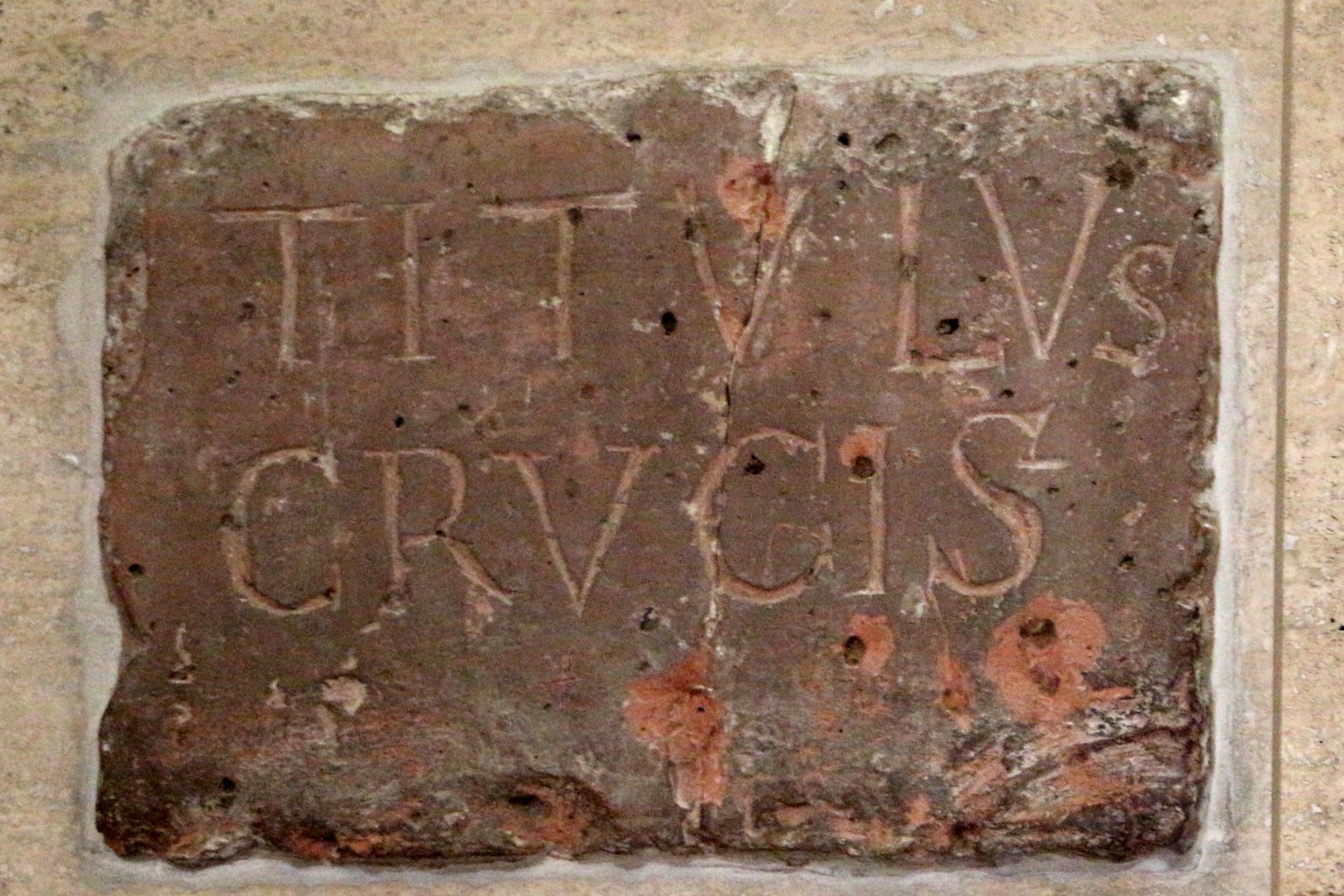
Photo by Sailko (2016). CC BY 3.0, via Wikimedia Commons.
John's Gospel gives the fullest account. "Pilate also had an inscription written and put on the cross," it reads. "It read, 'Jesus the Nazorean, the King of the Jews.' Now many of the Jews read this inscription, because the place where Jesus was crucified was near the city; and it was written in Hebrew, Latin, and Greek" (John 19:19-20, NABRE). The three languages weren't a courtesy — they covered the practical linguistic range of first-century Jerusalem: Hebrew (or more precisely Aramaic, in everyday use) for the local Jewish population, Greek as the common trade and administrative language of the eastern Mediterranean, and Latin as the official language of Roman authority. Whatever else Pilate intended, he made sure no one near the cross could claim they hadn't understood the charge.
The wording itself caused friction even on the day it was written. According to John, the chief priests objected to the phrase "The King of the Jews," asking Pilate to change it to a mere report of Jesus's own claim rather than a statement of fact — "Do not write 'The King of the Jews,' but that he said, 'I am the King of the Jews'" — and Pilate refused, answering only, "What I have written, I have written" (John 19:21-22, NABRE). The four Gospels don't record identical wording for the inscription itself; Matthew, Mark, and Luke each give slightly different phrasings of the charge, a common and unremarkable feature of how the Gospel writers reported spoken and written statements independently rather than transcribing a single master text. The core content — Jesus, Nazarene, King of the Jews — is consistent across all four.
From Calvary to a Roman basilica
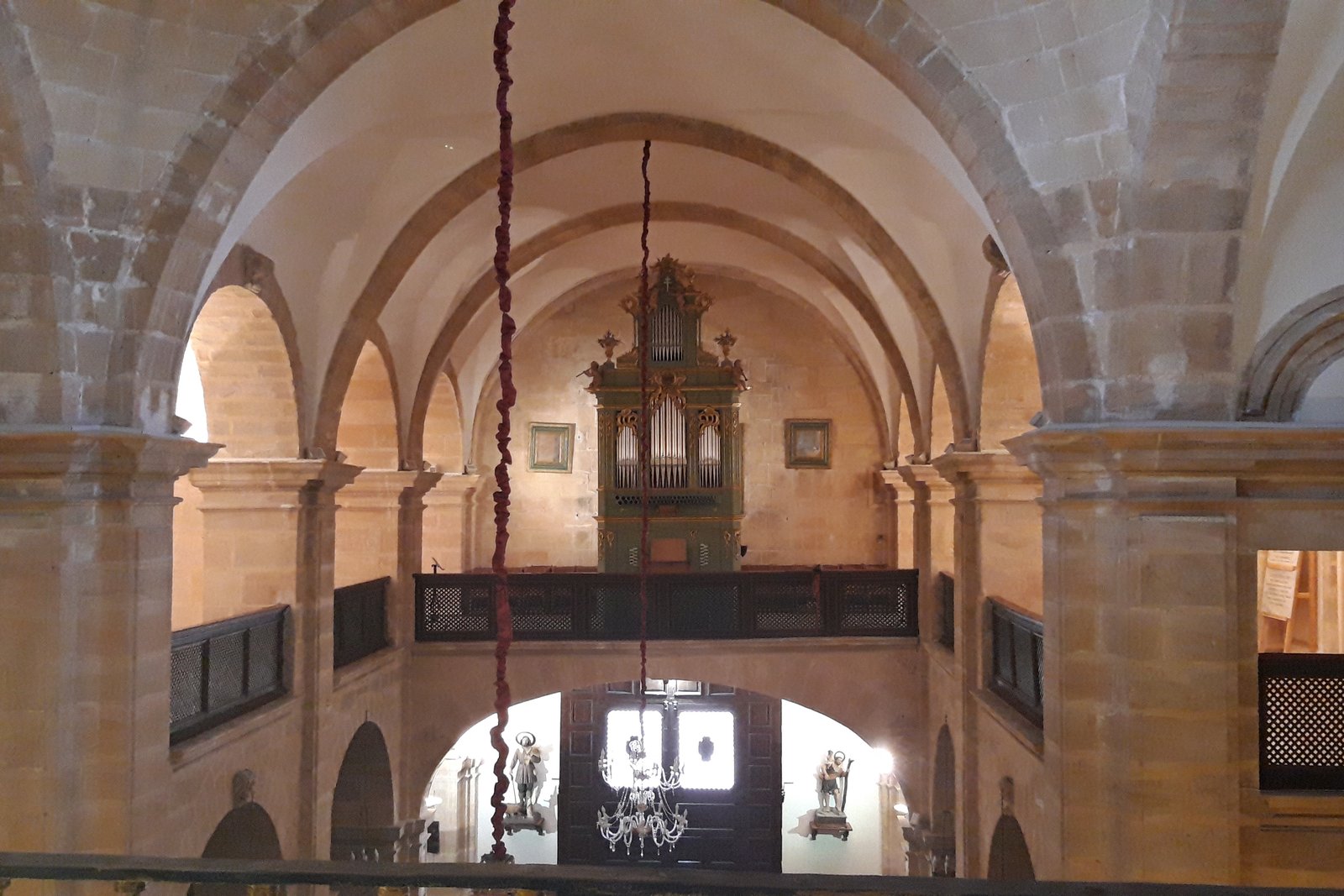
Tradition connects whatever became of this inscription to the same chain of events that produced the relics of the True Cross described elsewhere on this site: Saint Helena, mother of the emperor Constantine, is said to have recovered relics of the Passion during excavations in Jerusalem in the 320s, including, in later versions of the story, a fragment of the titulus itself. Those relics were brought to Rome and installed in the Sessorian Palace chapel that became the Basilica of Santa Croce in Gerusalemme — "Holy Cross in Jerusalem" — built specifically to house them and, according to tradition, even covered in soil brought from the Holy Land so that the ground beneath the altar could be considered Jerusalem's own.
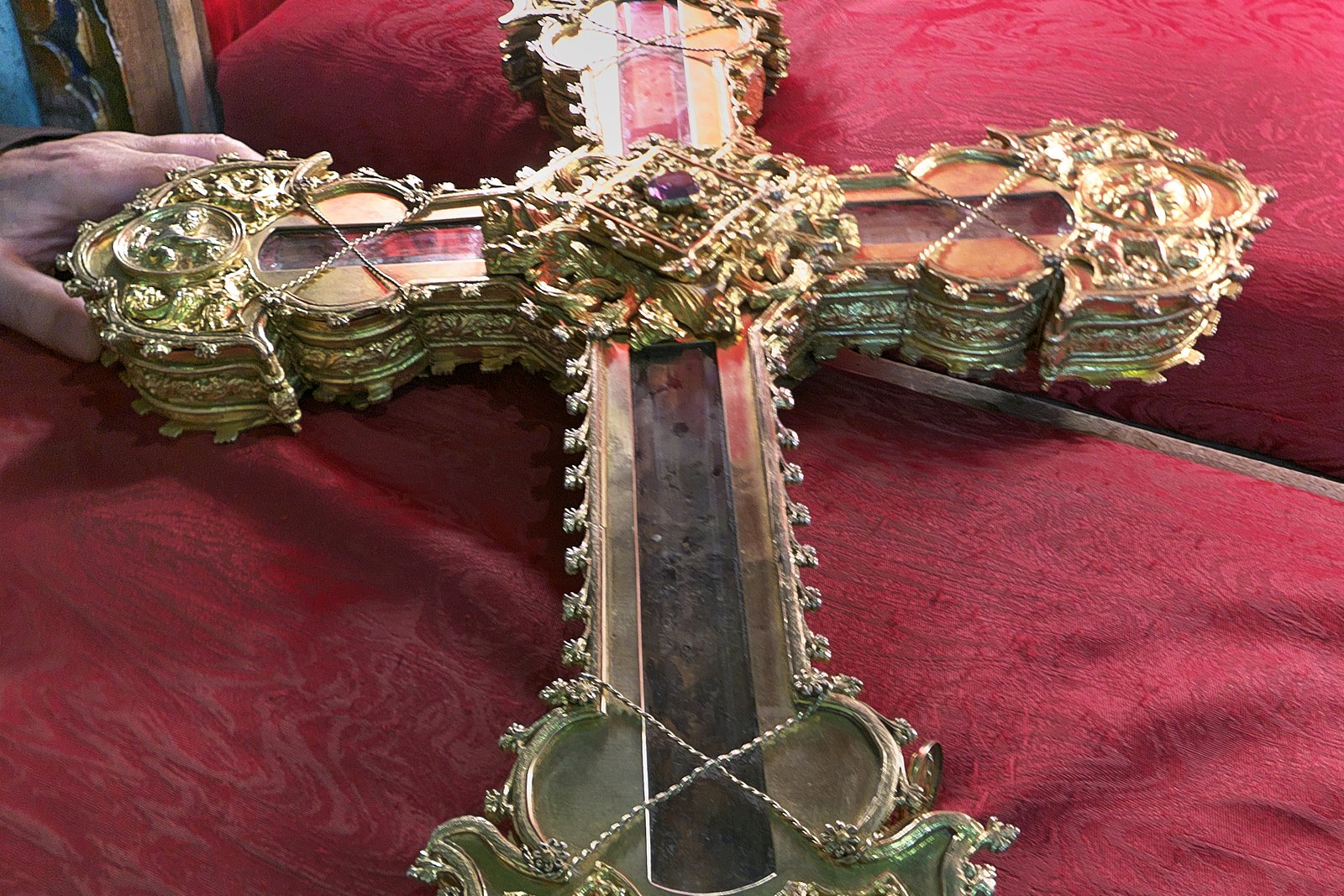
For centuries after that, the basilica's claimed fragment of the titulus is not well documented in surviving records — it's the kind of relic history that exists more as a continuous devotional claim than a continuously paper-trailed one. The story resumes with unusual specificity in 1492, when workers restoring a mosaic in the basilica's vault found a small lead box sealed behind a brick inscribed "TITULUS CRUCIS." Inside was a fragment of worm-eaten wood, roughly the size of a hand, bearing partial lettering in three scripts running right to left on two of the three lines — consistent, a point often raised by those who argue for an early origin, with how a scribe trained in Hebrew or Aramaic might naturally have continued the pattern into Greek and Latin on the same board, rather than switching direction as a later forger copying an unfamiliar script might do differently. Pope Alexander VI confirmed the discovery and had the relic placed in the basilica's dedicated chapel, where, framed in a gilded case above the altar, it remains on view today alongside other relics the chapel keeps, including fragments the basilica also associates with the crown of thorns and the cross itself.
A disputed dating, argued seriously on both sides
The relic has never escaped scholarly skepticism, and the skepticism intensified rather than faded once modern epigraphy — the study of ancient inscriptions and lettering styles — turned serious attention to the fragment in the 20th century. The debate isn't a simple believers-versus-skeptics split; it runs through professional epigraphers and historians on both sides.
The case for an ancient, possibly first-century origin has been argued most prominently by the Italian biblical scholar Maria-Luisa Rigato and, in more popular form, by the German New Testament scholar Carsten Peter Thiede, who pointed to the right-to-left letter order as a detail a medieval European forger — working in a culture that read and wrote left to right — would have been unlikely to reproduce correctly without a genuine antique model to copy from directly.
Most specialists in Jewish and Roman epigraphy who have published on the fragment take the opposing view: that specific letter forms in the Hebrew and Greek lines match scripts in use centuries after the crucifixion, pointing toward a medieval production — plausibly made for pilgrims visiting Santa Croce in Gerusalemme at some point after Helena's relics had already drawn devotion there, rather than a forged "ancient" artifact meant to deceive. On this reading, the fragment's age as an object doesn't necessarily discredit the broader tradition it represents; a medieval pilgrim relic made to honor an already-venerated holy site is a different kind of object than a modern fake, even if it isn't first-century wood.
No radiocarbon dating of the fragment has been published with results accepted as conclusive by the wider scholarly community, and the Church has taken no official position settling the question either way — which is, as it turns out, entirely consistent with how the Church generally treats relics of this kind.
What veneration doesn't require
The Second Council of Nicaea, meeting in 787 AD, settled the theological groundwork that still governs how Catholics approach objects like the Titulus Crucis: the honor given to a relic or sacred image "passes to the prototype," meaning the devotion reaches toward the person or event the object represents, not toward the physical material treated as sacred in itself. The Catechism of the Catholic Church carries that same logic forward, listing the veneration of relics among the Church's encouraged forms of popular piety (no. 1674) without requiring, as a condition of that devotion, forensic certainty about any specific object's age or chain of custody.
That distinction matters for an object as contested as this one. A pilgrim standing before the chapel at Santa Croce in Gerusalemme doesn't need Rigato's epigraphy to have won the scholarly argument, or Thiede's, in order for the moment to mean something. What the fragment points toward — the real charge Pilate posted over a real execution, the specific accusation that, in the Church's reading, turned out to name something truer than Pilate intended — doesn't rise or fall on carbon dating a single board. The wood in the gilded case may or may not be twenty centuries old; the words it's remembered for carrying are recorded independently, in four Gospel accounts, regardless of what happens to any one physical fragment.
Trivia
What did the inscription on Christ's cross actually say?
Where is the Titulus Crucis kept today?
When was the relic now in Rome discovered?
Do scholars agree the Rome fragment is from the first century?
Does the Church require belief that the relic is authentic?
Related Reading