Our Lady of Walsingham: England's Nazareth

A vision in the Norfolk countryside
Sometime around 1061, tradition holds, a widowed Saxon noblewoman named Richeldis de Faverches was living on her family's manor in the small Norfolk village of Walsingham, roughly a hundred miles north of London near the English coast. According to the shrine's own account of its origins, the Virgin Mary appeared to her and, in spirit, carried her to the house in Nazareth where the Annunciation had taken place — the moment the Angel Gabriel told Mary she would conceive and bear the Son of God. Mary then asked Richeldis to build, in Walsingham, an exact timber replica of that house, to stand forever as a memorial of the Annunciation and a place where pilgrims could come close to the mystery of the Incarnation without ever leaving England.
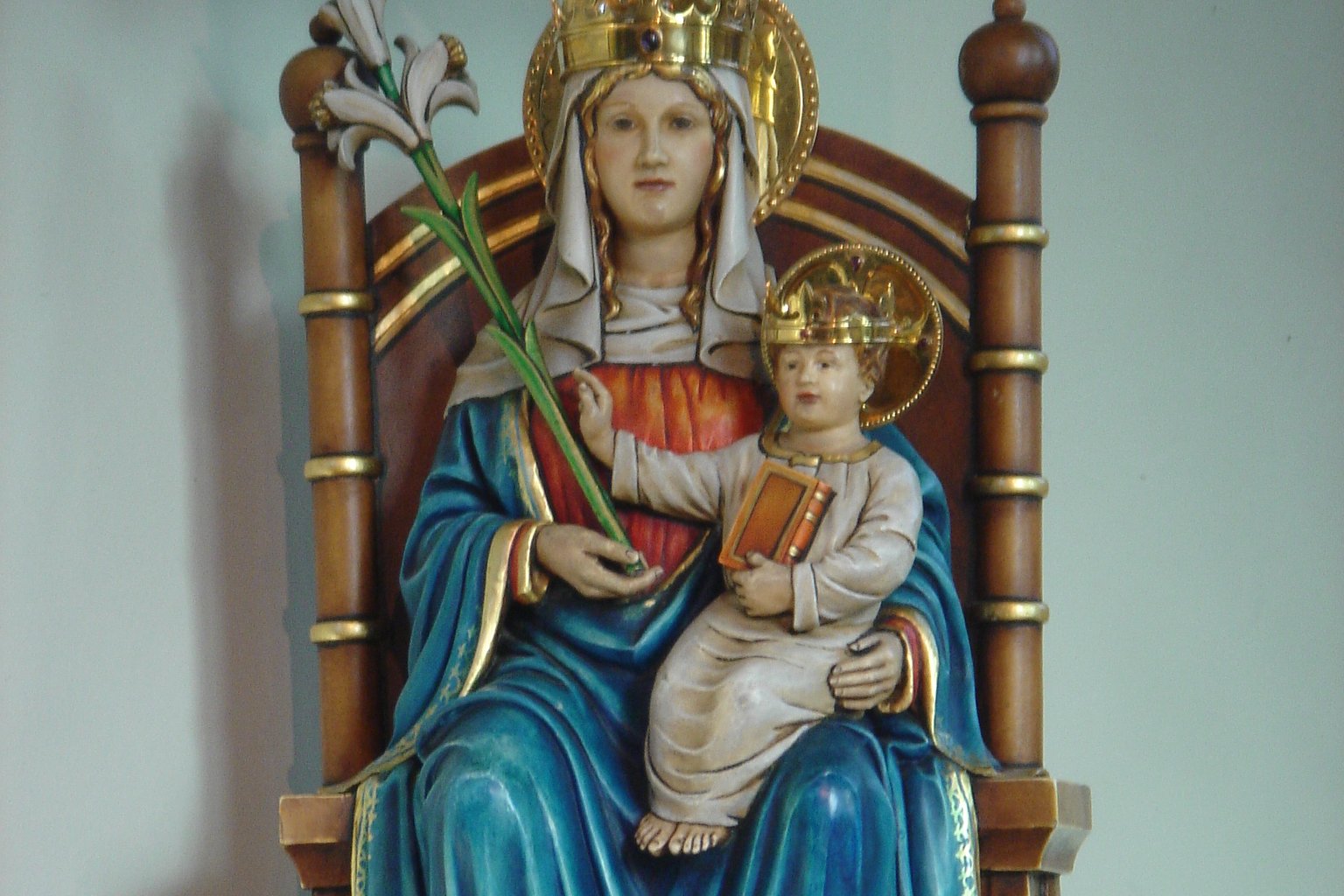
Thorvaldsson, Our Lady of Walsingham (2008). CC BY 3.0, via Wikimedia Commons.
Richeldis, the story goes, had carpenters begin construction on a site she herself had marked out, only to find the structure rising, overnight and without visible builders, on a different spot nearby — a detail meant to underline that the house's true builder was not a human hand at all. No document from the 11th century itself survives to confirm any of this; the earliest written versions of the Richeldis legend date from several generations later, which is the honest reason to treat it, like so much of medieval shrine-founding literature, as a cherished pious tradition rather than settled history.
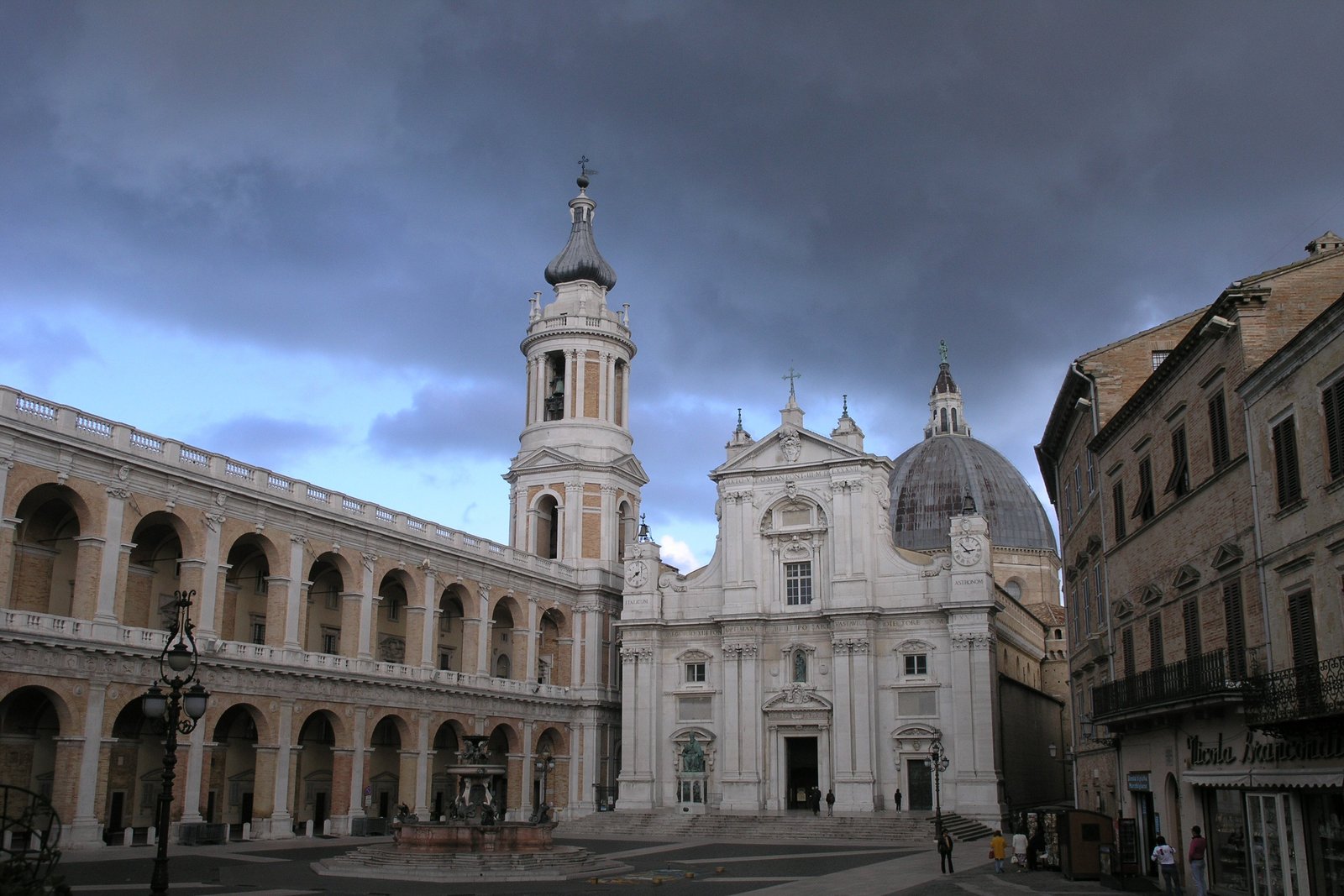
Readers of this blog's article on the Holy House of Loreto will recognize the pattern immediately: a modest building tied to Nazareth and the Annunciation, reproduced far from the Holy Land and venerated as a devotional stand-in for the place itself. Loreto's story involves a structure claimed to have traveled physically from Palestine to Italy; Walsingham's involves a new timber house built in England at Mary's instruction, not an imported relic. The two traditions share a devotional instinct common across medieval Christendom — bringing Nazareth to the pilgrim rather than sending the pilgrim all the way to Nazareth — without being the same claim, and this article won't retread the fuller Loreto discussion here.
A priory, a statue, and England's greatest pilgrimage
Whatever its precise origins, the shrine that grew up around Richeldis's house became, by the high Middle Ages, one of the most visited pilgrimage sites in all of Christendom. An Augustinian priory was established at Walsingham to care for the Holy House and the venerated statue of Mary enthroned with the Christ Child inside it, and the Catholic Encyclopedia's 1913 account calls Walsingham "the most celebrated of all the English sanctuaries of Our Lady," so revered that the village itself came to be called "England's Nazareth" or "the Holy Land of Walsingham."
Pilgrims walked from across England and the European continent to reach it, and English kings themselves made the journey repeatedly: Henry III, Edward I, Edward II, and Edward III are all recorded among the royal pilgrims, and Henry VIII visited Walsingham more than once in the earlier years of his reign, reportedly walking the final mile barefoot from the Slipper Chapel — a small wayside chapel, named for the custom of pilgrims removing their shoes there before completing the approach on foot — in an act of public penance expected of even the highest in the land. It is one of English history's sharper ironies that the same king who walked that mile barefoot would, within a couple of decades, order the whole shrine destroyed.
Destruction under Henry VIII
The end came swiftly and deliberately. As part of his broader dissolution of England's monasteries in the 1530s — the sweeping suppression of religious houses that also severed the English Church from Rome — Henry VIII had Walsingham Priory suppressed in 1538. According to the Catholic Encyclopedia, the venerated statue was removed from Walsingham and brought to London that same year, where it was publicly burned at Chelsea together with the image of Our Lady of Ipswich, reportedly in the presence of Thomas Cromwell, the king's chief minister and the architect of much of the dissolution campaign. The priory buildings themselves were stripped of their valuables and left to decay, and for nearly four centuries afterward, Walsingham's once-famous pilgrim road fell largely silent.
It's worth being precise about what is and isn't verified here: that the shrine was suppressed and its priory dissolved in 1538, and that a statue was burned at Chelsea around that time, rests on the Catholic Encyclopedia's historical account; the exact statue's fate has occasionally been debated by later historians, some of whom have speculated — without settled proof — that a surviving medieval statue now in London's Victoria and Albert Museum might be connected to Walsingham rather than lost entirely in the 1538 burning. That theory remains a minority historical hypothesis, not an established fact, and the shrine's own tradition has always treated the original image as destroyed.
Two revivals, one village
What makes Walsingham distinctive among the great medieval Marian shrines of Europe is not just that it fell, but how — and by whom — it was raised back up, nearly four hundred years later, in two separate efforts belonging to two separate churches.
The first came from the Church of England. Alfred Hope Patten, appointed vicar of Walsingham's parish church in 1921, set out to revive pre-Reformation pilgrimage devotion to Our Lady of Walsingham within Anglicanism. In 1922 he had a new statue of Our Lady of Walsingham carved and enthroned in the parish church, and pilgrimage to the site began to grow again under his direction; a dedicated Anglican shrine building, maintained independently of the parish church, followed later in the 1930s. That institution survives today as the Anglican Shrine of Our Lady of Walsingham, an active center of Church of England Marian devotion unusual in its intensity by Anglican standards.
The Catholic revival followed a different, parallel path. In 1895, the Catholic convert Charlotte Boyd purchased the medieval Slipper Chapel — the same wayside chapel where medieval pilgrims, including Henry VIII, had once removed their shoes — and restored it for Catholic worship. Devotion grew gradually over the following decades until, in 1934, some ten thousand pilgrims gathered at a ceremony formally designating the Slipper Chapel as England's National Catholic Shrine of Our Lady, a status it still holds. A larger basilica has since been built on the same site to accommodate the Catholic shrine's modern pilgrim numbers.
The practical result, unusual among the shrines covered on this blog, is a single English village that today hosts two independent, actively functioning pilgrimage shrines to the same Marian title — one Anglican, one Catholic — each with its own buildings, its own annual national pilgrimage, and its own community of devotion, separated by less than a mile of Norfolk countryside and nearly four centuries of history before either was rebuilt.
A devotion still being renewed
Walsingham's modern significance goes beyond either single institution. Popes from the 20th and 21st centuries have sent official recognition and favors to the Catholic shrine, English Catholic bishops continue to promote it as a national pilgrimage destination (the Catholic Bishops' Conference of England and Wales maintains its own page describing Walsingham as "England's Nazareth"), and both the Anglican and Catholic shrines draw thousands of pilgrims annually, including a long-running National Pilgrimage tradition and youth pilgrimages that keep bringing new generations to a village that, for roughly four hundred years, had nothing left standing to visit at all.
As with the veneration of relics and shrines generally, the Catechism of the Catholic Church frames devotion to holy places as an encouraged, not required, form of popular piety — directed toward the mystery a place represents rather than toward any claim of scientific or archaeological certainty about its objects. At Walsingham, that mystery has always been the Annunciation itself: the moment, as both Nazareth and its many English, Italian, and other replicas across Christendom were built to commemorate, "the Word was made flesh." Whether a visiting pilgrim arrives at the Anglican shrine or the Catholic one, that is still the claim being honored — carried, this time, not by angels or by a legendary overnight construction, but by two churches that each, independently, decided the ruins were worth rebuilding.
Trivia
What is Our Lady of Walsingham?
Who was Richeldis de Faverches?
What happened to the original statue and shrine?
Did English kings actually visit Walsingham?
Is Walsingham both an Anglican and a Catholic shrine today?
Related Reading