The True Cross of Santo Toribio de Liébana: Spain's Largest Fragment

A relic in the mountains, not the capital
Most of the world's best-known fragments of the True Cross — the wood believed, by longstanding tradition, to come from the cross of the crucifixion — sit in major cities: Rome's Santa Croce in Gerusalemme, Paris's Notre-Dame, the ancient churches of Jerusalem and Constantinople. This blog's general article on the True Cross tradition covers how a single relic, discovered according to tradition by Saint Helena in the 4th century, came to be broken up and scattered across the Christian world over the following centuries. Santo Toribio de Liébana is a striking exception to the usual pattern: a fragment of remarkable size, venerated for centuries, kept not in a capital but in a Benedictine monastery tucked into a narrow mountain valley in Cantabria, in Spain's rugged north, reachable even today only by a winding mountain road.
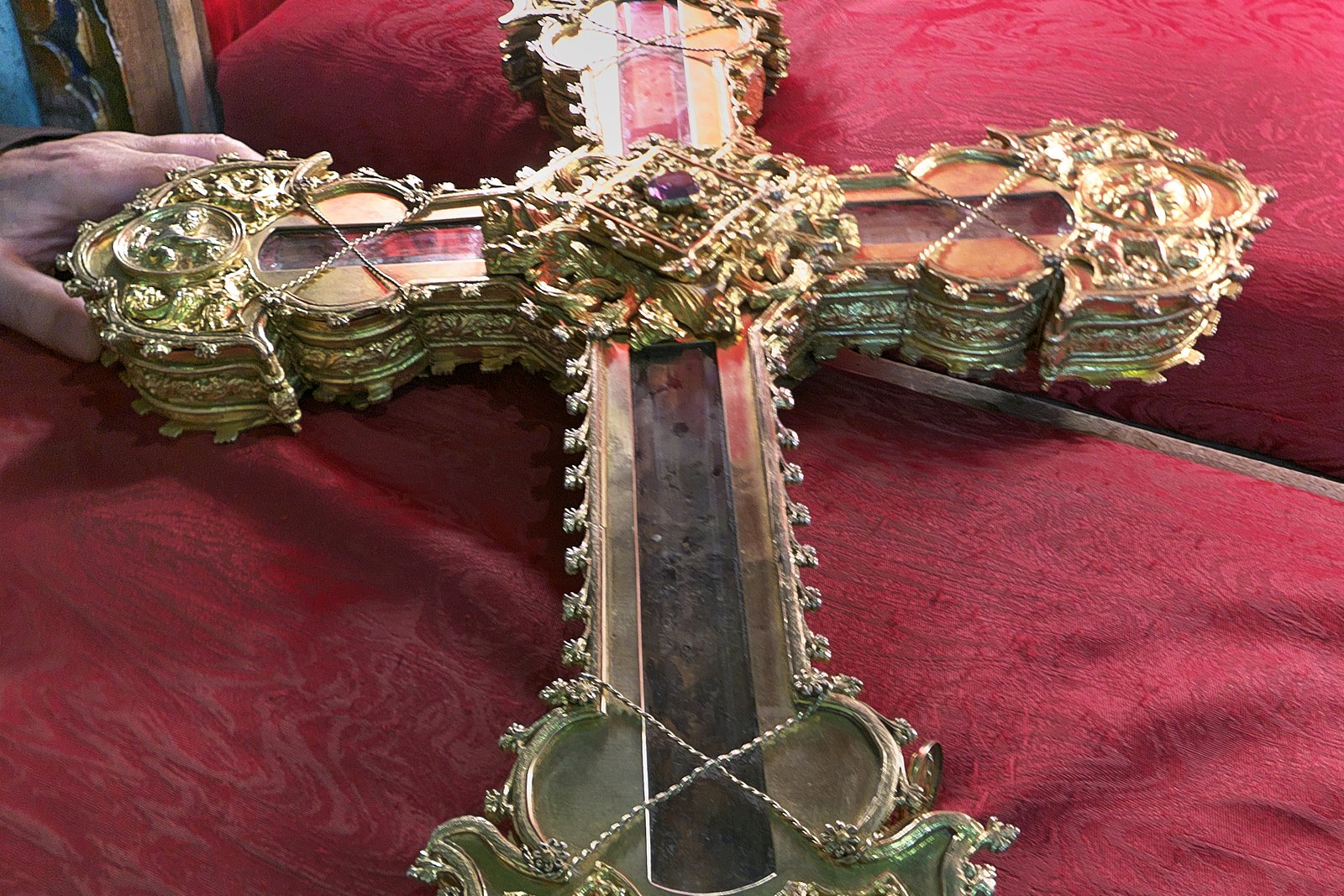
Photo by Jl FilpoC, Lignum Crucis de Santo Toribio de Liébana (2018). CC BY-SA 4.0, via Wikimedia Commons.
The monastery takes its name from Saint Toribio of Astorga, a 5th-century bishop — not to be confused with the much later Saint Toribio of Mogrovejo, the 16th-century missionary archbishop of Lima, Peru, whose name is similar but whose life and era are entirely different. According to the tradition kept at the monastery, this earlier Toribio traveled to the Holy Land, obtained a substantial fragment of the cross there, and eventually brought it back to Spain, where it came to rest at the monastery that would later take his name. The documentary record supporting the precise details of that journey is considerably thinner than the story itself; much of what is told today reflects medieval tradition built up over centuries rather than a contemporary 5th-century account, a distinction worth being honest about rather than papering over.
The largest fragment — according to whom?
The claim most often repeated about this relic is that it is the single largest surviving fragment of the True Cross anywhere in the world, shaped distinctively like the left arm of the cross rather than a splinter or sliver. It is a dramatic claim, and one that deserves the same caution this blog applies to similar claims elsewhere: several sites around the world — including, within Spain itself, the double-armed relic venerated at Caravaca de la Cruz in Murcia — make comparable claims about the size or significance of their own fragments, and no single, neutral, scientifically rigorous survey has measured and ranked every documented fragment of the True Cross worldwide to settle the question definitively. What can be said with confidence is that the Liébana relic is unusually large by the standards of True Cross fragments generally, and that it has been treated as exceptional by pilgrims and Church authorities for a very long time. Beyond that, "largest in the world" is best understood as a widely repeated tradition rather than an independently verified comparative fact — the same honest framing this blog gives the general "largest fragment" claims attached to several other sites.
A privilege shared with Rome and Jerusalem
Whatever uncertainty surrounds the relic's exact size ranking, the monastery's standing within the Church's own formal structures is not in doubt. In 1512, Pope Julius II confirmed Santo Toribio de Liébana's privilege of celebrating a perpetual Jubilee Year — a recurring Holy Year during which pilgrims who fulfill the usual conditions (sacramental confession, receiving Communion, and prayer for the pope's intentions) may receive a plenary indulgence, the full remission of the temporal punishment due to sin, granted under the Church's teaching on indulgences.
That privilege places this remote mountain monastery in genuinely rare company. Historically, only Rome, Jerusalem, and Santiago de Compostela held this standing honor among Catholic pilgrimage sites; Santo Toribio de Liébana's confirmation in the 16th century, and Caravaca de la Cruz's own later Jubilee privilege (granted permanent status by Pope John Paul II in 1998), bring the full list of such sites to five — meaning two of the five are in Spain, and both happen to be sites built specifically around a relic of the True Cross. Pilgrims following the modern Camino Lebaniego, a dedicated pilgrim route to the monastery that has grown substantially in popularity in recent decades, often make the journey specifically to take advantage of this privilege during designated Jubilee Years.
The chapel and its reliquary
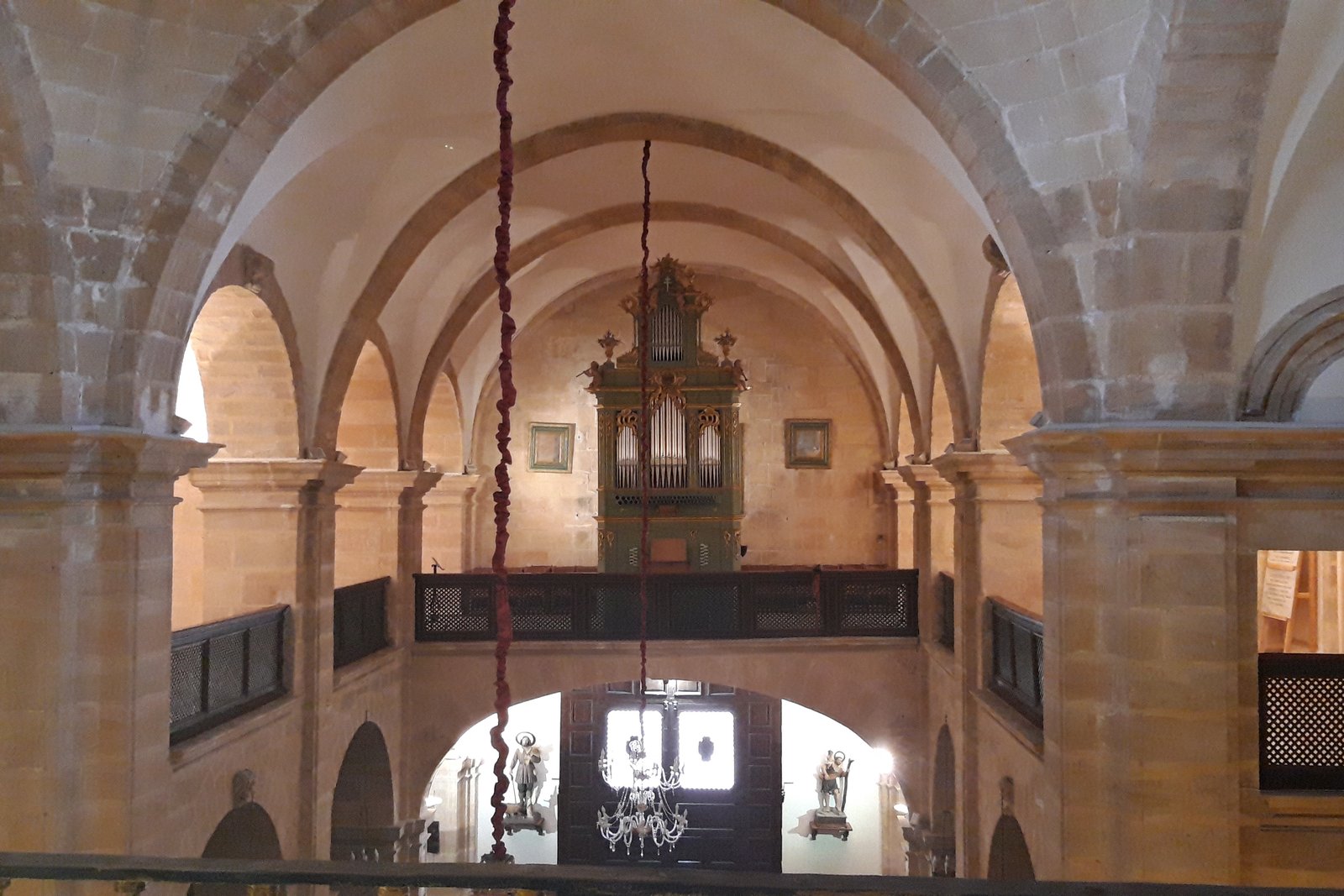
The relic itself is housed in the Chapel of the Lignum Crucis, a Baroque addition to the older medieval monastery complex, built in the early 18th century specifically to give the cross a setting worthy of the devotion surrounding it. Inside, the fragment rests in an elaborate gilded reliquary, raised above the altar where pilgrims can see it clearly, and it is brought down for closer veneration — kissing, touching, prayer before the open relic — on major feast days and throughout Jubilee Years, when the numbers of visitors to this otherwise quiet valley swell considerably. Franciscan friars have overseen the monastery and the relic's care for centuries, maintaining both the daily rhythm of monastic life and the practical work of receiving the steady stream of pilgrims the relic continues to draw.
Tradition, not dogma
As with every relic of the True Cross venerated anywhere in the world, the Catholic Church has never dogmatically certified that this specific fragment, or any other, is provably first-century wood from the crucifixion. The Church's actual teaching on relics, reflected in the Catechism of the Catholic Church (no. 1674), encourages the veneration of relics as a legitimate and longstanding form of popular piety without requiring — or claiming to offer — scientific certainty about any individual object's material origin. That framework applies here exactly as it does to every other claimed fragment of the cross discussed on this blog: the devotion a pilgrim brings to Santo Toribio de Liébana rests on centuries of tradition, the weight of continuous veneration, and the privilege the Church itself has formally granted the site — not on an forensic guarantee that could never really be offered for an object this old.
What makes the mountain monastery's relic worth knowing about, whatever one makes of the size claims attached to it, is the same thing that has drawn pilgrims up its narrow valley road for centuries: the chance to stand before a large, ancient, carefully guarded piece of wood that an unbroken chain of believers, across more than a thousand years, have held to be a physical connection to the central event of their faith.
Trivia
What relic is kept at Santo Toribio de Liébana?
How did the relic supposedly arrive in Spain?
Is Santo Toribio really home to the largest fragment of the True Cross?
What is the Jubilee Year privilege at Santo Toribio de Liébana?
Can the public see the relic today?
Related Reading