The True Cross of Caravaca: Spain's Double-Armed Relic

A Mass with no cross on the altar
The story is set in 1231 or 1232, depending on which version of the chronicle you read, in the years when this corner of southeastern Spain still sat on the frontier between Christian and Muslim rule. A Christian priest named Ginés Pérez Chirinos had been taken captive and brought before the local Moorish governor of Caravaca's castle. According to the tradition, the governor — curious about the Christian liturgy and perhaps testing the prisoner — ordered Ginés to celebrate Mass in front of him, so he could see with his own eyes what this foreign rite actually involved.
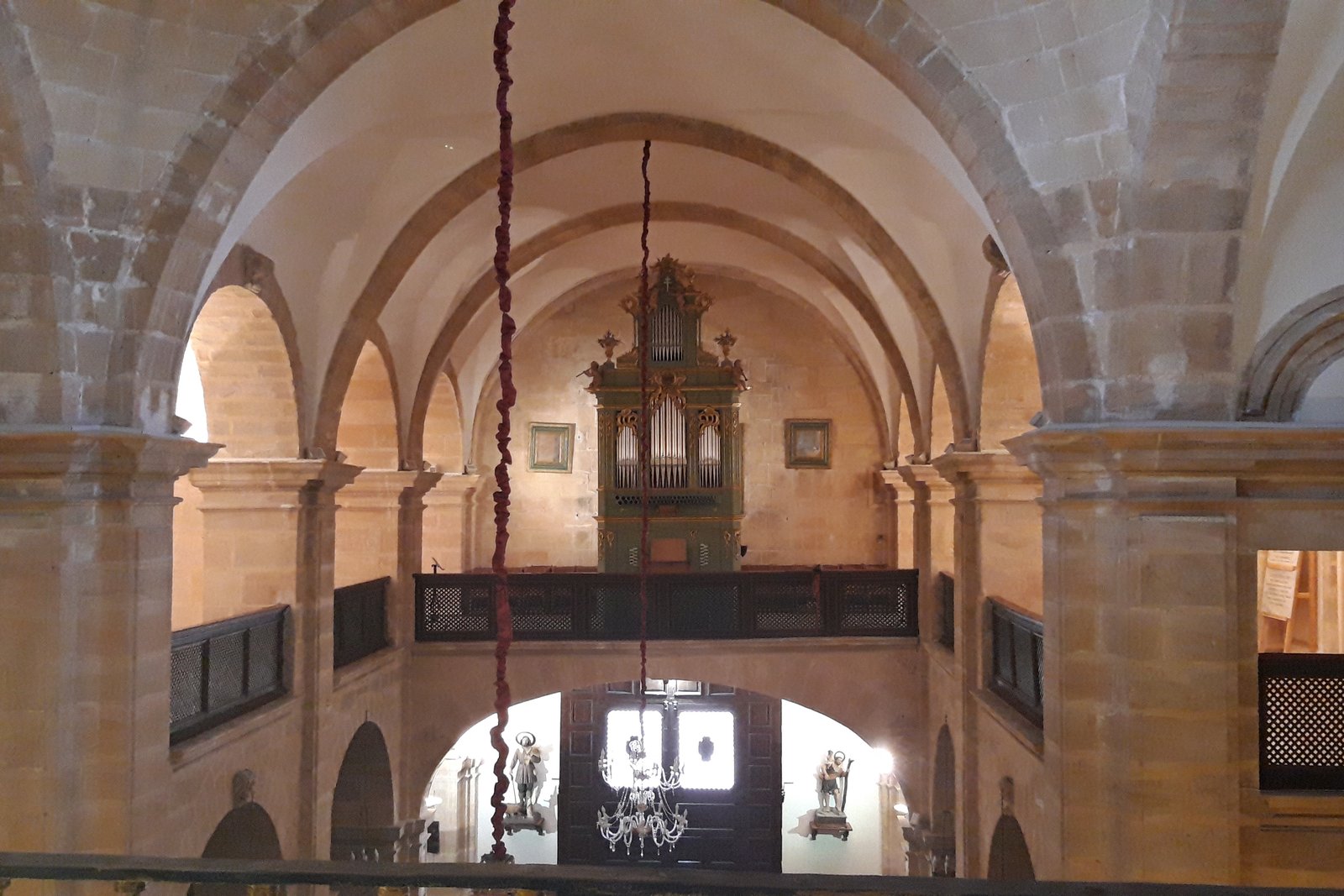
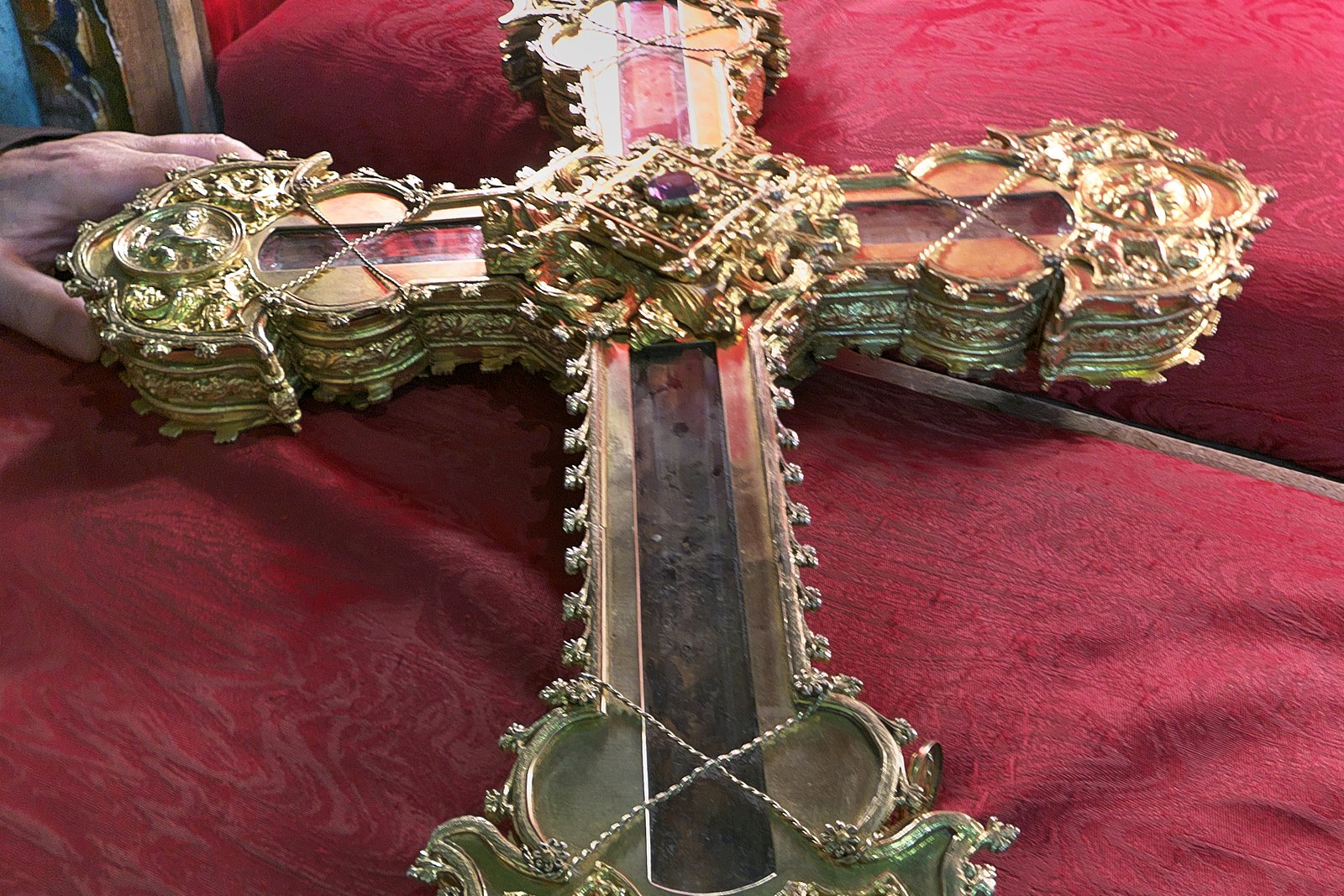
Photo by Jlgarmahuete, Santuario de Caravaca de la Cruz (2018). CC BY-SA 4.0, via Wikimedia Commons.
There was an immediate problem: no altar cross was on hand, and the Mass of that era required one. The earliest written account of what happened next comes from Gil de Zamora, a Franciscan friar who served as historian to King Ferdinand III of Castile and recorded the episode within a few decades of the supposed event — not an eyewitness, but a relatively early chronicler by medieval standards. His version has the governor, puzzled by the priest's hesitation, asking something like "wouldn't that one do?" — pointing, in some retellings, toward a window where two angels had just set down a glowing cross with two crossbars rather than one. Other versions describe the angels entering in full view of the gathered court, or the cross simply appearing on the altar itself. The accounts differ on these specifics, which is itself a sign of how the story grew in the retelling across the following generations.
What every version agrees on is the ending: the governor and much of his household, moved by what they had witnessed, converted to Christianity. The cross stayed in Caravaca, took the name by which it is still known — the Vera Cruz, the True Cross — and the town eventually added it to its own coat of arms and, centuries later, to its name itself: Caravaca de la Cruz.
It bears saying plainly, as the Church itself has never claimed otherwise: this is a pious legend passed down through medieval chronicle and local memory, not an event documented by independent contemporary sources. The Church has never pronounced on whether angels literally delivered this specific object, any more than it has certified any single splinter of the True Cross worldwide as scientifically verified. What can be said with more confidence is the shape of the devotion that followed — a shape distinctive enough that it eventually produced the most instantly recognizable form the True Cross takes anywhere in Spain.
A cross with two arms
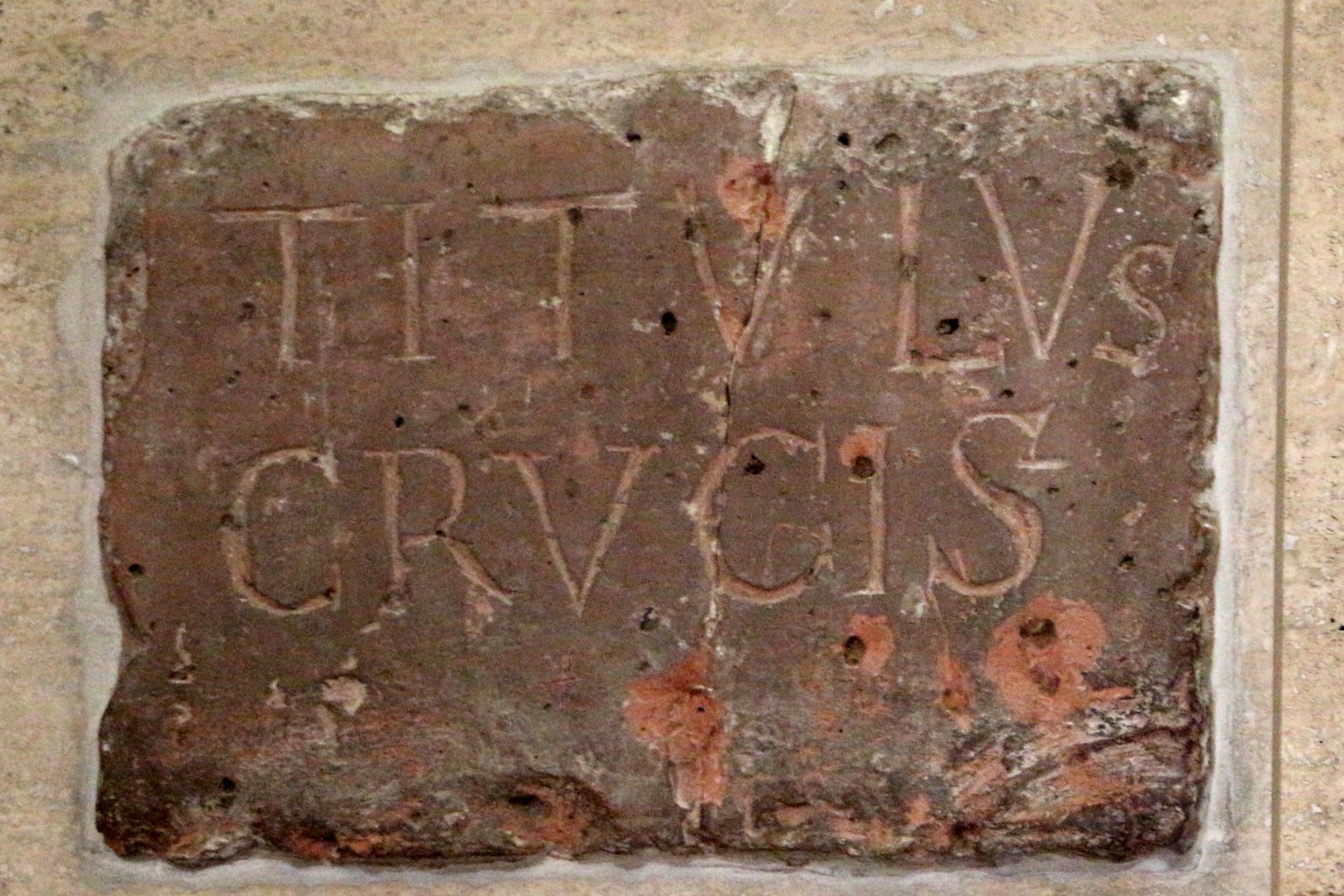
Most crosses associated with Christ's crucifixion — including most claimed relics of the True Cross scattered across churches from Rome to Jerusalem — follow the familiar single-crossbar Latin shape. Caravaca's relic is different: it's a double-armed cross, sometimes called a patriarchal or Lorraine cross, with two horizontal bars near the top, the upper one traditionally understood as representing the inscribed titulus Pilate ordered placed above Christ's head, set apart from the main crossbar where his hands were nailed.
That two-barred form became, over the centuries, inseparable from Caravaca's identity. It appears on the town's seal, on pilgrim medals and badges sold across Spain and Latin America for generations, and on the sanctuary built specifically to house it. The Royal Basilica-Sanctuary of the Vera Cruz stands on the grounds of Caravaca's hilltop castle, construction having begun in the early 17th century on the site traditionally identified with the governor's court where the legend is set — a visible, centuries-later monument built over a single remembered afternoon.
Stolen in 1934 — and quietly replaced
The relic's more recent history is where legend gives way to documented, and considerably more sobering, fact. On the night of February 13-14, 1934 — in the tense, often violently anticlerical years leading up to Spain's Civil War — the original cross was stolen from the sanctuary. It was never recovered, and its fate remains unknown to this day.
What happened afterward has often been retold in a simplified form, crediting the pope directly with sending a replacement. The historian Indalecio Pozo Martínez, in a 2010 study, laid out a more precise sequence: an initial replacement relic was granted in 1940 but disappeared en route, in Murcia's cathedral, before it ever reached Caravaca. A second fragment of the True Cross arrived from Rome in 1942, during the difficult years following the Civil War, sent through members of the Claretian religious order rather than being personally dispatched by Pope Pius XII, as popular accounts frequently — and inaccurately — state. That 1942 relic, mounted in a new reliquary cast in the same double-armed shape as the original, is the cross venerated at the sanctuary today. The devotion built around it did not end with the original object's disappearance; it simply continued around what the Church and the community agreed to treat as its faithful replacement.
A jubilee usually reserved for Rome
Caravaca's standing in the wider Catholic world rests on more than its relic's dramatic legend. In 1998, Pope John Paul II granted the town the privilege of celebrating a Jubilee Year in perpetuity — a status normally limited to an extremely short list of places: Rome, Jerusalem, Santiago de Compostela, and the monastery of Santo Toribio de Liébana in northern Spain. Caravaca became the fifth site in the Catholic world granted this standing, and the honor had been building for years beforehand, through temporary jubilee grants given in 1981 (marking the legend's 750th anniversary) and again in 1996. The perpetual jubilee now recurs on a seven-year cycle; the first fell in 2003, when Cardinal Joseph Ratzinger — soon to become Pope Benedict XVI — visited the sanctuary.
A plenary indulgence, the Church's term for the complete remission of temporal punishment due for sin under the usual conditions (confession, Communion, and prayer for the pope's intentions), is available to pilgrims who visit during a jubilee year — an honor placing this one Spanish town, at least in this specific respect, in the same company as Rome and Jerusalem.
The Wine Horses of May
Caravaca's biggest annual celebration, though, isn't strictly a liturgical one. Each spring, during the town's main festivities honoring the Vera Cruz (running roughly May 1 through 5), the Caballos del Vino — the "Wine Horses" — thunder up a steep slope toward the castle sanctuary, each animal draped in an elaborately embroidered caparison that can take a team of local artisans the better part of a year to sew. Local tradition links the race to episodes from the town's medieval history connected to the cross, though the documented history of the festival itself, as a formal event, only stretches back to the 17th century — a reminder that even genuinely old traditions often reach written record centuries after their legendary origin point. In 2020, UNESCO recognized the Caballos del Vino as Intangible Cultural Heritage of Humanity, citing the horsemanship and embroidery skills the festival has kept alive across generations.
What the devotion asks of a visitor
Taken together, the legend, the theft, the replacement, and the Jubilee privilege tell a story less about one unbroken chain of custody and more about a community's sustained decision to keep gathering around a particular shape of cross, generation after generation, regardless of what has happened to the specific object inside the reliquary. That's not a weakness in the devotion — it's close to how the Church has always framed relic veneration generally, as the Catechism notes in describing it among the Church's encouraged forms of popular piety (no. 1674): the reverence shown ultimately reaches what the object represents, not a certified, unbroken material artifact. A pilgrim standing before the double-armed cross at Caravaca today isn't required to resolve exactly which fragment of wood, from which century, sits inside that reliquary. What endures is the same thing Gil de Zamora's chronicle was already pointing toward eight centuries ago — a cross that, whatever its precise material history, has never stopped meaning the same thing to the people who come to see it.
Trivia
What is the True Cross of Caravaca?
Is the angel legend considered historical fact by the Church?
What happened to the original relic?
Why does Caravaca de la Cruz hold a 'Jubilee' usually associated with Rome or Jerusalem?
What are the Caballos del Vino, and how are they connected to the cross?
Related Reading