Saint Lawrence

A deacon entrusted with the Church's charity
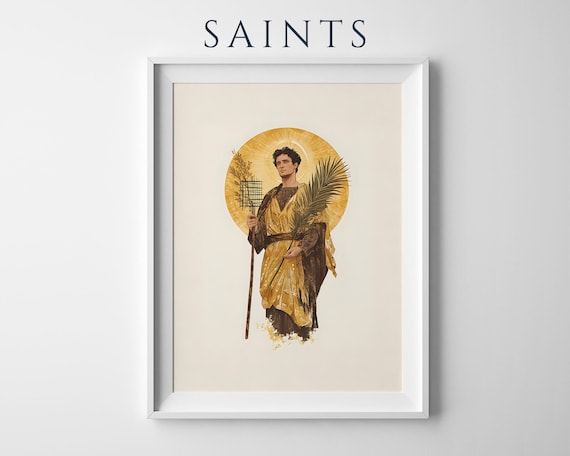
Lawrence's path to martyrdom began in an administrative role rather than a dramatic one. Likely born in Huesca, in what is now Spain, he traveled to Rome alongside the future Pope Sixtus II, who ordained him deacon in 257, when Lawrence was just 32, and soon after appointed him Archdeacon of Rome. The role placed him in direct charge of the material goods of the Church and the distribution of alms to the poor — practical, unglamorous work that nonetheless put him at the center of the community's charitable life.
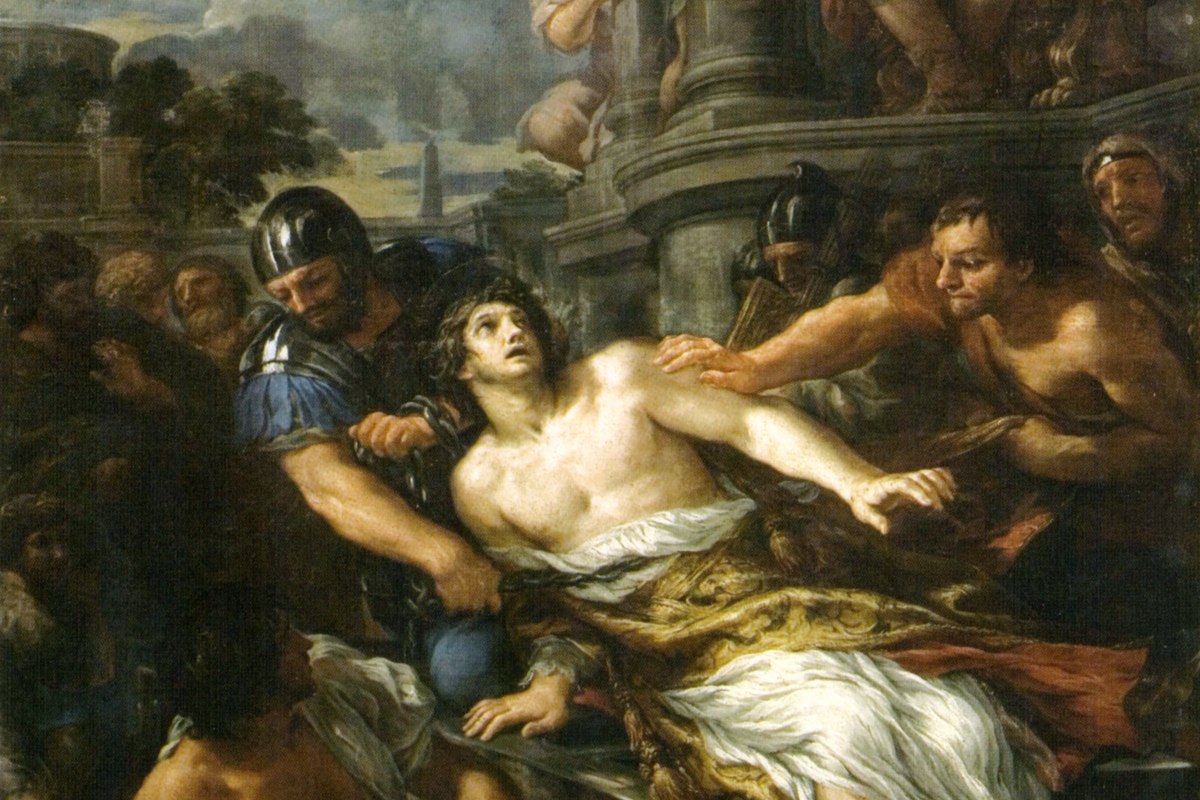
Pietro da Cortona, "The Martyrdom of Saint Lawrence," c. 1650 — public domain.
Rome at the time organized its charitable work through seven deacons, each responsible for one of the city's districts. As Archdeacon, Lawrence ranked above the other six and answered directly to the pope, which meant he also controlled whatever funds and valuables the Church held for the relief of widows, orphans, and the poor. That detail matters for understanding what came next: when the state eventually came looking for the Church's wealth, it was Lawrence, not Sixtus, who held the keys.
An answer that turned an order into a rebuke
That role became fatal in 258, when Emperor Valerian issued an edict demanding the execution of all bishops, priests, and deacons. Sixtus was killed on August 6, cut down along with several of his own deacons while presiding at a liturgy, according to tradition, in the catacombs outside the city. Lawrence, seeing what was coming, is said to have spent the three days before his own arrest quietly distributing whatever remained of the Church's funds to the poor of Rome — so that by the time soldiers came for the treasury, there was nothing left to seize.
Before Lawrence's own arrest, the emperor (or, in some versions of the story, a Roman prefect acting on his behalf) reportedly offered to spare his life in exchange for surrendering the treasures of the Church. Lawrence asked for a few days to gather everything together. He returned not with gold, but with the sick, the poor, and the marginalized of the city, presenting them to the official and declaring that these people — not silver or valuables — were the true treasures the Church possessed. It was less a negotiation than a public rebuke, delivered directly to the man holding his life in his hands, and it left the prefect, by most accounts, furious rather than amused.
A last line that outlived the historical record
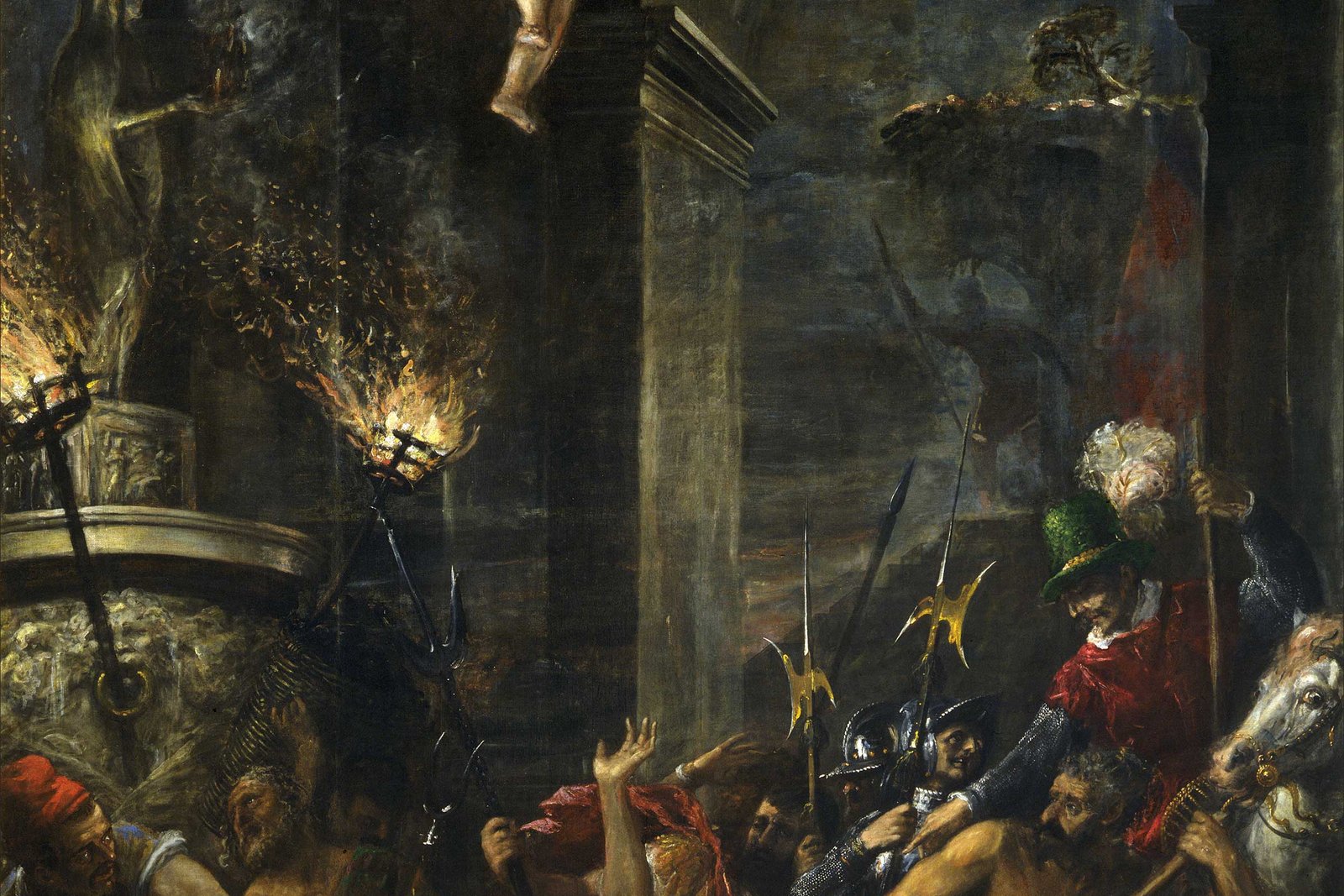
The account of Lawrence's actual execution has become inseparable from one of Christian history's most quoted lines. Legend holds he was roasted to death on a gridiron, and that partway through, he told his executioners, "I am cooked on that side; turn me over, and eat" — a line of almost impossible composure delivered in the middle of his own torture. Historians have questioned the account's accuracy, noting that Valerian's edict called for prompt execution of clergy, typically by beheading, which sits uneasily against the slow death the gridiron story describes. One theory, floated by some modern scholars, suggests a possible scribal error in an early account — a Latin phrase describing his death by the sword (passus est) may have been misread or mistranslated in a way that eventually produced the roasting narrative. Whatever actually happened in the final details, the story has endured for exactly the reason such stories tend to: an image of composure so extreme it became impossible to forget.
An emblem that shaped how he's remembered
The gridiron became Lawrence's defining attribute in Christian art almost immediately, appearing beside him in mosaics, frescoes, and paintings for over a millennium — much the way keys identify Saint Peter or a sword identifies Saint Paul. Because of the manner of his death, later tradition made him patron of cooks, chefs, and roasters, and by a natural extension, of firefighters as well. Comedians and satirists have also claimed him informally, on the strength of a martyr supposedly cracking a joke mid-execution — a detail that has made Lawrence one of the few saints remembered as much for his wit as for his suffering.
A basilica built over an enduring devotion
Lawrence's martyrdom, whatever its precise details, made him one of the most venerated martyrs of the early Roman Church, and one of only a handful whose feast was kept with the highest liturgical rank in the city of Rome itself for centuries. The Basilica of San Lorenzo Fuori le Mura, built over his traditional burial site, remains a major pilgrimage destination in Rome today and counts among the city's seven traditional pilgrim churches — a lasting monument to a deacon remembered less for how he died and more for the sharp, pointed answer he gave when asked to hand over treasure he didn't believe gold could represent.
Trivia
What was Lawrence's role in the early Roman Church?
What happened when the emperor demanded the Church's treasures?
What are Lawrence's famous last words?
What happened to Pope Sixtus II?
What is Saint Lawrence the patron saint of, and when is his feast day?
Related Reading