The Flight into Egypt

A second warning in a dream
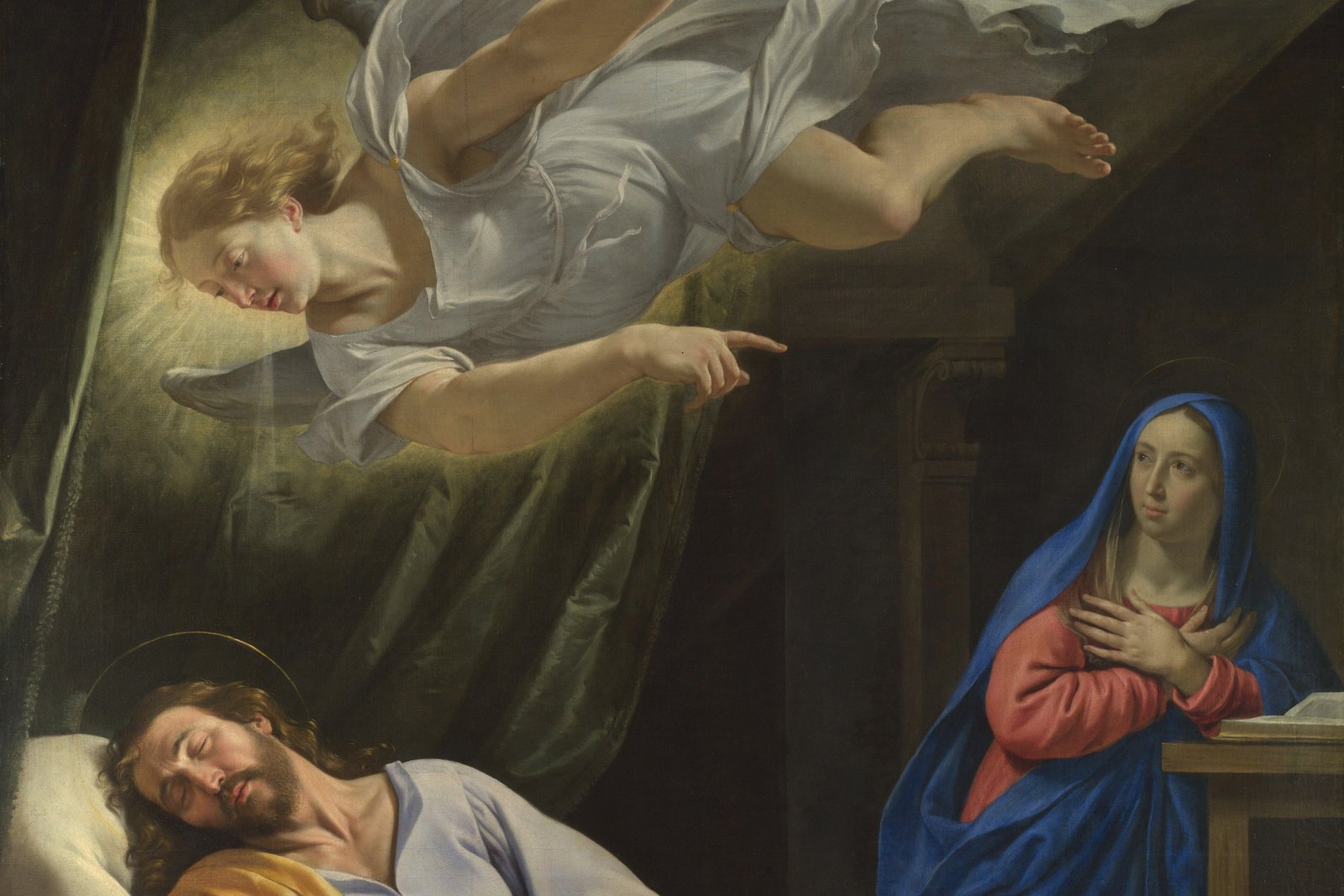
Joseph had already received one life-altering message in a dream — the angel who reassured him about Mary's pregnancy before Jesus was even born. The flight into Egypt begins with a second dream, but this time the message carries none of the comfort of the first. "The angel of the Lord appeared to Joseph in a dream and said, 'Rise, take the child and his mother, flee to Egypt, and stay there until I tell you. Herod is going to search for the child to destroy him'" (Matthew 2:13, NABRE). There's no explanation offered, no timeline given beyond "until I tell you" — just an urgent command to leave immediately, with a newborn and a young mother, for a country neither of them called home.
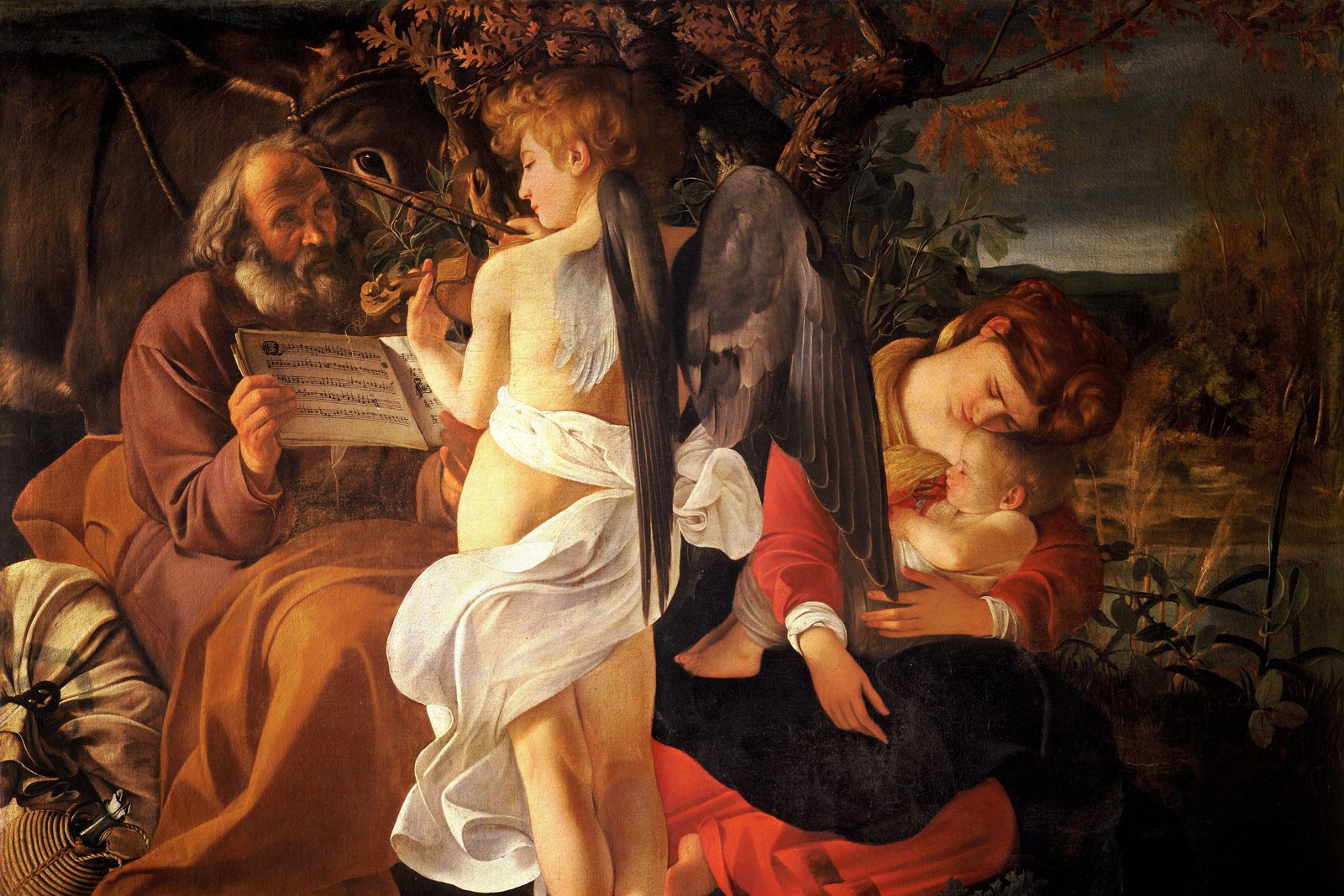
Caravaggio, "Rest on the Flight into Egypt," c. 1597, Galleria Doria Pamphilj, Rome. Public domain.
Leaving in the dark
What stands out in Matthew's account is how quickly Joseph obeys, and how little the text lingers on the difficulty of the decision. "Joseph rose and took the child and his mother by night and departed for Egypt" (Matthew 2:14, NABRE) — a single verse covering what must have been an enormous, frightening undertaking. Traveling by night rather than waiting for daylight suggests real urgency, not a leisurely departure. Egypt was a natural place of refuge for people fleeing danger in Judea — it lay outside Herod's jurisdiction, had a substantial Jewish population already settled there, and Jewish tradition remembered it as a place Israelites had fled to for safety more than once in earlier centuries. Even so, it meant the Holy Family arrived as refugees in a foreign land, with none of the support system they'd had at home.
A king who couldn't stand being outmaneuvered
The reason for the family's flight is rooted in what happens just before this passage: magi from the East had come to Jerusalem asking where to find the newborn "king of the Jews," and Herod, deeply unsettled by the question, had asked them to report back once they found the child so he could "go and offer him homage" too — a claim the text makes clear was a lie meant to locate and eliminate a perceived rival. When the magi, warned in a dream of their own, returned home by another route without reporting to him, Herod's reaction was violent. "When Herod realized that he had been deceived by the magi, he became furious. He ordered the massacre of all the boys in Bethlehem and its vicinity two years old and under, in accordance with the time he had ascertained from the magi" (Matthew 2:16, NABRE). Matthew connects the horror of that slaughter to the prophet Jeremiah's words about grief in Ramah — "Rachel weeping for her children" (Matthew 2:18) — a haunting echo woven into the same chapter that records the Holy Family's escape.
An old prophecy given new meaning
Matthew doesn't treat the family's stay in Egypt as incidental to the story — he ties it directly to a line from the prophet Hosea, writing that Joseph "stayed there until the death of Herod, that what the Lord had said through the prophet might be fulfilled, 'Out of Egypt I called my son'" (Matthew 2:15, NABRE). In its original context in Hosea 11:1, that line referred to God calling the nation of Israel out of Egyptian slavery during the Exodus, centuries earlier. Matthew reads it as finding a deeper fulfillment in Jesus himself — casting the infant Christ's own journey out of Egypt as an echo of Israel's founding story, with Jesus recapitulating the nation's history in his own life. It's a pattern that runs throughout Matthew's Gospel, which repeatedly presents Jesus as the fulfillment of Israel's Scriptures rather than a figure disconnected from them. For a broader look at how this fits into the Gospel's early chapters, see our collection of gospel stories and parables of Jesus.
A family that eventually came home
Scripture doesn't specify how long the Holy Family remained in Egypt — only that Joseph stayed there "until the death of Herod." Herod the Great died in 4 BC, and once news of his death reached Joseph, an angel appeared to him once more, telling him it was safe to return: "Rise, take the child and his mother and go to the land of Israel, for those who sought the child's life are dead" (Matthew 2:20, NABRE). Even then, the journey home wasn't simple — hearing that Herod's son Archelaus now ruled Judea in his father's place, Joseph was afraid to settle there and was warned again in a dream to go instead to the region of Galilee, settling in the town of Nazareth (Matthew 2:22-23). It's the last of a string of divine warnings that guide the family's movements across these two chapters — Joseph acting each time not on his own judgment alone, but on messages received in sleep, trusting them enough to uproot his family again and again to keep them safe.
Why this story still resonates
The flight into Egypt has long held particular meaning for Christians reflecting on displacement, exile, and the experience of refugees — a family fleeing political violence with no guarantee of welcome in the country they were entering. Catholic tradition has repeatedly pointed to this episode as grounding for compassion toward migrants and refugees, noting that the Holy Family itself once depended on the hospitality of a foreign land to survive. It's a detail easy to overlook in a story so often remembered mainly for its danger and its miraculous warnings — but at its center is simply a father protecting his family, doing whatever it took to get them somewhere safe.
Trivia
Why did the Holy Family flee to Egypt?
How quickly did Joseph act on the angel's warning?
Why did Herod want to kill the infant Jesus?
How long did the Holy Family stay in Egypt?
Does the flight into Egypt connect to any Old Testament prophecy?
Related Reading