Saint Joseph and the Angel in His Dreams


A quiet divorce, reconsidered
Matthew's Gospel introduces Joseph at a moment of private crisis. Mary, his betrothed, is found to be pregnant before the couple has lived together — a discovery that, under the marriage customs of the time, would have entitled Joseph to expose her publicly, with serious social and even legal consequences. Matthew instead calls him "a righteous man" who, "unwilling to expose her to shame, decided to divorce her quietly" (Matthew 1:19, NABRE). It's a portrait of someone choosing mercy within the limits of what he understood to be true, before he had any reason to believe otherwise.
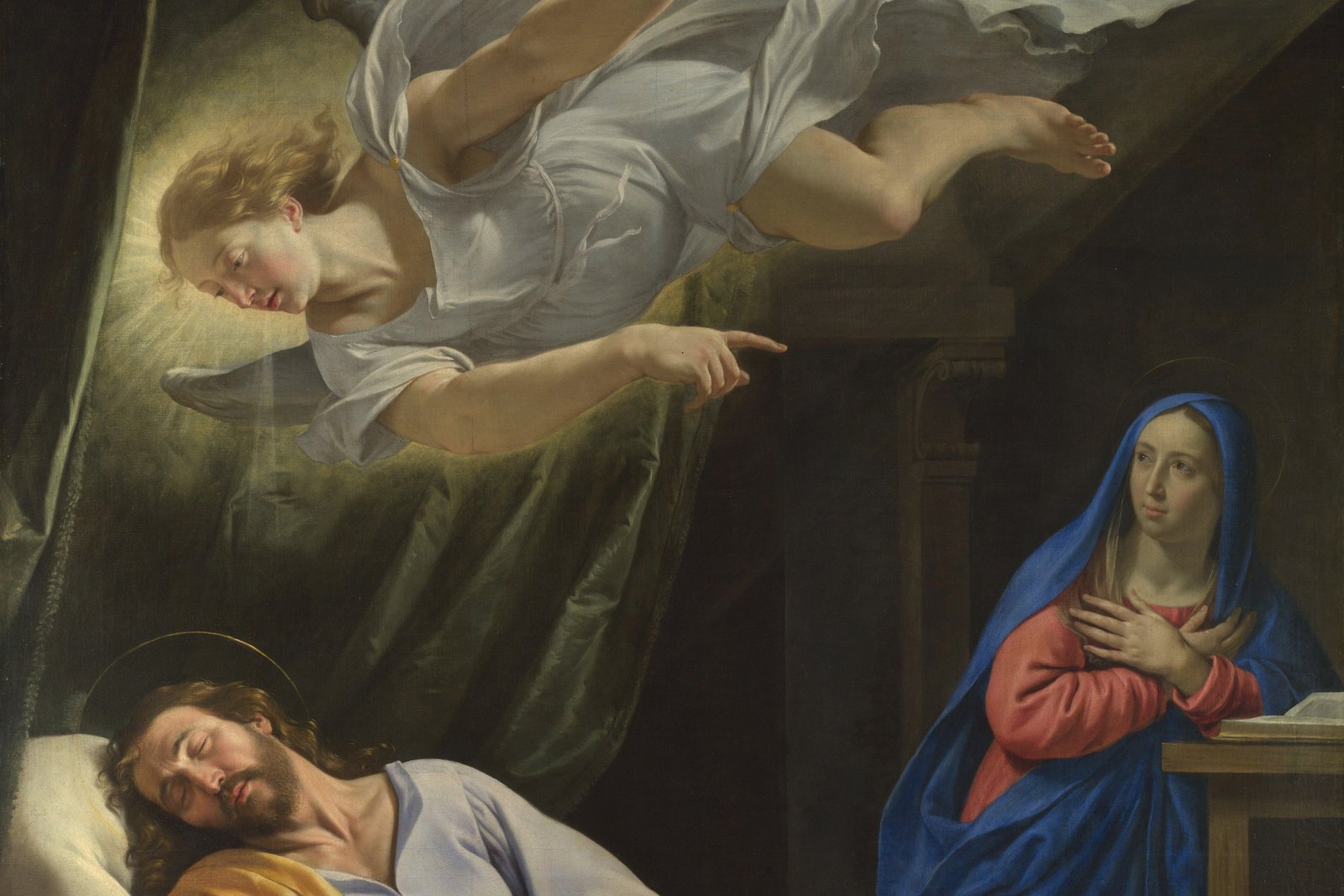
Philippe de Champaigne, "The Dream of Saint Joseph," c. 1642-1643, National Gallery, London — public domain.
That understanding changes overnight. "Such was his intention when, behold, the angel of the Lord appeared to him in a dream and said, 'Joseph, son of David, do not be afraid to take Mary your wife into your home. For it is through the holy Spirit that this child has been conceived in her'" (Matthew 1:20, NABRE). The angel goes further, instructing Joseph to name the child Jesus — a name meaning "the Lord saves" — "because he will save his people from their sins" (Matthew 1:21). Joseph's response is immediate and wordless: "When Joseph awoke, he did as the angel of the Lord had commanded him and took his wife into his home" (Matthew 1:24).
A pattern of silent obedience
What's notable across all four of Joseph's angelic dream-encounters in Matthew is that he never speaks a single recorded word in response — in sharp contrast to figures like Zechariah, Mary, or Gideon, who all question or negotiate with their angelic visitors elsewhere in Scripture. Each time, Matthew simply records that Joseph woke and did exactly as instructed, without delay or objection. This has led many readers, ancient and modern, to see in Joseph a distinctive portrait of quiet, immediate fidelity — a man whose entire recorded role in the Gospel consists of obedient action rather than speech.
Flight into Egypt
The second dream arrives after the visit of the magi, and its urgency is unmistakable: "When they had departed, behold, the angel of the Lord appeared to Joseph in a dream and said, 'Rise, take the child and his mother, flee to Egypt, and stay there until I tell you. Herod is going to search for the child to destroy him'" (Matthew 2:13, NABRE). Herod's subsequent slaughter of the male children of Bethlehem — the massacre traditionally commemorated by the Church as the Holy Innocents — makes plain how narrowly this warning arrived ahead of real, lethal danger.
Egypt was a natural refuge: close enough to reach on foot or by donkey, yet outside Herod's own kingdom and under separate Roman administration, making it a realistic place to disappear into for a family with nothing but what they could carry. Matthew also reads the flight as fulfilling an older scriptural pattern, quoting the prophet Hosea's line about Israel itself: "Out of Egypt I called my son" (Matthew 2:15) — casting the Holy Family's exile as an echo of Israel's own history of departure from and deliverance out of Egypt.
Return, and one final redirection
The third angelic dream comes once the danger has passed: "When Herod had died, behold, the angel of the Lord appeared in a dream to Joseph in Egypt and said, 'Rise, take the child and his mother and go to the land of Israel, for those who sought the child's life are dead'" (Matthew 2:19-20, NABRE). Joseph again obeys without hesitation — but on the way, learning that Herod's son Archelaus now ruled Judea in his father's place, he grows afraid to settle there.
Matthew records a fourth and final instance of divine guidance through dream, somewhat more briefly narrated than the first three: "because he had been warned in a dream, he departed for the region of Galilee" (Matthew 2:22), settling in Nazareth. Unlike the earlier three instances, this passage does not explicitly name an angel as the source of the warning, though it stands in obvious continuity with the pattern the Gospel has already established, and most readers naturally read it as another instance of the same angelic guidance.
Dreams as a mode of revelation
Modern readers sometimes wonder whether dreams carry the same theological weight as a waking angelic appearance, like those to Mary at the Annunciation or the shepherds at Bethlehem. Scripture itself treats prophetic dreams as a legitimate and recurring channel of divine communication — the Old Testament Joseph interprets dreams throughout Genesis as genuine revelation, and Matthew's own infancy narrative closes its account of the magi by noting they too were "warned in a dream not to return to Herod" (Matthew 2:12), returning home by another route. Catholic tradition has never treated Joseph's dreams as lesser or more ambiguous than other angelic encounters in Scripture; the text's own insistence that "the angel of the Lord" himself is the one appearing and speaking settles the question of their authority.
Saint Joseph's silence, and the Church's honor
Joseph never speaks a word anywhere in the four Gospels, and his role in Matthew's infancy narrative is defined entirely by these dream encounters and his unhesitating response to each one. The Catholic Church has long drawn on exactly this quality in honoring him — not as a passive or minor figure, but as a model of quiet, protective fidelity exercised at real personal cost, including the disruption of fleeing his homeland twice within a few short years. His feast is celebrated on March 19, with a second feast honoring him as patron of workers on May 1.
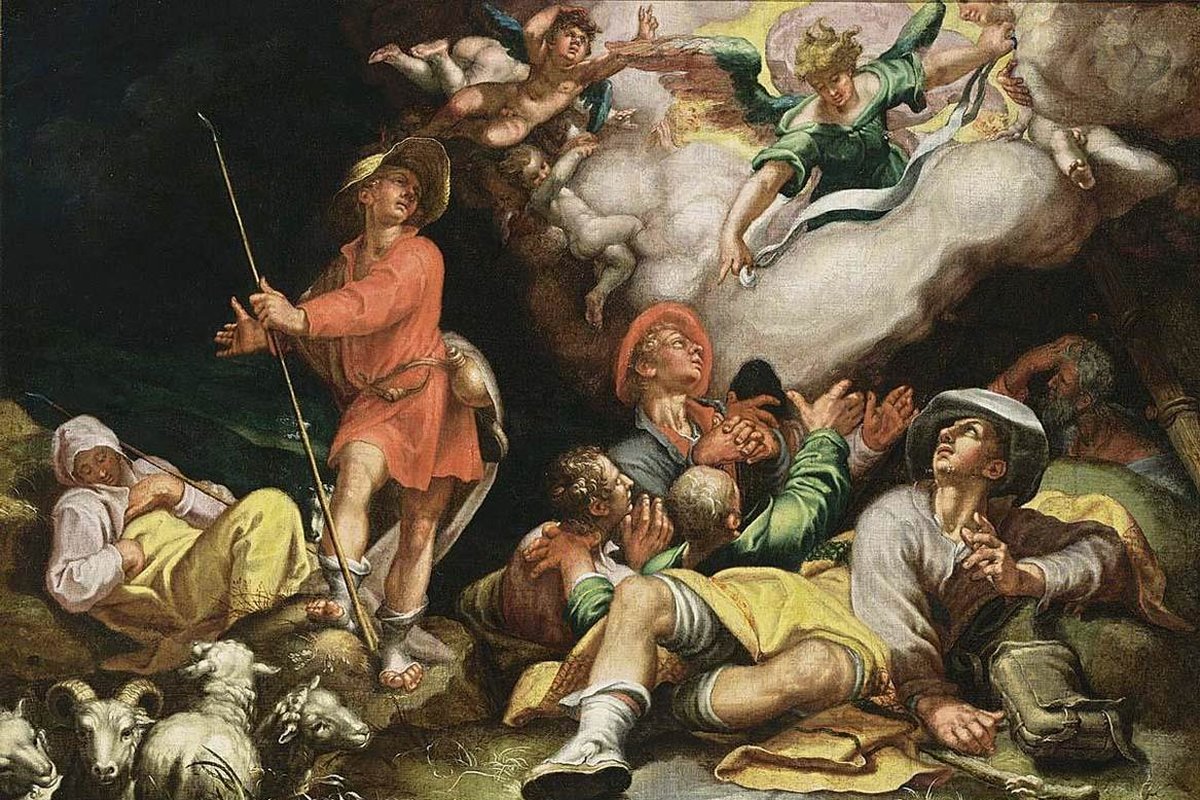
For readers interested in the wider pattern of angelic visits surrounding the Nativity, see also The Angel of the Annunciation and Angel Appearing to the Shepherds — together with Joseph's four dreams, these episodes form the complete angelic framework Matthew and Luke place around the birth of Christ.
Trivia
How many times does an angel appear to Saint Joseph in dreams according to Matthew's Gospel?
What was Joseph planning to do before the first angel appeared to him?
What exact words did the angel use to reassure Joseph?
Why did the angel warn Joseph to flee to Egypt specifically?
Does the Catholic Church regard Joseph's dreams as ordinary dreams, or as genuine angelic revelation?
Related Reading