The Holy Family — Together


An ordinary family's yearly pilgrimage
Luke frames the whole episode as something the family did routinely, not as a special or unusual trip: "Each year his parents went to Jerusalem for the feast of Passover," (Luke 2:41, RSV-CE), joining the Passover pilgrimage that observant Jewish families made annually to commemorate Israel's deliverance from slavery in Egypt. Twelve was a meaningful age for a Jewish boy to make this journey — old enough to be counted, in the culture of the time, as approaching the responsibilities of adulthood, even if the formal bar mitzvah ceremony recognized today developed into its current form later. That context matters for understanding why no one panicked immediately when Jesus wasn't visible at the day's end: pilgrimage caravans moved as large communities of extended family, neighbors, and fellow townspeople, and a boy on the edge of adolescence would ordinarily have been trusted to keep pace somewhere within the group.
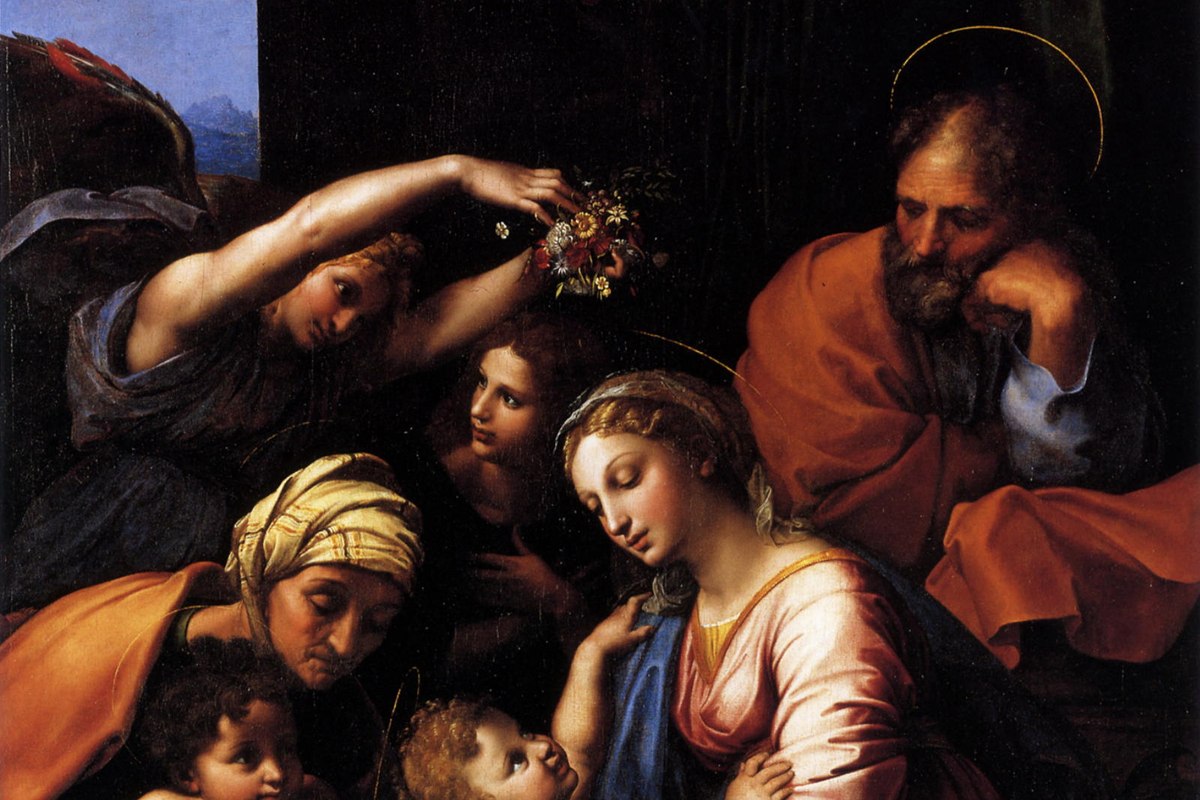
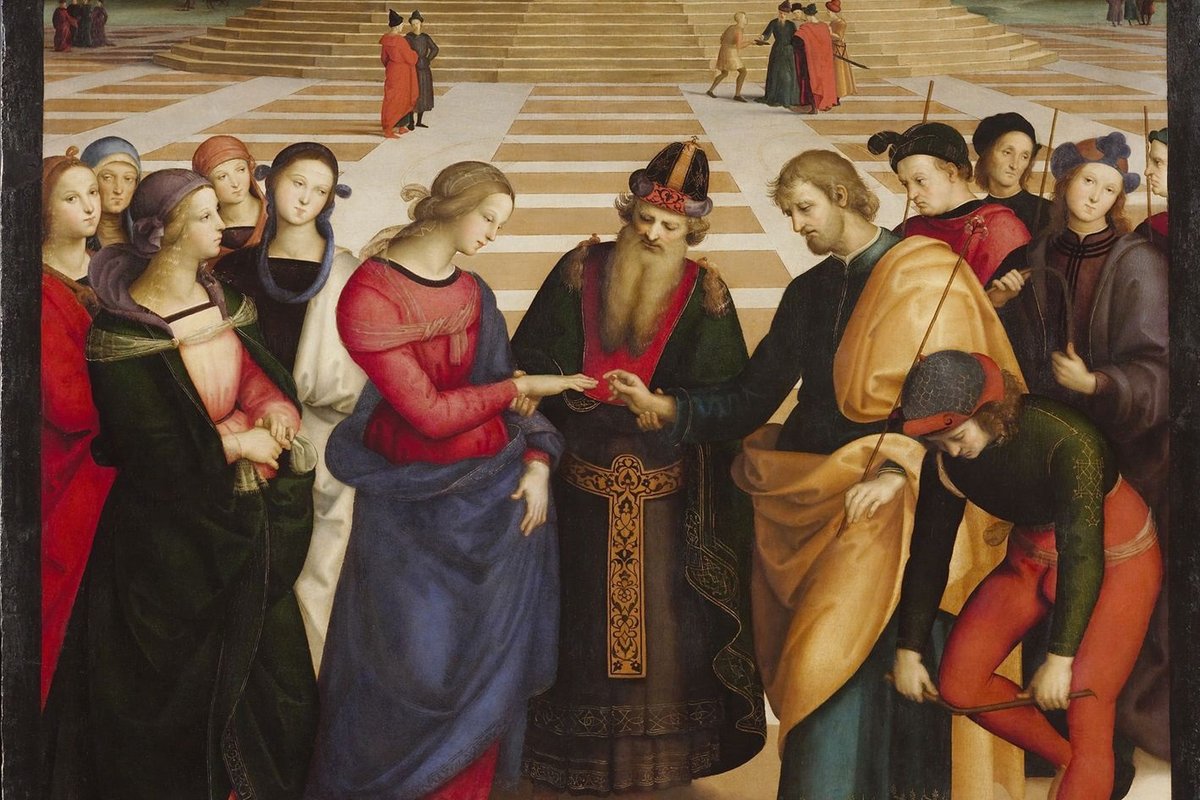
Raphael, "The Holy Family," 1518 — public domain.
A day gone by before anyone noticed
Of everything the Gospels could have recorded about Jesus's childhood, only one episode survives in any real detail, and it begins with an oversight rather than a miracle. Traveling back from Jerusalem after the Passover festival, Mary and Joseph go a full day before realizing Jesus isn't with them — a detail that only makes sense against the reality of large extended families and travel groups, where a twelve-year-old might reasonably be assumed to be walking with relatives or friends elsewhere in the group.
Three days of searching, then a startling scene
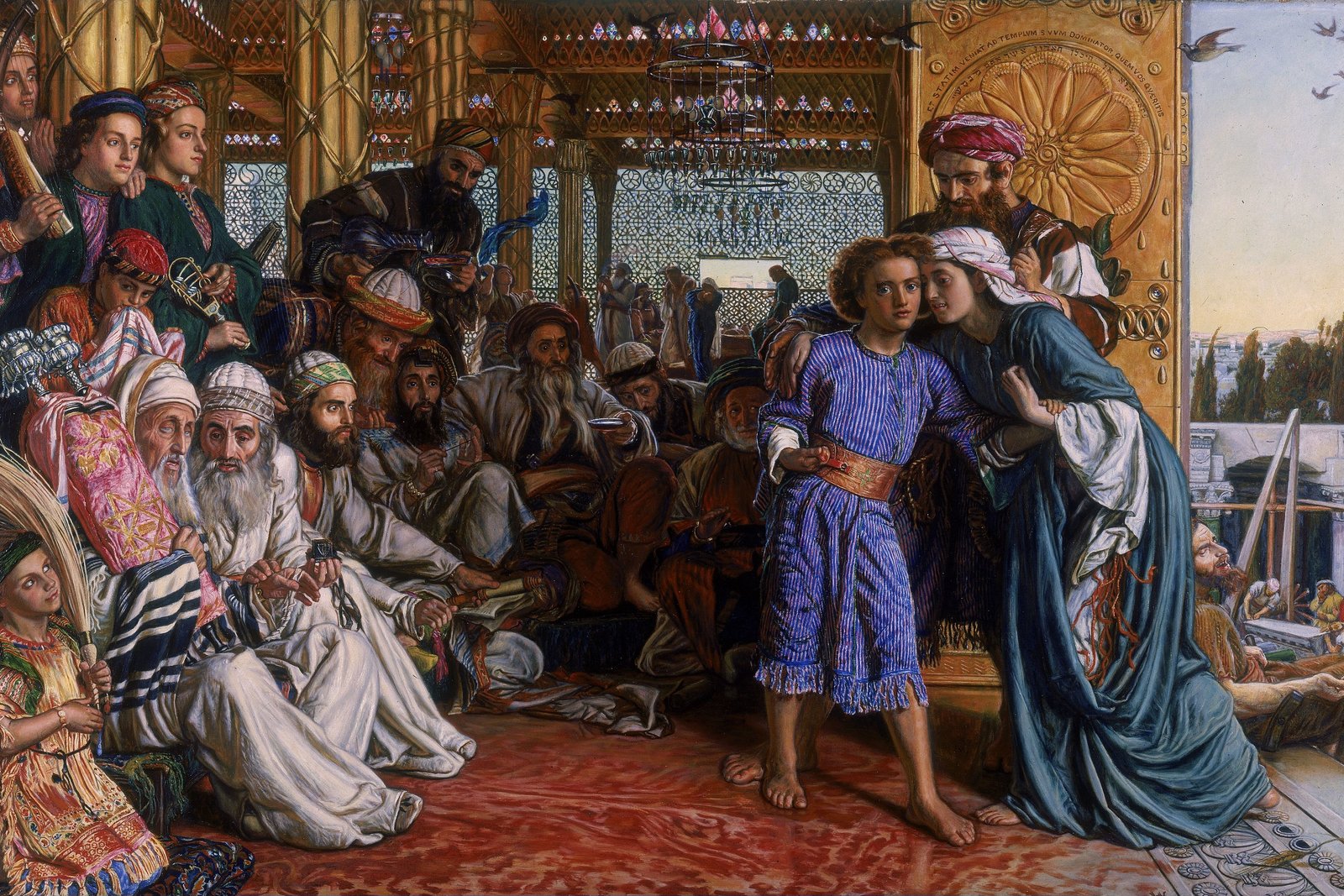
What follows is three anxious days of searching before they finally find him — not lost, not in danger, but "After three days they found him in the temple, sitting in the midst of the teachers, listening to them and asking them questions," (Luke 2:46, RSV-CE), with the surrounding adults "and all who heard him were astounded at his understanding and his answers." (Luke 2:47, RSV-CE). It's a jarring image precisely because of how undramatic it is. Jesus isn't missing in any conventional sense. He's exactly where he apparently intended to be.
A question that isn't quite an apology
Mary's reaction, understandably, is not relief alone: "Son, why have you done this to us? Your father and I have been looking for you with great anxiety." (Luke 2:48, RSV-CE). Jesus's reply doesn't offer the apology the question seems to invite: "Why were you looking for me? Did you not know that I must be in my Father’s house?" (Luke 2:49, RSV-CE). Luke is careful to note that his parents "did not understand the saying which he spoke to them" — an honest admission that this moment, even for the two people closest to him, didn't resolve into easy clarity.
It's worth noticing what's absent from this scene as much as what's present: Joseph never speaks a single recorded word anywhere in the Gospels, and this episode, one of the last in which he appears at all, is no exception. Mary asks the question; Jesus answers it; Joseph stands by, present but silent, exactly as he is throughout every Gospel account of the infancy narratives, from the nativity itself onward. Later Christian tradition has read that silence as its own kind of witness — a quiet, steady presence rather than an absence, fittingly matched to a man remembered less for anything he said than for simply staying, doing what was asked of him at every turn. This same episode is told in somewhat more focused detail, with attention to the temple setting itself, in the article on the Finding of Jesus in the Temple, traditionally counted as the fifth Joyful Mystery of the rosary.
A return to ordinary, unremarkable life
What follows the tension is a quiet return to the familiar: "And he went down with them and came to Nazareth, and was obedient to them; and his mother kept all these things in her heart" (Luke 2:51, RSV-CE), and Jesus "And Jesus advanced [in] wisdom and age and favor before God and man." (Luke 2:52, RSV-CE). After the one recorded exception, the Gospels close the door again on Jesus's childhood entirely — eighteen more years pass in near total silence before his public ministry begins, with this single story left standing as the only real glimpse anyone is given of the family life in between.
A model held up for ordinary households
Devotional art, including the Raphael painting above, has long favored scenes of quiet domestic closeness over dramatic action when depicting the Holy Family — Mary, Joseph, and the child Jesus gathered simply together, without any of the grander trappings given to images of Christ enthroned or crucified. That choice reflects how the Church has traditionally held up the Holy Family less as a subject of theological argument and more as a pattern for ordinary family life: work, prayer, obedience, and the unremarkable rhythms of a household in Nazareth, interrupted only once, so far as Scripture records, by anything resembling a crisis. Pope Leo XIII formally established a liturgical feast dedicated to the Holy Family in the late nineteenth century, later fixed in the modern calendar to the Sunday within the Christmas octave — placing this quiet vision of family life deliberately close to the Church's celebration of the Incarnation itself, as if to say that the story of God becoming man cannot be separated from the ordinary household that raised him.
Trivia
What is the one detailed story the Gospels tell about Jesus as a child?
Where did Mary and Joseph find him?
What did Mary say to Jesus, and how did he respond?
What happened after they found him?
Related Reading