All Souls Day Traditions Explained

One abbot's instruction to his own monks
All Souls Day didn't begin as a universal Church mandate handed down from Rome — it began locally, with one man's instruction to the community he led. In 998, Odilo, abbot of the influential monastery of Cluny in France, directed the monks under his authority to devote November 2nd each year specifically to the souls of the faithful departed, through Masses, acts of self-denial, and almsgiving offered on their behalf. Cluny wasn't an obscure or minor monastery — it stood at the head of the largest and most extensive monastic network in Europe at the time, and that network's reach is a significant part of why Odilo's local instruction to his own monks eventually became something far larger.
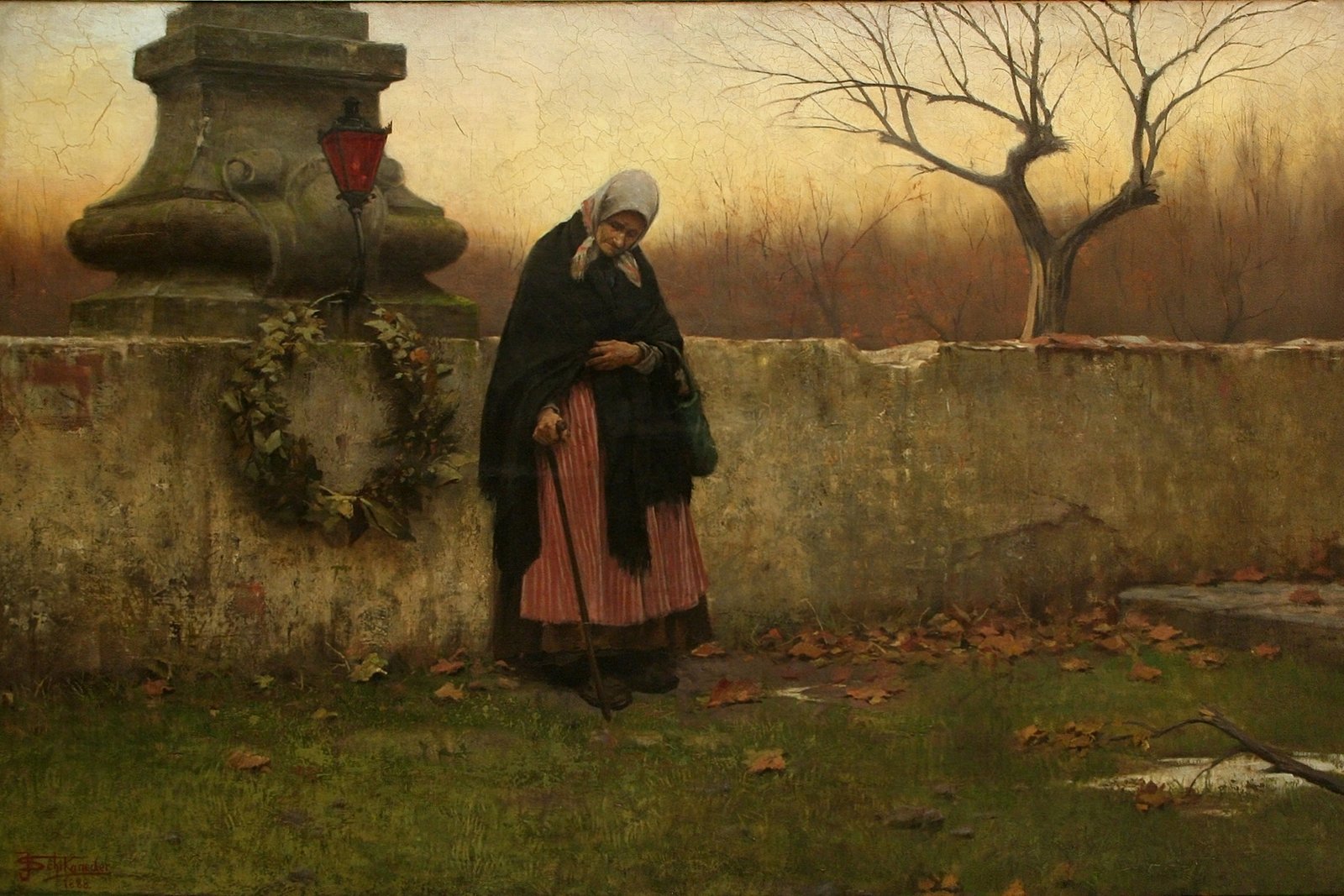
Jakub Schikaneder, All Souls' Day (1888), public domain via Wikimedia Commons
A slow spread, and a late arrival in Rome
From Cluny, the custom moved outward through the other monasteries of the Cluniac order, then into several dioceses in France, gradually extending through much of the Western Church over the following centuries. What's notable is how long it took to reach the Church's own center: Rome itself didn't formally adopt the observance until the fourteenth century, roughly three hundred years after Odilo first gave the instruction to his own community. It's a reminder that even a practice that eventually became universal and deeply ingrained in Catholic life didn't arrive from the top down all at once — it grew gradually, from the ground up, through one community's devotion spreading outward over generations.
The teaching behind the day
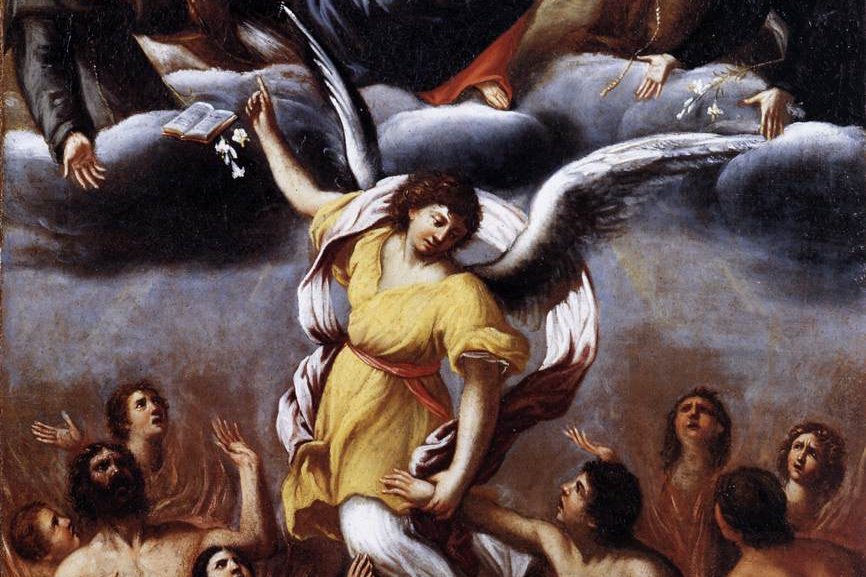
All Souls Day rests directly on the Church's teaching about Purgatory. The Catechism describes those who "die in God's grace and friendship, but still imperfectly purified" as "assured of their eternal salvation," while undergoing "purification, so as to achieve the holiness necessary to enter the joy of heaven" after death (CCC 1030). It goes on to note that this teaching about Purgatory "is also based on the practice of prayer for the dead, already mentioned in Sacred Scripture," and that "from the beginning the Church has honored the memory of the dead and offered prayers in suffrage for them, above all the Eucharistic sacrifice, so that, thus purified, they may attain the beatific vision of God" (CCC 1032). All Souls Day is, in effect, this ongoing practice of intercessory prayer for the dead given one concentrated, annual focus — a single day devoted to what the Church otherwise commends as an ongoing habit throughout the year.
Graves, candles, and Masses
The customs Catholics have attached to the day over the centuries reflect its purpose directly. Visiting and tending family gravesites — cleaning them, decorating them with flowers, lighting candles — remains among the most widespread practices connected to November 2nd in Catholic cultures around the world. Parishes typically offer Masses specifically intended for the faithful departed, and many Catholics use the day to offer specific prayers, almsgiving, or small acts of penance on behalf of particular deceased relatives or friends. None of these practices are treated as guaranteeing anything mechanically — they're expressions of the same confidence in intercessory prayer's real spiritual value that underlies the Church's broader teaching on Purgatory and prayer for the dead.
Indulgences and the days around November 2nd
Beyond Masses and prayer, Catholic tradition has long attached indulgences to this period — the Church teaches that the living can offer indulgenced prayer on behalf of souls in Purgatory, not just prayer in the ordinary sense, and specific norms around visiting a cemetery or church during the days surrounding November 2nd have been published by Church authorities over the centuries (the exact conditions have been adjusted at various points, so the current norms are best checked against an official source like the Vatican's own Enchiridion of Indulgences rather than assumed). What stays constant is the underlying conviction: the living can still assist souls in Purgatory through prayer and sacrifice, the same confidence that animates the rest of the day's customs.
Regional customs around November 2nd
How the day looks on the ground varies considerably by country, even though its theological core stays constant everywhere. In much of Latin America, November 2nd runs directly into the broader Día de los Muertos observances that began the day before, with family altars, favorite foods of the deceased, and marigold-strewn graves alongside Mass attendance. In Mexico specifically, the day carries its own folk customs — pan de muerto, sugar skulls, and nighttime cemetery vigils — that exist alongside, not instead of, the Church's liturgical observance. In Poland and much of Central Europe, November 2nd is typically quieter than November 1st's larger cemetery gatherings, with families returning to graves already decorated the day before to pray specifically for the dead. In the Philippines, "Undas" (covering both days together in common usage) draws enormous numbers of families to cemeteries, often with overnight vigils, candles, and shared meals held beside the graves themselves.
Paired deliberately with All Saints Day
All Souls Day doesn't stand alone on the calendar — it falls the day immediately after All Saints Day, November 1st, and the pairing is deliberate rather than coincidental. All Saints Day celebrates those already believed to have reached the full glory of heaven; All Souls Day, the very next day, turns attention to those still undergoing purification, not yet arrived at that same full glory. Read together, the two days move through nearly the entire Catholic understanding of the afterlife in the span of forty-eight hours — celebration of those already perfected, followed immediately by intercession for those still on the way, a sequence that keeps the Church's teaching on the communion of saints from becoming an abstraction, giving it instead two concrete, consecutive days on the calendar each year.
Trivia
What is All Souls Day?
Where does the custom of All Souls Day come from?
Why does the Church pray specifically for the dead on this day?
What do Catholics traditionally do on All Souls Day?
Is All Souls Day the same as All Saints Day?
Related Reading