The Good Friday Veneration of the Cross

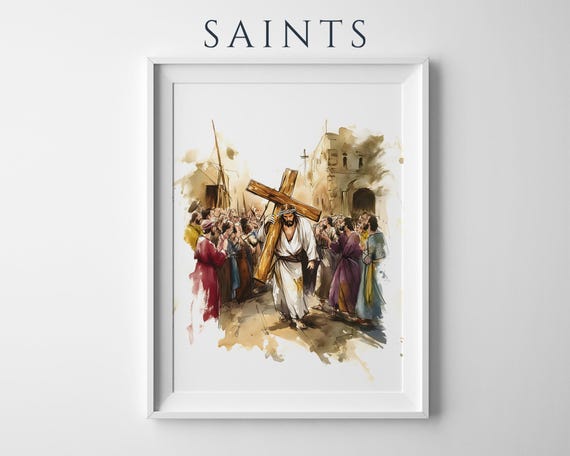
A relic, passed before a line of pilgrims
The earliest clear account of anything resembling today's Good Friday veneration comes from fourth-century Jerusalem. A pilgrim's description from that period records a portion of wood believed to be a fragment of the true cross being brought out in a silver casket on Good Friday, opened, and placed on a table where the faithful filed past, one at a time, to venerate it — some kissing it, others simply bowing before it. It's a striking image: an entire community, moving individually past a single physical object, each person pausing briefly before it in turn, long before any standardized liturgy had formalized the gesture into the rite Catholics know today.
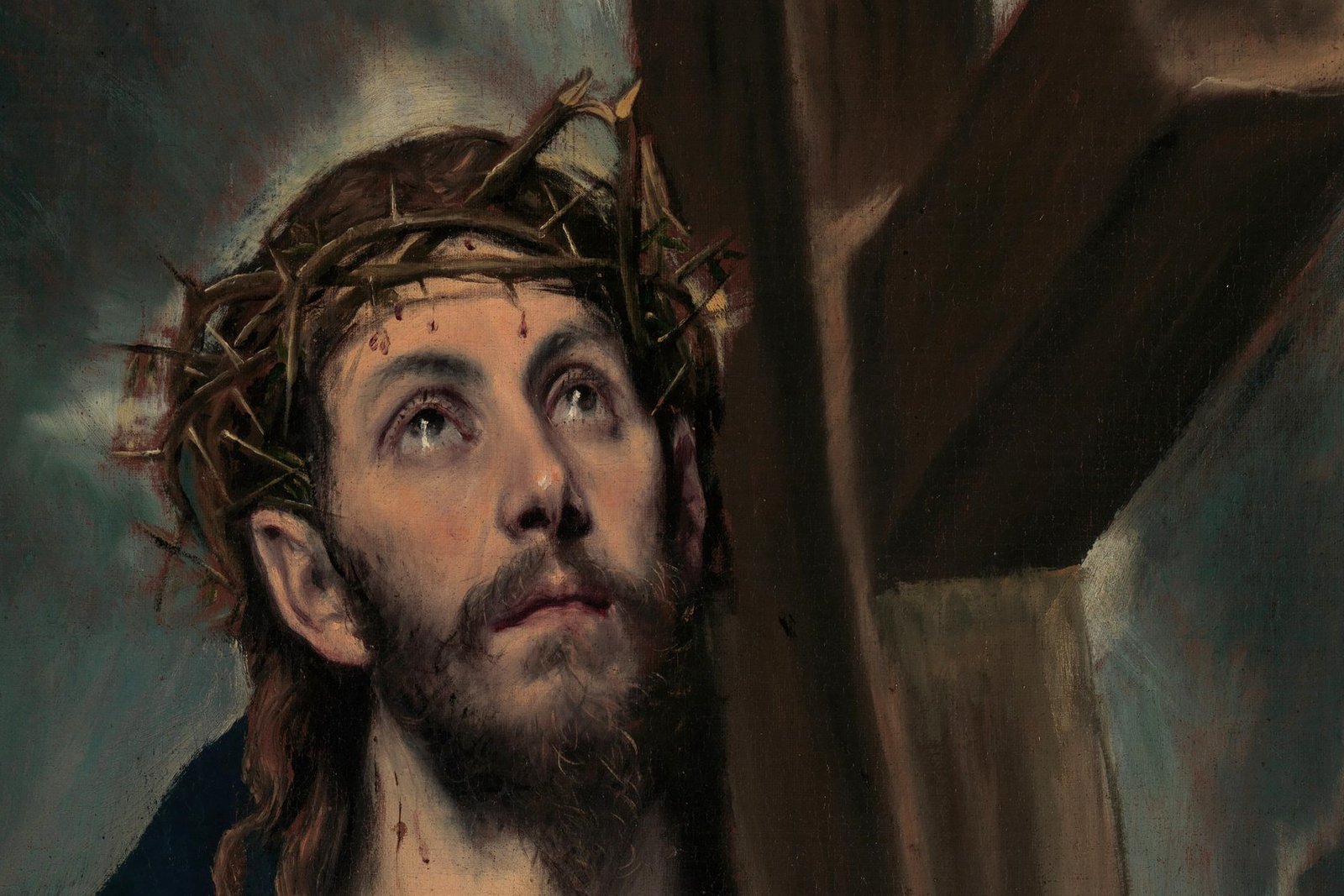
Christ Carrying the Cross (1580), public domain via Wikimedia Commons
From Jerusalem to the whole Latin Church
That local Jerusalem custom didn't stay local. Accounts describe the dramatic unveiling and adoration of the cross entering the broader Latin liturgy by around the seventh or eighth century, and by the end of the seventh century, papal celebrations of Good Friday in Rome had incorporated the veneration of a cross relic into their own observance. From Rome, the practice spread outward through the wider Church, gradually becoming a standard feature of Good Friday observance well beyond any single city or region, even in the many parishes that had no actual relic of the true cross available and instead used an ordinary crucifix or cross to stand in its place.
"Behold the wood of the Cross"
The modern ceremony retains a strong echo of that older relic-centered custom in its language. In one common form, a veiled cross is carried in procession to the sanctuary, where the priest unveils it in stages, chanting between each stage, "Behold the wood of the Cross, on which hung the salvation of the world" — to which the congregation responds, "Come, let us adore." In another common form, the cross is raised and the same invitation chanted three times, at the church door, partway down the aisle, and at the sanctuary, before the community kneels in adoration. The specific emphasis on "wood" traces directly back to the ancient veneration of a physical relic believed to be a literal fragment of the crucifixion's actual cross — language that has persisted in the ceremony even in the overwhelming majority of parishes where an ordinary cross, not a relic, stands at the center of the rite.
What the Church says the gesture actually means
It's worth being precise about what the veneration is and isn't. The Catechism states plainly that "the Church venerates his cross as it sings: 'Hail, O Cross, our only hope'" (CCC 617), language of honor and veneration rather than worship, directed at what the cross accomplished rather than at wood or metal as objects in themselves. The same paragraph describes Christ's Passion as "the source of eternal salvation" — the cross is venerated because of what happened on it and through it, an act the Catechism describes as having "merited justification for us" (CCC 617), not because the physical material carries independent power or significance apart from that event.
Where the veneration fits in the day's larger liturgy
The veneration of the cross is one part of a larger Good Friday service, not a stand-alone ceremony. It typically follows the Liturgy of the Word — readings that include the Passion according to John — and the Solemn Intercessions, a set of extended prayers for the Church, the world, and those in need that are unique to this one day of the liturgical year. After the veneration concludes, the service moves to Holy Communion, distributed from hosts consecrated the previous evening at the Holy Thursday Mass, since no Mass is celebrated on Good Friday itself. That absence of Mass is itself significant: Good Friday and Holy Saturday are the only two days of the entire liturgical year on which the Church does not celebrate the Eucharist, underscoring the day's unique character as a day of fasting, mourning, and stripped-down liturgical simplicity rather than celebration.
Regional customs built around the veneration
Beyond the liturgy itself, Catholic cultures have layered their own customs onto Good Friday. In the Philippines and much of Latin America, the Visita Iglesia tradition has the faithful visiting multiple churches on or around Good Friday, often to venerate a cross or image at each stop. In Spain, Italy, and parts of Latin America, elaborate Good Friday processions carry large crosses or images of the suffering Christ through city streets, sometimes accompanied by penitential confraternities in traditional robes, a public, outdoor extension of the same instinct that sends individuals forward to venerate a cross inside the church. These customs vary widely in form, but they share the same underlying impulse the fourth-century Jerusalem pilgrims already displayed: making the cross something approached physically and personally, not simply contemplated at a distance.
Coming forward, one at a time
Whatever specific form a parish's ceremony takes, its central action remains what the fourth-century Jerusalem account already describes: individuals, one after another, coming forward personally to venerate the cross — typically with a bow, a genuflection, or a kiss — rather than a single collective gesture performed all at once by the whole congregation together. That individual, one-at-a-time structure has proven remarkably durable across more than sixteen centuries, carrying forward a very old instinct that some encounters with the cross's meaning are better made personally, in a moment held briefly by just one person at a time, even within the middle of a much larger communal liturgy.
Trivia
What happens during the veneration of the cross on Good Friday?
Where did this custom come from historically?
Why does the Church specifically emphasize the 'wood' of the cross in this ceremony?
Does the Church teach that Catholics are worshiping the cross itself?
Is a crucifix or a plain cross used for the ceremony?
Related Reading