The Advent Wreath Explained: Candles, Colors, Meaning

A Lutheran mission project, adopted everywhere
The Advent wreath's actual origin story surprises a lot of Catholics who assume it's an ancient liturgical object. It traces most directly to Johann Hinrich Wichern, a Lutheran pastor and social reformer running a mission for poor and neglected children in Hamburg, Germany, in the 1830s. According to accounts of his ministry, the children in his care kept asking how many days remained until Christmas, so Wichern built a large wooden wheel studded with candles — small ones for weekdays, larger ones for Sundays — lighting one more each day through Advent so the children could see, visually, how close the feast was getting. That practical teaching tool, refined and simplified over the following decades, eventually settled into the four-candle, Sundays-only version now recognizable across denominations, including in Catholic parishes and homes worldwide.
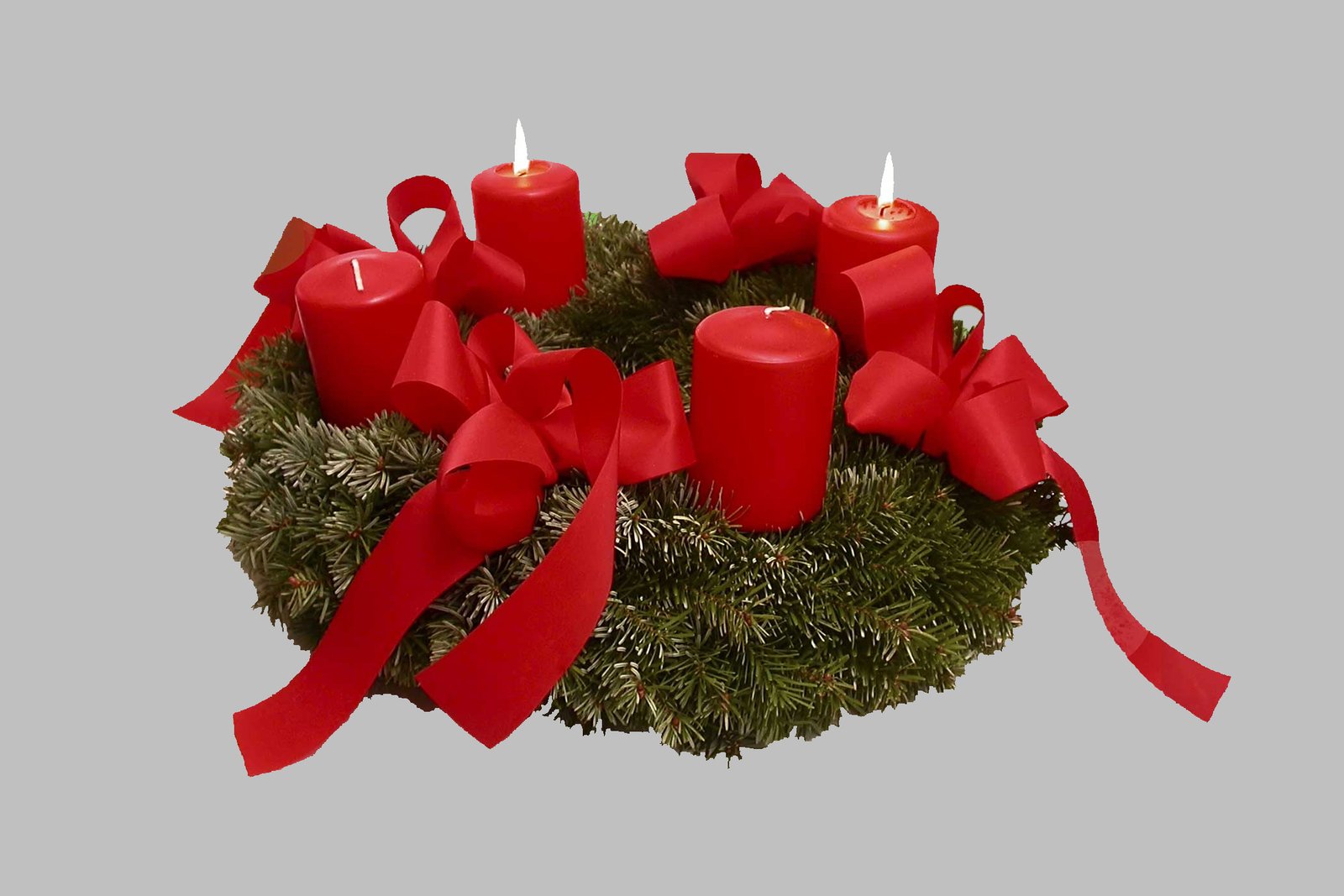
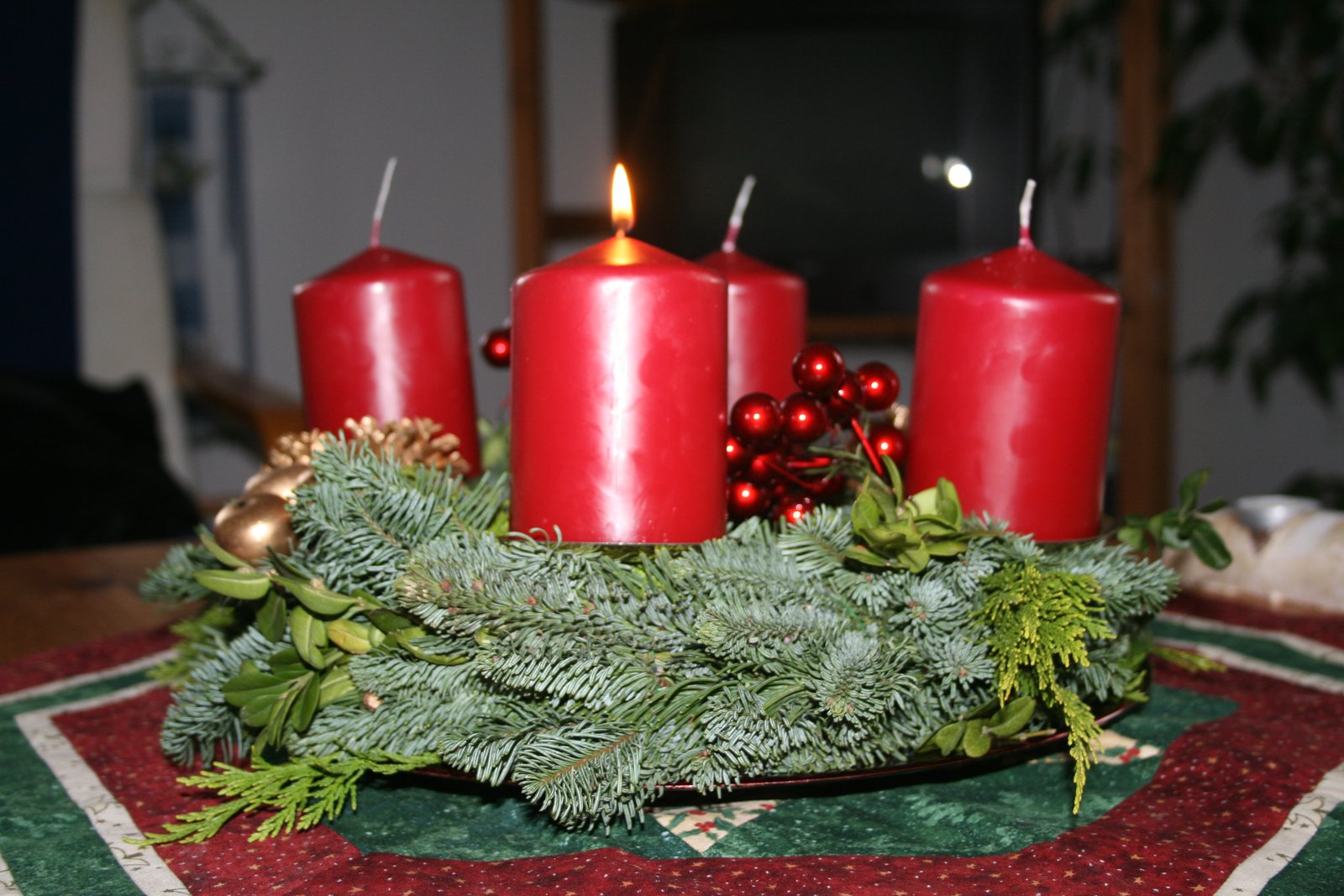
Advent wreath, photograph by Jonathan Kington, CC BY 2.5, via Wikimedia Commons.
The Advent season itself long predates Wichern's wreath by many centuries — the Church's practice of a preparatory period before Christmas goes back to at least the fourth or fifth century in various regional forms. What the wreath added wasn't the season's meaning but a tangible, weekly way of marking its progress, which is likely a big part of why the custom spread so quickly once introduced: it turned an abstract liturgical season into something a household could physically watch unfold.
Reading the circle itself
Even before any candle is lit, the wreath's basic shape carries meaning Catholic tradition has long attached to it. The circle, unbroken and without beginning or end, has functioned in Christian symbolism as a sign of eternity and of God's unending love, a visual echo of themes that show up throughout the Church's art and architecture, from halos in sacred painting to the ring exchanged in the Sacrament of Marriage. The evergreen branches traditionally used to build the wreath carry their own long-standing association with life persisting through winter's apparent death — a symbolism far older than Christianity, drawn from pre-Christian midwinter customs across Northern Europe, but readily absorbed into a season about anticipating new life breaking into the world.
Four candles, one theme per week
The standard Catholic Advent wreath holds four candles arranged around the circle, one lit on each of Advent's four Sundays, with previously lit candles relit alongside each new one so that, by the fourth Sunday, all four are burning together. Three of the candles are violet, matching the liturgical color assigned to most of the Advent season, itself signaling penance and preparation in the same family as Lent's violet, though Advent's penitential character is understood as gentler and more hopeful than Lent's.
The fourth candle, lit on the third Sunday, is rose rather than violet, marking what's known as Gaudete Sunday, named for the opening word of that Sunday's Latin Mass text ("Gaudete in Domino semper" — "Rejoice in the Lord always"). The rose color briefly interrupts the season's violet tone as a reminder that the waiting is nearly over and that Advent, unlike Lent, is fundamentally oriented toward joy rather than penance for its own sake — the same rose Sunday pattern reappears at the midpoint of Lent for a parallel reason.
What the individual candles "mean"
Ask five different Catholic families what each candle represents and you'll likely get slightly different answers, because no single scheme has been formally mandated by the Church for what each flame symbolizes. The most widespread popular devotional naming assigns the four candles to hope, peace, joy, and love, lit in that order across the four Sundays, with joy falling naturally on the rose candle's Gaudete Sunday. Other traditions, especially in parish catechesis, instead link each week to a stage of salvation history leading to Christ's birth — the patriarchs of the Old Testament, the prophets who foretold the Messiah, John the Baptist who prepared his way, and finally Mary, whose "yes" made the Incarnation possible. Both schemes, and various regional variants, coexist without tension, since the Church leaves this particular symbolism to popular devotion rather than official liturgical legislation.
A fifth candle, and other family additions
Many home wreaths, and some parish ones, include a fifth candle set in the wreath's center, usually white, lit on Christmas Eve or Christmas Day itself. Often called the "Christ candle," it represents the arrival of the light the other four candles have spent a month anticipating — a fittingly simple visual payoff for a season built almost entirely around waiting. This addition, like most of the wreath's specific symbolism, developed through popular custom rather than official Church legislation, which is part of why Advent wreaths vary so much in exact form from household to household and country to country while still communicating essentially the same idea.
A small object doing a lot of theological work
For an item that didn't exist in anything like its current form until the 19th century, the Advent wreath has settled remarkably firmly into Catholic family life, doing quiet theological work that a homily alone often can't: making the slow, deliberate arithmetic of waiting visible around a dinner table, one flame at a time, until the night arrives when all four — plus, in many homes, a fifth — are finally burning together.
Trivia
How many candles does a traditional Advent wreath have?
Why is one Advent candle pink or rose instead of purple?
Did the Catholic Church invent the Advent wreath?
What does each candle on the Advent wreath represent?
Is a fifth, white candle ever added to an Advent wreath?
You May Also Like
Related Reading