All Saints Day Traditions Explained

From a pagan temple to a church of martyrs
The path to All Saints Day begins in an unlikely place: the Pantheon, one of ancient Rome's most famous pagan temples. In 609 or 610, Pope Boniface IV had the building consecrated as a Christian church, dedicated to the Virgin Mary and all martyrs — a striking transformation of one of paganism's most significant structures into a space explicitly honoring Christian martyrs instead. The anniversary of that consecration, May 13th, became an annual feast honoring all martyrs, observed on that date for roughly the next century and a quarter. This earliest version of the feast was narrower in scope than what All Saints Day eventually became — it honored martyrs specifically, not the full breadth of holiness the feast would later come to encompass.
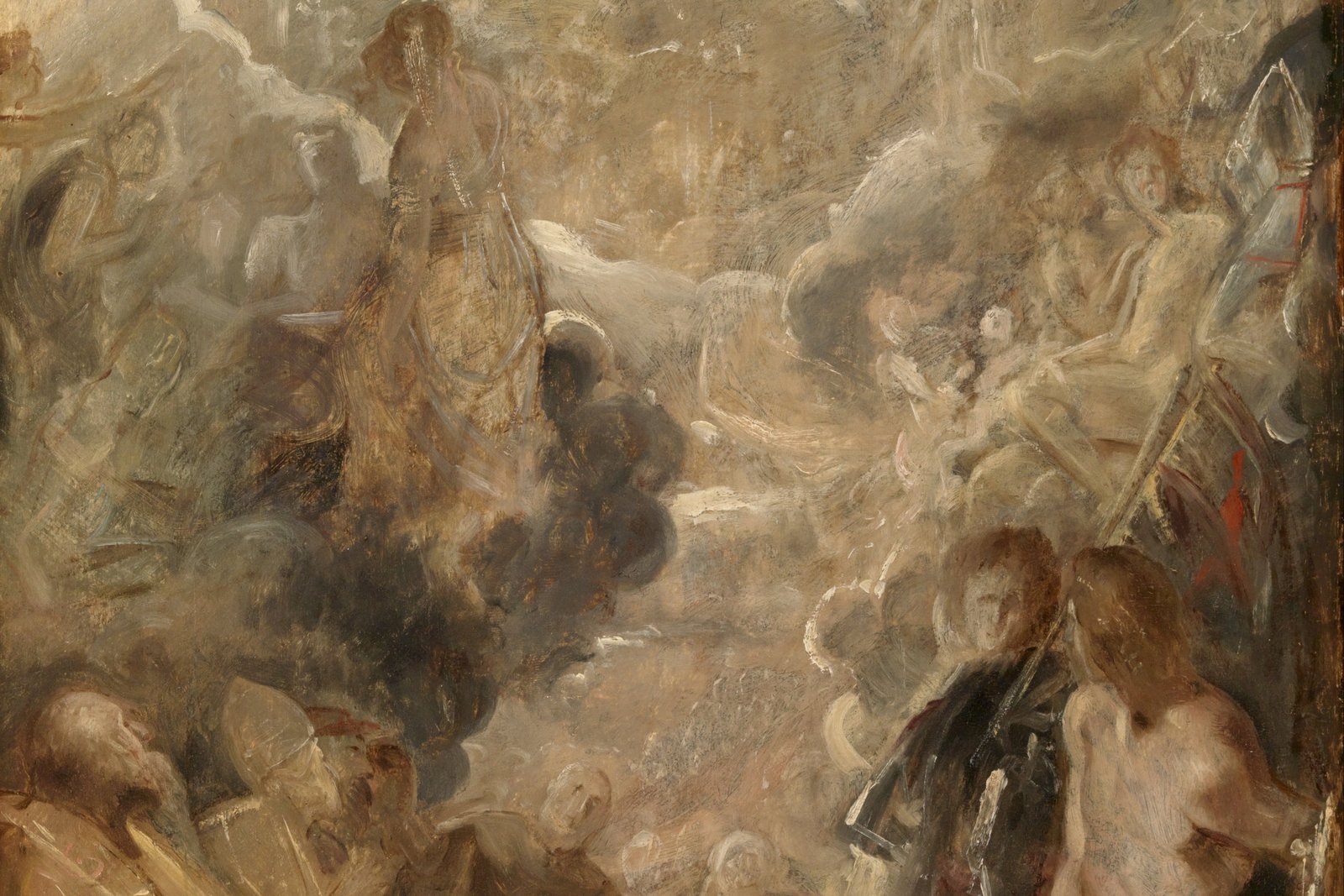
Peter Paul Rubens, All Saints (17th century), public domain via Wikimedia Commons
A pope, a chapel of relics, and a new date
The date familiar today arrived later, and through a different pope's initiative. In the eighth century, Pope Gregory III dedicated an oratory within St. Peter's Basilica specifically to house relics of the apostles, martyrs, and other saints, completing the dedication on November 1, 735. From that point forward, November 1st became the date associated with All Saints observance in Rome itself, gradually eclipsing the earlier May 13th date tied to the Pantheon's original consecration. The shift wasn't simply a change of calendar date — Gregory III's oratory also broadened the feast's scope beyond martyrs specifically toward the wider category of saints his relic collection represented.
From a Roman custom to a universal obligation
What had been, up to this point, primarily a Roman observance became something considerably larger under Pope Gregory IV in the ninth century. During his papacy (827-844), Gregory IV formally assigned November 1st as the date for All Saints throughout the entire Latin Church, establishing it as a holy day of obligation rather than leaving it as a regional custom specific to Rome. That decision is what transformed All Saints Day from one city's particular tradition into the universal Church observance still kept today, more than a millennium later, across every Catholic diocese in the world.
Honoring saints who never got their own feast day
The theological heart of All Saints Day is its scope: it deliberately reaches beyond the relatively small number of individuals the Church has formally canonized and assigned an individual date on the liturgical calendar. The Catechism describes those in heaven as being "more closely united to Christ" and states that they "fix the whole Church more firmly in holiness" and "do not cease to intercede with the Father for us" (CCC 956) — language that applies to the entire communion of the redeemed, an enormous number the Church has never attempted to name individually or formally recognize one by one. All Saints Day exists specifically to honor that much larger, largely anonymous multitude — the countless souls the Church believes have reached heaven's full glory without ever receiving a canonization process, an assigned feast day, or public recognition of any kind during their earthly lives.
How the canonization process fits in
It's worth pausing on a distinction the feast itself makes visible: canonization — the formal process by which the Church declares a deceased person a saint, worthy of public veneration throughout the universal Church — is not how someone becomes holy. It is how the Church publicly recognizes and confirms a holiness that, Catholic teaching holds, was already real. The process itself is a comparatively modern, carefully regulated one, involving investigation of a candidate's life and writings, verification of heroic virtue, and (outside the case of martyrs) confirmed miracles attributed to their intercession. Only a small fraction of those the Church believes to be in heaven have ever gone through it, simply because it requires a body of evidence, a devoted cause, and often centuries of advocacy that most holy lives never generate. All Saints Day quietly corrects for that imbalance by setting aside a day that doesn't depend on paperwork at all.
Customs around the world
Because All Saints Day is a holy day of obligation across the Latin Church, Mass attendance is its universal core everywhere it's kept — but the day around that Mass looks different from country to country. In much of Latin America, November 1st blends into the broader Día de los Muertos observances that continue into November 2nd, with families visiting cemeteries, cleaning and decorating graves, and treating the two days together as a single extended remembrance of both saints and departed loved ones. In Poland, Portugal, and the Philippines, cemetery visits on November 1st are a major family event in their own right, often drawing more people out than Sunday Mass itself, with graves cleaned and covered in flowers and candles in the days beforehand. In French-speaking Europe, La Toussaint functions as a quiet family holiday, often the occasion for the year's first visit to family graves ahead of the following day's more explicitly mournful tone. These regional customs vary widely, but nearly all of them share one instinct: using the feast as an occasion to physically visit the dead, even though the day itself is dedicated to the saints already believed to be in heaven rather than to the deceased in general — that remembrance belongs properly to November 2nd.
The day before a different kind of remembrance
All Saints Day sits immediately before All Souls Day, and the two form a deliberate pair rather than two unrelated observances that happen to fall on consecutive dates. All Saints Day celebrates those already believed to have reached heaven's fullness; the very next day turns attention to souls still undergoing purification. Together, the two days walk through nearly the entire Catholic understanding of the afterlife within forty-eight hours — a structure that gives the Communion of Saints concrete, annual expression, honoring first those who have already arrived, then interceding for those still on their way.
Trivia
What is All Saints Day?
How did All Saints Day originally begin?
When did the feast move to November 1st?
When did November 1st become obligatory throughout the Church?
Why does the Church honor saints who don't have their own individual feast day?
Related Reading