Lenten Fasting and Abstinence Rules Explained

Two days, not forty
The single most common misconception about Lenten fasting is scope: many people assume the obligation to fast covers some or all of the forty days of Lent itself. It doesn't. The Latin Church's actual obligatory fasting days connected to Lent are exactly two: Ash Wednesday, which opens the season, and Good Friday, which falls near its close. Everything else often associated with "Lenten fasting" in popular practice — giving up a specific food or habit for the whole season, eating more simply throughout Lent — is a voluntary, additional penance many Catholics choose to take on, not a Church-mandated fasting obligation extending across the entire season.
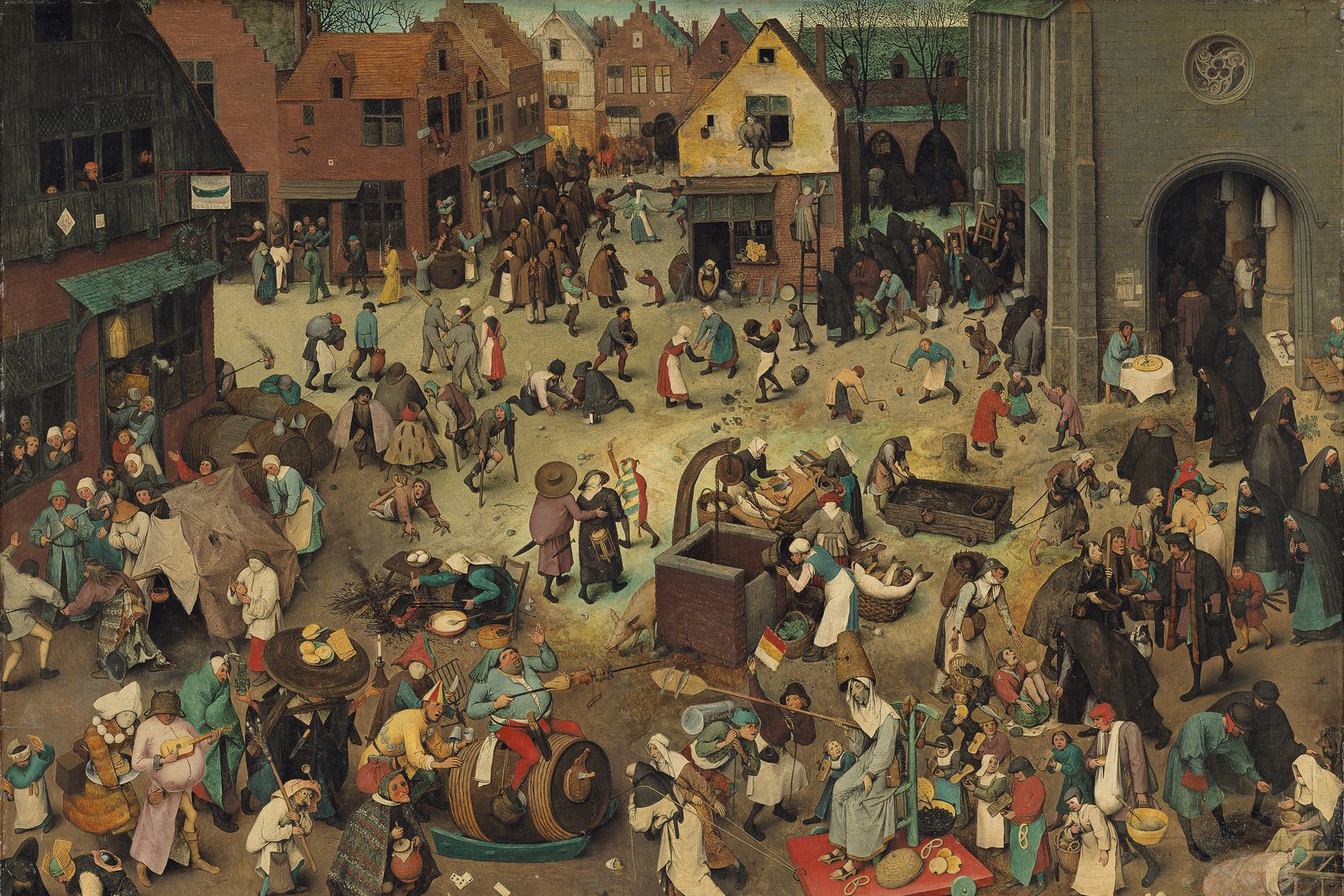
Pieter Bruegel the Elder, The Fight Between Carnival and Lent (1559), public domain via Wikimedia Commons
What "fasting" actually requires
Even on the two days it does apply, the Church's definition of fasting is more modest than the word suggests to most people today. The standard, as described by the USCCB, permits one full meal during the day, along with two smaller meals that together do not add up to a full meal — with no eating between those meals. It's a genuine reduction in food, deliberately built around a lighter-than-normal day rather than complete abstention from food. This binds Catholics between the ages of 18 and 59; outside that age range, the specific fasting obligation doesn't apply.
Fridays and the abstinence rule
Distinct from fasting is abstinence — refraining from meat specifically, regardless of how much or how little other food is eaten. This obligation covers considerably more days: every Friday during Lent, in addition to Ash Wednesday and Good Friday, is a day of abstinence from meat. The abstinence obligation binds Catholics from age 14 onward, with no upper age limit specified — unlike the fasting rule, which stops applying at 59, the requirement to abstain from meat on Lenten Fridays continues indefinitely once a Catholic turns 14.
The Catechism's broader framing
The Catechism doesn't lay out the specific day-by-day rules — those come from Church law and, in the United States, USCCB norms adapting universal Church law to the local conference of bishops' discretion. What the Catechism does provide is the underlying rationale for penitential seasons generally: "The seasons and days of penance in the course of the liturgical year (Lent, and each Friday in memory of the death of the Lord) are intense moments of the Church's penitential practice. These times are particularly appropriate for spiritual exercises, penitential liturgies, pilgrimages as signs of penance, voluntary self-denial such as fasting and almsgiving, and fraternal sharing" (CCC 1438). Notice that fasting appears in that list alongside almsgiving and pilgrimage as one example among several forms fitting penitential practice can take — the Church's vision of Lenten penance is broader than food rules alone, even while the specific fasting and abstinence obligations remain a defined, binding part of it.
Who is exempt, and why
Not every Catholic is bound by these obligations at every point in life. Age is the most straightforward exemption — those under 18 or over 59 are outside the fasting requirement automatically, and those under 14 are outside the abstinence requirement. Beyond age, exemptions generally extend to people whose health would be put at genuine risk by fasting, including those with chronic illnesses such as diabetes, and to pregnant or nursing women, whose nutritional needs take priority over the penitential discipline. The exemptions reflect a consistent underlying principle: the fasting and abstinence rules are meant to be a manageable, health-conscious discipline undertaken freely within reasonable limits, not a rigid obligation applied without regard for a person's actual physical circumstances.
How the rules have changed over time
Today's modest fasting requirement looks very different from the discipline earlier generations of Catholics kept. In the early centuries and through much of the medieval period, Lenten fasting in much of the Church meant a single meal a day, taken in the evening, with meat, eggs, and dairy products often excluded for the entire season rather than just on Fridays — a considerably stricter standard than the current one meal plus two smaller meals. The rules were progressively relaxed over the centuries, with major simplifications in the twentieth century, including Pope Paul VI's 1966 apostolic constitution Paenitemini, which reduced the universal obligation to its current, much narrower scope and gave individual bishops' conferences discretion to adapt specific practices like the Friday abstinence rule to local circumstances.
Some local variations worth knowing
Because of that discretion granted to national bishops' conferences, the specifics can vary somewhat outside the United States. Bishops in England and Wales, for instance, reaffirmed Friday abstinence from meat as obligatory year-round, not just during Lent, after a period when an alternative penance had been permitted. Eastern Catholic Churches, which follow their own particular law rather than Latin Church norms, often observe considerably stricter Lenten fasting traditions, closer to ancient practice, including extended abstinence from meat and dairy throughout much of the season. Someone traveling or attending a parish of a different rite during Lent may find the expectations noticeably different from the Latin Church baseline described here — a reminder that "Catholic Lenten rules" aren't a single universal checklist but a core obligation with room for legitimate local and ritual variation.
A modest rule carrying a much larger meaning
Measured purely by its practical demands, the Church's actual Lenten fasting and abstinence obligation is fairly small: two days of lighter eating, a run of meatless Fridays, exemptions built in for those it would genuinely burden. What the rule does, though, is give the whole season a recurring, embodied rhythm — a reminder, built into the calendar itself rather than left entirely to individual resolve, that Lent is a season of deliberate simplicity leading toward Easter, marked in the body as well as in prayer.
Trivia
Which days require fasting during Lent?
What does 'fasting' actually mean in Church rules — no food at all?
Which days require abstinence from meat?
Is Lenten fasting mentioned in the Catechism?
Who is excused from the fasting and abstinence obligations?
Related Reading