Confession and Repentance: Making Peace, One Step at a Time

Walking out lighter, then walking back in
Almost anyone who has gone to Confession more than a handful of times knows the pattern: real relief at the moment of absolution, a genuine resolve to change, followed weeks or months later by standing in the same line, about to say a familiar sin out loud again. It can feel like evidence that something isn't working — that the grace didn't "take," or that the person's sorrow the first time wasn't real. The Catholic tradition has a much older and more forgiving read on this pattern than the anxious one people tend to supply for themselves.

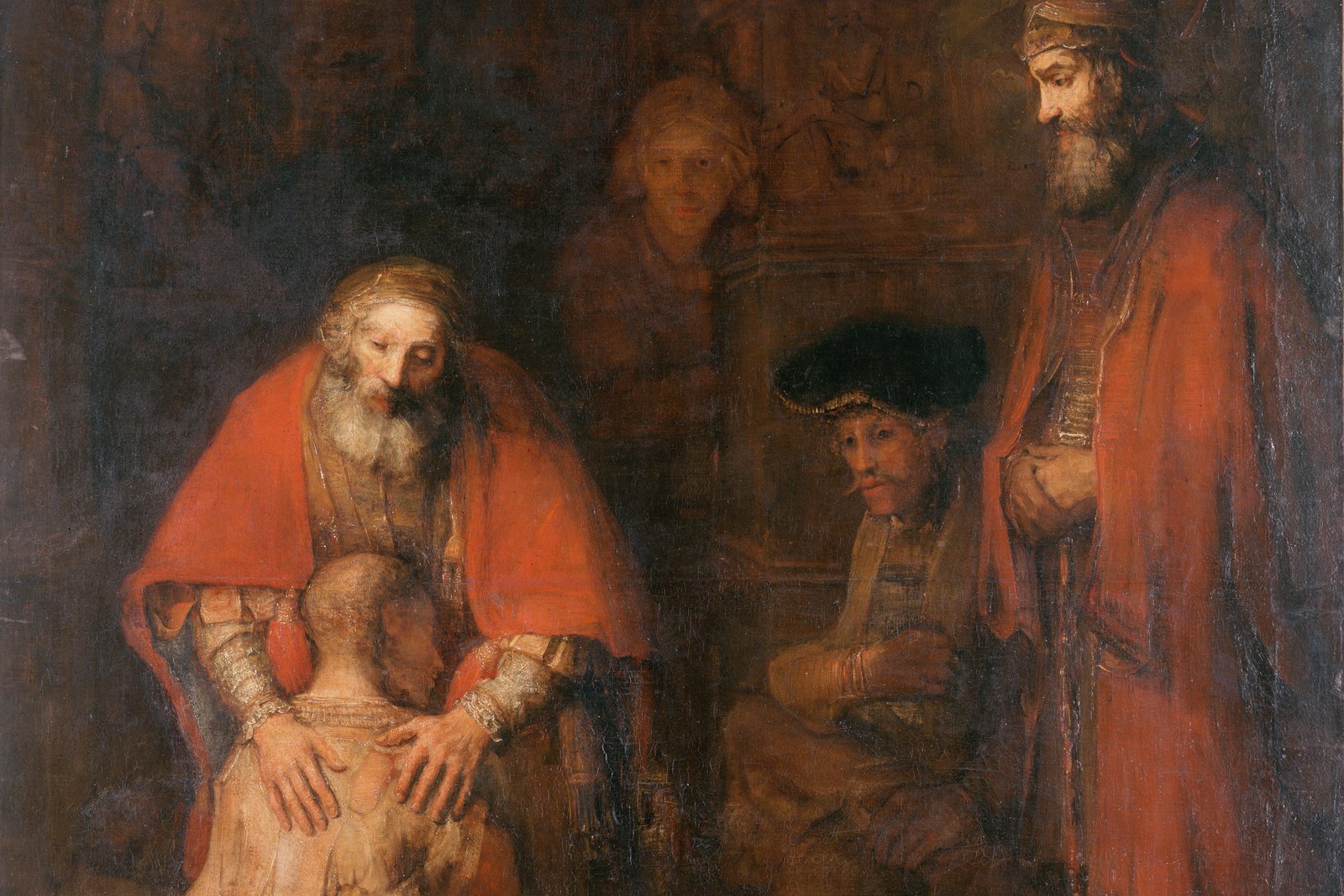
Rembrandt, The Return of the Prodigal Son, c. 1668, Hermitage Museum — public domain.
Conversion doesn't end at Baptism
The Catechism teaches that Baptism accomplishes something real and decisive — a genuine, initial conversion. But it's equally clear that the pull toward sin, what the tradition calls concupiscence, doesn't vanish the moment water touches the forehead. Because of that, the Catechism describes the baptized as called to a further, "laborious" conversion, one it calls a task for the whole Church, "an uninterrupted task for her as a whole," made up of what it describes as "ceaselessly renewed" acts of repentance and turning back to God (CCC 1428). This isn't a pastoral consolation invented to make backsliding feel better — it's a description of what the Church actually believes the Christian life is structurally like, for saints as much as for anyone else.
The Greek word behind "repent" in the Gospels is metanoia — not simply regret over one act, but a change of mind, a fundamental reorientation of the whole way a person thinks and lives. Jesus's own preaching opens with exactly this call: "Repent, and believe in the gospel" (Mark 1:15), addressed as an ongoing summons, not a single hurdle to clear once. Read that way, repeated Confession of a recurring struggle isn't a sign the first attempt failed. It's what the ongoing work of metanoia actually looks like in a real life, applied to one particular habit or weakness over time.
Why shame keeps people away
There's a meaningful difference between guilt and shame, even though the two get tangled together constantly. Guilt says: that specific action was wrong. Shame says: I am fundamentally the kind of person who does things like that, and probably always will be. Guilt can lead somewhere — toward acknowledgment, apology, repair. Shame tends to trap a person in avoidance, because if the problem is your whole identity rather than a specific choice, facing it feels pointless or unbearable.
This distinction matters directly for Confession, because shame is very often the real reason someone stays away for years, far more than busyness or scheduling. The sacrament is built, structurally and theologically, to work against shame rather than reinforce it: the priest isn't there to confirm a person's worst suspicions about themselves, and the Church's whole framing of the sacrament — reconciliation, homecoming, the Prodigal Son welcomed while still "a long way off" — exists specifically to counter the shame narrative that keeps people from walking through the door in the first place.
Frequent confession as a discipline of growth
Beyond the Church's minimum requirement — confessing grave sin at least once a year, and before Communion if aware of unconfessed mortal sin (CCC 1457) — the Church recommends frequent confession of venial sin as spiritually valuable, even though it isn't strictly required (CCC 1458). Many priests and spiritual directors suggest something like a monthly rhythm, not because venial sin demands it, but because the regular practice itself has a formative effect: it keeps a person in the habit of honest self-examination, of naming specific struggles out loud to another person rather than letting them stay vague and unexamined, and of receiving grace as an ongoing resource rather than an emergency intervention.
Approached this way, frequent Confession functions less like a fire extinguisher kept for genuine emergencies and more like a regular checkup — a discipline that assumes ongoing growth and occasional relapse as the normal texture of a real spiritual life, not evidence that something has gone catastrophically wrong.
What returning again actually means
Walking back into the confessional with the same sin as three months ago isn't a report of failure to a disappointed judge. In the Church's own theology of conversion, it's closer to showing up for the next round of a fight that was never going to be won in a single decisive blow. The saints the Church holds up as models of holiness were not, as a rule, people who sinned once, repented, and never struggled again — they were people who kept returning, kept naming the same persistent weaknesses honestly, and let that return itself become the shape of their growth. Repetition isn't the sign Confession failed. In the Church's own account of conversion, it's often the sign that it's working exactly as intended.
Trivia
Is it a bad sign to keep confessing the same sin over and over?
Why does the Catholic Church describe conversion as something ongoing rather than a one-time event?
How often should a Catholic go to confession if it's not sinning gravely?
What's the difference between guilt and shame when it comes to Confession, and does the Church address it?
What does 'metanoia' mean in the context of repentance?
Related Reading