The Blessing of Animals on Saint Francis's Feast

A sermon preached to a flock of birds
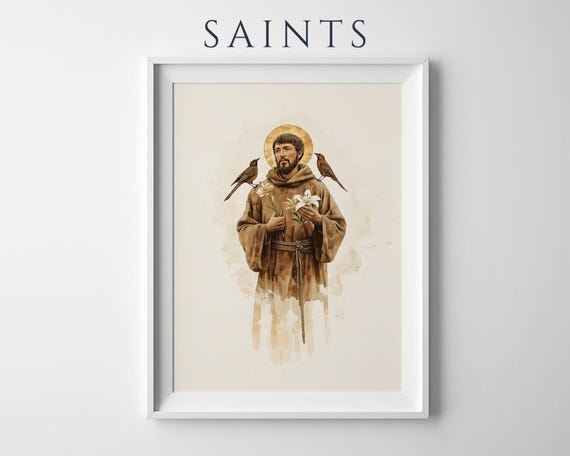
Few stories attached to Saint Francis of Assisi have stayed as vivid in popular memory as his reported sermon to the birds. Thirteenth-century accounts describe Francis, traveling through the Spoleto Valley in Italy with companions, noticing a large flock of birds gathered in nearby trees — and stopping to preach to them directly, reminding them to be grateful to God for their feathers, their freedom of flight, and the sustenance they received without needing to sow or harvest it themselves. According to the tradition, the birds responded by bowing their heads and bursting into song, after which Francis blessed them with the sign of the cross and sent them on their way, the flock famously scattering afterward in four directions, echoing the shape of the cross itself. As with many accounts from medieval hagiography, this story should be understood as devotional tradition rather than independently documented history — but it's the story that has done more than almost any other to shape how later generations remember Francis's relationship with the created world.
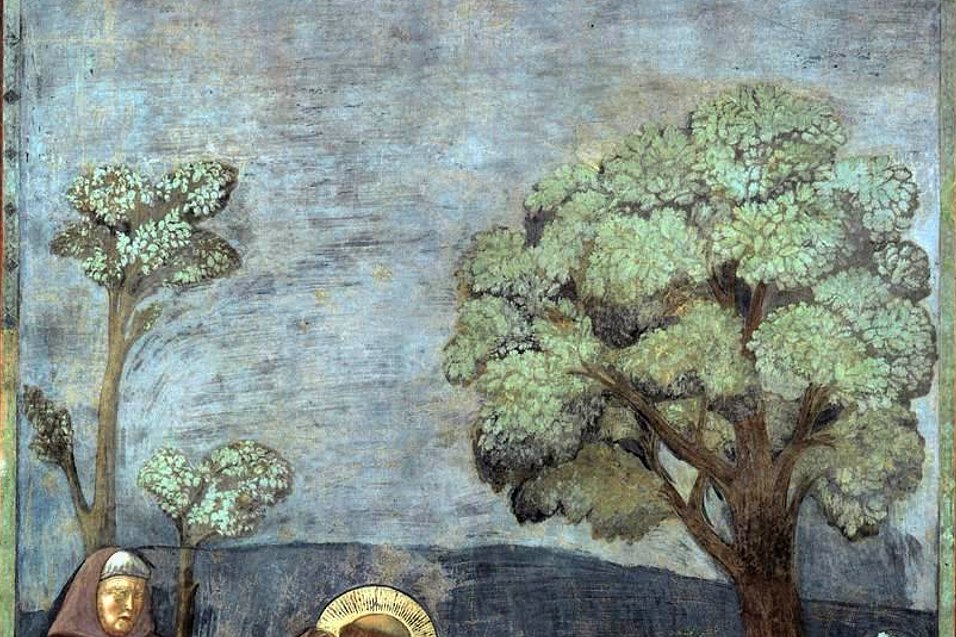
Giotto di Bondone, Legend of St Francis: Sermon to the Birds (13th century), public domain via Wikimedia Commons
"Brother Sun, Sister Moon"
Francis's regard for creation wasn't limited to a single legendary sermon. Near the end of his life, he composed the Canticle of the Creatures, a hymn addressing the natural world in strikingly familial terms — Brother Sun, Sister Moon, Brother Fire, Sister Water, Sister Mother Earth among them — inviting every part of creation, animal, plant, and mineral alike, to join together in praising God. The Canticle reflects a consistent thread running through the stories told about Francis: not simply an affection for animals as pets or curiosities, but a broader theological conviction that all of creation, in its own way, participates in praising its Creator, and that human beings share a kind of kinship with the rest of the created world rather than standing entirely apart from it.
From medieval legend to parish parking lot
The modern custom most people associate with Francis today — parishioners bringing household pets to church on or near his October 4th feast day for an individual blessing — is a considerably later development, not a direct continuation of any specific practice from Francis's own thirteenth-century lifetime. It's worth being honest about that gap: the devotion Francis is remembered for was directed broadly at the natural world and wild creatures encountered in the course of his itinerant preaching, not specifically at the household pets that fill parish courtyards on his feast day now. The modern custom developed over the centuries since as a popular devotional practice connected to his memory and legacy, rather than as something traceable directly to his own recorded actions.
What the modern blessing actually looks like
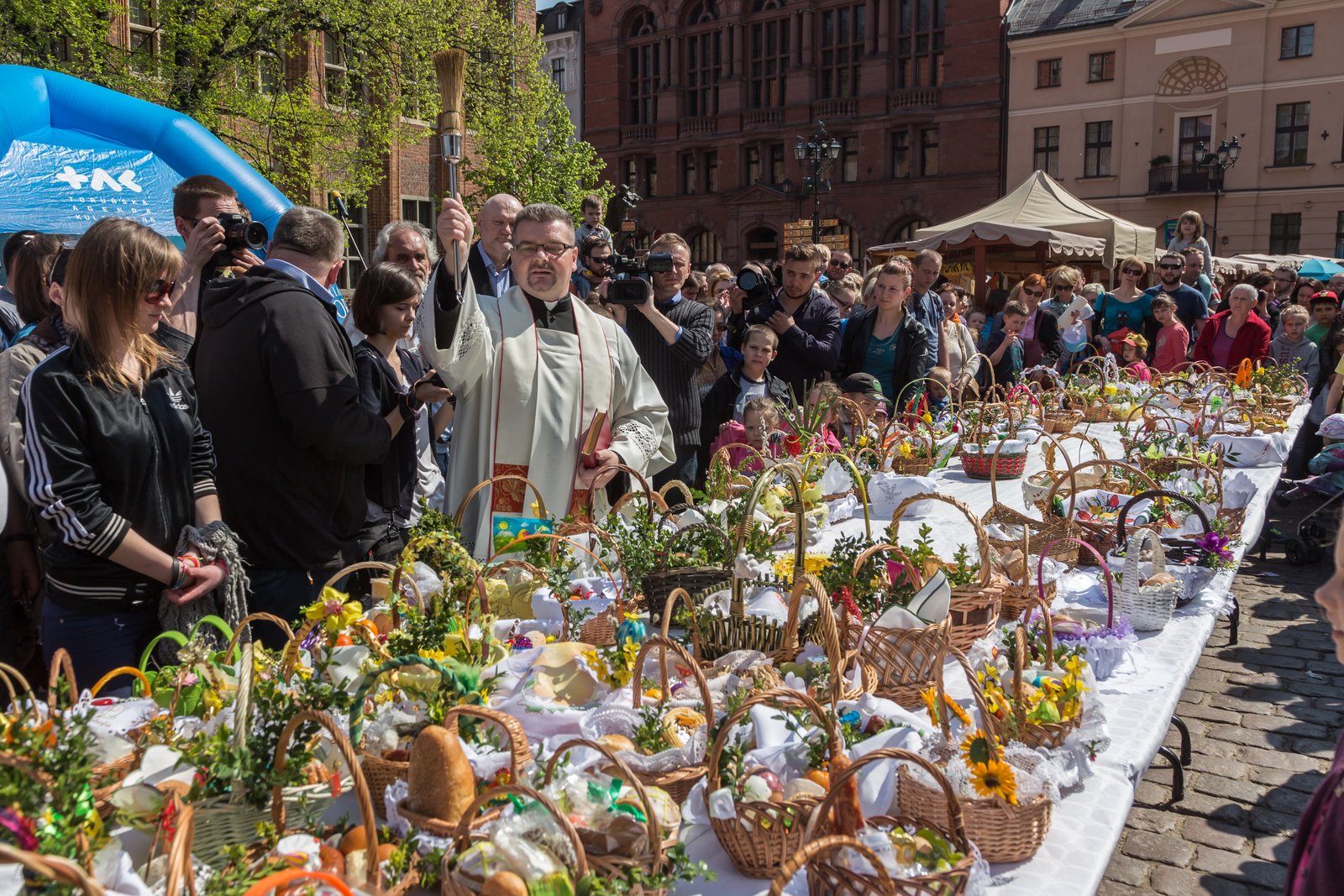
Despite that historical gap, the custom has become widespread and well loved in Catholic (and some other Christian) parishes. Practice varies somewhat from place to place, but a typical service involves a priest offering a general blessing prayer over the assembled group, then moving individually through the gathered animals and their owners, often using holy water, acknowledging both the animal and the particular bond between it and the person who brought it. Dogs and cats dominate most gatherings, but it's common to see a much wider range of animals brought forward — rabbits, birds, reptiles, and occasionally livestock or more unusual pets, depending on the parish and its setting.
A blessing with real theological footing
The animal blessing itself isn't a theological improvisation grafted onto Francis's feast day for sentimental reasons — it's a sacramental, a category of blessing the Church has long extended beyond people to the wider created world. The Roman Ritual (the Church's official collection of blessing formulas) has historically included prayers for blessing animals, livestock, and even fields and harvests, reflecting a broader Catholic conviction that God's grace can be invoked over the whole of creation, not only over human beings and sacred objects. A blessing of this kind doesn't claim to change an animal's nature or confer sacramental grace in the way the seven sacraments do — it's a prayer asking God's favor and protection over the animal and, implicitly, over the relationship between the animal and the person bringing it forward. That distinction matters for anyone unfamiliar with the practice: it's devotional and sacramental, not sacramental in the narrower, technical sense reserved for baptism, the Eucharist, and the other sacraments proper.
Why October 4th specifically
Francis's feast day itself has its own history, separate from the animal-blessing custom attached to it. Tradition holds he died at the Porziuncola, the small chapel near Assisi he considered the spiritual home of his order, around October 3-4, 1226 (accounts of the exact hour vary, since he is said to have died after sunset, which the Church's traditional reckoning would already count as the following liturgical day); his feast has been kept on October 4th. Pope Gregory IX, who had known Francis personally during his years as a cardinal, canonized him remarkably quickly — on July 16, 1228, less than two years after his death — a speed that reflects how immediately and widely Francis's reputation for holiness had already spread during his own lifetime.
A saint's memory, adapted for a different world
Whatever the gap between Francis's own thirteenth-century context and the modern custom celebrated in his name, the blessing of animals captures something genuinely faithful to how he's remembered: a conviction that animals matter within a Christian understanding of creation, not as incidental background to human life but as fellow creatures worth specific, deliberate blessing. It's a modest annual custom, requiring little more than a short prayer and a line of pets waiting their turn — but it keeps alive, in its own adapted form, an instinct that reaches all the way back to a saint reportedly kneeling in a field, addressing a flock of wild birds as though they, too, had something to answer for before God, and something to be blessed for in return.
Trivia
When is the blessing of animals typically held?
Why is this custom connected to Saint Francis specifically?
What is the Canticle of the Creatures?
Is the modern pet-blessing custom something Saint Francis himself would recognize?
What happens during a typical animal blessing service?
Related Reading