How to Build a Home Altar or Prayer Corner

A theology behind the shelf
Before getting to the practical layout, it's worth knowing that this impulse isn't just sentiment — the Church has actual teaching behind it. The Catechism describes the Christian family as the "domestic church," a phrase it traces back to the early Church Fathers, and teaches that it is within the family that children first learn to pray and that faith is first proclaimed and lived out in daily life (CCC 1655-1657). A home prayer space is one of the most direct, physical expressions of that teaching — a small acknowledgment, built into the architecture of daily life, that prayer isn't confined to Sunday Mass or reserved for church buildings alone.
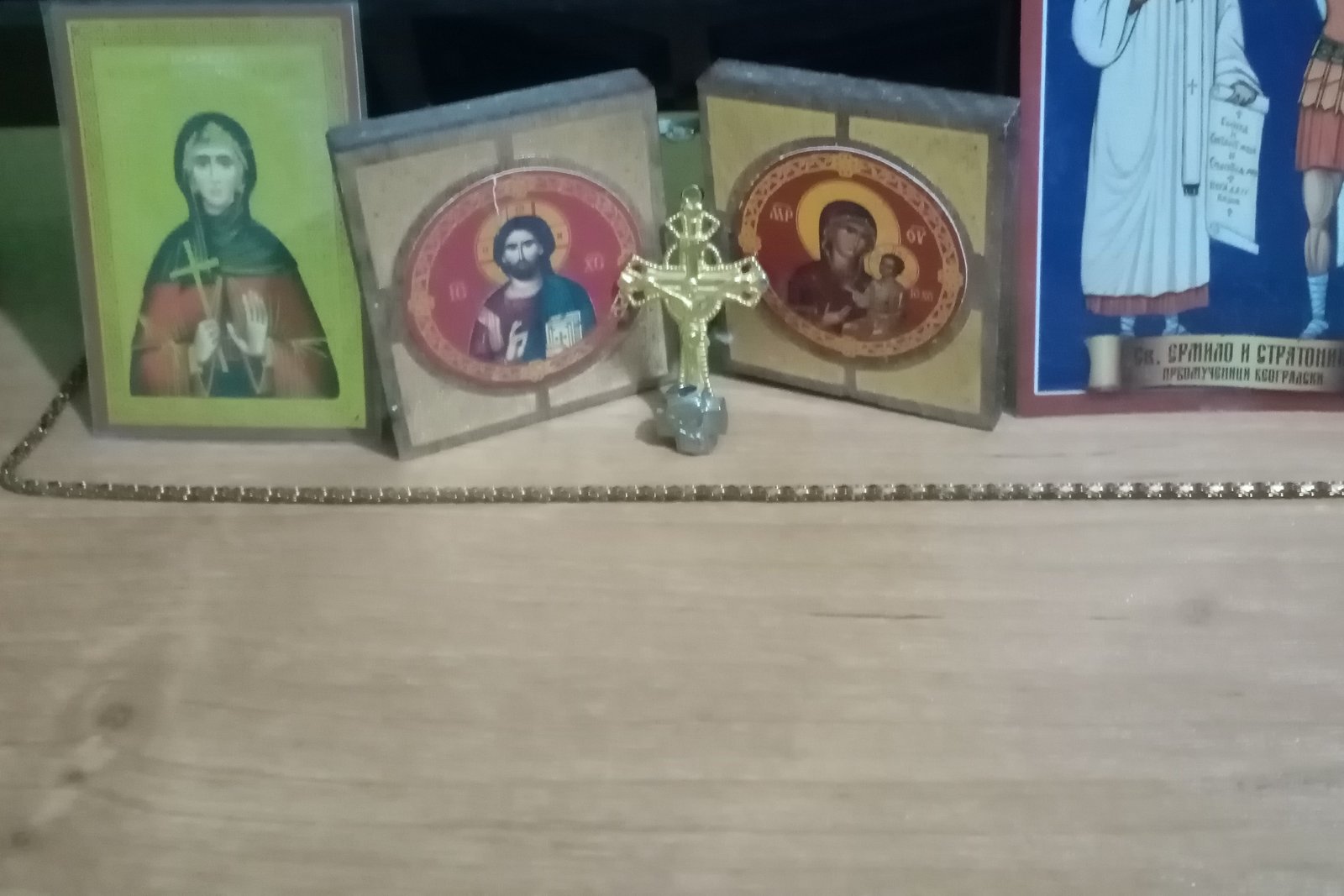
Photo of a home icon prayer corner, CC BY-SA 4.0, via Wikimedia Commons.
Worth a quick note on vocabulary: most home prayer spaces are more accurately called a prayer corner than an altar in the strict sense, since "altar" properly names the table on which Mass is offered. The distinction isn't pedantic hair-splitting — it keeps clear that a home prayer space isn't attempting to replicate or replace the Eucharistic altar at the parish, but to give personal and family devotion a fixed, physical home of its own.
What sacramentals actually are, and why the objects matter
The objects that typically populate a prayer corner — a crucifix, a rosary, holy water, blessed images — fall into a specific theological category the Church calls sacramentals. The Catechism defines them as sacred signs, instituted by the Church, that "prepare men to receive the fruit of the sacraments and sanctify different circumstances of life" (CCC 1667). That's an important distinction to hold onto: a blessed crucifix isn't a good-luck charm or a source of power in itself. Its purpose is to dispose the person using it toward grace, to focus attention, and to make the invisible reality of prayer a little more tangible through sight and touch. Catholic teaching is explicit that the effectiveness of a sacramental depends on the disposition of the person using it, unlike the sacraments themselves, whose grace doesn't depend in the same way on the minister's or recipient's personal holiness (CCC 1128, by contrast, on the sacraments proper). A candle lit in front of an icon isn't doing anything magical — it's a physical gesture that helps a distracted mind stay a little longer in prayer.
Building the space itself
The most traditional starting point is a crucifix or cross, positioned as the visual center of the space. Centering the corner on Christ, rather than on a favorite saint or devotion, keeps the theological proportions right — the saints are honored precisely because of their closeness to Christ, not as independent objects of devotion in their own right (see the Church's distinction between veneration of saints and worship of God, addressed more fully in this site's article on daily saint devotion).
From there, most home prayer corners add some combination of: a Bible, kept accessible rather than purely decorative, since Scripture read aloud or in silence is itself a form of prayer; a candle, often reserved for more focused prayer time rather than left burning constantly, both for practical safety and to mark the space as set apart when it's in active use; a rosary, hung nearby or kept in a small dish, useful precisely because its presence serves as a visual reminder as much as a tool; and one or two images of saints with particular personal significance — a patron saint, a family name saint, or simply a figure whose story has stuck with you. None of these additions are required by Church law. A prayer corner with just a crucifix and a Bible is complete in every sense that matters; the rest is a matter of what genuinely supports someone's own prayer life, not a checklist to complete.
Placement matters more for practicality than doctrine. A shelf, the top of a dresser, a windowsill, or a small table in a quiet corner of a bedroom or living room all work — the main considerations are that the spot is somewhere the household actually passes regularly (so it gets used, not forgotten) and that it can hold a lit candle safely if one is part of the setup. Some families choose a spot visible from the kitchen or dining area specifically so it becomes part of daily routine, such as a quick prayer before meals, rather than a shrine tucked away and rarely visited.
An image with a particular focus
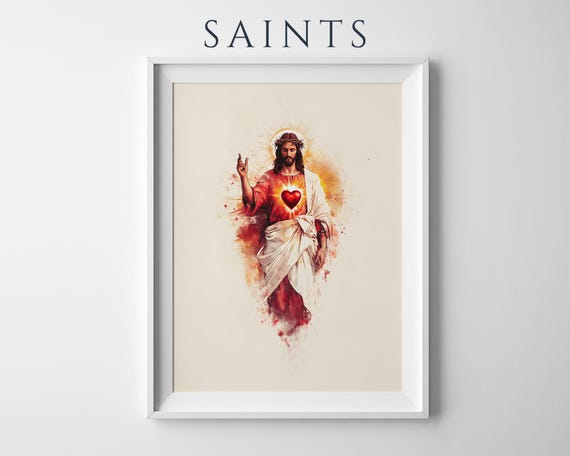
Many Catholics choose to center their prayer corner on an image with personal resonance — a favorite saint, Our Lady under a particular title, or an image of the Sacred Heart of Jesus, a devotion rooted in Christ's own self-revelation of his love and long promoted by the Church as a focus for personal and family consecration. A print of the Sacred Heart, kept at eye level near the crucifix, works well precisely because it keeps the corner's attention on Christ's own love as the center of the household's prayer, with any secondary devotions (a favorite saint, a Marian image) arranged around that anchor rather than replacing it.
Keeping it a living space, not a display
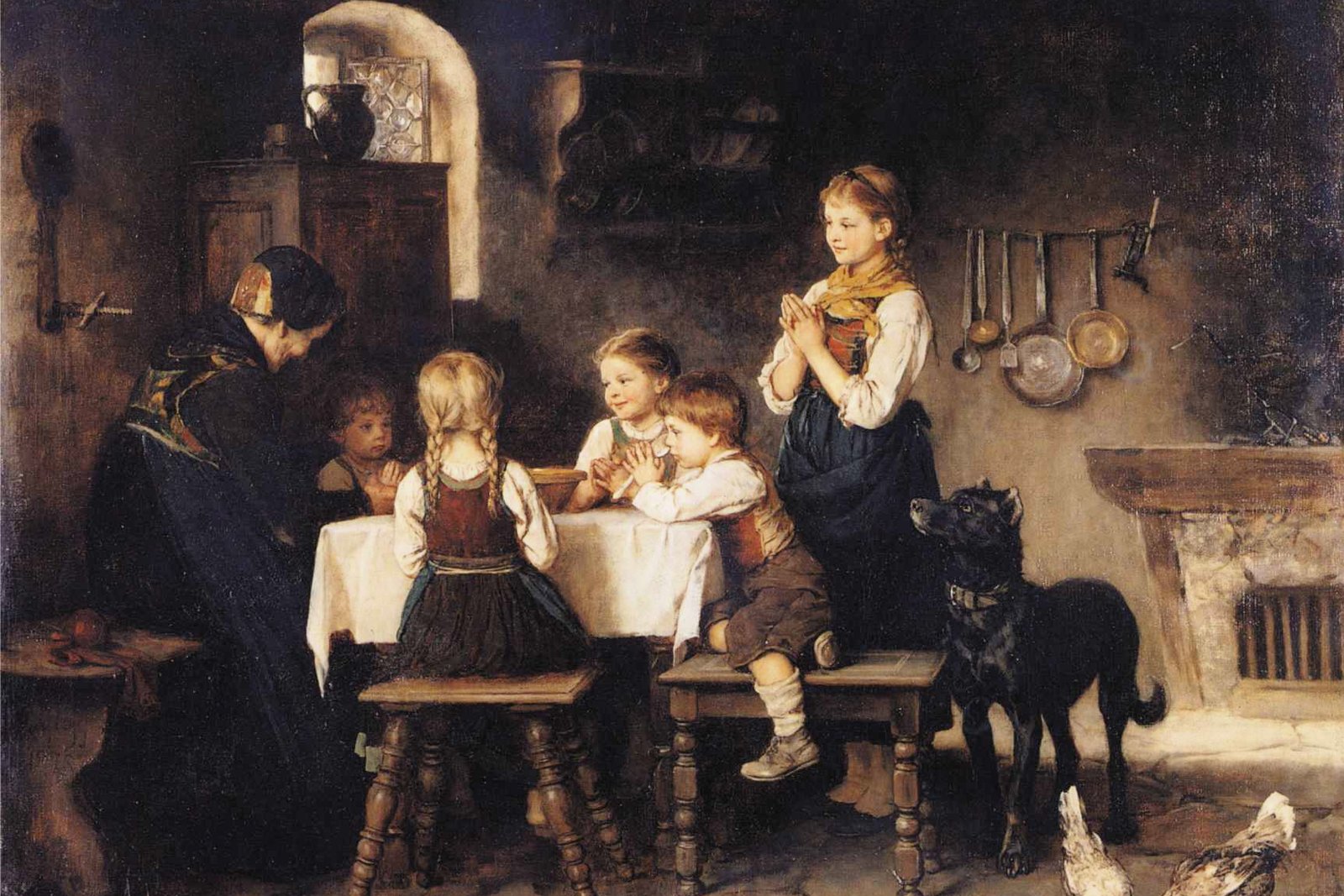
The single most common way a home prayer corner fails isn't bad design — it's neglect. A beautifully arranged shelf that nobody actually stops in front of is decoration, not devotion. The point of building the space deliberately, rather than letting it accumulate by accident the way that grandmother's kitchen shelf did, is to make a habit easier to start: a minute of quiet before the day begins, a decade of the rosary after dinner, a moment of thanks before a meal. None of that requires an elaborate setup. It requires a fixed spot, a few meaningful objects, and the will to actually use it.
Trivia
Is it appropriate for Catholics to have an altar in their home?
What are sacramentals, and how do they relate to a prayer corner?
What is the minimum needed to start a prayer corner?
Does a home prayer corner need to be blessed by a priest?
What does 'domestic church' actually mean in Catholic teaching?
Related Reading